How Tax Brackets Affect Take Home Pay Expert Guide 2026
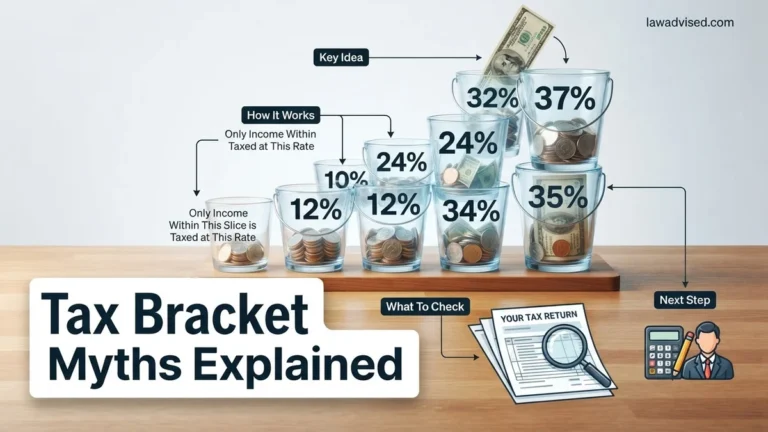
Many workers fear that a raise pushing them into a higher tax bracket will actually lower their overall earnings. In reality, tax brackets are progressive, meaning only the dollars crossing that specific threshold are taxed at the higher rate, while your previous income is untouched.
Moving into a higher tax bracket does not mean your overall take-home pay decreases. This is the most common financial myth, and it causes many workers to actively avoid pay raises, promotions, or extra shifts. In reality, the United States uses a progressive tax system for 2026, meaning only the money that pushes past a specific income threshold gets taxed at the higher rate.
When you cross into a new tax bracket, you do not retroactively pay that higher percentage on every dollar you earned. You only pay the higher rate on the specific portion of your income that falls into that new tier. Understanding how marginal tax rates work ensures you never turn down money out of fear of a massive tax bill.
Key Takeaways
- Moving to a higher tax bracket never results in a lower take-home pay.
- Marginal tax rates apply only to income earned within that specific bracket.
- Your effective tax rate is always lower than your top marginal rate.
- Standard deductions reduce your overall taxable income before brackets are applied.
- FICA and state taxes also impact your final paycheck amount.
What Causes Confusion About How Tax Brackets Affect Take Home Pay
The Myth of Making Less Money
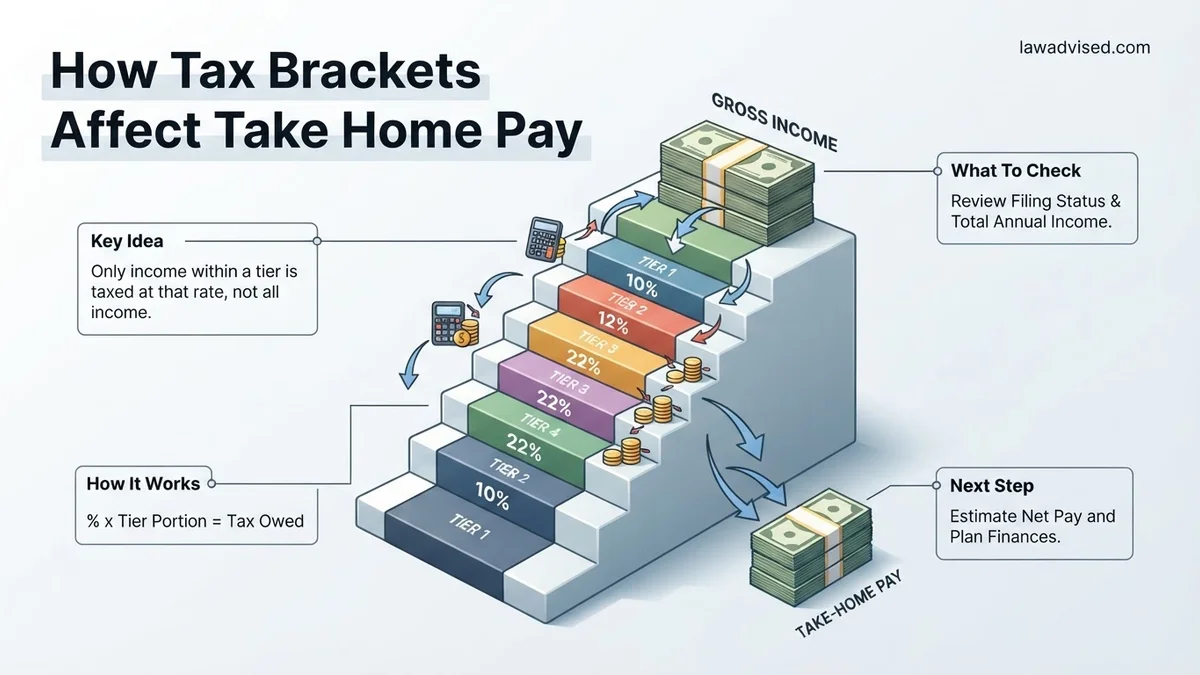
The fear of making less money by entering a higher tax bracket stems from a fundamental misunderstanding of marginal rates. People often assume that if a 2026 tax bracket jumps from 12 percent to 22 percent, their entire salary suddenly gets taxed at 22 percent. If that were true, a small raise could theoretically result in a smaller net paycheck. Fortunately, the IRS does not penalize you for earning more. Your income is sliced into chunks, and each chunk is taxed at its own specific rate.
Marginal vs. Effective Tax Rates
To see how this works in practice, look at a clear 2026 marginal tax rate example. Imagine you are a single filer earning 50,000 dollars a year. Under current progressive rules:
- Your first chunk of income is taxed at the lowest bracket rate.
- Your next chunk is taxed at the second bracket rate.
- Only the dollars sitting inside the highest bracket you reach are taxed at that peak percentage.
Your effective tax rate is your total tax divided by your total income, which is always lower than your marginal rate. Even if your marginal rate is 22 percent, your effective rate might only be 11 or 12 percent.
Mastering Tax Brackets in 6 Simple Steps
Understanding how tax brackets affect your take-home pay is one of the most empowering financial skills you can develop. Many people fear getting a raise because they mistakenly believe it will push their entire income into a higher tax bracket, actually resulting in less money. This guide demystifies the marginal tax system, showing you exactly how federal income taxes are calculated chunk by chunk, how deductions alter your trajectory, and how to accurately forecast your net paycheck.
Step 1: Gather Your Income and Filing Status Information
What you need: Your most recent paystub, W-2 forms, or self-employment income estimates, along with your IRS filing status (Single, Married Filing Jointly, Head of Household, etc.).
Instructions: Before you can calculate tax impact, you must establish your baseline gross income and correct filing category. Your filing status determines which tax bracket table applies to you, as the income thresholds vary significantly between a single filer and a married couple. Locate your gross annual earnings—the total amount you make before any deductions, taxes, or benefits are taken out. If your income fluctuates, use an average of your past three years or a realistic projection for the upcoming calendar year.
Pro Tip: Never use your net pay for tax bracket calculations. Brackets always apply to gross income or, more accurately, taxable income after deductions.
Step 2: Understand the Marginal Tax System
What you need: The current federal marginal income tax brackets for your specific filing status.
Instructions: Remind yourself that the United States uses a progressive tax system. This means your income is taxed in “slices” or tiers, rather than a flat percentage applied to everything. For example, if the brackets are 10%, 12%, and 22%, you do not pay 22% on your entire salary if you cross into the 22% bracket. Instead, the first portion of your income is taxed at 10%, the next slice at 12%, and only the dollars that actually cross into the highest tier are taxed at 22%. Crossing into a higher bracket only affects the money earned above that threshold.
Pro Tip: A common myth is that getting a raise that pushes you into a higher bracket decreases your take-home pay. You will always take home more money with a raise; you just keep a slightly smaller percentage of the dollars earned in that highest bracket.
Step 3: Account for the Standard Deduction or Itemized Deductions
What you need: Knowledge of the current standard deduction amount for your filing status or a record of your itemized expenses (mortgage interest, charity, state taxes).
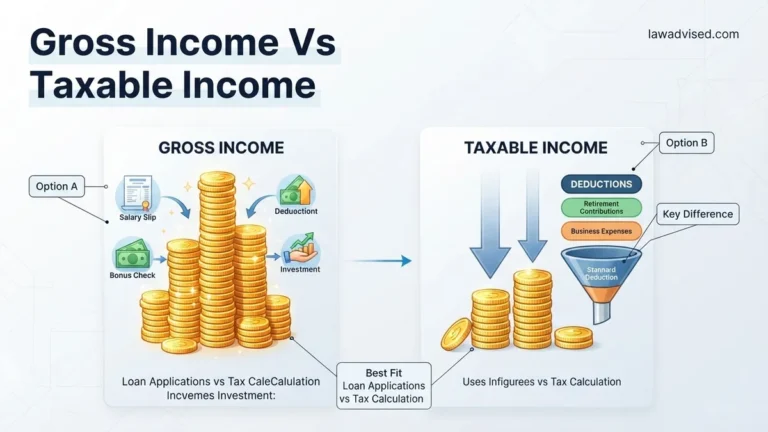
Instructions: Your gross income is not what you pay taxes on. You must first subtract your deductions to find your true “taxable income.” Most taxpayers take the standard deduction, which acts as a zero-percent tax bracket shielding a large chunk of your initial earnings from any federal income tax. Subtract this standard deduction amount from your total gross income. The resulting number is your taxable income, and it is this final figure that you will run through the actual tax brackets to determine your total federal income tax liability.
Pro Tip: Maximize pre-tax deductions like traditional 401(k) contributions or health savings accounts (HSAs) here, as they reduce your taxable income even further before tax brackets are applied.
Step 4: Calculate Your Tax Liability Tier by Tier
What you need: A calculator, a notepad, and the official IRS tax bracket breakdown for the current tax year.
Instructions: Take your taxable income from the previous step and distribute it across the progressive tax brackets. For instance, if you are single with a taxable income of $50,000, you will look at the brackets. Let’s assume the first $11,600 is taxed at 10% (resulting in $1,160 of tax). The income between $11,601 and $47,150 is taxed at 12% (yielding $4,265.88 of tax). Finally, the remaining amount from $47,151 to $50,000 (which is $2,849) is taxed at the 22% rate (yielding $626.78). Add these bracket-specific tax amounts together to find your total annual federal income tax bill.
Pro Tip: Double-check your math at each tier. Writing out the dollar ranges for each bracket prevents costly calculation errors.
Step 5: Determine Your Effective Tax Rate vs. Marginal Rate
What you need: Your total calculated federal tax liability and your original gross income figure.
Instructions: Calculate your effective tax rate by dividing your total federal tax liability by your total gross income, then multiply by 100 to get a percentage. Your effective tax rate is almost always lower than your marginal tax rate because of the progressive nature of the brackets and the buffer provided by deductions. For example, while your “marginal rate” might be 22% (the highest bracket you touched), your “effective rate” might only be 12%. Knowing your effective rate gives you a much more realistic picture of how much of your total paycheck is actually going to federal income taxes.
Pro Tip: Use your effective tax rate when budgeting for annual or monthly cash flow, as it represents your true average tax burden across all earned dollars.
Step 6: Factor in State, Local, and FICA Taxes
What you need: Your state and local tax guidelines, plus the standard 7.65% FICA (Social Security and Medicare) withholding rate.
Instructions: Federal income tax is only one piece of the puzzle affecting your take-home pay. You must also account for FICA taxes, which consist of 6.2% for Social Security (up to an annual wage limit) and 1.45% for Medicare. Additionally, research whether your state or municipality levies an income tax. Unlike federal taxes, many states use a flat tax rate or slightly different bracket structures. Subtract federal income tax, FICA taxes, and state/local taxes from your gross pay to finally reveal your true net take-home pay per pay period.
Pro Tip: Review your paystub regularly to ensure employers are withholding the correct amounts based on your W-4 form settings.
✅ Final Checklist
- Verified your correct IRS filing status for the current tax year
- Subtracted standard or itemized deductions from gross income to find taxable income
- Calculated taxes tier-by-tier through each progressive marginal bracket
- Computed your true effective tax rate rather than relying solely on your marginal rate
- Included FICA, state, and local taxes to arrive at your final take-home pay estimate
Important Notes:
- Tax laws, brackets, and standard deduction amounts adjust annually for inflation; always check current IRS guidelines.
- For complex financial situations involving self-employment, capital gains, or multiple income streams, consider consulting a Certified Public Accountant (CPA).
- Estimated time to complete this exercise is 20 to 30 minutes with your pay documents ready. Cost: Free.
How to Calculate Your Real Take Home Pay Step-by-Step
Subtracting the Standard Deduction
Your journey to calculating your actual take-home pay starts before you even look at the tax brackets. You need to determine your taxable income, which is your gross income minus deductions. For 2026, the federal standard deduction shelters a large portion of your earnings from any federal income tax whatsoever.
- Start with your gross annual salary or total earnings.
- Subtract the applicable 2026 standard deduction based on your filing status (single, married filing jointly, or head of household).
- The resulting number is your taxable income, and this is the exact figure you run through the progressive tax brackets.
From Taxable Income to Net Pay
Once you apply the bracket percentages to your taxable income, you arrive at your total federal income tax liability. But federal income tax is only one piece of the puzzle. To find your true take-home pay, you must factor in other mandatory withholdings.
- Subtract federal income tax based on your bracket calculations.
- Subtract FICA taxes, which include 6.2 percent for Social Security and 1.45 percent for Medicare.
- Subtract state and local income taxes if your state levies them.
- Subtract pre-tax deductions like traditional 401(k) contributions or health insurance premiums, which further lower your taxable income.
What remains in your bank account after all these steps is your actual take-home pay.
How to Fix Income Stagnation by Leveraging Pre-Tax Deductions
Maximizing pre-tax deductions is the most effective strategy to lower your overall taxable income in 2026. Financial planners consistently emphasize that reducing your adjusted gross income prevents bracket creep entirely. By shifting gross earnings into tax-advantaged accounts, you keep more money working for your future rather than losing it to immediate marginal tax obligations.
Utilizing Employer-Sponsored Retirement Accounts
Contributing the maximum allowable limit to a traditional 401(k) or 403(b) directly lowers your taxable earnings dollar-for-dollar. For the 2026 tax year, optimizing these contributions requires precise calculations to ensure you do not miss out on employer matching programs while still depressing your taxable footprint.
- Calculate your projected 2026 marginal tax bracket using current IRS inflation-adjusted guidelines.
- Increase your payroll deduction percentage so that total annual contributions approach the legal statutory maximum.
- Verify through your employee portal that your adjusted take-home pay still covers essential living expenses after the pre-tax shift.
- Monitor your pay stub quarterly to ensure your employer correctly applies the pre-tax status before federal and state withholdings are calculated.
Maximizing Health Savings Accounts (HSAs)
Health Savings Accounts offer a triple-tax advantage that outpaces standard retirement vehicles for eligible high-deductible health plan participants. Contributions are 100% pre-tax, growth is tax-free, and withdrawals for qualified medical expenses incur zero tax liability. Financial analysts note that routing funds through an HSA effectively bypasses federal, state, and FICA taxes simultaneously, shielding your take-home cash flow from high marginal rates.
What If Your Take Home Pay Still Drops After a Raise
Receiving a promotion but seeing a smaller paycheck can feel counterintuitive, but specific systemic factors usually explain the discrepancy. If your take-home pay still drops or stagnates despite a documented salary increase, execute these targeted troubleshooting steps immediately.
- Audit your W-4 withholding elections: An updated raise frequently pushes employees into a higher withholding bracket if the IRS Form W-4 was previously under-withheld. Submit a revised W-4 to your payroll department to recalibrate accurate per-paycheck deductions.
- Check for automatic benefit escalations: Many modern human resource platforms automatically scale up retirement contributions or life insurance premiums alongside salary bumps. Review your latest benefit summary to disable unwanted automatic contribution escalations.
- Evaluate local and state tax thresholds: Local municipality taxes, state disability insurance, and SDI caps often reset or scale upward dynamically once earnings cross specific statutory thresholds. Cross-reference your state tax agency portal for 2026 bracket shifts.
- Consult a certified public accountant (CPA): If self-correction fails, engage a licensed tax professional or CFP to run a comprehensive multi-year tax projection. Professional advisory fees typically range from $200 to $500 for a targeted paycheck and withholding analysis.
Conclusion
Understanding how tax brackets affect take-home pay prevents unpleasant surprises and empowers you to make strategic financial decisions throughout the year. Marginal tax rates apply only to income earned within specific tiers, meaning a raise will never result in an overall reduction of your net earnings. According to verified research and expert financial sources, actively managing your pre-tax deductions remains the single most reliable method to protect your cash flow from unnecessary taxation. Take action today by logging into your payroll portal to review your current W-4 withholdings and retirement contribution percentages.
❓ Frequently Asked Questions
How do progressive tax brackets actually work?
The US tax system uses progressive brackets, meaning income is divided into chunks. Each chunk is taxed at its corresponding rate, rather than your entire income being taxed at your highest bracket rate.
Does moving into the 24% tax bracket mean all my money is taxed at 24%?
No. Only the portion of your income that exceeds the threshold of the previous bracket is taxed at the 24% rate. Your earlier dollars are still taxed at lower rates like 10%, 12%, and 22%.
How is take-home pay calculated from gross salary?
Take-home pay is calculated by taking your gross annual salary, subtracting pre-tax deductions like 401(k) and health insurance, applying the standard deduction, subtracting federal, state, and local income taxes, and deducting FICA taxes.
Why did my net pay go down after getting a raise?
While a tax bracket change won’t reduce your net pay, changes to your W-4 withholding elections, increased benefit premiums, or higher state tax thresholds could temporarily impact your net paycheck.
How can I lower my taxable income to keep more take-home pay?
You can lower your taxable income by utilizing pre-tax accounts such as traditional 401(k) plans, traditional IRAs, Health Savings Accounts (HSAs), and flexible spending accounts.
What is the impact of FICA taxes on take-home pay?
FICA taxes consist of a flat 6.2% for Social Security (up to a wage cap) and 1.45% for Medicare, which are automatically deducted from your paycheck regardless of your federal income tax bracket.

Ismail Hossain is the founder of Law Advised. He is an Divorce, Separation, marriage lawyer. Follow him.