Standard Deduction for Married Couples 2026 Expert Guide
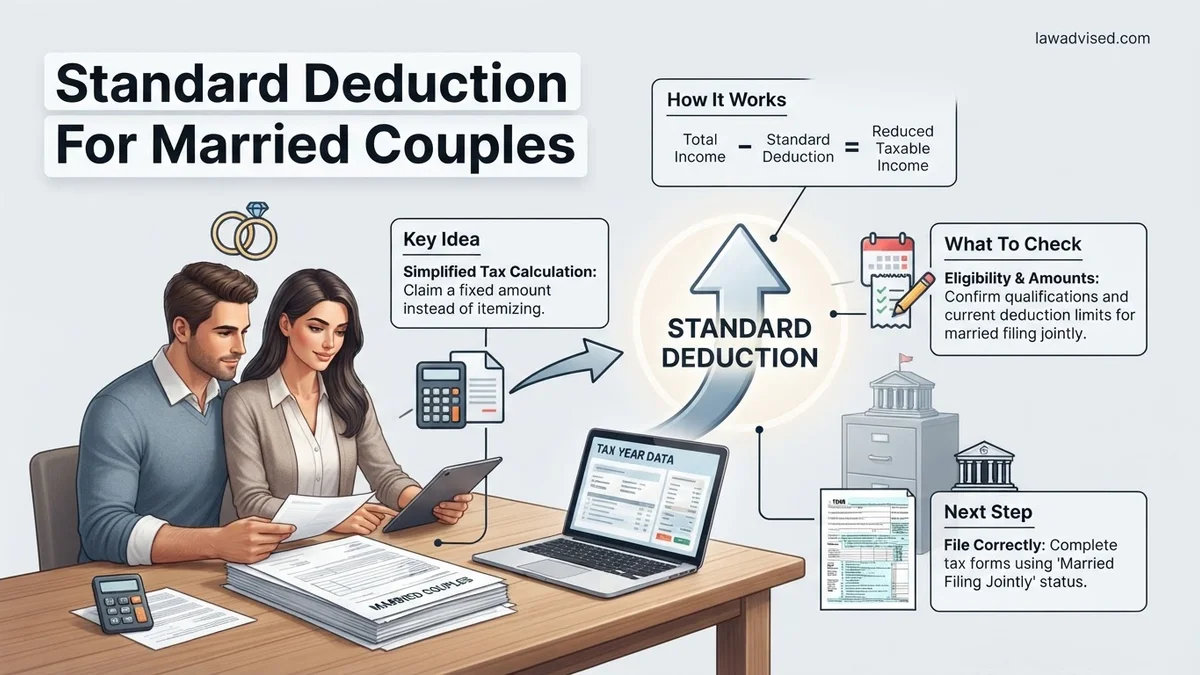
Navigating taxes requires knowing the exact standard deduction for married couples to reduce your taxable income effectively. For the 2026 tax year, married filing jointly status provides a specific flat deduction amount that lowers your federal tax liability without itemizing. Reviewing these thresholds ensures you maximize your tax savings and choose the right filing status.
For the 2026 tax year, the standard deduction for married couples filing jointly is $30,000. If you are a married couple using the married filing separately status, your individual standard deduction is $15,000. These amounts directly reduce your taxable income before you calculate what you owe the IRS.
Knowing these exact figures helps you decide whether to take the standard deduction or itemize your deductions. For most married taxpayers, the generous standard deduction simplifies tax season and results in a lower tax liability without the need to track every single receipt.
Key Takeaways
- Married filing jointly couples receive the highest base standard deduction amount.
- Spouses age 65 or older qualify for an additional standard deduction amount.
- Blind taxpayers receive an extra per-person addition to the standard deduction.
- Compare itemized deductions against the standard deduction to lower liability.
- Married filing separately claimants receive half the joint standard deduction amount.
What Causes Confusion About the Standard Deduction for Married Couples
Filing taxes as a married couple introduces unique rules that frequently trip up even organized taxpayers. The transition from single filing statuses to joint or separate returns creates multiple decision points that directly impact your final tax bill.
Filing Jointly Versus Filing Separately
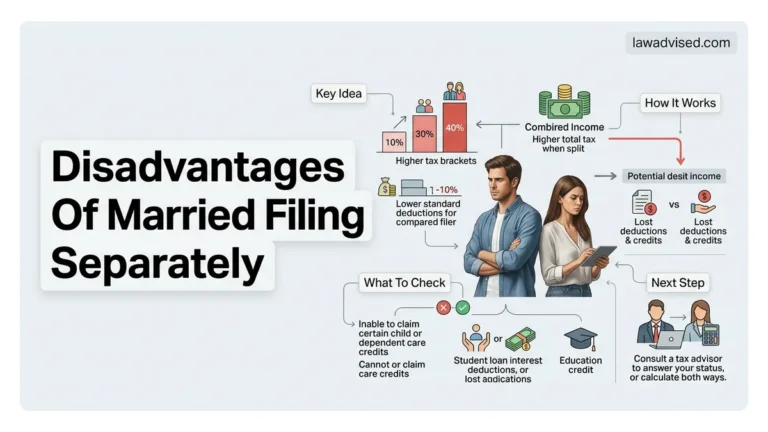
The biggest point of confusion involves choosing between married filing jointly and married filing separately. When you file jointly, you combine your incomes and claim a single, larger standard deduction. When you file separately, each spouse claims half of the joint standard deduction amount, which totals the same $30,000 combined, but rules apply strictly to each person’s individual return.
The Impact of Dependent Children and Family Changes
Many couples mistakenly believe that having children automatically increases their standard deduction amount. In 2026, the standard deduction remains a fixed dollar amount regardless of your family size. Instead of increasing your standard deduction, dependents provide separate tax benefits like the Child Tax Credit.
- Filing status dictates your exact baseline standard deduction amount for 2026.
- Standard deductions do not scale upward based on the number of children you have.
- State tax rules for married deductions often differ entirely from federal guidelines.
How to Calculate Your Standard Deduction Step-by-Step
Calculating your total standard deduction for the 2026 tax year involves more than just looking up the base filing status amount. If you or your spouse meet specific age or vision criteria, you must add additional amounts to your baseline figure.
Step 1: Determine Your Base Filing Status Amount
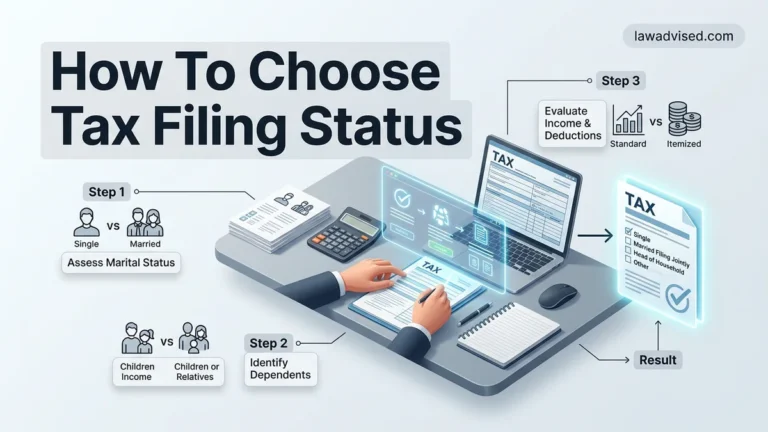
Start by identifying your correct filing status for the 2026 tax year. If you choose married filing jointly, your starting baseline is $30,000. If you choose married filing separately, your baseline is $15,000. Write down this initial figure as the foundation of your calculation.
Step 2: Add Extra Amounts for Age and Vision
Next, check if either you or your spouse qualify for the additional standard deduction. For 2026, if a spouse is age 65 or older by the end of the tax year, or is legally blind, they qualify for an extra standard deduction amount of $1,600 per condition if married filing jointly.
- Identify if you or your spouse turned 65 by December 31, 2026.
- Determine if either spouse meets the IRS definition of legal blindness.
- Add $1,600 for each applicable qualification to your base standard deduction total.
For example, if both spouses are over 65 filing jointly, you add $3,200 ($1,600 times two) to your $30,000 base, making your total standard deduction $33,200.
What If Your Itemized Deductions Exceed the Standard Amount
Most married couples filing jointly choose the standard deduction for its simplicity and immediate tax relief. However, certain financial circumstances can push your total deductible expenses well past the 2026 standard threshold. When your cumulative eligible expenses surpass the standard amount, itemizing on Schedule A becomes the financially optimal strategy.
Evaluating Major Itemized Categories
To determine if you should forgo the standard deduction, you must carefully aggregate your potential deductions across primary IRS-approved categories. Mortgage interest on loans up to $750,000, state and local taxes (SALT) capped at $10,000, and charitable contributions form the bulk of most itemized returns. Medical and dental expenses that exceed 7.5 percent of your adjusted gross income can also tip the scales in favor of itemizing.
Calculating Your Break-Even Point
Financial planners recommend running dual tax calculations before finalizing your 2026 return. Compare the exact dollar amount of your standard deduction against your itemized total.
- Gather all annual receipts for mortgage interest, property taxes, state income taxes, and charitable donations.
- Calculate 7.5 percent of your projected adjusted gross income to establish your medical expense threshold.
- Sum all qualified categories and compare the final figure directly to the married filing jointly standard deduction for 2026.
- Choose the filing method that yields the highest total deduction to minimize your overall tax liability.
What If It Still Doesn’t Work?
If complex financial situations, dual-state residency, or recent tax law changes leave you uncertain about whether to take the standard deduction or itemize, standard software tools may fall short. When your tax strategy involves high-value assets or business integration, targeted professional intervention is required to avoid costly filing errors.
- Consult a certified public accountant (CPA) or a federally authorized enrolled agent to review your 2026 tax documents. Professional tax preparation fees for married filing jointly returns typically range from $300 to $850 depending on complexity.
- Utilize the IRS Interactive Tax Assistant tool on the official government website to verify specific deduction eligibility criteria for your household.
- Review your employer-sponsored pre-tax contributions, such as health savings accounts and retirement plans, which interact directly with your standard deduction calculations.
- Request a formal transcript from the IRS to ensure your prior-year itemized carryovers, such as excess charitable contributions, are accurately accounted for in the current tax year.
Conclusion
Navigating the standard deduction for married couples requires careful comparison against potential itemized expenses to secure the lowest possible tax liability for 2026. Evaluating major financial milestones like homeownership and charitable giving ensures you never leave money on the table during tax season. According to verified research and expert financial sources, proactive year-round tax planning remains the most effective method for optimizing your household deductions. Take your next actionable step today by gathering your preliminary income and expense records to run a side-by-side deduction comparison before filing.
❓ Frequently Asked Questions
How does the standard deduction for married couples filing jointly work?
The standard deduction for married couples filing jointly is a specific dollar amount that subtracts directly from your adjusted gross income, lowering your overall taxable income without requiring itemized receipts.
What are the additional standard deduction rules for age and blindness?
If either spouse is age 65 or older, or legally blind by the end of the tax year, they qualify for an additional standard deduction amount. This extra amount increases per qualifying condition and per qualifying spouse.
What happens if one spouse itemizes and the other takes the standard deduction?
Under IRS rules, if married couples file separately, both must either take the standard deduction or both must itemize. One spouse cannot take the standard deduction while the other itemizes.
How do inflation adjustments affect the standard deduction each year?
The IRS adjusts standard deduction thresholds annually to account for inflation, helping to prevent bracket creep and ensuring real purchasing power is maintained.
Are dependents able to claim the standard deduction if their parents claim them?
Dependents who are claimed on a married couple’s tax return are subject to a limited standard deduction, which is calculated based on their earned and unearned income.
How do I report my standard deduction on my federal tax return?
You report your chosen filing status and corresponding standard deduction directly on Form 1040, which automatically applies the correct dollar threshold to your income.

Ismail Hossain is the founder of Law Advised. He is an Divorce, Separation, marriage lawyer. Follow him.