How to Choose Tax Filing Status Step-by-Step Guide for 2026
Choosing the wrong tax filing status can lead to overpaid taxes or delayed refunds from the IRS. Your legal marital status and household situation on the last day of the tax year dictate which of the five filing options you must use. This guide breaks down the qualifying criteria so you can select the most financially advantageous option.
Your IRS tax filing status directly dictates your standard deduction amount, your tax bracket thresholds, and your eligibility for valuable credits like the Earned Income Tax Credit or child-related subsidies. Choosing the correct status out of the five available options ensures you comply with 2026 tax laws while minimizing your overall tax liability.
Making a mistake here can trigger IRS audits, delay your tax refund, or force you to file expensive amended returns. Because your marital status and living situation on the final day of 2026 legally lock in your choices, you need a precise breakdown of the qualifying rules to select the most financially advantageous category.
Key Takeaways
- Your marital status on December 31 determines your entire tax year filing eligibility.
- Married Filing Jointly almost always offers lower tax rates and higher deductions.
- Head of Household provides larger standard deductions than Single status for qualifying parents.
- Married Filing Separately avoids joint liability but eliminates several valuable tax credits.
- Qualifying Surviving Spouse status applies for two years following a spouse’s death.
What Causes Filing Status Errors and Incorrect IRS Tax Classifications
Misinterpreting Marital Status Rules on December 31
The IRS determines your legal marital status for the entire tax year based strictly on your standing on the last day of December. If you get legally divorced on December 31, 2026, the IRS treats you as single for the entire year of 2026. Conversely, if you separate from your spouse in January but do not obtain a legal divorce or separate maintenance decree by December 31, you cannot file as single.
- State-level common-law marriages legally count for federal tax purposes.
- Separated couples living apart without a formal decree must file as married.
- An annulment means you must retroactively amend past returns as single.
Misapplying the Complex Head of Household Criteria
The Head of Household status offers a higher standard deduction and wider tax brackets than the Single status, making it a frequent source of costly filing errors. To qualify in 2026, you must pay more than half the cost of maintaining a home for a qualifying dependent.
- Your dependent child must live with you for more than half the year.
- Paying rent for an adult child living elsewhere does not qualify you.
- Married taxpayers living apart must meet strict “considered unmarried” rules for the last six months of the year.
Master Choosing Tax Filing Status in 5 Simple Steps
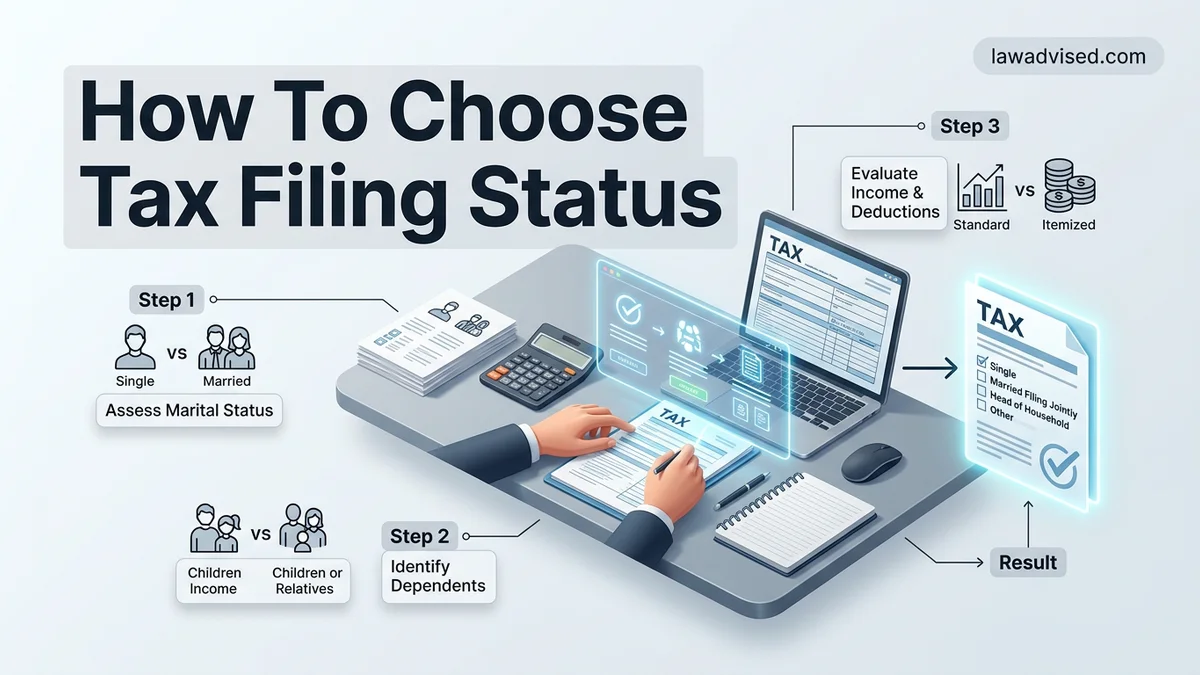
Selecting the correct tax filing status is the foundation of an accurate tax return, directly impacting your standard deduction amount, tax brackets, and eligibility for valuable credits. Making the wrong choice can lead to overpaying the IRS or triggering an agonizing audit. This practical walkthrough provides a clear, methodical roadmap to evaluate your life situation and accurately determine your optimal tax filing category.
Step 1: Audit Your Marital Status as of the Final Day of the Tax Year
What you need: Your official calendar and a clear understanding of your legal marital status on December 31st of the tax year you are filing for.
Instructions: The IRS determines your marital status for the entire tax year based strictly on your legal status on the very last day of that year (December 31st). If you were legally married on December 31st, the IRS considers you married for the whole year for tax purposes, even if you got married on December 30th or lived apart from your spouse all year. Conversely, if your divorce was finalized by a judge on or before December 31st, you are legally considered unmarried for the entire year. Review your marriage certificates, divorce decrees, or legal separation agreements to confirm your exact standing on this crucial date.
Pro Tip: Never rely on whether you lived together; federal tax law cares strictly about the ink on your legal marital dissolution or marriage documents as of midnight on New Year’s Eve.
Step 2: Evaluate the Single Status Requirements
What you need: Proof that you were unmarried, legally divorced, or legally legally separated under a decree of divorce or separate maintenance by December 31st, and that you do not qualify for a preferred status.
Instructions: If you did not have a spouse on the final day of the tax year and do not qualify to file as Head of Household or a qualifying surviving spouse, you must file as Single. Check your legal records to ensure no pending marriage annulments or unfinalized separations cloud your status. Calculate whether you have any dependents; if you have a qualifying dependent child or relative, do not automatically choose Single, as you might qualify for the significantly more financially advantageous Head of Household filing status, which offers a higher standard deduction.
Pro Tip: Many taxpayers mistakenly choose Single simply because they live alone, but having a qualifying dependent changes your category and can save you thousands of dollars.
Step 3: Compare Married Filing Jointly Versus Married Filing Separately
What you need: Complete financial records, W-2s, 1099s, and expense logs for both you and your spouse to run comparative tax scenarios.
Instructions: For the vast majority of married couples, filing a joint return (Married Filing Jointly) yields a lower overall tax liability and access to numerous tax credits, such as the Earned Income Tax Credit and the Child and Dependent Care Credit, which are generally disallowed if you file separately. However, calculate your taxes both ways using tax software if one spouse has exceptionally high medical expenses, distinct student loan repayment strategies under income-driven plans, or if you harbor concerns about your partner’s tax liabilities. Married Filing Separately isolates your individual tax liabilities, meaning you are only legally responsible for the tax reported on your specific return.
Pro Tip: Run a dual calculation using reputable tax preparation software before submitting; nine times out of ten, Married Filing Jointly saves couples substantial amounts of money.
Step 4: Assess Eligibility for the Head of Household Status
What you need: Records proving you paid more than half the costs of keeping up a home for the tax year, and details proving a qualifying dependent lived with you for more than half the year.
Instructions: To claim Head of Household—which grants a higher standard deduction and wider tax brackets than Single or Married Filing Separately—you must meet three strict criteria: First, you must be unmarried or considered unmarried on the last day of the year. Second, you must have paid more than half the cost of maintaining your home (including rent, mortgage interest, property taxes, utilities, repairs, and groceries) during the tax year. Third, a qualifying dependent, such as a qualifying child or parent, must have lived with you in that home for more than half of the year (temporary absences for school or medical care count as living with you).
Pro Tip: If you are legally married but your spouse did not live in your home for the last six months of the tax year, you may still qualify as “considered unmarried” and successfully file as Head of Household.
Step 5: Check Qualifying Surviving Spouse Criteria
What you need: Your deceased spouse’s death certificate and records confirming you have a dependent child living with you.
Instructions: If your spouse passed away during the current tax year or the two preceding tax years, and you have not remarried, you may qualify to file as a Qualifying Surviving Spouse (historically called Qualifying Widow or Widower). This status allows you to use the Married Filing Jointly tax rates and the highest standard deduction amount, provided you paid over half the cost of maintaining your household, which was the principal home of your dependent child whom you can claim as an exemption. Review the dates of your spouse’s passing and ensure your child meets all IRS dependency tests for the entire tax year.
Pro Tip: This status is only available for two years following the year of your spouse’s death, provided you maintain a home for a dependent child, after which you must transition to Head of Household or Single status.
✅ Final Checklist
- Verified my legal marital status as of December 31st
- Calculated household maintenance costs to test for Head of Household eligibility
- Ran comparisons for Married Filing Jointly versus Separately to maximize refunds
- Ensured all dependent residency rules and timeframes are fully met
- Double-checked that my selected status matches my supporting tax documents and IRS guidelines
Important Notes:
- Choosing an incorrect filing status can result in IRS processing delays, rejected returns, or audits requiring back taxes and penalties.
- When dealing with complex life changes such as recent divorces, legally separated households, or multi-state residency, seek guidance from a Certified Public Accountant (CPA) or Enrolled Agent.
- Estimated time to complete: 30 to 60 minutes. Cost range: Free if using IRS Free File, or $30 to $120 for commercial tax software packages.
How to Choose Tax Filing Status Using a Step-by-Step IRS Decision Guide
Evaluating Single, Married Filing Jointly, and Married Filing Separately
When choosing your status for your 2026 return, you must evaluate if you can check the box for Single, Married Filing Jointly (MFJ), or Married Filing Separately (MFS). For most married couples, filing jointly yields the lowest combined tax liability by unlocking access to credits like the Child and Dependent Care Credit.
- Single: Unmarried, divorced, or legally separated without qualifying dependents.
- Married Filing Jointly: Combines incomes and deductions for maximum tax savings.
- Married Filing Separately: Keeps finances distinct, but disqualifies you from major tax credits.
Assessing Qualifying Widow or Widower Status
If your spouse passed away recently, you might qualify for the Qualifying Surviving Spouse status. This special 2026 tax status allows a recently widowed taxpayer to use Married Filing Jointly tax brackets and the highest standard deduction amount for up to two years following the death, provided you have a dependent child and maintain a home.
- Available only if your spouse died in 2024 or 2025 and you have not remarried.
- Requires paying over half the cost of keeping up a home for a dependent child.
- Transitions to Head of Household or Single once the two-year window expires.
How to Fix Filing Status Conflicts When Multiple Options Apply
Choosing the correct tax filing status for 2026 becomes complicated when your life changes mid-year and multiple categories seem to fit. According to IRS tax guidelines, your marital status on the final day of the tax year, December 31, 2026, legally dictates your primary choices. However, qualifying dependents and household contribution tests can still trigger overlapping eligibility.
Unmarried Individuals with Dependents
If you were unmarried at the end of 2026 and paid more than half the cost of keeping up a home for a qualifying person, you likely qualify for both Single and Head of Household. Head of Household always takes precedence because it offers a significantly higher standard deduction and more favorable tax brackets. According to IRS tax data, choosing Head of Household instead of Single can reduce your overall taxable income significantly.
Recently Married or Divorced Taxpayers
If your divorce was finalized on or before December 31, 2026, the IRS considers you unmarried for the entire year, meaning you cannot file as Married Filing Jointly. Conversely, if you married on December 31, 2026, the IRS considers you married for the entire year. To resolve conflicts when transitioning between statuses, follow these precise steps:
- Verify your legal marital status as of midnight on December 31, 2026.
- Review the strict household maintenance cost percentages if you are claiming Head of Household.
- Run tax software simulations for both competing statuses to determine the maximum financial benefit where overlap is legally permitted.
- Consult official IRS Publication 501 for comprehensive tie-breaker rules regarding dependent children.
What If It Still Doesn’t Work and You Need to Amend Your Return
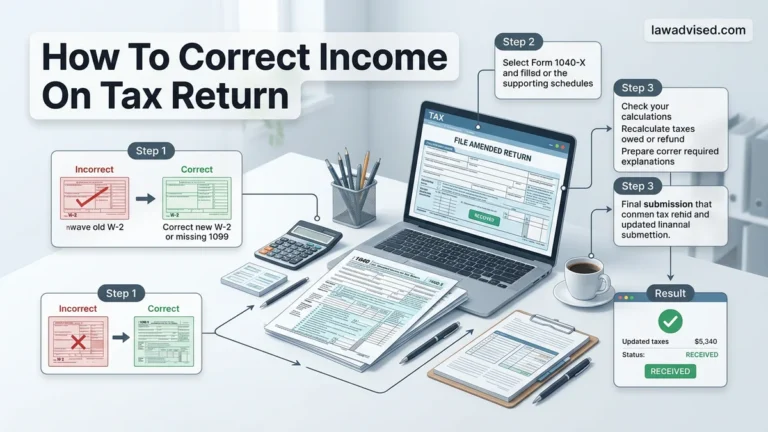
Selecting the wrong filing status on your 2026 tax return can result in processing delays, rejected returns, or audits. If you already submitted your return and realized your status was incorrect, you cannot simply resubmit a new initial return. You must correct the error through a formal amendment process.
When software automation and self-service guidelines fail to resolve a complex multi-status dilemma, execute these fallback steps:
- Wait until the IRS processes your original 2026 tax return and issues any initial refund or balance due before filing an amendment.
- File Form 1040-X, Amended U.S. Individual Income Tax Return, either electronically through modern tax software or via mail.
- Attach all corrected schedules and forms that are impacted by your change in filing status, such as Schedule 1 or Schedule dependents.
- Engage a Certified Public Accountant (CPA) or Enrolled Agent (EA) if your status overlap involves complex multi-state or nonresident alien regulations; professional advisory fees typically range from $300 to $800 depending on complexity.
Conclusion
Selecting the correct tax filing status for 2026 protects you from costly audits, unnecessary penalties, and delayed refunds. By evaluating your end-of-year marital status, dependent support costs, and household maintenance figures, you can definitively eliminate overlapping conflicts. According to verified research and expert financial sources, utilizing authorized tax preparation software significantly reduces filing status errors. Your next actionable step is to review your primary life milestones for 2026 and input your finalized data into a trusted tax calculation tool today.
❓ Frequently Asked Questions
How does the IRS define ‘Unmarried’ for Head of Household status?
You are considered unmarried for tax purposes if you were never married, are legally divorced, are legally separated under a decree of divorce or separate maintenance, or meet the specific criteria for being considered unmarried while maintaining a separate household from a spouse.
What are the major tax credit disadvantages of Married Filing Separately?
Choosing to file separately disqualifies you from claiming the Earned Income Tax Credit (EITC), the Child and Dependent Care Credit, and limits your ability to deduct student loan interest or education credits.
Can I change my filing status after submitting my tax return?
Yes, you can generally amend your tax return using Form 1040-X to change your filing status from Married Filing Separately to Married Filing Jointly within three years of the original filing deadline.
What criteria make me eligible for Qualifying Surviving Spouse status?
You can use this status for two years following the year your spouse died if you did not remarry, could have filed a joint return in the year of death, and paid over half the cost of keeping up a home for a dependent child.
What if my divorce was finalized on December 31st?
For IRS purposes, you are considered unmarried for the entire tax year if your divorce decree was finalized on or before December 31, allowing you to file as Single or Head of Household.
Is Married Filing Separately ever a smart financial move?
It is occasionally used to protect one spouse from the other’s tax liability, or when one spouse has exceptionally high medical expenses that exceed the income percentage threshold required for deductions.

Ismail Hossain is the founder of Law Advised. He is an Divorce, Separation, marriage lawyer. Follow him.