Married Filing Jointly W4 Explained Step-by-Step Guide 2026
Filling out Form W-4 as Married Filing Jointly can easily lead to under-withholding if both spouses work and fail to account for dual incomes. This guide walks you through the Step 2 multiple jobs adjustments to ensure your household withholds the correct amount of tax.
Filling out IRS Form W-4 as a married couple requires careful attention, especially if both you and your spouse earn an income. The primary challenge of the Married Filing Jointly status on the 2026 W-4 is preventing under-withholding, which frequently happens when two working spouses split the standard deduction and tax brackets equally on paper.
Getting your withholding right stops you from facing a surprise tax bill or owing penalties when you file your 2026 tax return. This guide breaks down exactly how to navigate the trickiest parts of the form so your paycheck accurately reflects your actual household tax liability.
Key Takeaways
- Check box 2(c) if both spouses earn relatively similar incomes to balance standard deductions.
- Use the IRS Tax Withholding Estimator for precise calculations on complex dual incomes.
- Step 3 allows you to claim child tax credits to immediately reduce tax withholding.
- Submit a new W-4 whenever your household income, jobs, or family size changes.
- Failing to account for dual incomes on Step 2 often results in a surprise tax bill.

Why Dual-Income Couples Owe Taxes Under Married Filing Jointly W-4 Settings
The Mechanics of the Married Standard Deduction
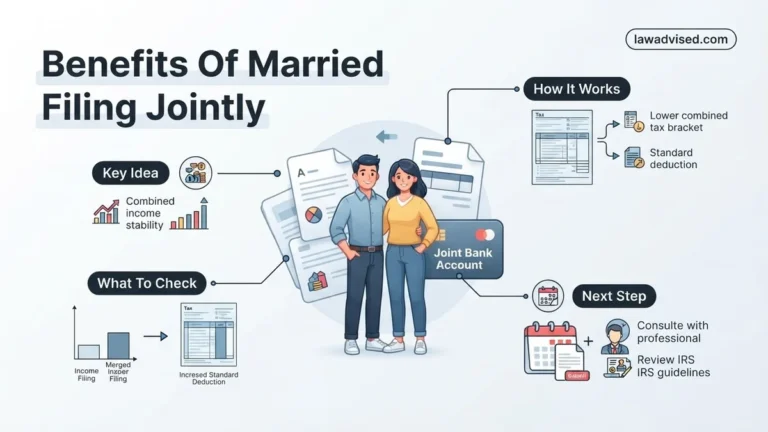
When you check Married Filing Jointly on Step 1 of the W-4, the IRS automatically applies the full joint standard deduction to that specific job. If your spouse does the exact same thing on their W-4 at their job, your employers both assume they are the only source of income utilizing that large standard deduction.
- Your employer shields a large portion of your income from federal taxes.
- Your spouse’s employer shields an identical portion of their income.
- Combined, your withholding calculations act as if your household has double the standard deduction it actually gets.
Pushing Into Higher Tax Brackets
In addition to the standard deduction overlap, dual incomes stack on top of each other inside your tax brackets. If Job A puts you at the top of the 12 percent bracket, Job B starts adding income right into the 22 percent or 24 percent bracket. If neither W-4 accounts for the other job, too little tax gets withheld from each paycheck, leading to a large balance due in April 2027.
Step-by-Step Guide to Filling Out the 2026 Married Filing Jointly W-4
Step 1 and Step 2: Personal Information and Multiple Jobs
Start by filling out your personal details in Step 1, making sure to select Married Filing Jointly. If only one spouse works, you can skip straight to Step 3. If both of you work, Step 2 is the most critical part of the entire form.
You have three distinct ways to handle Step 2 for dual-income households:
- Option A (Most Accurate): Use the IRS Tax Withholding Estimator online. It takes about 10 minutes and spits out exact dollar amounts to put on Step 4.
- Option B (The Worksheet): Complete the Multiple Jobs Worksheet on page 3 of the W-4 form and put the resulting extra withholding amount on Step 4(c).
- Option C (The Simple Checkbox): Check the box in Step 2(c) on both your W-4 and your spouse’s W-4. This splits standard deductions and tax brackets evenly between two jobs, working best when both spouses earn roughly similar salaries.
Steps 3, 4, and 5: Dependents, Additional Adjustments, and Signatures
Once you handle Step 2, move through the rest of the form to dial in your exact financial picture for 2026.
- Step 3 (Claim Dependents): Multiply your qualifying children under age 17 by $2,000, and other dependents by $500, then enter the total. To avoid under-withholding, only one spouse should claim these dependent credits on their W-4, ideally the higher-earning spouse.
- Step 4(a) (Other Income): Enter any anticipated side-hustle income, dividends, or retirement distributions that do not have taxes withheld automatically.
- Step 4(b) (Deductions): If you plan to itemize deductions rather than take the standard deduction, or claim adjustments like student loan interest, calculate those here to lower your withholding.
- Step 4(c) (Extra Withholding): Enter any extra dollar amount you want withheld per pay period as an added buffer against a surprise tax bill.
- Step 5 (Sign and Date): Remember that an unsigned W-4 is invalid, and both spouses must submit these forms to their respective payroll departments.
How to Handle Step 2 Multiple Jobs When One Spouse Earns Significantly More
When one spouse earns significantly more than the other, checking the box in Step 2(c) can result in severe over-withholding. The standard IRS Form W-4 algorithm assumes a roughly 50/50 split of income within a joint tax bracket. According to tax policy studies from the Tax Foundation, dual-earner couples with disparate salaries who use the checkbox method often have thousands of dollars unnecessarily withheld from each paycheck.
Using the Tax Withholding Estimator for Uneven Incomes
To avoid massive over-withholding while still preventing a tax bill in 2026, couples with uneven incomes should bypass Step 2(c) entirely. Instead, use the official IRS Tax Withholding Estimator online tool. This approach yields precise withholding adjustments tailored to exact salary figures.
- Gather recent pay stubs for both spouses detailing year-to-date earnings and federal income tax withheld.
- Navigate to the official IRS Tax Withholding Estimator on IRS.gov to input specific 2026 projected incomes.
- Enter exact deduction amounts, including projected child tax credits and standard deduction preferences for the Married Filing Jointly status.
- Follow the final calculator prompt to distribute the recommended additional withholding amount onto just one spouse’s Form W-4 in Step 4(a) or Step 4(c).
Allocating Extra Withholding to the Higher Earner
A common strategy for asymmetric earners is putting the additional withholding amount directly on the higher earner’s W-4. The lower-earning spouse leaves Step 2 unchecked and fills out only Steps 1 and 4(b) for deductions. Financial advisors note that concentrating withholding adjustments on the primary income source minimizes administrative payroll errors at smaller employers.
What If It Still Doesn’t Work?
Even after carefully completing Form W-4 for 2026, paycheck fluctuations or unexpected bonuses can throw off your tax calculations. If your year-end tax liability still misses the mark, take immediate corrective action.
- Review mid-year pay stubs against the IRS Tax Withholding Estimator every six months, especially after receiving a raise or bonus.
- Submit an updated Form W-4 immediately if your tax situation changes due to the arrival of a child or a change in deductible expenses.
- Increase the extra withholding amount in Step 4(c) by an incremental $50 to $100 per pay period to close small gaps.
- Consult a Certified Public Accountant (CPA) or Enrolled Agent (EA) for a comprehensive mid-year tax projection if your self-employment or investment income fluctuates wildly. Professional tax planning services typically cost between $250 and $600 annually depending on complexity.
Conclusion
Mastering the Married Filing Jointly W-4 for 2026 prevents unexpected tax bills and eliminates interest-free loans to the government through over-withholding. By carefully navigating Step 2 and accounting for dual-income disparities, you ensure your monthly cash flow remains accurate. According to verified research and expert sources from the IRS and the American Institute of Certified Public Accountants (AICPA), reviewing your withholding annually is the single most effective way to optimize household cash flow. Your actionable next step for today is to pull your latest pay stubs, open the IRS Tax Withholding Estimator, and submit a corrected Form W-4 to your payroll department if your current trajectory looks misaligned.
❓ Frequently Asked Questions
What is the best way to handle Step 2 on a married filing jointly W-4?
The best method depends on your income split. If both spouses earn similar salaries, checking box 2(c) on both forms is the simplest approach. If one spouse earns significantly more, use the online IRS Tax Withholding Estimator or the Multiple Jobs Worksheet.
What happens if we both check box 2(c) on our W-4s?
Checking box 2(c) splits the standard deduction and tax brackets evenly between both jobs, ensuring your employers withhold enough tax to cover your combined bracket without adding extra dollar amounts.
How does the IRS Tax Withholding Estimator work for married couples?
The online tool requires your most recent pay stubs, expected annual incomes, and current deduction details. It then generates specific, customized entries for Step 4 of your W-4s to ensure you break even at tax time.
Should only one spouse claim all the dependents in Step 3?
Yes, it is generally much easier and more accurate for the higher-earning spouse to claim all dependents in Step 3 while the lower-earning spouse leaves it blank.
What if one spouse does not work outside the home?
If only one spouse works and files jointly, you simply select Married Filing Jointly in Step 1, skip Step 2 entirely, and complete Steps 3 and 4 based on your family size and deductions.
How often should married couples update their W-4 forms?
Couples should review their W-4 withholding annually at the start of the year, or immediately following major life events such as a job change, a raise, the birth of a child, or buying a home.

Ismail Hossain is the founder of Law Advised. He is an Divorce, Separation, marriage lawyer. Follow him.