Self Employed Tax Deductions Expert Step-by-Step Guide 2026
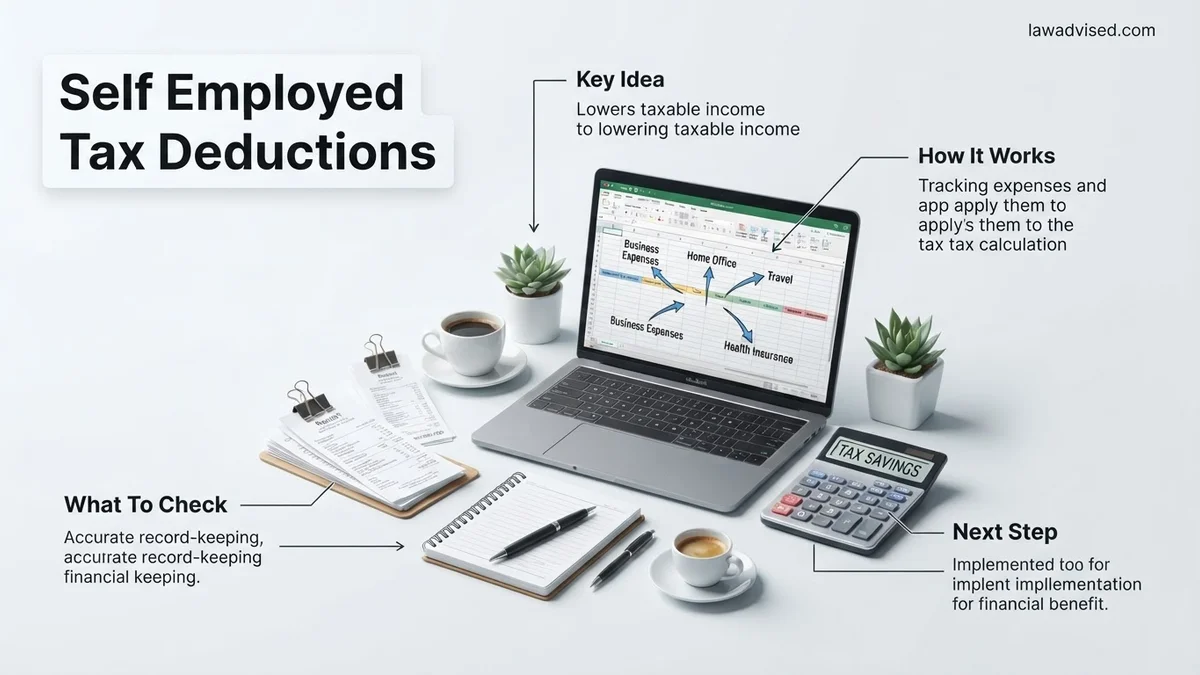
Lower your taxable income by legally claiming business write-offs using strict IRS guidelines. Self-employed tax deductions directly reduce your Schedule C net income, saving you thousands on your annual tax bill. Proper record-keeping and receipt tracking are essential to protect these deductions during an audit.
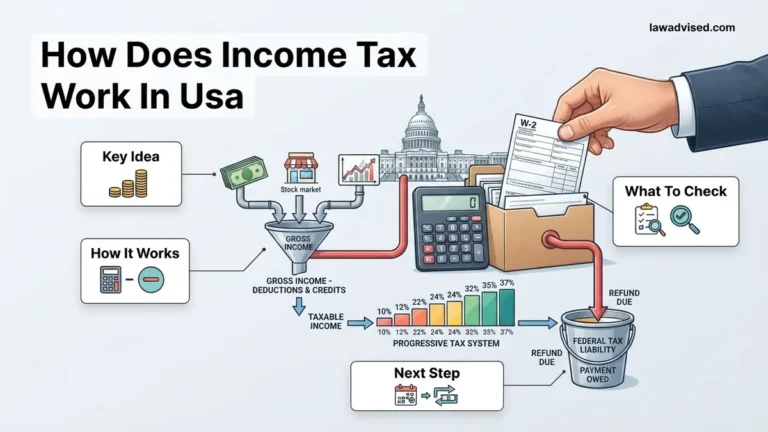
As a self-employed individual in 2026, you lower your taxable income by legally writing off standard business expenses like home offices, vehicle mileage, health insurance premiums, software subscriptions, and the Qualified Business Income (QBI) deduction. Every dollar you claim as a legitimate write-off directly reduces the amount of income subject to income tax and self-employment tax.
Navigating these write-offs correctly protects you from IRS audits while keeping more cash in your business account. By tracking your expenses systematically throughout 2026, you can avoid a massive, painful tax bill and ensure you only pay what you legally owe.
Key Takeaways
- Write off ordinary and necessary business expenses to lower Schedule C net income.
- Choose between the standard mileage rate or actual vehicle expenses.
- Qualify for the home office deduction using the simplified or regular method.
- Deduct 100% of health insurance premiums if you meet specific self-employment criteria.
- Track all business-related software, subscriptions, and professional development costs.
What Causes High Tax Bills for Self-Employed Individuals
Many freelancers and independent contractors face brutal tax bills because they fail to capture deductions correctly. Without a proactive strategy, you end up paying income tax plus the full 15.3% self-employment tax on every single dollar your business earns.
Failing to Track Everyday Business Expenses
If you do not save your receipts or log your business purchases, you cannot claim them. Small expenses add up quickly over the course of the year. When you mix personal and business spending on the same accounts, finding those write-offs at tax time becomes nearly impossible.
- Forgetting to log software tools, hosting, and domain renewals.
- Failing to record office supplies bought during routine grocery store runs.
- Absorbing the full cost of professional development, books, and online courses without writing them off.
Ignoring the Self-Employment Tax Impact
W-2 employees only pay half of their FICA taxes, but self-employed workers pay both the employer and employee portions. This extra 15.3% hits hard if your deductions are not optimized. Ignoring deductions means your adjusted gross income stays artificially high, inflating both your federal and state tax obligations.
Master Self-Employed Tax Deductions in 7 Simple Steps
Navigating taxes as a freelancer, independent contractor, or small business owner can feel overwhelming, but claiming the right deductions is the secret to keeping more of your hard-earned money. Every legitimate business expense you write off directly lowers your taxable income, reducing your overall tax liability. This practical walkthrough will guide you through the process of identifying, tracking, and claiming every deduction you deserve while staying completely compliant with tax authorities.
Step 1: Establish a Dedicated Business Bank Account
What you need: An Employer Identification Number (EIN) or Social Security Number, business formation documents, and an initial deposit for a new checking account.
Instructions: Before you can effectively deduct business expenses, you must separate your personal finances from your business operations. Open a dedicated business checking account and get a business credit card. Route all business income into this account and pay for all business-related expenses exclusively through these financial channels. This clear segregation creates an unquestionable audit trail, prevents personal transactions from muddying your accounting, and ensures you never accidentally overlook a deductible expense during tax season.
Pro Tip: Never mix personal and business purchases on the same card. If you accidentally use a personal card for a business expense, reimburse yourself immediately from the business account with a clear memo.
Step 2: Master the Home Office Deduction
What you need: A tape measure, square footage calculations of your home and office space, and utility bills for the past year.
Instructions: If you use a specific area of your home exclusively and regularly for conducting business, you qualify for the home office deduction. You can choose between the simplified method (a standard $5 per square foot up to 300 square feet) or the regular method. The regular method requires calculating the exact percentage of your home used for business, then deducting that same percentage of your rent or mortgage interest, utilities, homeowners insurance, and general home repairs.
Pro Tip: The space must be used exclusively for business. A desk in the corner of your bedroom where you also sleep or watch Netflix will not qualify if the IRS audits your return.
Step 3: Track Vehicle and Travel Expenses
What you need: A mileage tracking mobile app or a physical mileage logbook, and maintenance or fuel receipts.
Instructions: When driving for business—such as visiting clients, picking up supplies, or heading to industry events—you can deduct your transportation costs. You have two choices: the standard mileage rate (multiplying your business miles driven by the IRS standard rate) or the actual expense method (tracking gas, oil, repairs, insurance, and depreciation based on business-use percentage). Maintain a contemporaneous log that records the date, mileage, destination, and business purpose of every single trip.
Pro Tip: Commuting from your home to your primary regular office is never deductible. However, trips from your home office to a client site or temporary workspace always count as business miles.
Step 4: Claim Technology, Software, and Equipment Write-Offs
What you need: Receipts and invoices for computers, software subscriptions, smartphones, and office furniture purchased during the tax year.
Instructions: The tools you use to run your business are fully deductible. This includes your laptop, monitor, printer, specialized software subscriptions (like Adobe Creative Cloud, QuickBooks, or Zoom), website hosting fees, and even your business smartphone plan. Under Section 179 of the tax code, you can often deduct the full purchase price of qualifying equipment and software bought and placed in service during the tax year, rather than depreciating it over several years.
Pro Tip: If you use a device or internet connection for both personal and business use, you must calculate the business-use percentage and only deduct that specific portion.
Step 5: Write Off Ordinary and Necessary Marketing Expenses
What you need: Receipts for digital ads, domain names, business cards, networking event fees, and promotional materials.
Instructions: Growing your business requires financial investment, and the IRS rewards this by making marketing and promotional costs 100% deductible. Gather all receipts for social media advertising (Facebook, LinkedIn, Google Ads), search engine optimization services, email marketing software, graphic design for your logo, business card printing, and sponsorships. Even fees paid to maintain a professional portfolio website or portfolio domain registration qualify.
Pro Tip: Keep screenshots of digital marketing campaigns alongside your digital payment receipts to provide robust proof of the business purpose if questioned.
Step 6: Deduct Professional Services and Continuing Education
What you need: Invoices from accountants, lawyers, coaches, and receipts for online courses, industry books, or conferences.
Instructions: Expenses incurred to maintain or improve your professional skills are completely deductible. This includes hiring a CPA to file your taxes, paying legal fees for contract reviews, or working with a business coach. Furthermore, invest in your ongoing expertise by writing off online courses, certifications, industry workshops, webinars, and trade publications that help you stay sharp in your specific field.
Pro Tip: Education that qualifies you for a completely new trade or profession is not deductible, but education that upgrades your skills in your current business is fully deductible.
Step 7: Calculate Health Insurance and Self-Employed Retirement Contributions
What you need: Annual statements for health insurance premiums paid and contributions made to a SEP-IRA, Solo 401(k), or SIMPLE IRA.
Instructions: As a self-employed individual, you can deduct 100% of the health, dental, and qualifying long-term care insurance premiums you pay for yourself, your spouse, and your dependents, provided you weren’t eligible for an employer-subsidized plan. Additionally, contributing to a self-employed retirement plan like a SEP-IRA or Solo 401(k) lowers your adjusted gross income directly while building your future wealth.
Pro Tip: The self-employed health insurance deduction is an “adjustment to income,” meaning you can claim it even if you take the standard deduction instead of itemizing.
✅ Final Checklist
- All business transactions are routed exclusively through a dedicated business bank account.
- Home office calculations are accurately documented with square footage and exclusive-use verification.
- Vehicle mileage logs include dates, destinations, and verified business purposes.
- Receipts for all equipment, software, marketing, and education expenses are safely stored in digital folders.
- Retirement contributions and health insurance premiums have been totaled with official annual statements.
Important Notes:
- Always keep business receipts and tax documents for a minimum of 3 to 7 years in case of an IRS audit.
- Tax laws change frequently; seek the guidance of a Certified Public Accountant (CPA) or licensed tax professional for complex business structures like S-Corporations or multi-member LLCs.
- Estimated time: 3 to 5 hours of organization per quarter; Cost range: $0 (DIY) to $500+ (if hiring a professional bookkeeper or CPA).
How to Fix Your Tax Strategy Using Legal Self-Employed Deductions
Fixing your tax strategy means shifting from reactive guessing to systematic tracking. You need to leverage the five biggest IRS-approved deductions designed specifically for sole proprietors and freelancers.
The Big Five Write-Offs for 2026
To slash your taxable income, focus your energy on the deductions that yield the highest dollar-for-dollar savings. These core categories form the foundation of any solid 2026 tax strategy.
- Home Office Deduction: Claiming a dedicated space used exclusively and regularly for your business, using either the simplified method ($5 per square foot up to 300 square feet) or the actual expense method.
- Vehicle and Mileage: Tracking your business miles at the standard IRS mileage rate or deducting actual operational costs like gas, insurance, and maintenance based on business-use percentages.
- Health Insurance Premiums: Deducting 100% of your medical, dental, and qualifying long-term care insurance premiums directly as an adjustment to income.
- Qualified Business Income (QBI) Deduction: Taking up to a 20% deduction on your eligible business net income before calculating personal income tax.
- Supplies and Software: Writing off all specialized gear, tools, subscriptions, and inventory required to deliver your freelance services.
Meeting IRS Documentation Requirements
Claiming these deductions legally requires strict adherence to IRS guidelines. You cannot simply estimate your numbers when April 2027 arrives; you need proof.
- Keep digital or physical receipts for any business expense over $75.
- Maintain a contemporaneous mileage log showing the date, destination, business purpose, and miles driven for every trip.
- Open a dedicated business bank account and credit card to completely separate personal and professional transactions.
Step-by-Step Guide to Calculating Vehicle and Home Office Write-Offs
Maximizing your self-employed tax deductions for 2026 requires precise calculation methods for both vehicle use and home office spaces. The IRS scrutinizes these categories heavily, making accuracy essential to avoid audits while securing your maximum rightful savings.
Calculating Vehicle Write-Offs
You can choose between the standard mileage rate or the actual expense method. According to the IRS guidelines for 2026, the standard mileage rate is set at 70.5 cents per business mile driven.
- Track every business-related trip using a dedicated mileage tracking app or a physical logbook. Record the date, miles driven, starting location, destination, and business purpose.
- Multiply your total verified business miles for the year by the 2026 standard mileage rate of $0.705 to determine your deduction.
- Alternatively, calculate actual expenses by summing gas, oil, repairs, insurance, lease payments, and depreciation, then multiplying that total by your annual business-use percentage.
- Compare both methods to see which yields the highest financial return, keeping in mind that the standard method requires choosing it in the first year a vehicle is used for business.
Calculating Home Office Write-Offs
To qualify, your home office must be used regularly and exclusively as your principal place of business. The IRS provides two distinct calculation methods.
- Measure the square footage of your dedicated office space and divide it by the total square footage of your home to find your business percentage.
- Apply that percentage to indirect expenses such as utilities, internet, homeowners insurance, and general repairs using the regular method on Form 8829.
- Opt for the simplified method if record-keeping is a burden, which multiplies your office square footage (up to a maximum of 300 square feet) by a flat rate of $5.00 per square foot.
- Subtract mortgage interest and real estate taxes on your Schedule A if you are a homeowner, as these can be combined with your regular business deductions for greater overall tax relief.
What If It Still Doesn’t Work?
If your calculated deductions fail to significantly lower your tax burden, or if your return is flagged for review by the IRS, structured fallback steps are necessary. Implementing these troubleshooting actions ensures compliance and uncovers missed opportunities.
- Re-audit your expense logs against bank and credit card statements to ensure no legitimate receipts or business miles were omitted during the initial calculation phase.
- Transition from DIY tax software to a Certified Public Accountant (CPA) or Enrolled Agent (EA) who specializes in self-employed taxes. Professional tax preparation services typically cost between $400 and $1,200 depending on business complexity.
- File an amended return using Form 1040-X if you discover missed deductions from previous tax years, keeping in mind the standard three-year statute of limitations.
- Establish an accountable plan or switch your business structure to an S-Corporation if your net self-employment earnings consistently exceed $80,000 annually, as cited by small business financial advisors.
Conclusion
Navigating self-employed tax deductions requires diligent record-keeping, strict adherence to IRS guidelines, and strategic utilization of vehicle and home office write-offs. Failing to claim every eligible expense means leaving thousands of dollars of your hard-earned revenue on the table each tax season. According to verified research and expert sources from the National Association of Self-Employed (NASE), proper documentation is your absolute best defense against audits. Your actionable next step for 2026 is to download a reputable digital mileage tracker and set up a dedicated business expense folder today.
❓ Frequently Asked Questions
What are the most commonly missed self-employed tax deductions?
Frequently overlooked deductions include cell phone and internet percentages used for work, bank fees, continuous education courses, software subscriptions, and startup costs up to $5,000.
How do I calculate the home office deduction?
You can use the simplified method ($5 per square foot up to 300 square feet) or the regular method, which calculates the actual percentage of your home’s square footage used exclusively for business.
Can I write off meals when traveling for business?
Yes, standard business meals consumed while traveling away from your tax home are generally 50% deductible, provided they are ordinary, necessary, and not lavish.
Are supplies bought for my home office fully deductible?
Office supplies such as printer paper, pens, notebooks, and specific tools used directly for your trade are 100% deductible in the year purchased.
Can I deduct expenses if my freelance business operated at a loss?
You can report business losses on your tax return, but the IRS closely monitors hobby losses; you must show a profit motive in three out of five consecutive years.
Do I need a separate business bank account to claim deductions?
While not strictly mandatory for sole proprietors, having a dedicated business bank account and credit card makes tracking deductible expenses significantly easier during tax season.

Ismail Hossain is the founder of Law Advised. He is an Divorce, Separation, marriage lawyer. Follow him.