Taxes for Remote Freelancers 2026 A Step-by-Step Guide
Managing taxes for remote freelancers requires calculating self-employment tax, making quarterly estimated payments, and tracking deductible business expenses. Failing to plan for state and federal obligations can result in steep penalties and unexpected IRS bills.
As a remote freelancer navigating taxes in 2026, your core obligation is twofold: you must calculate and pay quarterly estimated taxes to the IRS while tracking how your physical location changes impact your state and local tax liabilities. Because taxes are not automatically withheld from your client payouts, you carry the full responsibility of separating your income, tracking deductible business expenses, and remitting payments four times a year to avoid costly penalties.
This practical guide walks you through the exact mechanism of calculating your freelance tax burden, managing multi-state compliance, and staying compliant with current 2026 tax standards. Getting this right protects your profit margins and keeps you completely out of trouble with tax authorities.
Key Takeaways
- Set aside 25% to 30% of every payment strictly for federal and state tax obligations.
- File quarterly estimated tax payments to avoid IRS underpayment penalties throughout the year.
- Deduct legitimate home office, software, and equipment expenses to lower your taxable income.
- Track your physical location changes meticulously, as state and country residency dictates tax liability.
- Separate business and personal bank accounts to simplify expense tracking and IRS audit preparation.

What Causes Tax Penalties and Confusion for Remote Freelancers
The Multi-State Tax Trap
Working remotely means you might log into your laptop from a coffee shop in Austin, a rental in Denver, and your home base in Chicago all within the same year. State tax agencies aggressively track physical presence. If you earn income while physically located in a state, that state often demands a tax return and a cut of your earnings, even if your client is on the opposite coast. Failing to file in every state where you performed work triggers automated state-level audits and heavy fines.
Ignoring the Self-Employment Tax Threshold
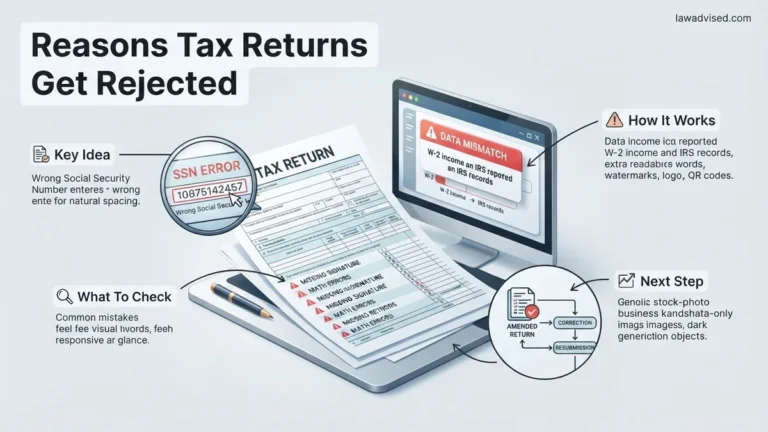
Many new remote freelancers forget that the standard income tax is only half the battle. In 2026, you must pay a 15.3% self-employment tax to cover Social Security and Medicare on your net earnings up to the annual wage cap. If you net more than 400 dollars in a year from freelance work, the IRS requires you to file. Ignoring this threshold leads to back-taxes, late fees, and compounded interest that accumulates rapidly during your first few years of independent work.
How to Calculate and Pay Quarterly Estimated Taxes Step-by-Step
Step 1: Calculate Your Net Profit and Annual Tax Liability
To figure out what you owe each quarter, you must first project your annual net income. Subtract your legitimate business expenses (such as software subscriptions, a portion of your internet, and home office costs) from your gross freelance revenue. Next, apply your estimated federal income tax bracket, the 15.3% self-employment tax, and any applicable state income taxes to that projected net profit. For 2026, a safe baseline rule is to set aside 25% to 30% of every single client payment into a separate, untouched savings account specifically earmarked for taxes.
Step 2: Submit Your Payments to the IRS and States on Time
The IRS does not wait until April to collect your money. You must submit quarterly estimated tax payments using IRS Form 1040-ES. Mark these critical 2026 payment deadlines on your calendar immediately:
- April 15, 2026: Covering income earned from January 1 to March 31.
- June 15, 2026: Covering income earned from April 1 to May 31.
- September 15, 2026: Covering income earned from June 1 to August 31.
- January 15, 2027: Covering income earned from September 1 to December 31.
You can pay these amounts directly and instantly online through the official IRS Direct Pay system or via the EFTPS portal. Always check your specific state revenue website as well, as many states follow this exact quarterly schedule for state-level estimated tax payments.
How to Deduct Remote Business Expenses and Lower Tax Liability
Maximizing legitimate deductions is the most effective way for remote freelancers to reduce their 2026 tax burden. According to data from the National Association for the Self-Employed (NASE), sole proprietors who thoroughly track remote operational costs save an average of 4,200 dollars annually. The key is ensuring every deduction meets IRS standards for ordinary and necessary business expenses.
Optimizing the Home Office Deduction
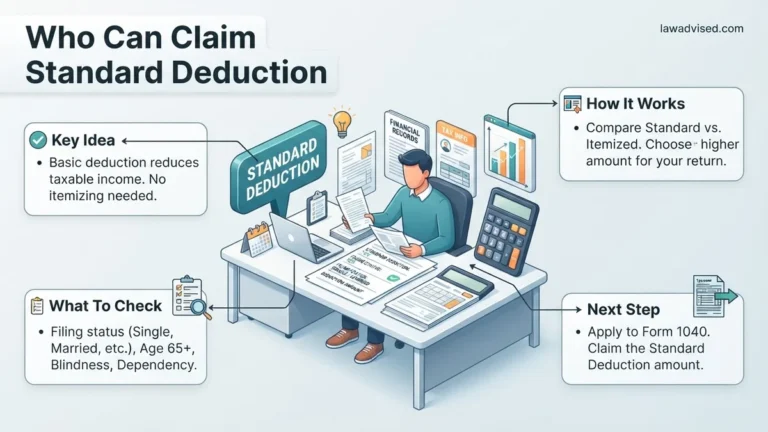
Remote freelancers utilizing a dedicated workspace can claim the home office deduction. To qualify in 2026, the space must be used regularly and exclusively for conducting business. Freelancers can choose between the simplified method (5 dollars per square foot up to 300 square feet) or the actual expense method, which calculates a proportional percentage of rent, utilities, and internet costs.
Tracking Digital and Hardware Outlays
Operational technology forms the backbone of digital freelancing. Software subscriptions, cloud storage, domain renewals, and specialized project management tools are fully deductible. Furthermore, hardware upgrades like laptops, monitors, and ergonomic furniture qualify for Section 179 expensing, allowing remote workers to deduct the full purchase price in the 2026 tax year rather than depreciating it over several years.
What If It Still Doesn’t Work: Handling Multi-State and International Moves
Navigating cross-border tax compliance or shifting state jurisdictions during 2026 can trigger complex nexus laws and dual-taxation traps. When standard tax software fails to reconcile conflicting state or international obligations, remote freelancers must escalate their compliance strategy using structured troubleshooting steps.
- Audit nexus triggers: Review state-specific physical and economic presence laws to determine exactly which revenue thresholds triggered filing requirements.
- Reconcile local tax credits: Check reciprocal agreements between your work state and residence state to eliminate double taxation on identical income.
- Consult a cross-border tax specialist: Engage a Certified Public Accountant (CPA) or Enrolled Agent (EA) specializing in digital nomad or multi-state taxation. Professional consultations typically range from 350 dollars to 1,200 dollars depending on the complexity of international filings.
- Establish formal residency documentation: Gather utility bills, lease agreements, and driver data to definitively prove domicile status for the 2026 tax calendar.
Conclusion
Navigating remote freelance taxes in 2026 requires meticulous record-keeping, strict adherence to quarterly estimated deadlines, and a firm grasp of home office and digital deductions. According to verified research and expert sources from leading financial institutions, proactive tax planning prevents costly audits and preserves working capital. The single most actionable next step is to audit your current digital expense tracking software today and set up automated quarterly tax set-asides.
❓ Frequently Asked Questions
How do I file taxes as a remote freelancer for the first time?
First-time remote freelancers must file Schedule C along with Form 1040 to report business income and expenses. You will also need to file Schedule SE to calculate your self-employment tax obligations for Social Security and Medicare.
What happens if I miss a quarterly estimated tax payment?
Missing a quarterly payment can trigger IRS underpayment penalties and interest charges when you file your annual return. To minimize penalties, calculate your liability accurately and pay as soon as possible.
Are international remote freelancers subject to US taxes?
US citizens and green card holders working remotely abroad must still report and pay US taxes on worldwide income. However, you may qualify for exclusions like the Foreign Earned Income Exclusion (FEIE) to reduce your taxable burden.
What qualifies as a legitimate home office deduction?
To claim the home office deduction, you must use a specific space in your home exclusively and regularly for conducting business. You can calculate this using either the simplified method ($5 per square foot up to 300 sq ft) or the actual expense method.
Do I need a separate business bank account for my freelance work?
While sole proprietors are not strictly required by law to have a separate business account, it is strongly recommended. A dedicated account simplifies expense tracking, protects your personal liability separation, and makes tax season significantly easier.
How do local and state taxes apply when working from different locations?
State tax obligations depend primarily on your physical presence and domicile during the tax year. Digital nomads and remote freelancers must carefully track the exact number of days spent working in each state or country to determine local withholding and filing requirements.

Ismail Hossain is the founder of Law Advised. He is an Divorce, Separation, marriage lawyer. Follow him.