Reasons Tax Returns Get Rejected Step-by-Step Fix Guide 2026
Finding out your tax return has been rejected can cause panic, but most rejections are caused by simple clerical errors like typos in social security numbers or incorrect prior-year adjusted gross income (AGI). Fortunately, electronic filing rejections are easy to fix once you identify the exact error code provided by the IRS or your tax software.
An electronic tax return rejection happens when the IRS or state agency’s automated system spots a data mismatch or missing information before the return can even enter processing. This is entirely different from an audit; it simply means your file bounced back and was never officially received for the 2026 tax season.
Fixing this quickly prevents processing delays, secures your refund faster, and ensures you avoid potential late-filing penalties if the original deadline is approaching. Here is the exact breakdown of why your return was rejected and how to fix it right now.
Key Takeaways
- A rejected tax return means the IRS system stopped processing due to a formatting error.
- Mismatched names and Social Security Numbers are the leading cause of e-file rejections.
- Locate your exact rejection error code to quickly identify and solve the problem.
- Correct the error in your tax software, save the changes, and resubmit electronically.
- A rejected return is different from a tax audit or a standard processing delay.
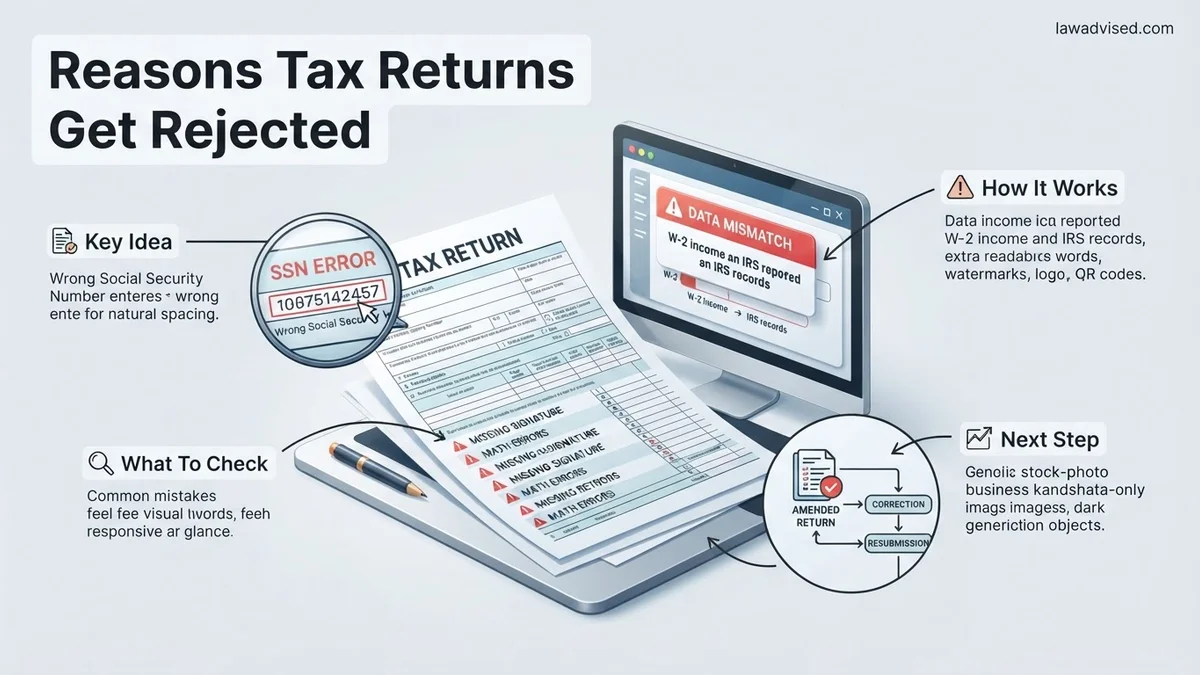
Top Reasons Tax Returns Get Rejected by the IRS
Mismatched Personal Information and SSNs
The most common e-file rejection trigger is a typo in a Social Security Number (SSN) or Individual Taxpayer Identification Number (ITIN). If the name on your tax return does not match the exact spelling stored in the Social Security Administration database, the system will immediately reject the filing.
- Typos in your own SSN, your spouse’s SSN, or a dependent’s SSN.
- Failing to update your last name with the Social Security Administration after a marriage or divorce.
- Entering a date of birth incorrectly on the primary, secondary, or dependent lines.
Incorrect Prior-Year AGI or IP PIN
To verify your identity during electronic filing, the IRS requires your prior-year Adjusted Gross Income (AGI). Entering the wrong number is an automatic rejection.
- Using the total income amount instead of the actual AGI from your 2025 tax return.
- Leaving the prior-year AGI field blank when filing through commercial software.
- Forgetting to include your 6-digit Identity Protection PIN (IP PIN) issued by the IRS for security purposes.
How to Fix a Rejected Tax Return and Resubmit
Correcting Errors in Your Tax Software
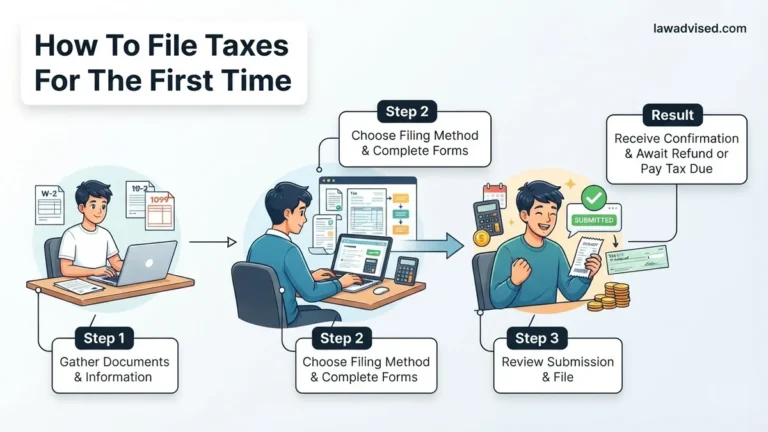
If you filed your 2026 taxes using commercial software like TurboTax, H&R Block, or FreeTaxUSA, the platform will flag the specific reject code associated with your error. Fixing it requires a few straightforward steps.
- Log back into your tax software account and locate the status dashboard showing the rejected notice.
- Review the specific IRS error code provided (such as code IND-507 for AGI mismatches or F1040-517 for dependent SSN issues).
- Navigate directly to the flagged section, correct the typo or update the missing data field.
Resubmitting Your Fixed Return
Once you correct the errors inside your software, you do not need to print and mail everything unless specifically instructed by an error code. Electronic resubmission is free and fast.
- Double-check all personal identification numbers against your physical social security cards and last year’s return.
- Select the option to re-file or transmit your corrected electronic tax return.
- Wait 24 to 48 hours for a notification email confirming that the IRS has accepted your resubmitted file.
Difference Between a Rejected Tax Return and a Processing Delay
Many taxpayers confuse a rejected tax return with a standard processing delay, but the two scenarios involve completely different internal mechanisms at the IRS. Understanding this distinction prevents unnecessary panic and ensures you apply the correct response strategy during the 2026 tax season.
Understanding a Rejected Return
An electronically filed tax return is rejected when it fails automated validation checks at the software gateway before it ever enters IRS processing systems. This usually happens within 24 to 48 hours of submission. The system spots a discrepancy, such as a mismatched Social Security Number, and immediately sends it back with a specific rejection code. You must fix the error and resubmit.
Understanding a Processing Delay
Conversely, a processing delay occurs after the IRS has successfully accepted your electronic return. According to Treasury Inspector General for Tax Administration (TIGTA) reports, accepted returns enter the master file but can stall due to manual review triggers, identity verification flags, or mathematical errors caught by internal IRS auditors. You do not resubmit a delayed return; you simply wait or respond to an IRS notice.
What to Do If Your Corrected Electronic Return Still Fails
If you have updated your personal data, corrected the EIN, or fixed the dependent mismatch, but the IRS electronic filing system rejects your submission a second or third time, automated fixes are no longer sufficient. You must pivot to alternative filing methods to meet statutory deadlines.
Steps for Persistent Electronic Rejections
- Switch to Paper Filing: Print your complete tax return, attach all required W-2 and 1099 forms, sign the document physically, and mail it to the designated IRS processing center for your geographic region.
- Include a Form 8948: If your software forces electronic filing or you are a paid preparer subject to e-file mandates, attach IRS Form 8948 explaining the specific reason for paper filing.
- Engage a Certified Professional: If rejection codes persist without a clear explanation, consult a Certified Public Accountant (CPA) or an Enrolled Agent (EA) who has access to IRS Practitioner Priority Service lines.
- Prepare for Extended Timelines: Note that paper-filed returns take significantly longer to process. According to National Taxpayer Advocate benchmarks, paper refunds often require 6 to 8 weeks or more compared to electronic deposits.
What If It Still Doesn’t Work?
If persistent rejections and mailing complications threaten your tax compliance or refund timeline for 2026, fallback strategies become necessary. Professional intervention resolves deep-seated data conflicts within the IRS master database.
- Request an IRS Account Transcript: Order your official tax transcript online to inspect what the government currently has on file for your SSN, prior adjusted gross income (AGI), and reported income.
- Contact the Taxpayer Assistance Center (TAC): Schedule an in-person appointment at a local IRS office if identity theft flags or deep administrative freezes block both electronic and paper submissions.
- Hire a Tax Professional: Engage a licensed CPA or tax attorney to untangle complex multi-year filing failures. Professional representation typically ranges from $300 to $1,500 depending on the complexity of the unfiled or rejected returns.
- Utilize the Taxpayer Advocate Service (TAS): If an IRS error causes severe financial hardship and standard channels fail, petition the independent TAS for formal case assistance.
Conclusion
Navigating a rejected tax return requires swift identification of rejection codes, precise data corrections, and prompt resubmission to avoid compliance penalties. According to verified research and expert sources from the Internal Revenue Service, proactive data verification remains the single most effective defense against electronic filing failures. Take action today by pulling your electronic filing status report and resolving any pending rejection codes immediately.
❓ Frequently Asked Questions
What are the most common reasons tax returns get rejected?
The most common reasons include mismatched Social Security numbers or ITINs, misspelled taxpayer names, incorrect prior-year adjusted gross income (AGI), missing or invalid Identity Protection PINs (IP PIN), and dependent data errors where a dependent’s SSN was already claimed on another return.
How long do I have to fix a rejected tax return?
If your original return was filed on time, the IRS typically grants a 10-day window to correct the error and resubmit your e-file without facing late filing penalties.
How do I fix an incorrect prior-year AGI error?
Check your prior-year tax return line by line or request a tax transcript directly from the IRS website to find the exact adjusted gross income figure, then update your software file.
What if someone else claimed my dependent on their tax return?
If your return is rejected because a dependent’s SSN was already claimed, you cannot e-file. You must paper file your return by mail, triggering an IRS review to resolve the duplicate claim.
Is a rejected tax return the same thing as an audit?
No, a rejection means the system cannot read or match your data due to an administrative error before processing even begins, whereas an audit happens after acceptance.
Can I just print and mail my tax return if e-file keeps rejecting?
Yes, if electronic submission continues to fail due to stubborn software or database mismatches, printing and mailing your return is a reliable fallback option.

Ismail Hossain is the founder of Law Advised. He is an Divorce, Separation, marriage lawyer. Follow him.