Who Needs to Pay Estimated Taxes The 2026 Expert Guide
Not everyone is subject to quarterly IRS payments, but anyone earning income without automatic tax withholding may be required to pay. If you expect to owe at least $1,000 in taxes when filing your return, you likely need to make estimated payments. Missing these thresholds triggers underpayment penalties.
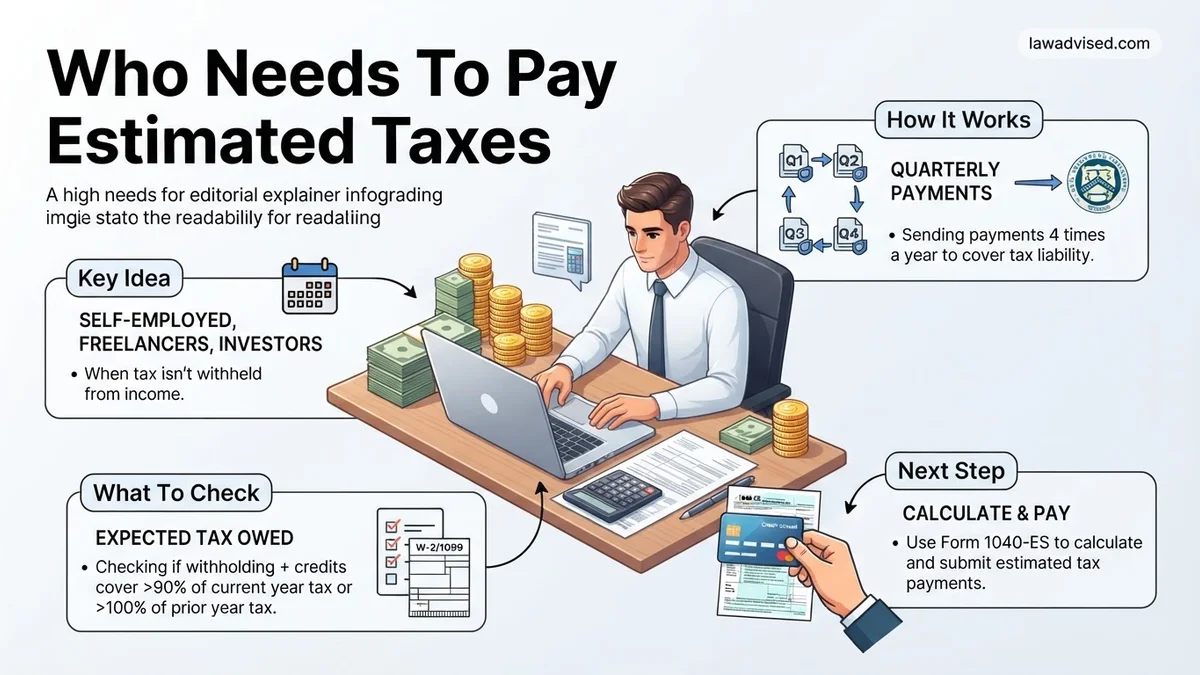
You must pay estimated taxes to the IRS if you expect to owe at least $1,000 in federal taxes when you file your 2026 return, and your withholding and refundable credits do not cover at least 90% of your current year liability or 100% of your prior year liability. Unlike traditional employees who have taxes automatically deducted from every paycheck, self-employed individuals, freelancers, and investors must proactively calculate and pay their income and self-employment taxes four times a year.
Missing these quarterly deadlines triggers automatic underpayment penalties and interest charges when you file your annual return. Navigating the IRS threshold rules ensures you stay compliant, avoid unexpected bills next April, and maintain steady cash flow throughout the year without overpaying the government prematurely.
Key Takeaways
- You must pay estimated taxes if you expect to owe $1,000 or more.
- Self-employed individuals, freelancers, and gig workers typically lack employer withholding.
- Investors and landlords earning passive income must account for quarterly tax obligations.
- W-2 employees can avoid estimated payments by increasing their employer withholding.
- The IRS safe harbor rule helps you avoid penalties by paying 90% of current or 100% of prior year tax.
What Causes the Requirement to Pay Estimated Taxes
The Golden Rule of the $1,000 Tax Threshold
The IRS requires quarterly payments primarily based on your net tax liability. If you calculate that your total tax minus your withholding will be $1,000 or more, you generally must make estimated payments. This rule catches many side-hustlers and new freelancers off guard because they assume small side income does not matter.
- Your total expected tax liability exceeds your withholding by $1,000 or more.
- You fail the safe harbor rule by paying in less than 90% of your 2026 tax liability.
- You fail the prior-year safe harbor by paying in less than 100% (or 110% for high earners) of your 2025 tax liability.
Income Types That Lack Automatic Withholding
Traditional W-2 jobs handle tax withholding seamlessly, but alternative income sources skip this step entirely. If you earn money where no employer acts as a tax collection agent, the burden shifts entirely to you.
- Freelance and Gig Work: Independent contractors, rideshare drivers, and consultants.
- Business Ownership: Sole proprietors, single-member LLC owners, and partners in partnerships.
- Investment and Capital Gains: Significant stock sales, crypto trading profits, dividend income, and rental property revenue.
How to Fix Your Tax Withholding and Calculate Payments Step-By-Step
Evaluating Your Current Income and Deductions
To determine if you need to pay estimated taxes for 2026, you must project your total annual financial picture. Start by estimating your gross revenue for the entire year and subtracting your ordinary business expenses to find your net self-employment income.
- Review your 2025 tax return to establish a baseline for your income and deductions.
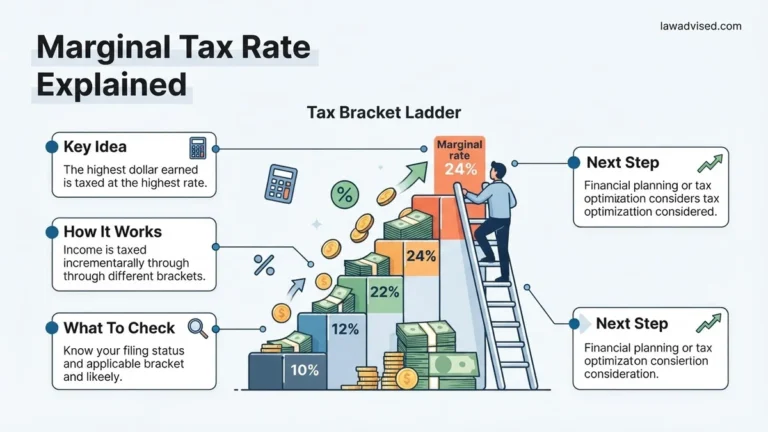
- Factor in federal income tax brackets as well as the 15.3% self-employment tax covering Social Security and Medicare.
- Adjust your projections mid-year if your freelance contracts increase or decrease significantly.
Using W-2 Withholding Adjustments as a Shortcut
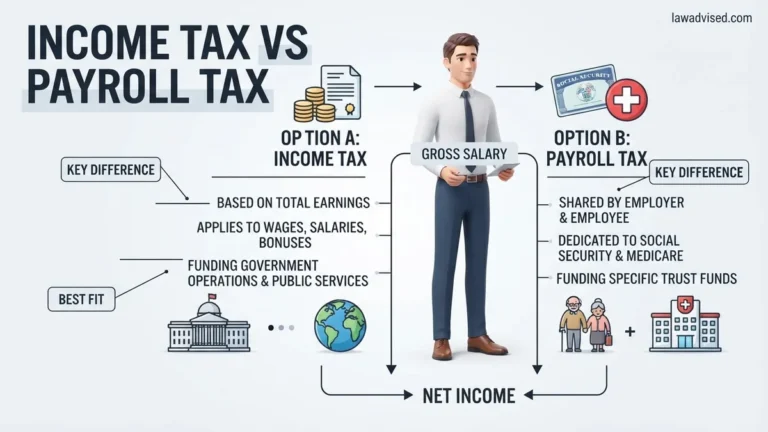
If you or your spouse hold a traditional W-2 job alongside your side business, you have a built-in advantage. You can often bypass quarterly estimated tax filings entirely by simply increasing the federal income tax withheld from your regular paycheck.
- Submit a revised Form W-4 to your employer to request an additional flat dollar amount withheld from each pay period.
- Ensure the extra withholding covers both your side-income taxes and the $1,000 threshold requirement.
- Monitor your paystubs in the third and fourth quarters of 2026 to confirm the adjustments are working effectively.
What If Your Income Fluctuates and Safe Harbor Rules Don’t Cover It
Freelancers and gig workers often experience wild income swings throughout the year. When your earnings spike unexpectedly, standard safe harbor projections may leave you vulnerable to underpayment penalties. Relying solely on the previous year’s adjusted gross income can backfire if your current 2026 earnings skyrocket, rendering the prior-year protection null for high-income earners.
Using the Annualized Income Installment Method
According to IRS guidelines, taxpayers with seasonal or fluctuating earnings can calculate their required payments period by period. This prevents you from overpaying in the spring when your business was slow. To implement this strategy effectively, follow these procedural steps:
- Calculate your actual net income and deductions for each specific payment period, rather than dividing your annual estimate evenly.
- Complete IRS Form 2210, Schedule AI, to determine the annualized income installment for each quarter.
- Compare the annualized amount to the standard quarterly requirement and pay the lower calculated figure for that specific deadline.
- Attach Form 2210 to your final 2026 federal tax return to explain the fluctuating calculation to the IRS and eliminate potential penalties.
What If It Still Doesn’t Work?
If complex income streams, multi-state self-employment, or unexpected capital gains make your 2026 estimated tax calculations impossible to reconcile, standard DIY software may fall short. When automated calculations fail or IRS notices persist, targeted professional intervention becomes necessary to avoid severe penalties.
- Consult a Certified Public Accountant (CPA) or Enrolled Agent (EA) specializing in self-employed tax strategy. Professional hourly consultation rates typically range from $200 to $450, while comprehensive quarterly planning packages cost between $1,000 and $3,000 annually.
- Request a formal penalty abatement review if a localized disaster, serious illness, or systemic IRS processing error caused your missed payment deadline.
- Establish a formal IRS payment plan or installment agreement immediately if you determine you cannot afford the current quarter’s liability, which prevents more aggressive collection actions.
- Utilize the IRS Direct Pay portal with professional oversight to retroactively adjust your quarterly vouchers and minimize cumulative compounding interest rates.
Conclusion
Navigating estimated taxes requires careful income tracking, adherence to 2026 IRS safe harbor thresholds, and proactive quarterly filings. Missing these obligations triggers unnecessary financial penalties that erode your hard-earned business revenue. According to verified research and tax authority data, utilizing the annualized income method or securing professional guidance significantly reduces audit risk and ensures complete compliance. Your actionable next step is to review your current year-to-date earnings today, calculate your net profit, and submit any necessary quarterly vouchers before the upcoming deadline.
❓ Frequently Asked Questions
How do independent contractors determine their quarterly tax obligations?
Independent contractors must estimate their net earnings from self-employment, income tax, and self-employment tax for the year. If this total expected tax minus credits is $1,000 or more, they must file IRS Form 1040-ES and make quarterly payments.
Can I avoid estimated taxes by adjusting my regular W-2 job withholding?
Yes, if you or your spouse have a traditional W-2 job, you can submit a new Form W-4 to your employer to increase federal income tax withholding. This extra withheld amount covers your side income or investment earnings, eliminating the need to make separate quarterly payments.
What is the IRS safe harbor rule for estimated taxes?
The safe harbor rule protects you from underpayment penalties if you pay at least 90% of your current year’s tax liability or 100% of your prior year’s tax liability (110% if your adjusted gross income exceeds $150,000) through withholding and estimated payments.
What types of unearned income trigger estimated tax requirements?
Unearned income sources such as capital gains from selling stocks or real estate, dividends, interest, rental income, and retirement distributions often lack automatic tax withholding, triggering potential estimated tax rules.
Are state estimated tax payments separate from federal payments?
Yes, most states with a personal income tax have their own separate estimated tax thresholds and quarterly deadlines that mirror or closely follow the federal IRS schedule.
What should I do if my freelance income changes drastically mid-year?
You can recalculate your expected tax liability for each remaining quarter using the annualized income installment method. This allows you to adjust your quarterly payments up or down based on actual earnings to date.

Ismail Hossain is the founder of Law Advised. He is an Divorce, Separation, marriage lawyer. Follow him.