Can College Student Be Claimed As Dependent Expert 2026
Deciding whether you can college student be claimed as dependent depends entirely on strict IRS criteria regarding age, school enrollment, and financial support. Parents must verify that the student is under 24, a full-time student for at least five months, and does not provide more than half of their own support. Understanding these rules prevents costly tax filing errors and maximizes available education credits.
Yes, you can claim a college student as a dependent on your 2026 tax return, but only if they meet strict IRS criteria regarding age, student status, residency, and financial support. Navigating these rules correctly prevents costly IRS audits and ensures you maximize valuable education tax credits like the American Opportunity Tax Credit.
For the 2026 tax year, claiming a college-aged student involves parsing specific IRS dependency tests designed specifically for students. Getting this wrong means potentially losing out on thousands of dollars in deductions and credits, making it essential to understand the exact mechanics of the qualifying child rules before you file.
Key Takeaways
- Students must be under age 24 at the end of the tax year.
- Full-time enrollment status is required for at least five months of the year.
- Scholarships do not count toward the student’s own financial support.
- Students who provide over 50% of their support cannot be claimed.
- Only one party can claim the student and associated education tax credits.
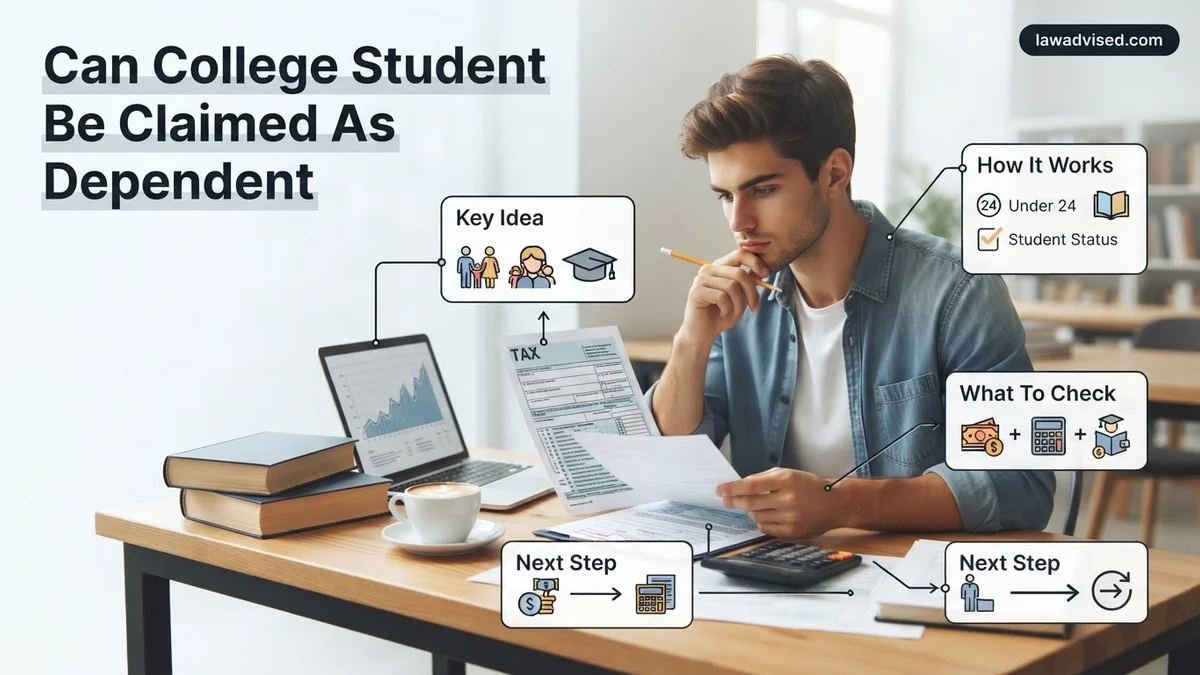
The IRS Rules for Evaluating When a College Student Qualifies as a Dependent
The Age Limit and Full-Time Student Status
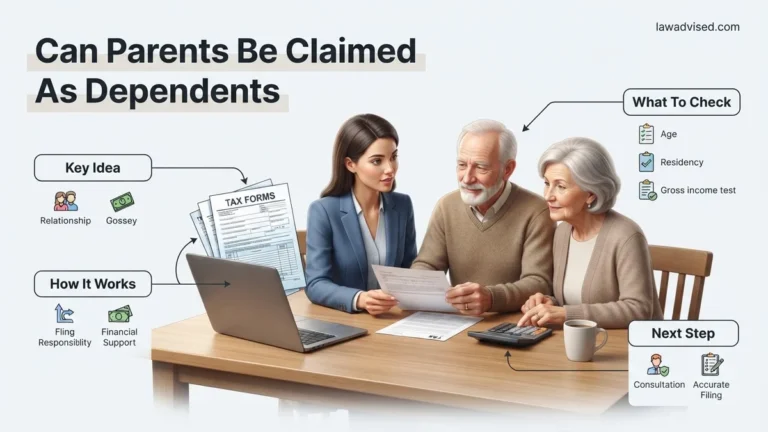
To claim your college student as a dependent under the qualifying child rules for 2026, they must be under the age of 24 at the end of the tax year. Specifically, your student must either be:
- Under age 19 at the close of 2026, or
- A full-time student under age 24 at the close of 2026.
What constitutes a full-time student? The IRS defines this as being enrolled at a school that has a regular teaching staff and student body. Your student must carry a full-time workload during at least five months of 2026, as determined by their specific college or university.
The Residency and Relationship Tests
Beyond age and school status, your student must satisfy residency and relationship requirements. They must be your son, daughter, stepchild, foster child, brother, sister, half-brother, half-sister, or a descendant of any of them. Furthermore, your student must legally live with you for more than half of the year. However, the IRS makes a vital exception for higher education: time spent away at college counts as temporary absence. As long as your student maintains their permanent home with you, they meet the residency test.
How to Calculate Financial Support and Test Student Income Limits
The 50 Percent Financial Support Rule
You must prove that your college student did not provide more than half of their own financial support during 2026. This calculation trips up many families because of how scholarships are treated. If your student receives a tax-free scholarship, that money does not count as financial support provided by the student. Instead, scholarships are treated as third-party assistance. If your student pays for their apartment and groceries using a Pell Grant or a merit scholarship, that funding is excluded from their own support tally, making it much easier for you to meet the 50 percent parental support threshold.
Evaluating Student Earned Income and Investment Limits
Unlike qualifying relatives, a qualifying child who is a full-time college student does not have a strict gross income limit regarding earnings from a campus job or summer internship. Your student can earn a substantial income in 2026 without losing their dependent status, provided they did not spend that money to pay for more than half of their own total living expenses. However, you must watch out for unearned income, such as capital gains or interest from investments, which can complicate dependency status if the student uses those funds to support themselves.
Step-by-Step Instructions to Claim Your College Student on IRS Form 1040
Filing your 2026 tax return requires precision when adding a qualifying child or qualifying relative dependent. According to IRS compliance guidelines, missing a single checkbox or entering an incorrect Social Security Number (SSN) triggers automated processing delays.
Sub-step 1: Verify Personal Identification Numbers
- Obtain the student’s exact legal name as it appears on their Social Security card.
- Confirm their correct SSN or Individual Taxpayer Identification Number (ITIN).
- Check that their date of birth meets the age limit requirements for the 2026 tax year.
Sub-step 2: Complete the Dependent Section
- Navigate to the dependent section on IRS Form 1040 or your preferred 2026 tax preparation software.
- Enter the student’s full name, SSN, and relationship to you.
- Check the box indicating they qualify you for the Child Tax Credit or the Credit for Other Dependents.
Sub-step 3: Claim Education Credits and Support
- Gather IRS Form 1098-T issued by the college or university for the 2026 calendar year.
- Complete IRS Form 8863 to calculate the American Opportunity Tax Credit or Lifetime Learning Credit.
- Transfer the final credit amount directly to your Form 1040 schedule to reduce your overall tax liability.
What If It Still Doesn’t Work?
Tax filing rejections occur frequently when a student inadvertently claims themselves on their own electronic return. If your e-filed return is rejected by the IRS with error code IND-507-02, apply these fallback steps:
- Confirm whether the student already filed their 2026 return checking the box that allows them to be claimed as a dependent.
- If the student checked “No,” they must file an amended tax return (Form 1040-X) immediately to correct their filing status.
- If the student refuses to amend or a disputed dependency claim arises, you must file a paper tax return by mail instead of e-filing.
- Attach Form 8949 and a signed statement of support proving you supplied over 50 percent of the student’s financial needs for 2026.
- Seek professional intervention from a Certified Public Accountant (CPA) or Enrolled Agent (EA) if the IRS initiates an audit or verification review. Professional tax resolution services for dependency disputes generally cost between $350 and $1,200 depending on complexity.
Conclusion
Navigating dependency rules for college students in 2026 requires strict adherence to age, residency, and financial support thresholds. Failing to coordinate with your student often results in rejected e-filed returns and processing delays. According to verified research and expert sources from the IRS, clear communication between parents and student filers prevents costly paper filing delays. Your immediate actionable next step is to review the student’s financial support worksheet to confirm you provided more than half of their annual expenses before submitting your Form 1040.
❓ Frequently Asked Questions
What are the exact age and student status requirements for tax dependents?
To be claimed as a qualifying child, the student must be under age 24 at the end of the tax year and enrolled full-time at an eligible educational institution for at least five months of the year. Part-time students or those 24 and older must look to the qualifying relative rules, which include strict gross income limits.
How do I calculate whether the student provided more than half of their own support?
You must compare the total cost of the student’s support (housing, food, tuition, medical care, transportation) against what the student paid using their own earned or saved funds. Keep in mind that scholarships and financial aid awarded directly to the student do not count as support provided by the student.
Can a part-time college student be claimed as a dependent?
Part-time students generally do not meet the qualifying child tests for students, but they may still be claimed under the qualifying relative test if they earned less than the IRS gross income limit for the year and you provided over 50% of their total support.
Who gets the education tax credits if the student is claimed as a dependent?
If you claim the student as a dependent, you are the only party eligible to claim tax benefits like the American Opportunity Tax Credit (AOTC) or the Lifetime Learning Credit, provided you also pay the qualified education expenses.
What if my college student lives in an off-campus apartment?
Living away from home does not disqualify a college student from being your dependent. Temporary absences for education are treated as time living in your primary household, provided you still maintain their home and supply financial support.
Can a married college student be claimed as a dependent by their parents?
Generally, you cannot claim a married college student as a dependent if they file a joint return with their spouse, unless they are filing solely to claim a refund of withheld income tax and no tax liability exists for either spouse.

Ismail Hossain is the founder of Law Advised. He is an Divorce, Separation, marriage lawyer. Follow him.