Drone Laws in Arizona A Step-by-Step Guide to 2027
Navigating drone laws in Arizona requires understanding a combination of federal FAA guidelines and specific state statutes regarding privacy, critical infrastructure, and emergency operations. Pilots must follow federal airspace rules while respecting state-level prohibitions against interfering with wildfire suppression and law enforcement. Knowing these restrictions prevents costly fines and legal trouble.
Navigating drone laws in Arizona requires balancing federal airspace rules with specific state statutes that govern privacy, critical infrastructure, and local preemption. If you fly a drone in the Grand Canyon State during 2027, you must comply with a unique mix of state-level restrictions and federal mandates to avoid hefty fines or legal trouble.
State lawmakers have clear boundaries on what local municipalities can regulate, while simultaneously enforcing strict penalties for trespassing, voyeurism, and flying near sensitive sites like correctional facilities and power plants. Knowing these exact boundaries keeps your aircraft in the air and out of trouble.
Key Takeaways
- Comply with FAA Part 107 rules or recreational trust test requirements before flying.
- Arizona state law strictly prohibits flying over critical infrastructure like power plants.
- Never fly drones near wildfire sites to avoid triggering emergency Temporary Flight Restrictions.
- Respect local privacy laws by avoiding intentional surveillance of private residential property.
- Check LAANC authorization apps for airspace clearance near Arizona’s busy airports.
What Causes Compliance Failures with Drone Laws in Arizona
Confusing Local Ordinances with State Preemption
Many pilots fail because they assume city councils can ban drones entirely from local parks. Under Arizona state law, cities and towns cannot enact laws that regulate the operational airspace of unmanned aircraft. That authority belongs exclusively to the FAA. However, municipalities can still enforce traditional laws regarding disorderly conduct, voyeurism, and taking off or landing from public property if local park rules explicitly prohibit it. You might legally fly through airspace over a city park, but launching from that park could violate local municipal codes.
Ignoring Critical Infrastructure and Privacy Violations
Arizona statutes heavily penalize drone operations near critical infrastructure and private residences. You cannot fly your drone closer than a specific distance to energy facilities, water treatment plants, or correctional institutions. Furthermore, using a drone to capture images of individuals in a way that violates their reasonable expectation of privacy constitutes a misdemeanor under Arizona law. If your camera peers into someone’s backyard or records them through a window, federal airspace authorization will not protect you from state privacy charges.
How to Fix Your Flight Plan Using FAA and Arizona State Rules
Cross-Referencing FAA Restrictions with State Mandates
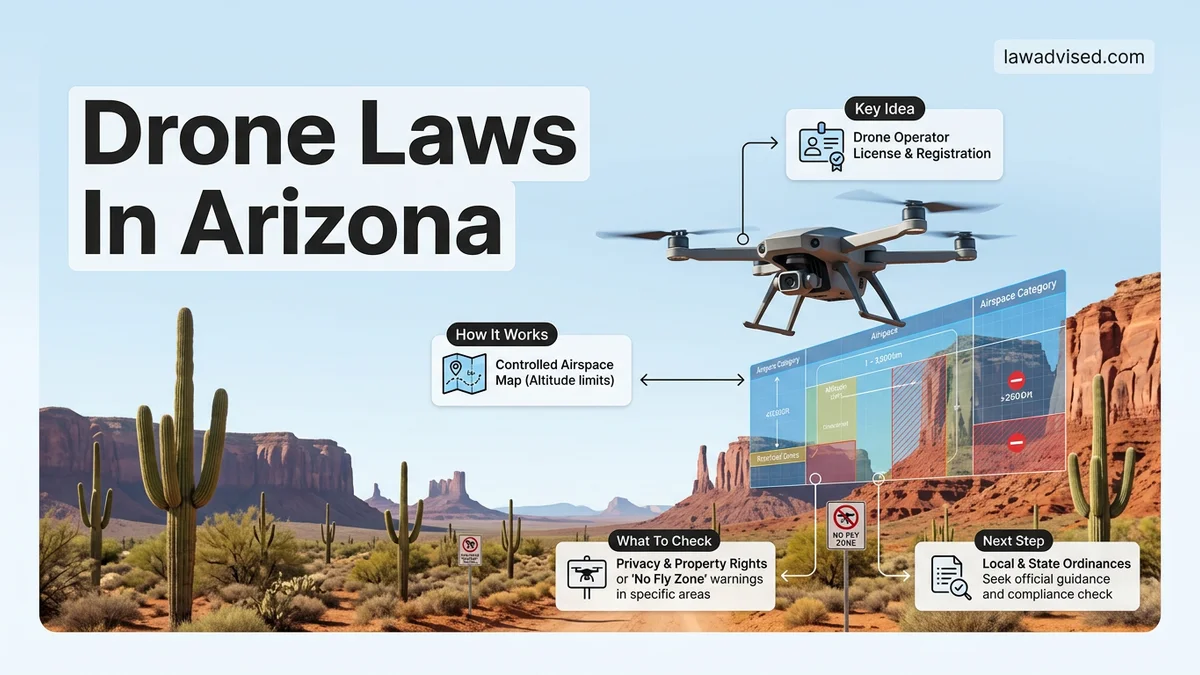
Your 2027 flight planning process must start with the LAANC system or the FAA B4UFLY app to check airspace classifications. Once you confirm the airspace is open, you must layer Arizona state restrictions over your map. Look out for the following potential hazards:
- Active wildfire zones, which trigger strict state and federal Temporary Flight Restrictions (TFRs) where hobbyist and commercial drones are grounded immediately.
- Tribal lands, as sovereign nations in Arizona often have total bans or strict permitting processes for drone photography and flight.
- National Parks and monuments, where federal law prohibits launching, landing, or operating drones entirely.
Adapting to Arizona Wildfire and Tribal Land Constraints
Arizona’s dry climate means wildfire season brings rapid TFR deployments. Flying near a wildfire not only violates FAA regulations but carries severe Arizona state penalties if you interfere with firefighting aircraft. Additionally, flying over Navajo, Hopi, or other tribal reservations requires checking individual tribal regulations rather than relying solely on FAA maps. Securing prior tribal permission prevents the immediate confiscation of your drone and steep fines under local tribal jurisdiction.
Step-by-Step Guide to Checking Local Airspace and Tribal Restrictions
Navigating the complex airspace across the Grand Canyon State requires a methodical approach. Arizona operators must verify both federal jurisdiction and sovereign tribal boundaries before every single flight in 2027. Relying solely on a single application often results in compliance violations. Follow this structured process to secure your flight path safely.
Step 1: Check Federal Airspace via LAANC
Begin by opening an FAA-approved LAANC provider application, such as Aloft or Skyward. Enter your exact geographic coordinates and desired altitude limit. If the zone is green, automated authorization is typically granted instantly for flights under 400 feet.
Step 2: Identify Tribal Land Boundaries
Arizona is home to 22 federally recognized Native American tribes, each enforcing independent airspace ordinances. Consult the Arizona Department of Transportation Aeronautics Division map to identify tribal borders. Never assume public domain laws apply over reservation lands.
Step 3: Contact Tribal Authorities
If your flight plan intersects reservation boundaries, you must contact the specific tribal government’s cultural resources or public relations department. Request written permission weeks in advance, as approval timelines vary significantly by nation.
What If It Still Doesn’t Work? Troubleshooting Airspace Approvals
When automated LAANC requests are denied or tribal permissions stall, do not launch your drone. Regulatory penalties from the FAA can easily exceed ten thousand dollars for unauthorized operations. Execute these verified fallback procedures to resolve the blockage.
- Submit a Manual FAA DroneZone Request: If real-time LAANC fails, file a standard prior authorization request through the official FAA DroneZone portal at least 30 days before your intended operation date.
- Adjust Your Flight Parameters: Lower your requested maximum altitude or shift your launch coordinates outside of restricted perimeter buffers to qualify for automated clearance tiers.
- Verify Remote ID Compliance: Ensure your unmanned aircraft transmits a compliant FAA Remote ID broadcast signal. Unregistered or malfunctioning transmitters automatically trigger system-wide flight restrictions in 2027 airspace management software.
- Consult an Aviation Attorney: For complex commercial shoots overlapping disputed municipal or tribal boundaries, retain a legal professional specializing in UAS law. Professional consultation fees typically range from $250 to $500 per hour.
Conclusion
Mastering drone laws in Arizona protects your equipment, your finances, and the privacy of residents across the state. By systematically checking federal LAANC frameworks and respecting sovereign tribal boundaries, you eliminate guesswork before takeoff. According to verified research and expert aviation sources, proactive compliance remains the single most effective strategy for accident-free operations in 2027. Your next actionable step is to download an approved LAANC application and verify your local flight zone today.
❓ Frequently Asked Questions
What are the core FAA regulations that apply to drone pilots in Arizona?
All drone operators must follow FAA rules, which include registering aircraft over 0.55 pounds, marking the exterior with the registration number, and keeping the drone within visual line of sight. Commercial pilots must operate under FAA Part 107 guidelines, while recreational flyers must pass the TRUST safety test.
How do Arizona state privacy laws impact recreational drone use?
While Arizona does not outlaw flying over private property entirely, state privacy statutes prohibit using drones to capture images or recordings of individuals in places where they have a reasonable expectation of privacy without their consent.
Can I fly a drone over tribal lands in Arizona?
Arizona contains extensive Native American reservations, and many tribes have strict independent regulations regarding drone photography and flight. You must secure explicit permission from the specific tribal government before launching a drone over reservation land.
What constitutes critical infrastructure under Arizona drone statutes?
Arizona law restricts drone operations over critical infrastructure facilities, which include electrical power generation plants, water treatment facilities, oil refineries, and railroad tracks. Flying within a certain prohibited distance of these sites can lead to criminal misdemeanor charges.
How do I secure permission to fly in controlled airspace around Phoenix or Tucson?
You must use an FAA-approved LAANC (Low Altitude Authorization and Notification Capability) service provider or the FAA DroneZone portal to request automated or manual airspace authorization before taking flight near commercial airports.
What should I do if an emergency vehicle or wildfire response appears while I am flying?
You must immediately land your drone or move it away from the area. Emergency responders frequently trigger Temporary Flight Restrictions (TFRs) that make any civilian drone presence in the vicinity illegal and highly dangerous.

Ismail Hossain is the founder of Law Advised. He is an Divorce, Separation, marriage lawyer. Follow him.