Fixed Blade Knife Laws in California: What You Need to Know Now
If you carry a fixed blade knife or are thinking about it, knowing California’s knife laws is essential. You might be surprised to learn that what seems simple—like how you carry your knife—can actually be against the law.
California has strict rules about fixed blade knives, especially when it comes to whether you carry them openly or concealed. Understanding these laws can save you from serious trouble, fines, or even arrest. You’ll get clear, easy-to-follow information on what’s allowed, what’s not, and how to stay on the right side of the law when it comes to fixed blade knives in California.
Keep reading to protect yourself and make smart choices every time you carry your knife.
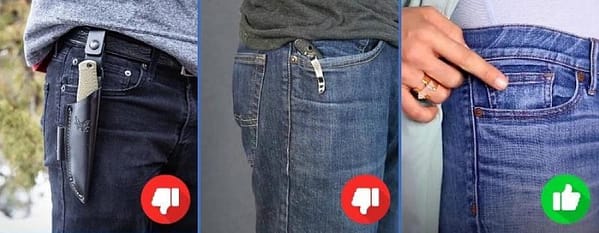
Credit: kelmanskylaw.com
Open Carry Rules
In California, open carry rules for fixed blade knives are strict and specific. The law requires the knife to be visible and properly secured. Carrying a fixed blade knife hidden or improperly sheathed can lead to legal trouble. Understanding the rules ensures safe and legal knife use.
Sheath And Visibility Requirements
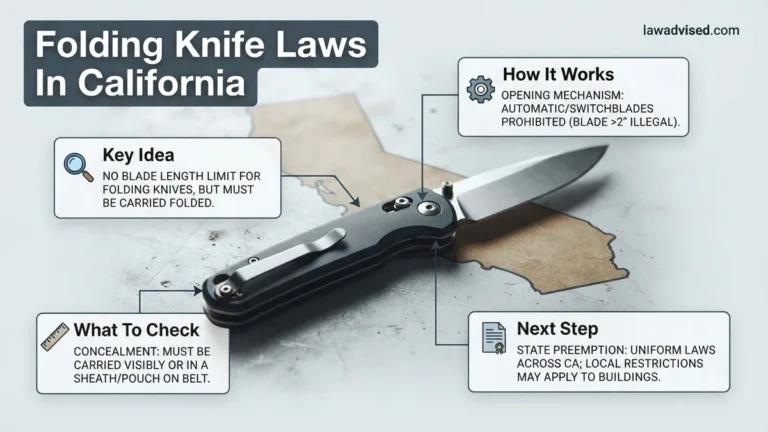
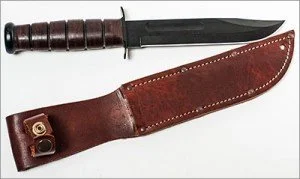
California law states fixed blade knives must be carried in a sheath. The sheath and handle must remain visible at all times. Covering the knife with clothing, even partly, counts as concealment. Concealed knives can be considered illegal weapons. The blade length does not matter for open carry if visible and sheathed.
Waist Attachment Guidelines
The sheath must attach to the waist. It can hang from a belt or waistband securely. The knife cannot be carried in a pocket or backpack if concealed. The law aims to avoid hidden weapons in public places. Proper waist attachment keeps the knife clearly open carried and legal.
Credit: www.donhammondlaw.com
Credit: www.reddit.com
Frequently Asked Questions
What Size Fixed Knife Is Legal To Carry In California?
California law allows carrying fixed blade knives of any size if openly worn in a visible sheath attached to the waist. Concealing the knife, even partially, is illegal. No blade length limit applies for open carry of fixed blades.
What Knives Are Not Allowed In California?
California bans carrying concealed dirks, daggers, switchblades over 2 inches, ballistic knives, and butterfly knives. Fixed blades must be openly worn in visible sheaths.
Can You Carry A Fixed Blade Knife In A Backpack In California?
Carrying a fixed blade knife concealed in a backpack is illegal in California. It must be openly carried in a visible sheath on the waist.
What Is The Biggest Pocket Knife You Can Carry In California?
California law does not restrict pocket knife blade length. Folding knives are legal if not switchblades or fixed blades concealed.
What Are The Basic Fixed Blade Knife Laws In California?
In California, fixed blade knives must be carried openly in a sheath. The sheath and handle must be visible and attached to your waist. Concealing the knife, even partially, is illegal.
Conclusion
Understanding fixed blade knife laws in California helps you stay safe and legal. Carry your knife openly in a sheath attached to your waist. Concealing the blade or handle can lead to trouble. There is no blade length limit for open carry under state law.
Remember, some knives are illegal regardless of carry style. Always check local rules before carrying your knife. Knowing the laws keeps you prepared and avoids unwanted problems. Stay informed and carry responsibly.

Ismail Hossain is the founder of Law Advised. He is an Divorce, Separation, marriage lawyer. Follow him.