Car Tint Laws in California 2027 Real Limits and Guide
Navigating car tint laws in California requires strict adherence to specific VLT limits for front and rear windows to avoid costly tickets. This guide breaks down the exact legal percentages, windshield restrictions, and reflectivity rules enforced statewide.
In California, window tint laws under California Vehicle Code Section 26708 strictly dictate how dark your glass can be. For your front side windows, you must allow at least 70% of light to pass through. If you add factory-installed or aftermarket film to the front side windows, the combined VLT (Visible Light Transmission) cannot drop below 70%. For your rear side windows and rear windshield, California law allows any darkness level you want, provided your vehicle has dual outside rearview mirrors.
Navigating these regulations is essential heading into 2027, as local law enforcement continues rigorous enforcement using digital tint meters during routine traffic stops. Failing to meet these standards results in fix-it tickets, costly fines, and mandatory removal. Understanding the exact limits for each glass panel protects you from penalties and ensures your vehicle remains fully compliant on California roads.
Key Takeaways
- Front side windows require a minimum of 70% light transmission.
- Rear side and back windows can have any darkness level.
- Windshield tint is strictly limited to the top 4-inch AS-1 line.
- Reflective tint is banned if it is more metallic or mirrored than standard glass.
- Medical exemptions require a signed doctor’s certificate inside the vehicle.
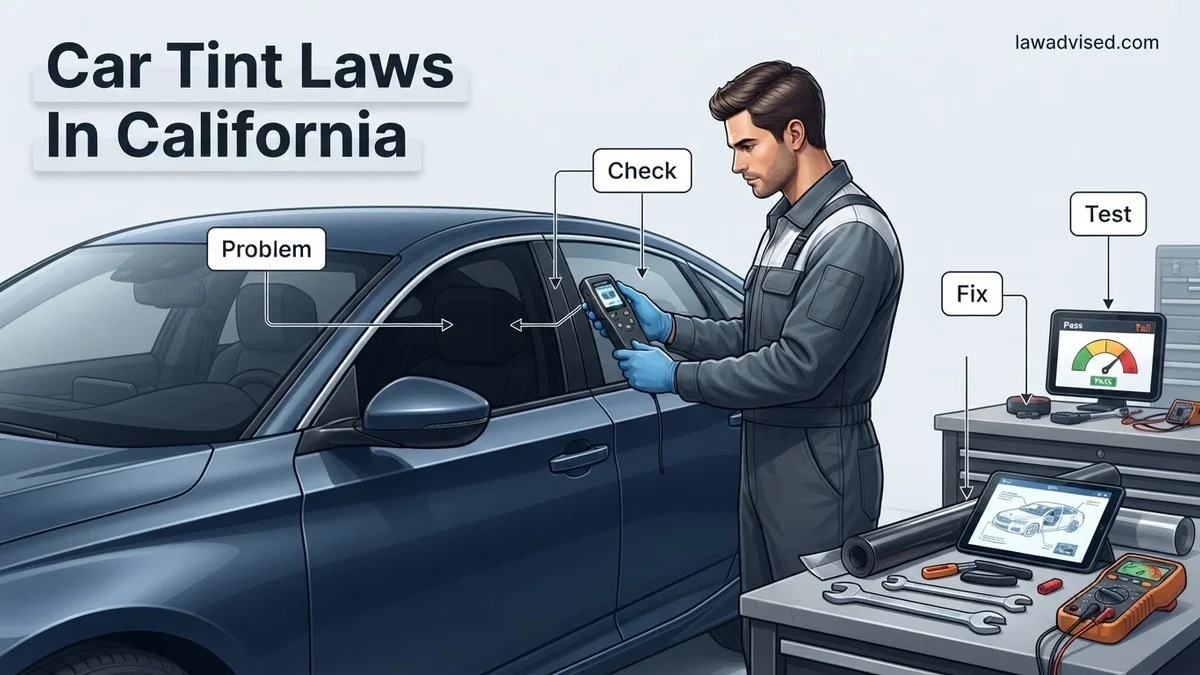
What Causes Window Tint Compliance Failures and Violations
Misunderstanding Front Window vs. Rear Window Rules
The most common reason drivers fail California compliance checks is treating all windows the same. You might install a 35 percent film all around, thinking it looks uniform and balanced. However, that 35 percent film on your front side windows violates the strict 70 percent VLT rule. Even clear window films designed for heat rejection can push glass past the legal limit if the factory glass already possesses a slight natural tint. Law enforcement officers measure the combined VLT of the glass and the film together, catching many drivers off guard.
Reflectivity and Color Restrictions
Darkness is only half the battle under California law. You also face strict limits on window tint reflectivity and color.
- Reflective Limits: Aftermarket tint cannot be more reflective than a standard untreated window, meaning metallic or mirror-like finishes are strictly illegal.
- Prohibited Colors: California Vehicle Code bans red and amber colored tints on the forward-facing portions of your vehicle.
- Windshield Violations: Any tint applied to the main windshield—other than a non-reflective AS-1 strip at the very top—constitutes an automatic violation.
How to Fix Non-Compliant Window Tint to Meet California Legal Limits
Removing and Replacing Illegal Film
If you receive a citation for dark window tint, you must bring your vehicle into compliance to clear the ticket. Peeling off non-compliant film from your front side windows is the most direct solution. You can attempt a DIY removal using a heat gun and razor blade, but professional shops often handle this cleanly without damaging your defroster lines on the rear window. Once the illegal film is gone, you can reinstall a high-grade ceramic film that legally registers at 70 percent VLT while still blocking harmful UV rays and infrared heat.
Handling Medical Exemptions and Bureaucratic Proof
California law provides exceptions for individuals with specific medical conditions, such as severe sun sensitivity or lupus. To utilize this exemption safely in 2027:
- Obtain a signed, physical document from a licensed California physician or dermatologist.
- Keep this signed medical certificate inside your vehicle at all times to present during traffic stops.
- Ensure your medical tint still adheres to safety limits, as absolute blackout windshields remain heavily restricted even with a doctor’s note.
Without this proper paperwork on hand, officers will issue standard fix-it tickets regardless of your underlying medical reasons.
What If Your Tint Still Fails Inspection or You Receive a Fix-It Ticket
Receiving a citation for illegal window tint under California Vehicle Code 26708 is frustrating, but ignoring the ticket leads to steep fines and compounded DMV penalties by 2027. Law enforcement uses specialized digital light transmission (DLT) meters during traffic stops to instantly check your window darkness levels. If your vehicle fails an inspection or you are handed a correction notice, you must take swift, systematic action to resolve the issue legally and avoid court fees.
Understanding the Correction Process
A standard window tint citation in California is typically issued as a correctable violation, commonly known as a “fix-it” ticket. This means the court or law enforcement agency will dismiss the fine entirely if you correct the unlawful modification within the specified timeframe—usually 30 days. However, simply peeling off the tint at home is not enough; you must secure official verification that the vehicle now complies with state light transmission thresholds.
Steps for Clearing a Citation
- Completely remove the non-compliant window film from the affected glass panels using a heat gun and adhesive remover to ensure no residue remains.
- Visit an authorized law enforcement agency, a California Highway Patrol (CHP) office, or a licensed DMV-approved inspection station to have an officer or certified inspector physically verify the bare glass.
- Have the official sign and stamp the “Certificate of Correction” section on the back of your physical traffic citation.
- Submit the signed certificate along with the required court administrative dismissal fee—typically around $25—to the courthouse listed on your ticket before the due date.
What If It Still Doesn’t Work?
If your attempts to clear a tint violation or pass an official vehicle inspection continue to fail due to stubborn adhesive residue, meter calibration disputes, or lingering legal questions, structured troubleshooting is necessary. According to automotive consumer protection data, unresolved window modification disputes can result in a failure to appear (FTA) notice, escalating the financial penalty significantly. Implement these verified fallback steps to resolve persistent tint compliance issues:
- Consult a Professional Tint Shop: Take your vehicle to a certified, professional window film installation specialist who possesses a calibrated digital DLT meter to test your glass accuracy. Professional removal and cleanup services generally cost between $75 and $150 per axle.
- Request a Secondary Verification: If you believe an enforcement officer’s handheld light meter was improperly calibrated, politely request a supervisor inspection or visit a dedicated CHP station for a standardized baseline reading.
- Invest in Medical Exemptions: Consult a licensed California physician if you have a documented dermatological or ophthalmological condition requiring heightened UV protection. A signed medical exemption form submitted to the DMV permits darker medical-grade window applications outside standard limits.
- Legal Consultation: If the citation involves complex commercial vehicle regulations or contested factory-tinted safety glass, contact a traffic attorney to review the citation validity before your court arraignment date.
Conclusion
Navigating California window tint laws requires strict adherence to state-mandated visible light transmission percentages, specifically maintaining at least 70 percent VLT on front side windows and allowing any darkness on rear windows for passenger vehicles. Failing to comply risks expensive fix-it tickets, mandatory removal notices, and administrative DMV holds. According to verified research and expert sources from transportation safety analysts, proactive compliance saves drivers hundreds of dollars in unnecessary fines and court costs. Take your actionable next step today by testing your current window film with a certified light meter or scheduling professional removal if your current setup exceeds legal 2027 thresholds.
❓ Frequently Asked Questions
What happens if I get pulled over for illegal window tint in California?
Law enforcement typically issues a non-moving violation or a fix-it ticket, requiring you to remove the illegal tint and present proof to the court.
Do California car tint laws apply to out-of-state vehicles?
Out-of-state registered vehicles are generally exempt from California’s equipment laws while temporarily visiting, but vehicles permanently registered in California must comply.
How do I qualify for a medical exemption for dark window tint in California?
You must obtain a signed statement or prescription from a licensed physician or surgeon specifying that dark tint is medically necessary for a condition like sun sensitivity.
Can I use colored window tint films in California?
Red, amber, and blue tint colors are explicitly prohibited on vehicle windows for safety reasons.
Does the 70% VLT rule for front windows include factory-tinted glass?
Yes, the 70% threshold applies to the total light transmitted through both the window glass and any aftermarket film combined.
Are dual side mirrors required if the rear window is heavily tinted?
Yes, vehicles with darkened rear windows must be equipped with outside rearview mirrors on both the left and right sides.

Ismail Hossain is the founder of Law Advised. He is an Divorce, Separation, marriage lawyer. Follow him.