1099 K Explained 1099-K Explained Step-by-Step 2026
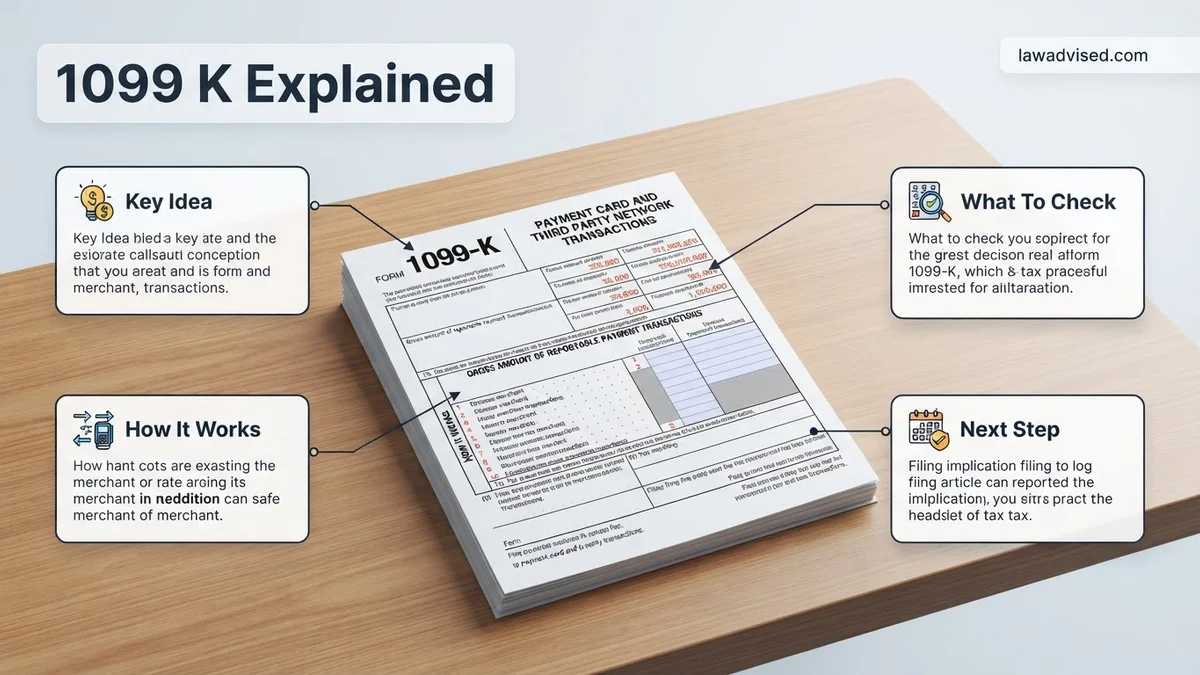
Form 1099-K reports payments received through credit card processors and payment apps like PayPal or Venmo for goods and services. Understanding the current IRS thresholds helps you accurately track business income versus personal transfers on your tax return. If you receive this form, you must report the income even if it falls below the reporting threshold.
Form 1099-K is an IRS information return used to report payments you receive through payment apps (like Venmo, PayPal, or Cash App) and credit card processors. If you sold goods online or accepted digital payments for services during 2026, third-party networks use this form to report your gross transaction volume directly to you and the IRS.
Navigating this form matters because a high gross number on your 1099-K does not automatically equal taxable profit. Knowing how to handle these numbers ensures you report your actual net income correctly and avoid overpaying taxes or triggering an automated IRS audit.
Key Takeaways
- Form 1099-K reports business transactions processed via third-party payment apps and merchant networks.
- Personal transfers, gifts, and splitting bills are not taxable income and should be separated.
- The IRS reporting threshold requires platforms to issue the form if gross payments exceed the yearly limit.
- All earned income must be reported on your taxes, regardless of whether you received a 1099-K.
- Incorrect 1099-K amounts require immediate contact with the payment platform issuer for correction.
What Causes Confusion With Form 1099-K Thresholds
The rules governing when you actually receive a Form 1099-K have shifted significantly over recent years, causing widespread anxiety for casual sellers and side-hustlers. Understanding the current federal baseline cuts through the noise.
The Federal 2026 Threshold Rule
For the 2026 tax year, the official statutory IRS threshold for third-party settlement organizations remains at $20,000 and 200 transactions. However, many individual states have enacted much lower state-level thresholds, forcing platforms to issue the form at $600 or even $1,000 regardless of transaction count.
- Federal standard: $20,000 in gross payments and 200 separate transactions.
- State-specific exceptions: States like Maryland, Massachusetts, Vermont, and Virginia enforce a $600 threshold.
- Platform compliance: Payment apps must track your address; if you live in a low-threshold state, you will get the form at $600.
Gross Income Versus Net Profit Confusion
The single biggest point of confusion is that Form 1099-K reports gross payments. This means the total dollar amount entering your account does not factor in platform fees, shipping costs, refunds, or the original cost of the item you sold.
- The 1099-K number reflects total money processed, not your final take-home earnings.
- You must actively subtract your business expenses and cost of goods sold on your tax return.
- Failing to account for this difference leads to paying income tax on money you never actually kept.
How to Distinguish Business Income From Personal Payments
Mixing personal funds with commercial activity on payment apps is a recipe for receiving an inaccurate 1099-K. The IRS expects you to separate everyday peer-to-peer transfers from actual commercial revenue.
Identifying Non-Taxable Personal Transactions
When friends or family send you money via digital apps, these transfers are not taxable income and should never appear on a valid 1099-K. Keeping your account categories correct prevents unnecessary tax headaches.
- Dinner splits and shared rent: Categorizing peer transfers correctly as personal prevents them from counting toward business thresholds.
- Gifts and reimbursements: Repaying a friend for a concert ticket or receiving a wedding gift is strictly non-taxable.
- Selling personal items at a loss: If you sell your used couch online for $200 after buying it for $800 years ago, you have a personal capital loss, which is generally not taxable income.
Spotting Taxable Business and Side-Hustle Income
Any payment received in exchange for goods or services must be reported on your tax return, even if you never receive a physical or digital copy of Form 1099-K. The legal obligation to report income exists independently of whether a reporting form was triggered.
- Freelance and gig work: Payments for graphic design, ridesharing, tutoring, or hand-crafted goods.
- Flip sales: Regularly buying items specifically to resell them for a profit online.
- Unreported forms: If you earned income below the threshold and received no 1099-K, you are still legally required to report those earnings.
Step-by-Step Guide to Reporting 1099-K Income on Your Tax Return
Filing your taxes with a 1099-K requires careful alignment between the gross amounts reported by payment platforms and your actual business accounting. According to IRS guidelines, you must reconcile these figures to avoid automated matching notices or audits.
Gathering Your Financial Records
Before entering any data into your tax preparation software, you must compile all supporting documentation for the 2026 tax year.
- Collect every 1099-K form issued by platforms like PayPal, Stripe, or eBay.
- Pull your year-end profit and loss statement to cross-reference gross receipts.
- Compile receipts for all ordinary and necessary business expenses incurred during the year.
Entering Data Into Tax Software
When reporting your gig economy or freelance earnings, precision is critical for accurate calculations.
- Navigate to the business income section of your chosen tax preparation software for 2026.
- Enter the gross amounts from your 1099-K forms onto Schedule C (Form 1040) under gross receipts.
- Deduct allowable business expenses, platform fees, and chargebacks to determine your net taxable income.
What to Do If Your 1099-K Has Wrong Amounts or Errors
Receiving an inaccurate 1099-K is a common issue for freelancers and small business owners. Errors often stem from personal item sales, platform processing mistakes, or uncounted refunds. Taking swift action protects you from overpaying taxes.
Verifying and Documenting Discrepancies
You need to isolate the exact cause of the variance before contacting the platform issuer.
- Compare the 1099-K gross amount line-by-line with your internal ledger and bank deposits.
- Identify transactions that were refunded, canceled, or mistakenly categorized as business revenue instead of peer-to-peer transfers.
- Calculate the exact monetary difference that requires correction.
Contacting the Issuer
Payment settlement entities are legally required to investigate and potentially correct reported figures upon request.
- Log into your merchant dashboard and locate the issuer support or tax department contact channel.
- Submit a formal dispute ticket detailing the exact calculation error and providing supporting documentation.
- Request an amended 1099-K form if the issuer agrees that the reported figure is inflated.
What If It Still Doesn’t Work?
If the payment platform fails to issue a corrected 1099-K before your filing deadline, you must still report your true income accurately. Implement these verified fallback steps to handle unresolved errors.
- Report your actual business revenue on Schedule C based on your verified bookkeeping records rather than the erroneous 1099-K.
- Attach a detailed explanatory statement to your 2026 tax return documenting the discrepancy and your attempts to resolve it with the platform.
- Consult a certified public accountant (CPA) or enrolled agent to ensure compliance and mitigate audit risks. Professional tax advisory fees typically range from $200 to $500 depending on complexity.
- Maintain all correspondence records, chat logs, and merchant statements in your permanent tax file for at least seven years.
Conclusion
Navigating the 1099-K reporting requirements for the 2026 tax year demands vigilance, accurate bookkeeping, and adherence to updated IRS thresholds. Reconciling your platform statements with actual business ledgers ensures you only pay tax on your true net earnings. According to verified research and expert sources from the American Institute of CPAs, maintaining meticulous digital paper trails is the single most effective defense against tax discrepancies. Take your next actionable step today by organizing your platform statements and scheduling a preliminary reconciliation review.
❓ Frequently Asked Questions
What triggers the issuance of a Form 1099-K?
Third-party settlement organizations and payment apps issue a 1099-K when your gross payments for goods and services cross the IRS reporting threshold for the tax year.
How are refunds and chargebacks handled on a 1099-K?
The gross amount on the 1099-K does not automatically subtract refunds. You must account for customer refunds and chargebacks when calculating your net taxable business income.
What if my 1099-K includes personal sales like selling my old couch?
If you sold personal items at a loss, you do not owe income tax on them. You can reconcile these amounts on your tax return by reporting the gross proceeds and backing them out.
Are cryptocurrency transactions reported on a 1099-K?
Certain crypto exchanges and payment processors that facilitate merchant transactions for goods and services may issue a 1099-K for commercial activity.
Does a 1099-K mean I am automatically audited by the IRS?
Receiving a 1099-K does not mean you are audited. The IRS simply matches the income reported on the 1099-K against the income reported on your tax return.
Who qualifies as a third-party settlement organization?
Companies like PayPal, Venmo, Cash App, eBay, and Etsy that act as intermediaries to process payments between buyers and sellers are considered third-party settlement organizations.

Ismail Hossain is the founder of Law Advised. He is an Divorce, Separation, marriage lawyer. Follow him.