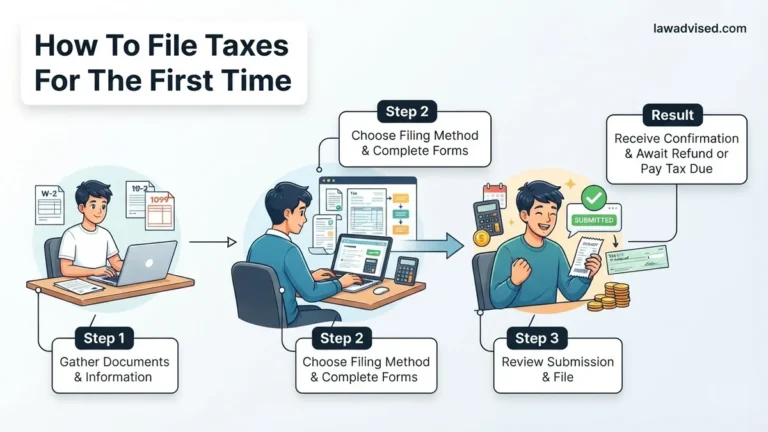
How to Prepare for Tax Filing in 2026 Step-by-Step Guide
Proper preparation is the key to an accurate return and a faster refund. Gathering your income documents early and organizing your deductions prevents costly errors and stress.
Preparing for your 2026 tax filing requires gathering specific income documents, organizing expense records, and reviewing your previous year’s return before you sit down to file. By systematically collecting your W-2s, 1099s, and investment statements early, you eliminate the frantic search for missing paperwork and drastically reduce the risk of costly mathematical errors.
Getting your financial house in order now ensures you claim every deduction and credit you deserve without leaving money on the table. Taking a methodical approach to your paperwork sets the stage for an accurate return and a much faster refund from the IRS.
Key Takeaways
- Collect all W-2s, 1099s, and investment statements before starting.
- Organize expense receipts for itemized deductions and tax credits.
- Review your previous year’s tax return for baseline consistency.
- Choose between DIY tax software and hiring a professional CPA.
- File electronically and set up direct deposit for the fastest refund.
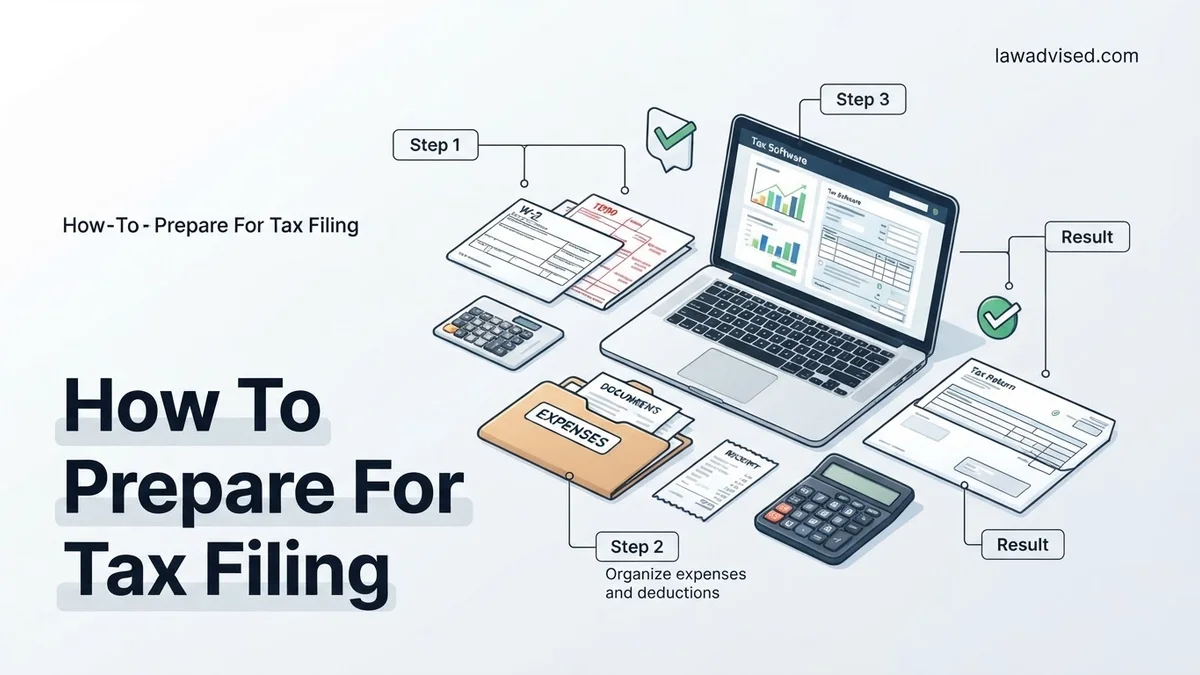
What Causes Tax Filing Delays and Missing Refunds
The Danger of Missing Information Forms
Filing your taxes too early—before all your official tax documents arrive—is the number one reason returns get delayed or flagged by the IRS. In the 2026 tax season, automated matching systems instantly cross-reference the numbers on your return with the copies sent directly by employers, banks, and brokerages. If your reported income does not match their digital records down to the dollar, processing halts immediately. Waiting for late-arriving consolidated 1099s from investment accounts or corrected W-2s prevents frustrating processing freezes.
Common Discrepancies That Trigger Audits
Simple math errors and mismatched identification numbers cause the vast majority of tax review delays. Incorrect Social Security numbers for dependents or misspelled names will cause automated rejection of electronic filings. Furthermore, failing to report miscellaneous income from side gigs, freelance work, or digital asset sales guarantees a follow-up notice from tax authorities. Double-checking your personal data against last year’s records helps you avoid these avoidable administrative traps.
- Filing before receiving all 1099-NEC or 1099-INT forms
- Typing errors in Social Security or Employer Identification Numbers
- Mismatched names on tax forms due to recent legal marriages or name changes
- Omission of small side-hustle or digital platform earnings
Master Tax Filing in 8 Simple Steps
Tax season does not have to be a source of overwhelming stress and last-minute panic. Whether you are dealing with a simple W-2 income or managing multiple freelance streams, proper preparation is the absolute key to maximizing your refund and avoiding costly audits. This guide walks you through the exact process to get your financial house in order before you file, ensuring you miss no deductions and hit submit with total confidence.
Step 1: Gather Your Personal Information and Identification Documents
What you need: Social Security Numbers (or ITINs) for yourself, your spouse, and all dependents, plus government-issued photo IDs.
Instructions: Before looking at a single dollar sign, secure the foundational data required by the IRS. Pull out physical or digital copies of Social Security cards for every member of your household. If you have had any major life changes in the past year—such as getting married, legally changing your name, or having a child—ensure those updates are already reflected with the Social Security Administration. Double-check that your home address and routing numbers for direct deposit are current and accurate.
Pro Tip: Keep last year’s tax return nearby; you will likely need your 2022 or 2023 Adjusted Gross Income (AGI) to verify your identity with tax software.
Step 2: Collect All Income Documents and Tax Forms
What you need: Form W-2s, 1099s (NEC, MISC, INT, DIV), K-1s, and records of any other miscellaneous income.
Instructions: Wait until you have received all official income documents before starting your return. Employees should expect W-2s from every employer they worked for during the year by late January. Freelancers and independent contractors must look out for 1099 forms from clients who paid them $600 or more. If you have investments, expect 1099-INT and 1099-DIV forms showing interest and dividends earned. Create a dedicated digital folder on your desktop to store scanned PDFs of all these forms as they roll in.
Pro Tip: Even if you did not receive a formal 1099 for freelance work, you are legally required to report all self-employment income.
Step 3: Compile Your Above-the-Line Deduction Records
What you need: Receipts and statements for student loan interest, educator expenses, HSA contributions, and retirement account deposits.
Instructions: Above-the-line deductions are fantastic because you can claim them even if you take the standard deduction. Review your bank statements and annual financial summaries for contributions made to traditional IRAs, health savings accounts (HSAs), and student loan interest payments (Form 1098-E). If you are a K-12 teacher who spent personal money on classroom supplies, pull together those store receipts to claim up to $300 in educator expenses.
Pro Tip: Many financial institutions automatically generate these forms by mid-February, so log into your student loan servicer or brokerage accounts to download them directly.
Step 4: Choose Between the Standard Deduction and Itemizing
What you need: A calculator, last year’s tax return, and your itemized deduction receipts (medical bills, mortgage interest, charitable donations, state and local taxes).
Instructions: You must decide whether to take the flat standard deduction or itemize your specific expenses. Add up your potential itemized deductions: mortgage interest (Form 1098), property taxes, state income taxes (capped at $10,000 via SALT), large medical expenses exceeding 7.5% of your AGI, and verified charitable donations. Compare this total sum against the current standard deduction threshold for your filing status. Whichever number is higher is the one you should use to lower your taxable income.
Pro Tip: For most taxpayers, the standard deduction is much higher and significantly easier to claim, saving hours of receipt-tracking.
Step 5: Document Your Business or Self-Employment Expenses
What you need: Profit and loss statements, mileage logs, software subscription receipts, and home office measurements.
Instructions: If you run a side hustle, freelance business, or small enterprise, you are entitled to write off ordinary and necessary business expenses. Review your business bank account and credit card statements to categorize every expense—from website hosting and software to advertising and inventory. If you use your personal car for business travel, pull out your mileage log showing dates, miles driven, and business purpose. If you work from home, calculate the square footage of your dedicated home office space.
Pro Tip: Never mix personal and business purchases; having a dedicated business credit card makes this step take minutes instead of days.
Step 6: Organize Tax Credits and Specific Life Event Documentation
What you need: Form 1098-T for tuition, childcare provider tax IDs and statements, energy audit reports, or adoption expense records.
Instructions: Tax credits are dollar-for-dollar reductions in your tax liability, making them immensely valuable. If you paid for college courses, download your Form 1098-T to claim the American Opportunity Tax Credit or Lifetime Learning Credit. Parents should secure the Employer Identification Number (EIN) and total payment receipts from daycare facilities, summer camps, or babysitters for the Child and Dependent Care Credit. If you installed solar panels or energy-efficient home upgrades, keep those contractor invoices handy.
Pro Tip: Double-check income phase-out limits for credits like the Child Tax Credit to ensure you qualify before filing.
Step 7: Reconcile Prior Payments and Estimated Tax Submissions
What you need: Records of quarterly estimated tax payments (Form 1040-ES) and confirmation numbers from the IRS payment portal.
Instructions: If you are self-employed or have investment income, you likely made quarterly estimated tax payments throughout the year. Log into your IRS Direct Pay account or state tax portal to pull the exact dates and amounts of every quarterly payment you sent in. You must report these accurately on your final return so the IRS credits you for taxes already paid, preventing you from accidentally paying the same tax twice.
Pro Tip: If your quarterly payments fell short of your actual tax liability, set aside a small emergency fund now to cover the remaining balance upon filing.
Step 8: Select Your Filing Method and Software
What you need: A computer or smartphone, internet connection, and your compiled folder of tax documents.
Instructions: Decide whether you will use DIY tax preparation software, hire a certified public accountant (CPA), or utilize free government filing options. If your adjusted gross income falls below the IRS Free File threshold, you can use brand-name software at zero cost. Input your gathered information methodically step-by-step, cross-referencing every number you type with your source documents. Once the software runs its internal error check, review the final preview of your Form 1040 to ensure your name, Social Security number, and banking details are completely error-free.
Pro Tip: Always choose direct deposit for your refund; it is vastly faster and safer than waiting for a paper check in the mail.
✅ Final Checklist
- All W-2s, 1099s, and income forms are accounted for and matched against the IRS database.
- Social Security numbers and spelling of names are verified against official government cards.
- Bank routing and account numbers for direct deposit are double-checked for accuracy.
- Deductions and business expenses are backed by valid receipts and logs.
- Prior-year AGI is entered correctly to pass electronic filing security checks.
Important Notes:
- Always file your tax return by the April deadline (or October extension deadline) even if you cannot pay what you owe, to avoid catastrophic late-filing penalties.
- Seek professional help from a CPA or Enrolled Agent if you face complex international tax situations, inherited property sales, or complex cryptocurrency trades.
- Estimated preparation time: 3 to 6 hours depending on your financial complexity; DIY software costs range from $0 to $120+, while professional CPA fees typically range from $300 to $1,000+.
How to Gather and Organize Your Tax Documents
Compiling Your Wage and Employment Records
Your primary goal is hunting down every piece of official income documentation issued for the 2026 tax year. Employees should look for Form W-2 from every company they worked for over the past twelve months. Independent contractors, freelancers, and gig workers must track down Form 1099-NEC, 1099-MISC, or 1099-K forms reflecting payments from clients or payment processors. Keep these digital PDFs or paper documents in a single, dedicated folder labeled 2026 Tax Prep to streamline your workflow.
Collecting Investment and Retirement Statements
Investment income requires careful attention because brokerages often issue consolidated Form 1099s that arrive late in February or early March of 2026. You need to pull statements detailing dividends, capital gains, and interest earned from stocks, bonds, and high-yield savings accounts. Do not forget tax-advantaged retirement accounts, such as Form 5498 for IRA contributions or Form 1098-E if you paid student loan interest during the year.
- Form W-2 for wage-earning employees
- Forms 1099-NEC, 1099-MISC, and 1099-K for self-employed income
- Consolidated Form 1099 for dividends, stock sales, and interest
- Form 1098 for mortgage interest and real estate taxes paid
- A copy of your 2025 federal and state tax returns for quick reference
Step-by-Step Process to Claim Deductions and File
Maximizing your tax savings requires a methodical approach to claiming standard or itemized deductions. According to IRS guidelines for the 2026 tax year, you must carefully evaluate whether itemizing exceeds the newly adjusted standard deduction threshold for your filing status.
1. Evaluate Standard Versus Itemized Deductions
- Calculate your total potential itemized expenses, including mortgage interest, state and local taxes (SALT), and charitable contributions.
- Compare this sum directly against the 2026 standard deduction amount for your specific household category.
- Select the option that yields the highest deduction to minimize your overall taxable income effectively.
2. Execute the Filing Method
- Input your verified income statements and deduction documentation into your chosen IRS-approved tax preparation software.
- Double-check all Social Security numbers, banking details for direct deposit, and dependent information for complete accuracy.
- Transmit your electronic return securely and retain the official timestamped confirmation receipt from the IRS agency.
What to Do If You Make a Mistake on Your Return
Discovering an error after transmitting your documents can cause unnecessary stress, but the IRS provides a standardized correction protocol. Financial experts advise waiting until the original return has been fully processed before taking any corrective action.
1. Filing an Amended Return
- Obtain and complete official IRS Form 1040-X, which serves as the designated document for correcting previously filed individual tax returns.
- Gather the original return, the new W-2 or 1099 forms, and documentation proving the specific changes you are submitting.
- Submit the amended paperwork either electronically through modernized e-file providers or via traditional mail services.
What If It Still Doesn’t Work?
If electronic rejection persists or the automated tax software fails to reconcile complex financial situations, specific fallback measures ensure compliance. According to certified public accounting authorities, taxpayers facing persistent filing obstacles should implement the following recovery steps:
- Print out all completed tax forms and supporting documents to conduct a thorough manual verification of every calculation.
- Contact the official IRS taxpayer assistance helpline or visit a designated Taxpayer Assistance Center for direct guidance.
- Engage a qualified professional, such as a Certified Public Accountant (CPA) or Enrolled Agent (EA), to resolve persistent discrepancies. Professional tax preparation fees typically range from $220 for basic itemized returns to over $500 for complex business or investment portfolios.
- Request a formal filing extension using IRS Form 4868 before the April deadline to avoid severe late-filing penalties while resolving technical roadblocks.
Conclusion
Successfully navigating the 2026 tax filing season requires early organization, accurate documentation gathering, and strict adherence to IRS procedural steps. According to verified research and expert financial sources, proactive preparation eliminates costly errors and significantly accelerates your direct deposit refund timeline. Take your single most important next step today by gathering your primary income statements and creating a secure digital folder for all your essential 2026 tax documents.
❓ Frequently Asked Questions
What income documents do I need to collect before filing taxes?
You need all W-2 forms from employers, 1099 forms for freelance or contract work, unemployment income statements, and year-end interest or dividend statements from your bank and investment accounts.
How do I know if I should take the standard deduction or itemize?
Compare the total sum of your eligible itemized deductions—such as mortgage interest, charitable donations, and medical expenses—against the IRS standard deduction for your filing status and choose the higher amount.
What should I do if a W-2 or 1099 form is missing or incorrect?
Contact your employer or payer immediately to request a corrected or replacement form. If you cannot get it by the filing deadline, you can file using Form 4852 as a substitute, though it may delay processing.
Can I still file my taxes if I cannot pay what I owe?
Yes, you should always file your tax return on time even if you cannot afford the payment. Filing on time avoids failure-to-file penalties, and you can apply for an IRS payment plan or installment agreement.
How long should I keep my tax records after filing?
The IRS generally recommends keeping your tax returns and supporting documentation for at least three years from the date you filed, or two years from the date the tax was paid, whichever is later.
What is the fastest way to check the status of my tax refund?
The IRS ‘Where’s My Refund?’ tool on IRS.gov or the IRS2Go mobile app provides the most up-to-date tracking information, usually available within 24 hours of e-filing.

Ismail Hossain is the founder of Law Advised. He is an Divorce, Separation, marriage lawyer. Follow him.