Vape Laws in Arkansas 2027 Expert Compliance Guide
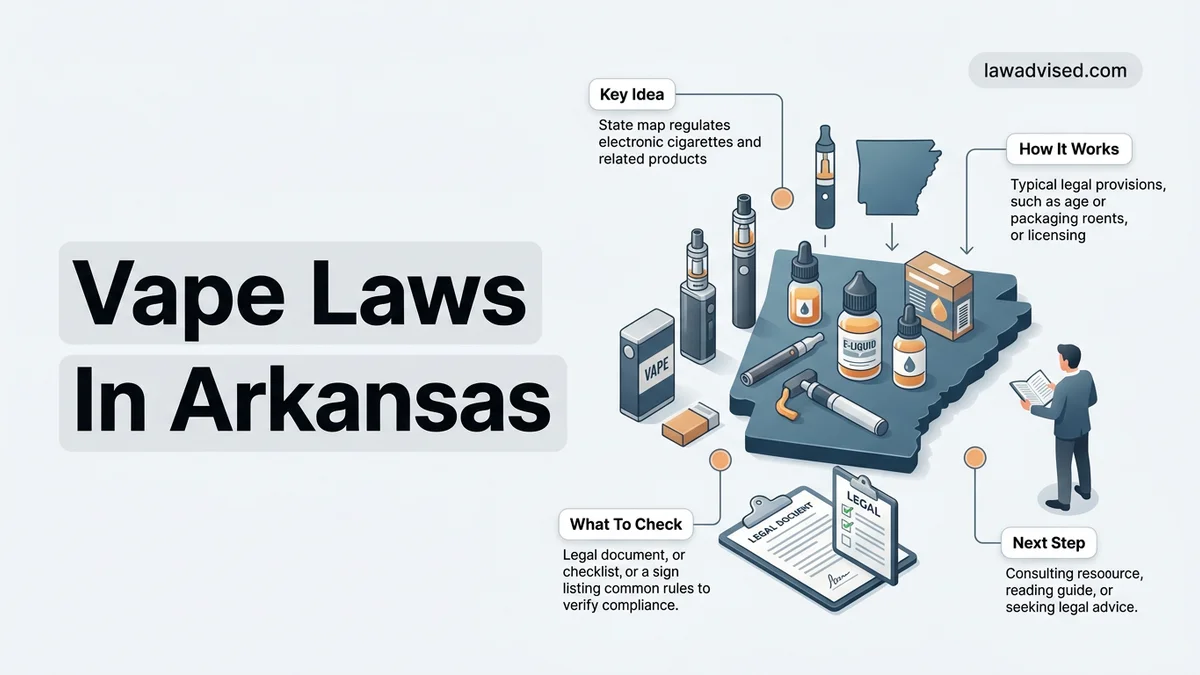
Navigating vape laws in Arkansas requires strict adherence to state age limits, public indoor use prohibitions, and licensing regulations. Retailers and consumers face steep penalties for violating compliance mandates.
Arkansas enforces strict regulations on electronic nicotine delivery systems, aligning with federal mandates by setting the minimum legal sales age at 21. Compliance in 2027 requires mandatory photo identification checks for any customer appearing under the age of 30, alongside severe penalties for retailers who sell to minors.
Navigating these rules is essential whether you operate a smoke shop, convenience store, or manage a public workspace. Staying compliant protects your business from heavy fines, license suspensions, and potential criminal charges under state law.
Key Takeaways
- The minimum legal purchase and possession age for vape products in Arkansas is 21.
- Public indoor vaping is heavily restricted under the Arkansas Clean Indoor Air Act.
- Retailers selling to minors face severe fines and potential license revocation.
- Online vape sales require age verification and must comply with PACT Act shipping rules.
- Possessing vape products under the age of 21 is a violation of state law.
What Causes Retail Violations and Legal Penalties under Arkansas Vape Laws
Age Verification Failures and Underage Sales
The leading cause of compliance failures in Arkansas involves selling vape products to individuals under 21. State enforcement agencies utilize regular underage compliance checks, deploying minor decoys to test retail staff. Failing to request valid government-issued identification results in immediate citations.
- Selling to a minor violates Arkansas Code Annotated section 4-20-101 and related tobacco control statutes.
- First-time retail violations typically incur substantial monetary fines for the business owner.
- Repeated offenses lead to the permanent revocation of your state tobacco retail permit.
- Clerks who complete illegal sales can face personal misdemeanor charges and individual fines.
Failure to Meet Strict ID Scans and Record Keeping
Arkansas retailers often trigger violations by relying on visual age assessments instead of electronic verification systems. State guidelines strongly encourage automated ID-scanning technology to eliminate human error during fast-paced transactions.
- Accepting expired identification documents constitutes a direct regulatory violation.
- Failing to maintain purchase logs and supplier invoices invites state tax and compliance audits.
- Unlicensed distribution of wholesale vape products to secondary sellers triggers felony charges.
How to Fix Compliance Issues and Meet Arkansas Vaping Regulations
Implementing Mandatory Employee Training Protocols
To prevent costly violations in 2027, you must establish rigorous, recurring training for all front-line retail staff. Every employee who handles cash registers or inventory must understand Arkansas age restriction laws completely.
- Mandate a hard carding policy for anyone appearing under 30 years old, without exception.
- Integrate POS system prompts that lock the register until a birthdate is manually entered or scanned.
- Document every training session with employee signatures to demonstrate due diligence during state inspections.
- Appoint a compliance manager to oversee weekly self-audits and mystery shopper checks.
Securing Proper Licensing and Public Use Adherence
Beyond point-of-sale rules, keeping your business legally sound requires maintaining the correct state permits and respecting public consumption bans. Arkansas prohibits vaping in virtually all indoor workplaces, restaurants, bars, and educational facilities under the Clean Indoor Air Act.
- Display all active Arkansas tobacco and vapor product retail permits clearly near the cash register.
- Post mandated no-vaping signage at all public entrances of your commercial establishment.
- Ensure inventory originates strictly from state-authorized, tax-stamped distributors to avoid illicit trade penalties.
What If It Still Doesn’t Work: Troubleshooting Retailer Licensing and Shipping Rules
Navigating Arkansas vapor statutes can present unforeseen compliance roadblocks for business owners and consumers alike. When standard permit applications stall or interstate shipping restrictions disrupt operations, targeted intervention is required to resolve the issue swiftly.
Escalating Licensing Delays with the ATC
If an Arkansas retail tobacco permit application remains unresolved past the standard processing window, specific troubleshooting steps ensure compliance without risking unauthorized sales penalties.
- Contact the Arkansas Tobacco Control (ATC) enforcement division directly via their official portal to verify application queue status and identify pending document flags.
- Audit your municipal business license and sales tax permit to confirm that all physical addresses and corporate officer details match state filings precisely.
- Submit missing compliance affidavits or surety bond documentation through certified mail with return receipt requested to establish a verifiable paper trail.
- Consult with a licensed Arkansas administrative law attorney if your permit is unjustly denied, keeping in mind that legal retainers for regulatory appeals typically range from $1,500 to $3,500 depending on complexity.
Expert Next Steps for Staying Compliant with Arkansas Tobacco and Vapor Statutes
Maintaining long-term adherence to Arkansas vapor laws requires proactive policy management and continuous staff education. As regulatory frameworks evolve through 2027, businesses must implement rigorous internal controls to mitigate legal liabilities and severe financial penalties.
Implementing Robust Verification Protocols
To safeguard your retail enterprise against underage sales violations and illicit product distribution, structured compliance workflows must be embedded into daily operations.
- Institute mandatory digital age-verification scanners at every point of sale to eliminate human error when checking government-issued photo identification.
- Review inventory supplier manifests monthly against the FDA’s current tobacco product directory and the ATC approved product lists to prevent the stocking of unauthorized flavored e-liquids.
- Establish quarterly compliance training sessions for all frontline retail staff regarding Arkansas-specific flavor bans, taxation updates, and public indoor vaping prohibitions.
- Subscribe to regulatory update alerts published by state retail associations to receive immediate notifications regarding legislative amendments taking effect throughout 2027.
Conclusion
Complying with Arkansas vape laws in 2027 demands meticulous attention to licensing mandates, shipping prohibitions, and strict age-verification protocols. Failing to adapt to these stringent state statutes can result in devastating fines and permit revocations. According to verified research and regulatory compliance experts, establishing a proactive audit schedule is the most effective defense against legal infractions. Your immediate next step is to conduct a comprehensive inventory audit to ensure all stocked vapor products align strictly with current state and federal directories.
❓ Frequently Asked Questions
What documentation do Arkansas retailers need to check for vape sales?
Retailers must verify a valid government-issued photo ID showing the purchaser is 21 or older for all tobacco and vapor product transactions.
How are e-liquids taxed under current Arkansas laws?
Arkansas imposes specific state excise taxes on vapor products and e-liquids, which must be factored into wholesale and retail pricing.
Are flavored vape products banned in Arkansas?
Arkansas follows federal FDA guidelines regarding flavored e-cigarettes, restricting unauthorized flavored cartridge-based products while monitoring state-level proposals.
What happens if a minor is caught with a vape in Arkansas?
Underage possession can result in confiscation of the device, mandatory diversion programs, or court fines depending on local municipal ordinances.
Does the indoor vape ban apply to private businesses and bars?
The Arkansas Clean Indoor Air Act generally bans vaping in indoor workplaces, restaurants, and enclosed public areas, though specific venue exemptions may vary.
How can a business obtain a tobacco and vape retail permit in Arkansas?
Businesses must apply through the Arkansas Department of Finance and Administration and pay the required annual licensing fees to legally sell vapor products.

Ismail Hossain is the founder of Law Advised. He is an Divorce, Separation, marriage lawyer. Follow him.