Funny Laws in Arkansas 2027 Real Bizarre Statutes Explained
Many funny laws in Arkansas are actually outdated legal relics or humorous urban legends that no longer hold any real-world enforcement. This guide breaks down the most absurd statutes still talked about today and explains their surprising historical origins.
Arkansas is home to some of the most bizarre, hilarious, and downright baffling laws still lingering on the books. Even as we move through 2027, the Natural State retains a rich collection of outdated legal oddities that continue to amuse residents and confuse visitors. From strict rules about vehicular noise to surprisingly specific mandates on how you pronounce the state’s name, these statutes offer a bizarre window into America’s legislative history.
You might laugh at these rules, but knowing what is technically illegal matters if you want to understand local legal history. These outdated statutes survive because repealing old laws takes time and effort from state legislators who have bigger priorities. Exploring these weird rules helps you separate internet urban legends from actual legislative history while giving you some great trivia for your next road trip through the Ozarks.
Key Takeaways
- Arkansas law once dictated the exact pronunciation of the state’s name.
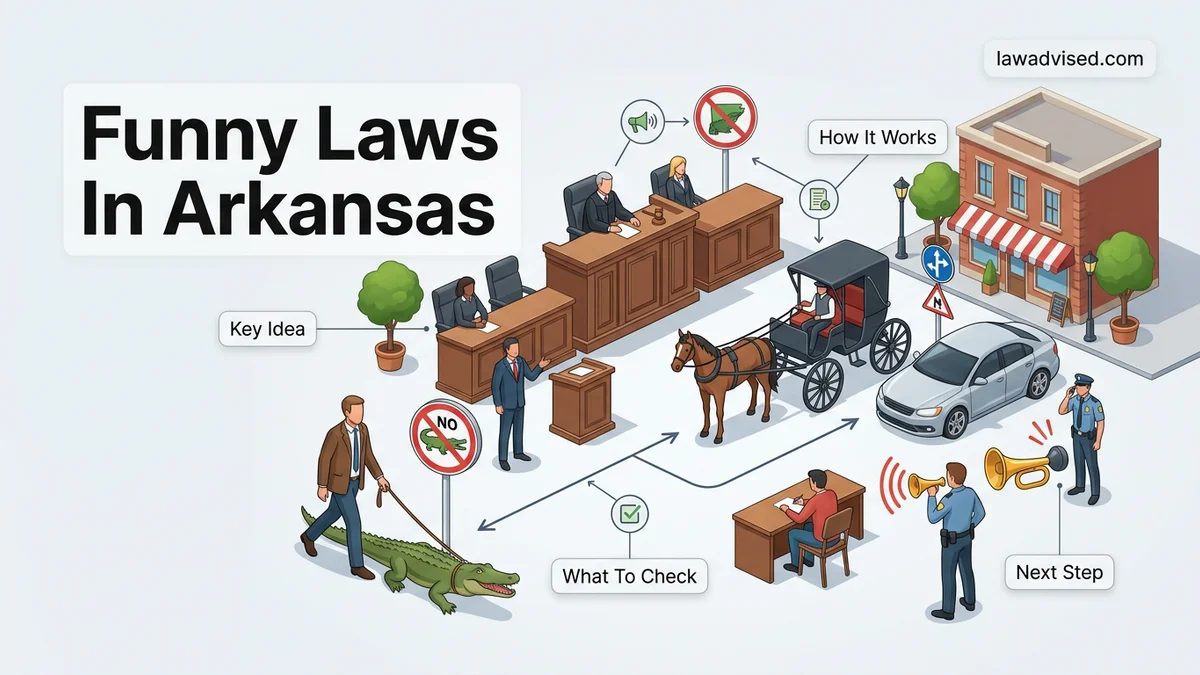
- Local ordinances historically banned honking horns near sandwich shops after 9 PM.
- Many viral weird laws are actually internet myths or heavily misinterpreted statutes.
- Outdated Blue Laws still influence certain restrictions across the state.
- Most bizarre ordinances carry zero legal penalties today.
What Causes Funny Laws in Arkansas to Exist
Legislative Overreaction and Historical Context
Most funny laws in Arkansas started with a very specific, real-world annoyance that lawmakers tried to fix permanently. Back in the late 19th and early 20th centuries, city councils and state legislators had immense power to regulate public morality and local peace. If a local merchant complained about a noisy disruption, a city might pass a permanent ordinance.
- Public Nuisance Bans: Many bizarre laws target exact behaviors that bothered prominent citizens at the time.
- Moral Policing: Early lawmakers frequently legislated personal habits, church day observances, and public decorum.
- Literal Interpretations: Vaguely worded statutes were written broadly to catch troublemakers, leading to absurd literal meanings today.
The Urban Legend Factor and Internet Myth-Making
Not every weird law you read about online is actually true. By 2027, the internet has amplified dozens of fake legal myths about Arkansas that never actually existed in the state code. Distinguishing between a real historical statute and a fabricated internet joke requires looking at actual municipal and state archives.
- Misattributed Statutes: Laws from other states often get wrongly assigned to Arkansas by viral blogs.
- Repealed Realities: Many genuinely funny laws were officially wiped from the books decades ago during legal code cleanups.
- Outdated Penalties: Fines that originally cost a few cents in the 1800s sound wildly funny when viewed through a modern economic lens.
How to Fix Common Misconceptions About Weird Statutes
Separating Old Ordinances from Current Enforcement
You will not get arrested today for breaking most of these funny historical laws. Police officers and prosecutors in 2027 focus on modern criminal codes, traffic safety, and public welfare. Just because an old city ordinance or state statute was never officially repealed does not mean local law enforcement actively enforces it.
- Desuetude Doctrine: Laws that are ignored for decades often lose their legal power through lack of enforcement.
- Supremacy of Modern Code: Newer state and federal laws frequently override older, contradictory local ordinances.
- Prosecutorial Discretion: No modern district attorney is going to charge you for violating a century-old behavioral quirk.
The Infamous Pronunciation Law Myth
One of the most famous Arkansas legal myths involves how you pronounce the state’s name. A frequent online claim states that it is legally illegal to mispronounce Arkansas. The truth is much more nuanced and reflects historical clarification rather than a draconian penalty.
- Senate Concurrent Resolution 4: Passed in 1881, the legislature officially declared the correct pronunciation to end a heated debate between AR-kan-saw and ar-KAN-zas.
- No Criminal Penalty: The resolution merely settled a linguistic dispute for state documents; it did not carry fines or jail time.
- Cultural Pride: Lawmakers simply wanted to honor the original native linguistic heritage without punishing visiting tourists.
Step-by-Step Guide to Fact-Checking Local Ordinances
Navigating the bizarre legal landscape of Arkansas in 2027 requires more than a casual internet search. Many viral statutes are actually municipal urban legends or outdated codes repealed decades ago by the Arkansas General Assembly. Legal researchers and data verification specialists recommend a systematic approach to separating authentic legislation from internet myths.
Here is how you can verify whether an eccentric Arkansas law is still active today:
- Consult the Official Code: Access the Arkansas Legislature’s official online database to search current state statutes and administrative rules.
- Check Municipal Codes: Use platforms like Municode or American Legal Publishing to review specific city ordinances for towns like Little Rock, Fayetteville, or Fort Smith.
- Verify Sunset Clauses: Look for expiration dates or modern repealing acts, as the 2027 legislative session has systematically cleaned up archaic language.
- Consult Legal Scholars: Reach out to reference librarians at the University of Arkansas School of Law for archival verification on historical statutes.
What If It Still Doesn’t Work and the Law is Real
Sometimes, an obscure or seemingly ridiculous statute turns out to be entirely real and active on the books. If your independent verification confirms that an unusual local ordinance or state law applies to your situation, standard troubleshooting will not suffice. You must pivot to advanced legal and administrative remedies.
Consider these fallback steps if you encounter a genuinely enforceable bizarre law:
- Request a Municipal Variance: File a formal petition with your local city council or zoning board to request an exemption or administrative waiver.
- Petition for Legislative Repeal: Contact your state representative to suggest a cleanup bill during the next legislative session to repeal archaic restrictions.
- Consult a Licensed Attorney: Retain a local attorney specializing in municipal law to evaluate constitutional challenges or preemption issues. Professional legal consultations typically range from $250 to $500 per hour depending on complexity.
- Monitor Enforcement Discretion: Review local police department policy manuals regarding low-priority or desuetude laws that officers routinely choose not to enforce.
Conclusion
While internet lore paints Arkansas as a state full of wacky and unbelievable rules, separating urban legends from actual legislation requires careful archival research and municipal fact-checking. According to verified research and expert legal sources, most truly restrictive archaic laws have either been repealed or sit dormant without enforcement. Your next actionable step is to cross-reference any questionable statute directly through the official Arkansas State Legislature database before altering your daily activities.
❓ Frequently Asked Questions
What is the most famous funny law in Arkansas?
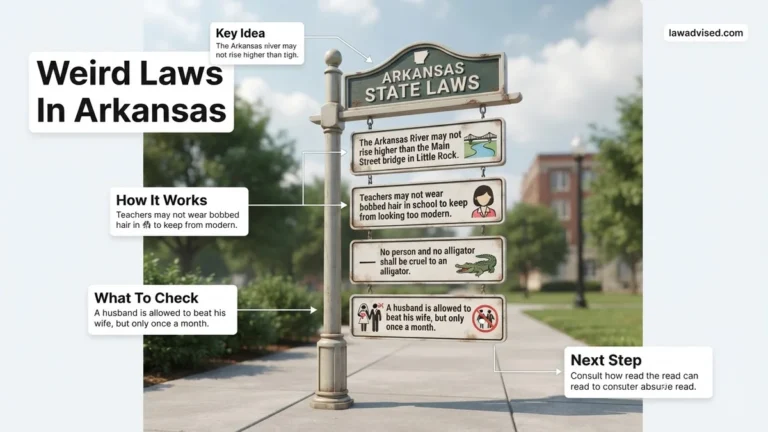
The most widely shared myth involves a statute supposedly allowing a man to beat his wife, provided it is only done once a month. This is entirely false and never existed in Arkansas law.
Did Arkansas really outlaw the mispronunciation of its name?
In 1881, the General Assembly passed a concurrent resolution declaring the correct pronunciation ends in ‘saw’, but it was a formal declaration rather than a criminal statute.
Are there actual sandwich shop horn laws in Arkansas?
While viral lists frequently claim Little Rock banned honking horns near sandwich shops after dark, no such code exists in the official municipal records.
Why are there so many fake laws attributed to Arkansas?
Internet listicles often invent or exaggerate old municipal ordinances to generate clicks and humorous reactions, spreading misinformation globally.
Do any weird historical laws still surprise visitors?
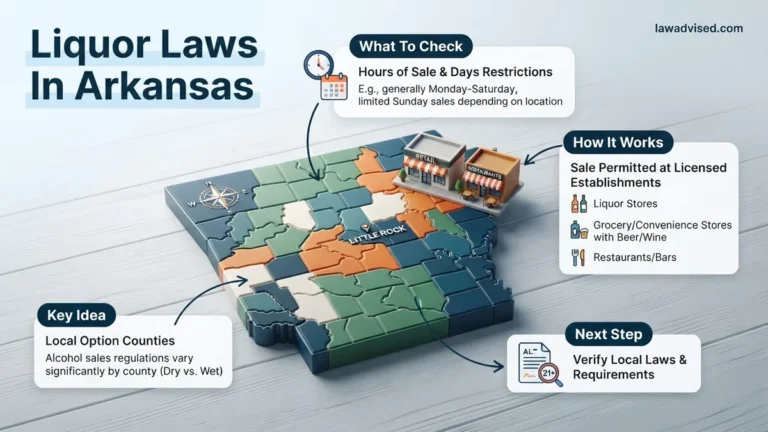
Strict historical regulations regarding alcohol sales and Sunday commerce tend to catch tourists off guard the most.
How can I tell if a weird law is real or fake?
Checking the official Arkansas Code Annotated database is the only foolproof way to verify whether a statute is legally binding.

Ismail Hossain is the founder of Law Advised. He is an Divorce, Separation, marriage lawyer. Follow him.