Tint Laws in Arizona 2027 Expert Guide to VLT Rules
Navigating tint laws in Arizona requires strict adherence to specific Visible Light Transmission (VLT) percentages for cars and multi-purpose vehicles. Understanding legal limits for front side, rear, and windshield glass keeps your vehicle compliant and prevents costly fines.
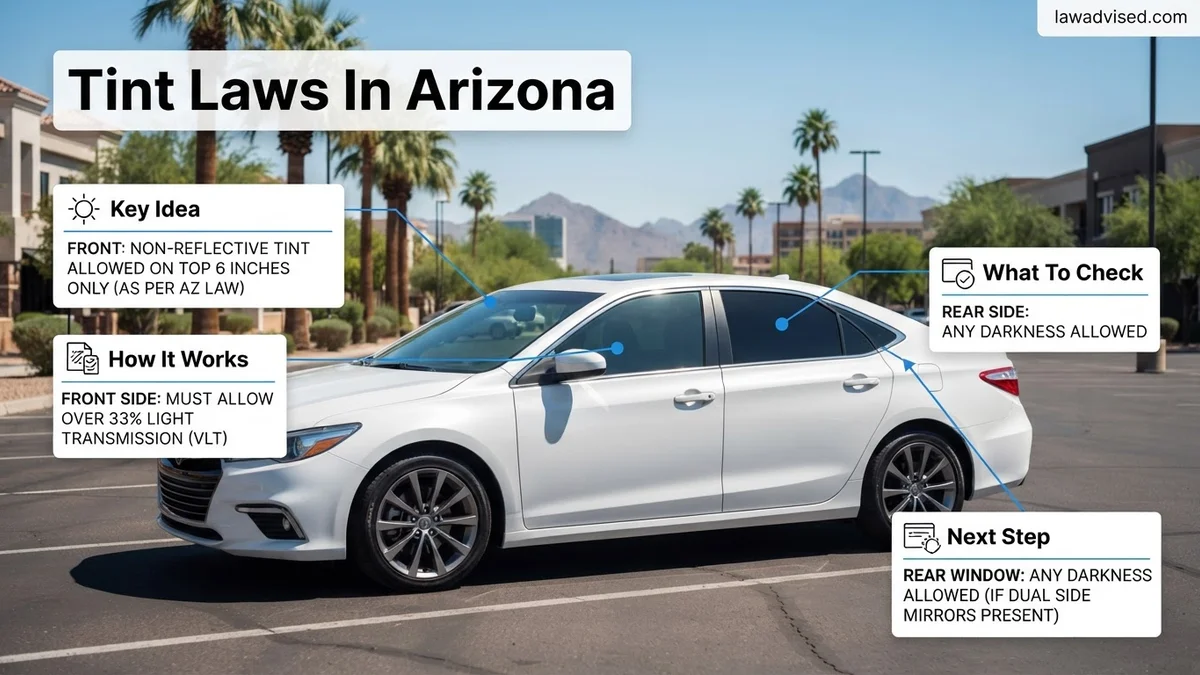
Navigating window tint laws in Arizona requires strict adherence to specific Visible Light Transmission (VLT) percentages for cars versus multi-purpose vehicles. For sedans, your front side windows must allow more than 33% of light in, while multi-purpose vehicles like SUVs and trucks enjoy more lenient rules for the rear. Windshield restrictions are absolute across all vehicle types, permitting non-reflective tint only on the top AS-1 line.
As of 2027, local law enforcement actively enforces these standards using digital light meters during routine traffic stops. Getting this wrong means costly fix-it tickets, mandatory removal notices, and failed annual safety checks in certain jurisdictions. Knowing the exact limits before you schedule your next tint installation saves you from immediate fines and hassle.
Key Takeaways
- Front side windows must allow over 50% of light in Arizona.
- Multi-purpose vehicles can use any darkness on rear windows.
- Windshield tint is strictly limited to the top AS-1 line.
- Reflective tint cannot exceed 35% reflectivity on front or rear.
- Dual side mirrors are mandatory if rear windows are tinted.
What Causes Tint Law Violations and Fines in Arizona
Vehicle-Specific VLT Non-Compliance
The most common violation stems from applying incorrect VLT percentages to specific window positions. Arizona law draws a hard legal line between passenger sedans and multi-purpose vehicles. If you drive a sedan, every side window and the rear window must adhere to strict clarity standards. Multi-purpose vehicles receive exceptions only for windows behind the driver.
- Sedans: Front side windows must let in over 33% of light. Back side windows and the rear window also require greater than 33% VLT.
- SUVs and Trucks: Front side windows must exceed 33% VLT. However, rear side windows and the back windshield can use any darkness percentage you prefer.
- Reflectiveness: No vehicle window tint in Arizona can be more than 35% reflective to reduce blinding glare for other drivers.
Windshield and Medical Exemption Violations
Applying film below the manufacturer’s AS-1 line on your front windshield is an automatic citation. Arizona allows non-reflective tint on this top strip only. If you require darker tint for medical reasons, you must carry an official signed statement from a licensed physician or optometrist. This document must explicitly state your medical necessity and remain inside your vehicle at all times for presentation to law enforcement.
How to Measure and Fix Non-Compliant Window Tinting
Using Digital VLT Meters Accurately
Law enforcement officers use portable optical meters to test your window tint percentage on the side of the road. You can verify your setup before driving by visiting a professional tint shop with a calibration meter. The device clamps onto rolled-down or slightly open glass to read the combined VLT of your factory glass and the applied aftermarket film. Keep in mind that factory privacy glass already absorbs some light, meaning standard 35% film applied over factory glass might drop your total VLT below the legal 33% threshold.
Clean both the inside and outside of your glass thoroughly before testing, as road grime skews meter readings.
Test each window individually, as front and rear placements carry different legal limits.
Verify that your installer provides a receipt stating the exact certified VLT of the film used.
Remediation Steps for Failed Inspections
If a police officer issues a citation for illegal tint, you typically have a set timeframe to fix the issue and present proof to the court. Fixing non-compliant tint requires completely stripping the old film off the glass. Attempting to peel dark film often leaves behind a stubborn adhesive layer that requires a razor blade, soapy water, and a heat gun. Once stripped, you must pay out of pocket to install a compliant film that meets the 33% VLT standard and obtain a signed compliance form from an authorized inspection station.
Step-by-Step Guide to Applying Legal Tint Percentages
Achieving a compliant vehicle modification in 2027 requires careful measurement and professional execution. Window film manufacturers specify Visible Light Transmission (VLT) ratings that factor in factory glass darkness. Applying illegal film leads to mandatory removal notices and state-imposed fines. Follow this structured process to ensure your installation meets Arizona Department of Transportation standards.
1. Measure Factory Glass VLT
Most modern automotive glass leaves the factory with a slight tint ranging from 75% to 85% VLT. Never assume your windows are completely clear. Use a certified digital VLT meter to test the bare glass before purchasing any aftermarket film. Multiplying factory glass VLT by film VLT determines your final legal percentage.
2. Select Compliant Film Rolls
Purchase high-grade ceramic or carbon films matching Arizona requirements. Ensure the front side windows use at least 33% VLT film. Verify that the top AS-1 line or permitted banner measurement is marked correctly. Reputable suppliers provide manufacturer certification stickers that must be applied between the glass and the film.
3. Professional Installation and Testing
Schedule your installation with a certified Arizona window tint technician who understands 2027 statutory limitations. Ask the installer to test the finished windows with a calibrated optical light meter. Request a signed compliance receipt documenting the exact VLT percentages achieved on every window.
What If Your Medical Exemption Requires Darker Window Tint
Certain medical conditions, such as lupus, photosensitivity, or severe albinism, require protection from intense sunlight. Arizona law accommodates these drivers through specific legal exemptions. Understanding the procedural requirements prevents unnecessary traffic citations and ensures complete legal compliance.
Obtaining Documentation
Drivers must secure a signed statement or prescription from a licensed physician or ophthalmologist. This medical document must explicitly state that the patient requires specialized window tint for health reasons. Keep this physical documentation inside the glove compartment alongside vehicle registration at all times.
Submitting State Paperwork
Forward your medical certification to the Arizona Motor Vehicle Division (MVD). Verified exemptions receive an official state compliance sticker or endorsement. Law enforcement officers recognize these authorized exemptions during traffic stops, permitting darker VLT levels on side and rear windows.
What If It Still Doesn’t Work?
If your window tint fails a law enforcement inspection or an annual safety check, immediate corrective action is necessary. Ignoring a citation results in escalating financial penalties. Complete these fallback steps to resolve non-compliant installations efficiently:
- Visit a Certified Removal Specialist: Take your vehicle to a professional tint shop to strip the non-compliant film safely without damaging rear defroster grids. Professional removal services typically cost between $100 and $250 depending on the vehicle type.
- Re-test with Optical Meters: Have the shop install new film certified at exact Arizona limits (33% VLT for front sides) and verify the measurement with a calibrated meter.
- Request a Certificate of Compliance: Obtain a signed work order from the installer detailing the new legal VLT percentages to present to local law enforcement or court officials if required.
Conclusion
Navigating Arizona window tint laws in 2027 demands strict adherence to VLT percentages and reflective limits. Failing to meet these standards invites costly citations and forced film removal. According to verified research and expert automotive compliance sources, precision measurement before installation remains the single most effective way to avoid penalties. Schedule an appointment with a certified professional today to test your current glass and guarantee total adherence to state regulations.
❓ Frequently Asked Questions
What are the exact VLT limits for sedans versus SUVs in Arizona?
For sedans, the front side windows require 50% VLT, while back side and rear windows must allow more than 33% light. For multi-purpose vehicles like SUVs and trucks, front windows require 50% VLT, but rear windows can be any darkness.
How do Arizona laws regulate windshield tinting?
Arizona law permits non-reflective tint on the front windshield only down to the manufacturer’s AS-1 line. Any tint below this line on the main windshield glass violates state regulations.
What are the rules regarding medical exemptions for window tint?
Drivers with documented medical conditions requiring protection from sunlight can apply for a medical exemption waiver. This allows darker tint than standard limits, provided official documentation is kept inside the vehicle.
Are there specific penalties for violating Arizona window tint regulations?
Violating state window tint laws typically results in a civil traffic violation and a fix-it ticket. Drivers are usually required to remove the illegal film and present proof of compliance to avoid further fines.
Does Arizona allow color restrictions on aftermarket window film?
Yes, red and amber colored window films are strictly banned on all vehicles driven on public roads in Arizona. Utilizing these colors can immediately result in a citation.
How is window tint percentage tested by law enforcement?
Law enforcement officers use a specialized electronic light meter placed directly against the glass. This device accurately measures the Visible Light Transmission percentage of the installed film.

Ismail Hossain is the founder of Law Advised. He is an Divorce, Separation, marriage lawyer. Follow him.