AC Laws in Arizona 2027 Expert Landlord and Tenant Guide
Under Arizona law, air conditioning is legally classified as an essential service that landlords must maintain. A broken AC unit during extreme summer heat constitutes a breach of the warranty of habitability, triggering strict legal response timeframes.
Under Arizona law, air conditioning is not considered a luxury amenity; it is a legal necessity for habitability. If you rent a home in the Grand Canyon State, your landlord is legally required to provide and maintain a working AC unit that can safely cool the property. When summer temperatures regularly cross 110 degrees, a broken cooling system creates an immediate health and safety emergency.
Navigating these rules in 2027 requires knowing the exact boundaries of the Arizona Residential Landlord and Tenant Act. Landlords cannot ignore failed systems, and tenants must follow strict statutory procedures if they want to exercise their legal remedies without facing eviction.
Key Takeaways
- Landlords must legally maintain working air conditioning systems in Arizona rental properties.
- AC failure in extreme heat is an emergency requiring rapid landlord response.
- Tenants may use the ‘repair and deduct’ remedy if landlords fail to act.
- Withholding rent entirely without following legal procedures can lead to eviction.
- Document all communications regarding AC failures in writing immediately.
What Causes AC Legal Disputes in Arizona Rentals
The Warranty of Habitability and Cooling Standards
Arizona law treats air conditioning differently than almost any other state. Under the Arizona Residential Landlord and Tenant Act, landlords must maintain fit premises, which explicitly includes essential services like running water, electricity, and air conditioning. Local municipal codes, such as those in Phoenix and Tucson, often go a step further by mandating specific indoor temperature thresholds—usually requiring the AC to maintain a temperature below a certain degree when it is extreme outside. If your unit breaks, the landlord is in material breach of the lease agreement.
Responsibility for Maintenance and Repairs
Disputes frequently arise over who pays for routine upkeep versus sudden mechanical failures. As a general rule:
- Landlord Duty: The landlord is responsible for repairing normal wear and tear, replacing aging compressors, and fixing structural system failures.
- Tenant Duty: You are generally responsible for replacing air filters monthly and keeping the vents clear, unless your lease explicitly states otherwise.
- Negligence: If a tenant damages the thermostat or blocks airflow intentionally, the tenant may be held financially liable for the repair bill.
How to Fix AC Repair Issues Legally as a Tenant
Emergency Timeframes for AC Failure
In Arizona, a total loss of air conditioning during extreme heat is legally classified as an emergency. Landlords do not have the standard 10 days to fix non-essential items when the indoor temperature threatens your health. Under the law, landlords must act with “deliberate speed” once notified. While the statute does not slap an exact hourly deadline on every scenario, 2027 enforcement standards and local housing codes generally expect a certified HVAC technician to be dispatched within 24 hours of written notice.
Step-by-Step Notice Requirements
You cannot simply call a repair person, hand the bill to your landlord, or withhold rent without following a precise legal paper trail. To protect your rights, you must:
- Notify Immediately: Send written notice via certified mail, email, or your tenant portal detailing the AC failure. Keep timestamped screenshots and temperature readings.
- Allow Access: Provide the landlord or their technician reasonable access to the property to diagnose and fix the issue.
- Document Everything: Keep a detailed log of every communication, the indoor temperature, and any medical impacts caused by the excessive heat.
What If Your Landlord Fails to Fix the AC Unit
When an Arizona landlord fails to address a broken air conditioner within the legally mandated timeframe, tenants have powerful remedies under the Arizona Residential Landlord and Tenant Act. Extreme summer temperatures elevate a broken cooling system from an inconvenience to a severe health hazard. According to state housing guidelines, surviving a heatwave without adequate cooling triggers specific self-help measures designed to protect occupants from heat-related illness.
Knowing the exact legal thresholds prevents tenants from violating their lease agreements while enforcing their rights. The following statutory remedies apply when landlords ignore written repair notices:
- The Repair and Deduct Remedy: If the repair costs less than $300 or an amount equal to one-half of the monthly rent—whichever is greater—tenants can hire a licensed contractor and deduct the cost from their next month’s rent.
- Alternative Housing Procurement: Tenants may secure temporary lodging at the landlord’s expense if internal temperatures render the property uninhabitable during excessive heat warnings issued by the National Weather Service.
- Lease Termination: Under Arizona Revised Statutes Section 33-1361, tenants can issue a written notice of termination allowing a 10-day cure period for material non-compliance affecting health and safety.
Documenting every communication remains essential for legal protection. Certified mail receipts, text messages, and time-stamped photographs of indoor thermometer readings serve as vital evidence in justice court disputes or rent escrow actions throughout 2027.
What If It Still Doesn’t Work?
Even after a landlord attempts repairs or a tenant utilizes self-help options, a cooling system may continue to malfunction under extreme 2027 desert operating loads. Resolving persistent HVAC failures requires a systematic troubleshooting approach before escalating the dispute further.
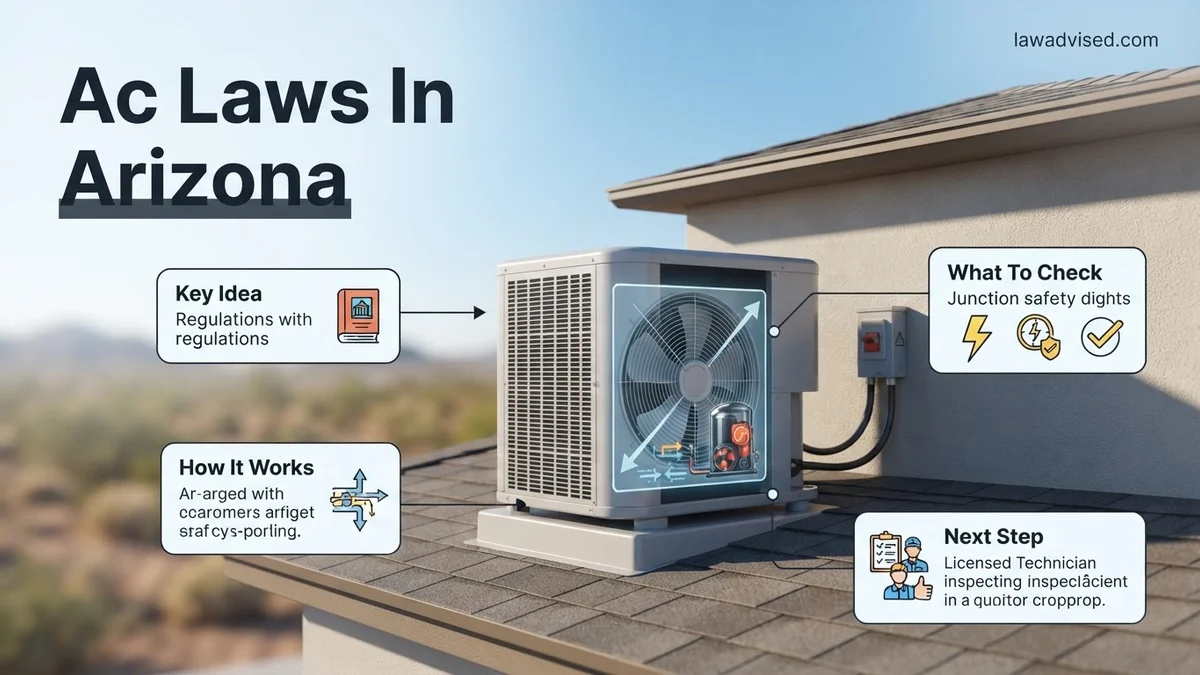
- Verify that the exterior condenser disconnect switch has not tripped due to a power surge, and inspect the main circuit breaker panel for flipped breakers.
- Check and replace clogged pleated air filters, as restricted airflow frequently triggers safety switches that shut down modern compressor units.
- Inspect the condensate drain line for blockages or algae buildup, which causes float switches to automatically disable the system to prevent water damage.
- Contact a certified HVAC professional to diagnose electrical faults or refrigerant leaks, keeping in mind that diagnostic service calls typically range from $100 to $250.
- Submit a secondary written notice to the landlord attaching the professional technician’s diagnostic report to demand immediate component replacement.
Conclusion
Navigating air conditioning laws in Arizona requires a clear understanding of statutory timelines, emergency health thresholds, and tenant self-help remedies. When landlords delay essential HVAC repairs during peak desert heat, knowing how to legally invoke repair-and-deduct or lease termination clauses protects both physical safety and financial well-being. According to verified research and expert housing sources, maintaining meticulous written documentation of every repair request remains the single most effective strategy for resolving landlord disputes swiftly. Review your lease agreement today and ensure your emergency contacts are updated for the ongoing 2027 cooling season.
❓ Frequently Asked Questions
What defines an AC emergency under Arizona law?
While the statute does not list a specific temperature threshold, common law and local ordinances view temperatures dangerous to health during extreme desert summers as an immediate emergency.
What steps must a tenant take to legally report a broken AC?
The tenant must provide written notice to the landlord detailing the specific problem and demanding repairs within a reasonable timeframe, typically keeping copies for legal protection.
Who pays for hotel accommodations if the AC fails?
Landlords are generally not required to pay for a hotel unless stated in the lease, but tenants may legally vacate the premises and stop paying rent if the unit is uninhabitable.
Can a landlord charge tenants for AC maintenance?
Landlords are responsible for structural and mechanical maintenance of provided appliances, though tenants are liable for damage caused by their own negligence.
What if the AC breaks due to normal wear and tear?
Normal wear and tear is entirely the landlord’s financial and legal responsibility to repair or replace promptly under the warranty of habitability.
Does Arizona law apply to mobile homes and RV spaces regarding AC?
The Arizona Mobile Home Parks Residential Landlord and Tenant Act provides similar protections if the landlord owns and rents the cooling unit with the space.

Ismail Hossain is the founder of Law Advised. He is an Divorce, Separation, marriage lawyer. Follow him.