Drone Laws in Arizona 2027 Step-by-Step Legal Guide
Navigating drone laws in Arizona requires understanding both federal FAA mandates and specific state statutes to avoid hefty fines. This expert guide breaks down where you can legally fly, required certifications, and critical no-fly zones across the state.
Flying a drone in Arizona means navigating a strict framework of both state statutes and federal aviation rules. Whether you are capturing cinematic desert landscapes or conducting commercial roof inspections, you must comply with Arizona’s state preemption laws, privacy mandates, and Federal Aviation Administration (FAA) regulations to avoid heavy fines.
In 2027, law enforcement agencies across Phoenix, Tucson, and rural municipalities actively monitor airspace misuse. Knowing the legal boundaries protects you from civil liability, misdemeanor charges, and FAA enforcement actions.
Key Takeaways
- Pass the TRUST exam for recreational flying or obtain Part 107 certification for commercial operations.
- Arizona state law prohibits flying over critical infrastructure like power plants and correctional facilities.
- Local cities cannot override state preemption laws regarding routine flight paths.
- Always check LAANC apps for real-time airspace authorizations near busy airports.
- Respect tribal sovereignty by avoiding unauthorized flights over Native American reservations.
What Causes Legal Violations Under Drone Laws in Arizona
Most drone pilots who face legal trouble in Arizona do so because they misunderstand state-specific restrictions rather than federal airspace rules. Arizona has very explicit statutes concerning where you can fly, who you can film, and how you interact with local authorities.
Privacy Violations and Surveillance Restrictions
Arizona law treats the use of unmanned aerial systems for targeted surveillance with zero tolerance. Under state privacy statutes, you cannot use a drone to capture images or recordings of individuals in places where they maintain a reasonable expectation of privacy without their consent.
- Private Property: Hovering your drone outside a bedroom window or peering over a backyard fence constitutes criminal surveillance.
- Commercial Exceptions: Real estate photography and roof inspections are generally legal, provided you avoid lingering near private, non-consenting individuals.
- Civil Liability: Victims of drone-based privacy breaches can sue you directly for damages in civil court.
Interfering with Emergency Operations and Wildlife
Arizona’s geography makes it prone to seasonal wildfires and search-and-rescue operations. State laws heavily penalize any drone activity that disrupts public safety personnel.
- Wildfires: Operating a drone near a wildfire zone violates federal law and triggers severe Arizona state felony charges if you ground firefighting aircraft.
- Wildlife Protection: Harassing, herding, or disturbing bighorn sheep, pronghorn, or nesting raptors violates Arizona Game and Fish regulations.
- State Preemption: Under Arizona state law (HB 2392 and subsequent updates), local cities and towns cannot pass their own conflicting drone ordinances. The state maintains sole authority over airspace management, preventing a confusing patchwork of rules between Phoenix, Scottsdale, and Mesa.
How to Comply with Federal FAA Regulations and State Statutes
While Arizona dictates privacy and emergency response laws, the FAA retains absolute control over the National Airspace System. Flying legally in 2027 requires you to satisfy both federal certifications and local legal requirements simultaneously.
Recreational vs. Commercial Compliance Pathways
Your intended use dictates the legal hoops you must jump through before your drone leaves the ground.
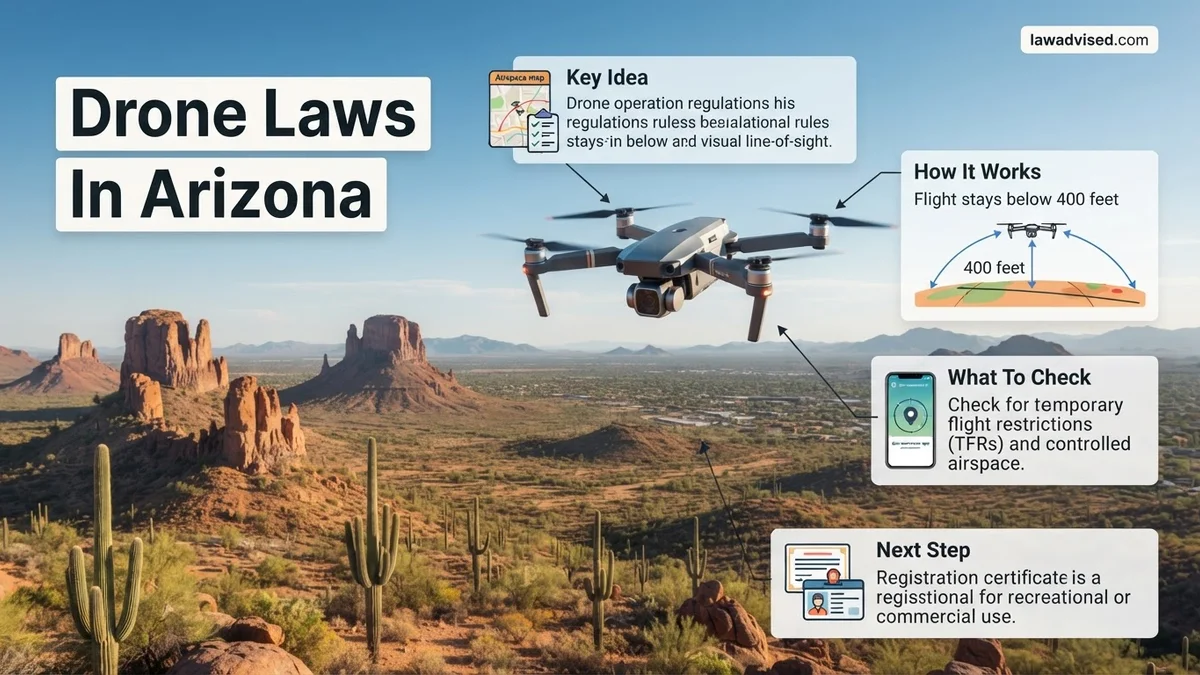
- Recreational Pilots: You must pass the TRUST (The Recreational UAS Safety Test) and carry your certificate while flying. Your drone must be registered with the FAA if it weighs over 250 grams.
- Commercial Pilots: If you sell your footage, use your drone for business promotion, or fly under any paid agreement, you must hold a valid FAA Part 107 Remote Pilot Certificate.
- Remote ID Mandate: Your aircraft must broadcast Remote ID information unless you are flying strictly within an FAA-recognized identification area (FRIA).
Airspace Authorization and Flight Planning
Arizona features dense airspace clustering around major international airports, military installations like Luke Air Force Base, and restricted national security zones.
- LAANC Access: Always use FAA-approved LAANC (Low Altitude Authorization and Notification Capability) providers like Aloft or Skyward to secure instant digital clearance in controlled airspace.
- State Parks and Native Lands: While state parks generally permit drone takeoffs and landings with proper permit checks, sovereign tribal nations (such as the Navajo Nation or Tohono O’odham Nation) enforce strict bans on drone operations without explicit tribal authorization.
- Visual Line of Sight: You must maintain unaided visual contact with your aircraft at all times, relying on visual observers only as a supplement.
Step-by-Step Process to Verify Airspace and Secure Authorization
Flying legally in Arizona requires navigating a complex patchwork of federal airspace and state-specific restrictions. According to Federal Aviation Administration (FAA) data and state aviation guidelines updated for 2027, pilots must follow a rigorous verification workflow before every single flight to remain fully compliant.
Step 1: Check Current Airspace Status
- Open an FAA-approved LAANC (Low Altitude Authorization and Notification Capability) provider app, such as Aloft or Skyward, on your mobile device.
- Enter your exact launch coordinates in Arizona to view sectional charts and real-time Temporary Flight Restrictions (TFRs).
- Identify whether your planned altitude falls beneath the controlled airspace grid ceiling or if it enters unrestricted Class G airspace.
Step 2: Submit for Automated or Manual Clearance
<
- Select your operational parameters, including maximum altitude, flight duration, and exact radius boundaries.
- If the flight is within controlled airspace, request instant LAANC authorization, which typically processes within seconds for altitudes under 400 feet.
- If automated approval is unavailable, submit a manual airspace authorization request through the FAA DroneZone portal, keeping in mind that manual reviews can take up to 90 calendar days.
What If Your Flight Path Intersects with Protected or Restricted Zones
Arizona features numerous federal, state, and tribal lands where drone operations are heavily restricted or outright banned. Navigating these overlapping jurisdictions requires careful planning to prevent costly federal violations and potential equipment seizure.
Handling National Parks and Wilderness Areas
- Identify federal boundaries using official land management maps, noting that launching, landing, or operating a drone from National Park Service lands is strictly prohibited under 36 CFR § 1.5.
- Check active wildfire perimeters, as the USDA Forest Service routinely issues emergency TFRs across Arizona forests that carry fines exceeding $20,000 for interference.
Navigating Tribal Sovereignty and Military Installases
- Research tribal land borders, as sovereign nations like the Navajo Nation enforce independent aviation laws that often require distinct permits and fees.
- Verify proximity to active military installations, including Luke Air Force Base and Davis-Monthan Air Force Base, which enforce strict national security buffer zones.
What If It Still Doesn’t Work?
If your automated LAANC request is repeatedly denied or your drone software fails to unlock restricted airspace despite proper credentials, strict troubleshooting protocols must be followed. Attempting to bypass geofencing features independently violates federal regulations.
- Verify that your drone firmware and remote identification module are updated to the latest 2027 manufacturer standards.
- Contact the FAA Support Center at 866-225-7432 to diagnose systemic authorization errors on your operator profile.
- Consult with a certified aviation attorney or professional UAS service provider if operating near complex military or commercial corridors. Professional regulatory consultation typically ranges from $150 to $400 per hour depending on project scope.
- File a manual waiver request through the FAA DroneZone if your commercial mission requires deviations from standard Part 107 rules.
Conclusion
Mastering drone laws in Arizona protects operators from severe legal penalties while ensuring safe skies for commercial and recreational users alike. By systematically verifying airspace through LAANC and respecting protected federal and tribal zones, you maintain total compliance. According to verified research and aviation safety experts, taking the proactive step of securing digital authorizations before every flight remains the single most effective defense against violations. Review your local airspace map today and fly with confidence.
❓ Frequently Asked Questions
What are the primary differences between recreational and commercial drone use in Arizona?
Recreational flyers only need a TRUST certificate and FAA registration for hobby use. Commercial pilots must pass the FAA Part 107 knowledge test to earn a Remote Pilot Certificate, which is legally required for any business-related flight.
How do Arizona privacy laws apply to drone photography?
Arizona privacy statutes prohibit using drones to capture images or video of individuals in private spaces where they have a reasonable expectation of privacy, such as backyards, without explicit consent.
Can I fly my drone over Native American reservations in Arizona?
Native American reservations are sovereign nations with their own laws. Many tribes, including the Navajo Nation, strictly prohibit drone operations on their lands without obtaining prior tribal permits.
How close can I fly my drone to wildlife in Arizona?
State and federal wildlife protection laws prohibit harassing, chasing, or disturbing wildlife with a drone. Operating too close to bighorn sheep, eagles, or nesting birds can result in heavy wildlife interference penalties.
What should I do if a law enforcement officer questions my drone flight?
Remain calm, politely inform them that you are operating under FAA guidelines and Arizona state preemption laws, and show your FAA registration or Part 107 certificate if requested.
How do I secure airspace authorization near busy Arizona airports like Phoenix Sky Harbor?
You must use an FAA-approved LAANC (Low Altitude Authorization and Notification Capability) service provider app, such as Aloft or AutoPound, to request automated clearance before taking off in controlled airspace.

Ismail Hossain is the founder of Law Advised. He is an Divorce, Separation, marriage lawyer. Follow him.