Tobacco Age Laws in California Expert 2027 Guide to Rules
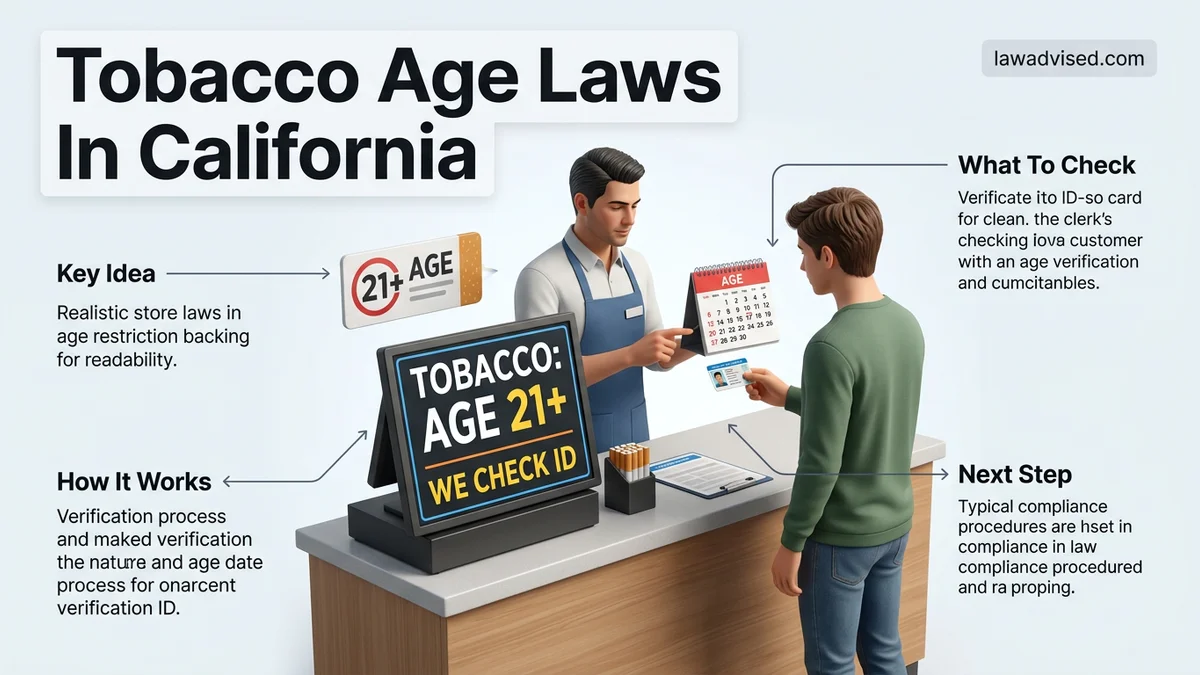
The legal minimum age to purchase and possess tobacco products in California is 21 years old. This strict age restriction applies to all tobacco items, including cigarettes, cigars, and alternative nicotine delivery systems. Retailers who sell to anyone under 21 face severe legal penalties and fines.
The legal minimum age to buy and possess tobacco and nicotine products in California is 21 years old. This strict mandate applies to all traditional cigarettes, cigars, chewing tobacco, and modern electronic nicotine delivery systems without exception.
As of 2027, California enforces some of the nation’s most stringent retail compliance standards. Whether you operate a retail storefront, manage a smoke shop, or simply want to stay fully informed of state mandates, understanding these laws protects you from severe legal penalties, steep fines, and potential license suspensions.
Key Takeaways
- The minimum legal age to buy tobacco in California is strictly 21 years old.
- All nicotine products, including e-cigarettes and vapes, fall under the age-21 restriction.
- California enforces a statewide ban on the retail sale of flavored tobacco products.
- Military exemptions do not exist; active duty service members must also be 21 to purchase tobacco.
- Retailers caught selling to underage buyers face heavy civil and criminal penalties.
What Causes Underage Sales Violations of California Tobacco Laws
Retailers frequently face violations not due to malicious intent, but because of systemic operational oversights at the point of sale. Knowing these failure points helps you safeguard your business.
Employee Training Gaps and High Turnover
New cashiers often fail to calculate birth dates accurately or misread out-of-state identification cards under pressure. When your staff lacks rigorous, ongoing compliance training, underage buyers slip through the cracks. In 2027 enforcement sweeps, state inspectors actively target locations with high employee turnover rates.
Bypassing POS System Age Prompts
Many modern point-of-sale systems require a manual date-of-birth entry or a physical ID scan before a tobacco transaction can proceed. Employees rushing to clear long lines sometimes bypass these safety prompts by entering generic override dates, directly triggering illegal sales violations.
- Failing to ask for physical identification from patrons who appear under the age of 30.
- Accepting expired, damaged, or easily falsified identification cards.
- Allowing third-party or proxy purchases where an adult buys products for an underage companion.
- Distributing flavored tobacco items, which remain entirely banned from sale across California storefronts regardless of customer age.
How to Comply with California Tobacco Age Laws and Check IDs
Absolute compliance requires a standardized protocol that removes guesswork from the cashier’s daily routine. Implementing a strict verification framework ensures your business stays fully aligned with 2027 standards.
Mandatory Carding Policies for All Ages
Adopt a strict Card-30 policy across your entire retail staff. If a customer appears to be 30 years old or younger, cashiers must physically inspect a valid, government-issued photo ID. Never estimate a customer’s age visually.
Acceptable Forms of Identification
Your team must verify that every presented document is current and authentic before completing any sale of tobacco or e-cigarettes.
- Valid state-issued driver licenses or Department of Motor Vehicles identification cards.
- Current United States Armed Forces identification cards.
- Valid passports or passport cards containing a clear photograph and birth date.
- Digital identification formats officially recognized by the State of California.
What If Retailers Fail to Enforce the Under-21 Tobacco Ban
California enforces rigorous compliance checks to ensure retail establishments strictly adhere to the under-21 tobacco sales law. According to data from the California Department of Public Health (CDPH), state and local agencies conduct thousands of unannounced decoy operations annually. When retailers fail to verify age or illegally sell nicotine products to underage buyers, severe regulatory penalties immediately follow.
Penalties for Illegal Sales
Retailers caught violating tobacco age laws face escalating fines and administrative actions. A first-time offense typically incurs a civil penalty starting around $400 to $600. Repeat infractions within a 24-month window result in significantly higher fines, reaching up to $3,000 for a fourth violation. Furthermore, persistent non-compliance leads to the suspension or permanent revocation of the retailer’s state tobacco license.
Employee Accountability
Individual clerks who sell tobacco to minors also face legal repercussions. Law enforcement can issue personal citations and misdemeanor fines directly to the employee making the sale. To mitigate this risk, industry experts strongly recommend that business owners implement mandatory annual training programs. Comprehensive training ensures staff members properly utilize electronic ID-scanning technology and understand state-mandated compliance protocols.
Proven Steps to Navigate California Flavored Tobacco and Vape Restrictions
California maintains one of the strictest flavor bans in the nation under Proposition 31 and subsequent legislation. Navigating these rules requires absolute clarity on what is prohibited versus what remains legal for adult consumers aged 21 and older. Authorized retailers must strictly remove all banned merchandise from display shelves to maintain their operating licenses.
- Verify Product Legality: Check state compliance lists to ensure any tobacco product does not feature characterizing flavors like fruit, mint, menthol, or candy.
- Understand Exemptions: Acknowledge that premium cigars, loose-leaf pipe tobacco, and certain shisha products sold in specialized lounges maintain narrow exemptions under current 2027 state guidelines.
- Secure Proper Documentation: Always carry a valid, government-issued photo identification when purchasing any age-restricted tobacco item to comply with mandatory point-of-sale scanning laws.
What If It Still Doesn’t Work?
If compliance efforts fail or if businesses encounter persistent supply chain and regulatory disputes regarding tobacco age laws, specific escalation steps are necessary. Resolving complex licensing or legal challenges often requires targeted action.
- Consult Legal Counsel: Engage an attorney specializing in California administrative law and state tobacco licensing to contest unfair penalties or citation errors. Estimated legal consultation costs range from $250 to $500 per hour.
- Contact Regulatory Authorities: Reach out directly to the California Department of Tax and Fee Administration (CDTFA) to clarify licensing statuses and rectify administrative discrepancies.
- Review Compliance Software: Upgrade point-of-sale hardware and age-verification software to automated biometric systems, which cost between $1,500 and $3,500 to install.
- Implement Audit Protocols: Hire third-party compliance auditing firms to conduct mock decoy checks, with service fees typically ranging from $500 to $1,200 per audit cycle.
Conclusion
Navigating California tobacco age laws and flavor restrictions requires constant vigilance from both consumers and retail operators. Strict enforcement mechanisms and steep penalties make compliance non-negotiable for anyone participating in the state’s tobacco market. According to verified research and expert sources from public health agencies, maintaining rigorous ID-checking procedures remains the single most effective method to avoid legal penalties. As a definitive next step, business owners should schedule an independent compliance audit to ensure their staff and point-of-sale systems meet all current 2027 statutory requirements.
❓ Frequently Asked Questions
What specific products are restricted under California tobacco laws?
The restrictions apply to all tobacco products, including traditional cigarettes, cigars, chewing tobacco, pipe tobacco, and electronic nicotine delivery systems like vapes, e-cigarettes, and e-liquids regardless of nicotine content.
What are the penalties for retailers who sell tobacco to minors in California?
Retailers caught selling tobacco products to individuals under 21 face escalating fines, civil penalties, and the potential suspension or revocation of their state tobacco retail license.
Does California law require ID checks for tobacco buyers?
Yes, retailers are legally required to verify the age of any tobacco purchaser who appears to be under the age of 30 by checking a valid government-issued photo identification.
Can adults aged 21 and older buy tobacco for underage individuals?
No, furnishing, supplying, or giving tobacco products to anyone under the age of 21 is strictly illegal and subject to fines and misdemeanor charges.
How do local California municipalities enforce tobacco laws?
Local health departments and law enforcement agencies regularly conduct decoy operations and compliance checks using underage decoys to ensure retailers are following age-verification laws.
Are online tobacco sales to California residents subject to the age-21 limit?
Yes, online retailers shipping tobacco or vape products to California addresses must utilize robust, independent age-verification systems to ensure the recipient is at least 21 years old.

Ismail Hossain is the founder of Law Advised. He is an Divorce, Separation, marriage lawyer. Follow him.