Gross Income vs Taxable Income Real Guide for 2026
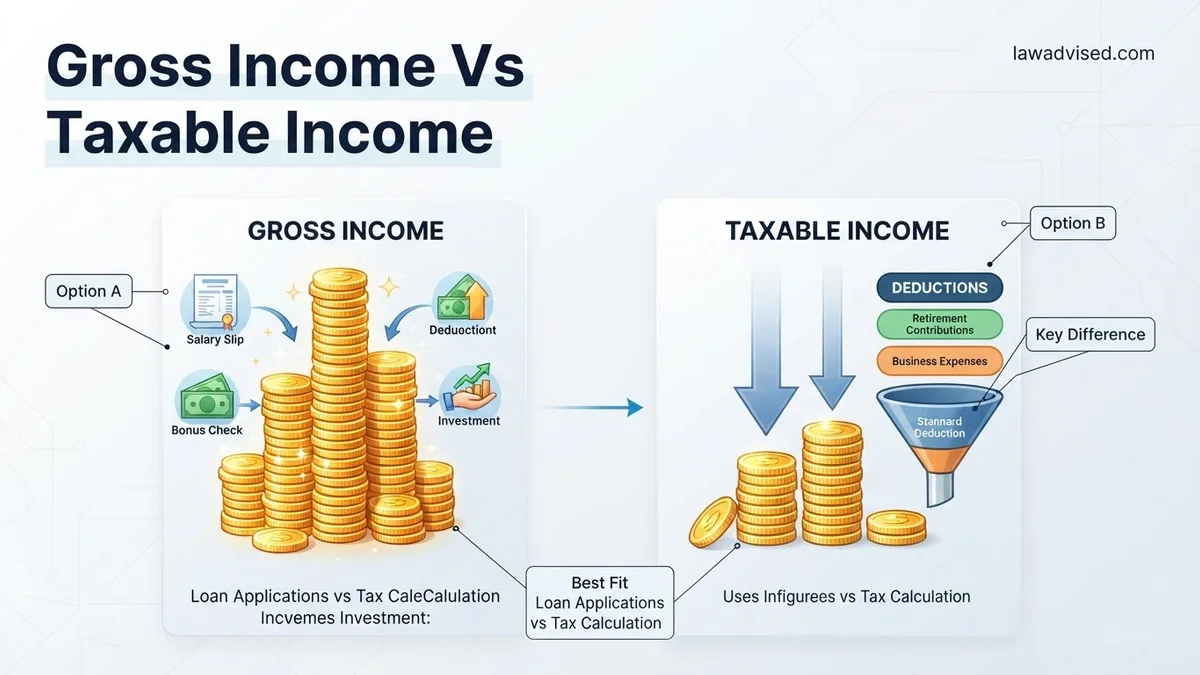
Gross income is your total earnings before any deductions, while taxable income is the adjusted amount subject to federal and state taxes. Understanding the gap between the two determines your actual tax liability and refund potential.
Gross income is your total earnings before any deductions, while taxable income is the actual amount of that money the government uses to calculate your 2026 tax bill after subtracting allowable adjustments, standard deductions, or itemized deductions.
Understanding this difference matters practically because your gross salary is rarely what you actually pay taxes on. Knowing how to bridge that gap helps you maximize deductions and accurately predict your take-home pay and tax liability for the 2026 tax year.
Key Takeaways
- Gross income includes all wages, tips, interest, and dividends earned throughout the year.
- Taxable income subtracts adjustments and deductions from your total gross earnings.
- Pre-tax retirement contributions and health insurance premiums lower your taxable baseline.
- Choosing between the standard deduction and itemized deductions directly affects taxable totals.
- Loan approvals typically evaluate gross income, while tax brackets rely strictly on taxable income.
What Causes the Gap Between Gross Income and Taxable Income
The gap between what you earn and what you are taxed on comes down to specific government-approved subtractions. These reductions lower your tax burden.
Above-the-Line Deductions
Adjustments to income, often called above-the-line deductions, reduce your gross income to arrive at your Adjusted Gross Income (AGI). You can claim these even if you take the standard deduction.
- Contributions to traditional IRAs or health savings accounts (HSAs)
- Student loan interest payments up to allowable annual limits
- Self-employed health insurance premiums and retirement contributions
Below-the-Line Deductions
Once you reach your AGI, you apply below-the-line deductions to reach your final taxable income for 2026. This is where you choose between two primary options.
- The federal standard deduction, adjusted for inflation in 2026
- Itemized deductions like mortgage interest, state and local taxes, and charitable donations
Step-by-Step Guide to Calculate Your Taxable Income From Gross Earnings
Calculating your taxable income for 2026 requires following a logical sequence. You start with your total top-line revenue and systematically remove qualified amounts.
Step 1: Total Your Gross Earnings
You must compile every source of income you receive throughout the year to establish your starting baseline.
- W-2 wages and salaries from your primary employer
- Freelance income, side-hustle earnings, and 1099 payments
- Investment dividends, capital gains, and rental property revenue
Step 2: Subtract Adjustments and Deductions
With your gross income established, you apply your pre-tax deductions and standard or itemized deductions to reveal the final number.
- Deduct your pre-tax employer-sponsored retirement plan contributions like 401(k) or 403(b) payments
- Subtract qualified above-the-line adjustments to determine your AGI
- Subtract your chosen standard deduction or total itemized deductions to find your 2026 taxable income
Proven Strategies to Maximize Deductions and Lower Your Taxable Base
Bridging the gap between your gross income and your taxable income requires proactive planning. According to financial analysts at the IRS and leading tax policy institutes, taxpayers who strategically utilize above-the-line deductions and tax-advantaged accounts retain significantly more of their earnings.
Utilize Pre-Tax Retirement Accounts
Contributing to employer-sponsored plans like a traditional 401(k), 403(b), or eligible governmental 457 plan directly reduces your gross income to arrive at your adjusted gross income (AGI). For the 2026 tax year, maximizing your contributions not only builds long-term wealth but immediately shields those funds from federal income taxation.
Leverage Health Savings Accounts (HSAs)
An HSA offers a unique triple tax advantage. Contributions are 100% pre-tax, earnings grow tax-free, and withdrawals for qualified medical expenses are entirely tax-free. Financial planning experts emphasize that maximizing an HSA is one of the most efficient legal methods to shrink your taxable base.
- Calculate your maximum allowable contribution limit for the 2026 tax year based on your high-deductible health plan coverage type.
- Set up automated payroll deductions to ensure consistent contributions throughout the calendar year without manual intervention.
- Invest the cash balance within the HSA once eligibility thresholds are met to maximize long-term compound growth.
- Keep meticulous digital or physical records of all qualified medical receipts to substantiate withdrawals if audited.
What If Your Withholdings Still Don’t Match Your Taxable Liability
Even with careful calculations, unexpected life changes or fluctuating freelance revenue can cause a mismatch between your withholdings and your final 2026 tax liability. If your year-end tax scenario looks off, specific troubleshooting steps can correct the trajectory before filing season arrives.
Actionable Fallback Steps for Tax Mismatches
When standard withholding adjustments fail to align with your actual gross-to-taxable calculations, execute these corrective measures:
- Submit an updated Form W-4 to your employer’s human resources or payroll department immediately to increase flat-dollar additional withholdings per pay period.
- Calculate and submit estimated quarterly tax payments directly to the IRS using Form 1040-ES if you earn significant 1099 or investment income alongside a W-2 salary.
- Consult a certified public accountant (CPA) or an enrolled agent (EA) to conduct a mid-year tax projection review, with professional consultation fees typically ranging from $200 to $500 depending on complexity.
- Establish an IRS online account to monitor your real-time tax payments, ledger balance, and historical filing transcripts to avoid surprise penalties.
Conclusion
Understanding the fundamental differences between gross income and taxable income empowers you to take control of your financial health and minimize unnecessary tax burdens. According to verified research and tax experts, actively managing your deductions and utilizing pre-tax accounts are the most reliable methods to lower your overall liability. To take the next actionable step today, log into your payroll provider portal, review your current tax withholdings, and adjust your pre-tax retirement or health contributions for the 2026 tax year.
❓ Frequently Asked Questions
How does adjusted gross income fit between gross and taxable income?
Adjusted gross income is your gross income minus specific adjustments like student loan interest or retirement contributions, serving as the stepping stone to taxable income.
Can your taxable income ever be higher than your gross income?
No, taxable income is calculated by making subtractions from gross income, meaning it is always equal to or lower than the gross amount.
Which income figure do tax brackets apply to?
Federal and state income tax brackets apply strictly to your final taxable income, not your gross earnings.
Are self-employed individuals taxed on gross or net business income?
Self-employed individuals pay taxes on their net business income, which is gross receipts minus ordinary and necessary business expenses.
Do state taxes use the same taxable income as federal taxes?
Most states start with federal adjusted gross income or taxable income as a baseline, but they apply their own state-specific deductions and adjustments.
How do pre-tax deductions impact your tax bracket?
Pre-tax deductions lower your adjusted gross and taxable income, which can potentially drop you into a lower tax bracket.

Ismail Hossain is the founder of Law Advised. He is an Divorce, Separation, marriage lawyer. Follow him.