Taxable Income Meaning Step-by-Step Guide for 2026
Taxable income is the portion of your total earnings that the government actually taxes after accounting for deductions and adjustments. Gross income represents everything you earn, while taxable income is the final figure used to determine your actual tax liability. Knowing the difference helps you effectively lower your tax burden each year.
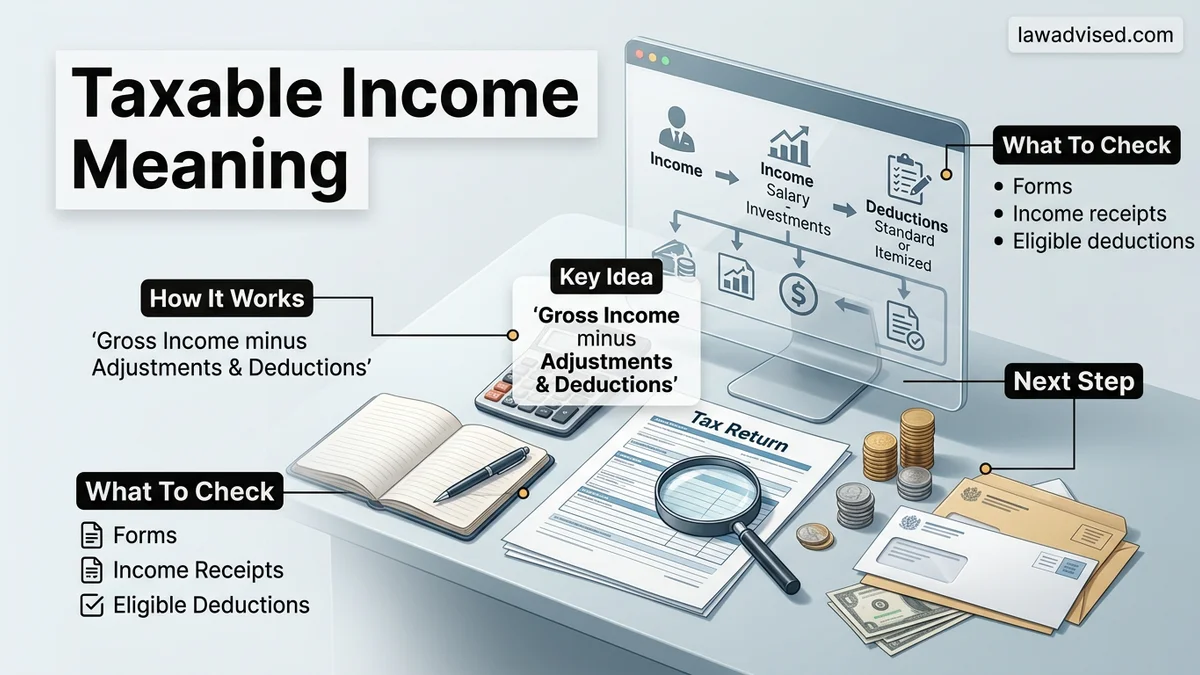
Taxable income is the portion of your total earnings that the government actually taxes after subtracting allowable adjustments and deductions. It is the final baseline figure used to calculate your actual federal and state income tax liability for the year.
Understanding this metric prevents you from overpaying the IRS and helps you strategically lower your tax bill. By knowing how gross earnings transform into your final taxable amount, you can leverage deductions and pre-tax accounts effectively.
Key Takeaways
- Taxable income is the specific amount of money subject to government taxation.
- Calculate it by taking your gross income and subtracting allowable deductions.
- Both earned wages and unearned investment gains can contribute to your overall income.
- Taking the standard deduction lowers your final taxable total instantly.
- Pre-tax retirement contributions effectively reduce your overall taxable income.
What Causes Confusion Around Taxable Income Versus Gross Income
Gross Income vs. Taxable Income Explained
Many taxpayers mistakenly believe that their annual salary or hourly wages dictate the amount subject to taxation. Your gross income includes every dollar you earn, from your base pay and bonuses to freelance side-hustle money and investment dividends. Taxable income, however, is a much smaller number because the tax code lets you subtract specific expenses and deductions before applying tax rates.
Why the Difference Impacts Your Wallet
The gap between what you earn and what you pay taxes on determines your real purchasing power. If your employer reports a gross salary of $80,000 for 2026, you will not pay taxes on that full amount. Ignoring this distinction leads to flawed budgeting and missed opportunities to shelter your money using legal deductions.
- Gross income represents the starting pool of all your earnings.
- Taxable income is the adjusted final amount subjected to tax brackets.
- Deductions and adjustments act as the bridge between the two figures.
How to Calculate Your Taxable Income Step-by-Step
Step 1: Start with Your Total Gross Income
Begin your calculation by gathering all income streams received throughout the calendar year 2026. This includes W-2 wages from employers, 1099 earnings from freelance work, rental income, and taxable interest. Sum these amounts to find your total gross income, which acts as the ceiling for your tax calculations.
Step 2: Subtract Above-the-Line Deductions and Pre-Tax Contributions
Next, subtract adjustments to income, often called above-the-line deductions. These do not require you to itemize expenses and directly lower your gross total. Examples include contributions to traditional 401(k) plans, health savings accounts (HSAs), and student loan interest payments.
- Add up all verifiable gross earnings for 2026.
- Subtract pre-tax retirement and health savings contributions.
- Deduct eligible above-the-line expenses like educator expenses or self-employed health insurance.
Step 3: Apply the Standard Deduction or Itemized Deductions
After finding your adjusted gross income, you must subtract a final major layer to arrive at your taxable income. You can choose between taking the flat standard deduction or itemizing specific expenses like mortgage interest and charitable donations. For the 2026 tax year, taking the standard deduction is the simplest route for the vast majority of households.
For example, if your adjusted gross income is $75,000 and you take a standard deduction of $15,000, your final taxable income drops to $60,000. The government applies your tax bracket percentages only to that remaining $60,000.
How to Apply Deductions and Adjustments to Lower Your Tax Bill
Once you calculate your adjusted gross income for the 2026 tax year, the next step involves applying deductions to determine your final taxable income. Tax experts emphasize that utilizing every eligible deduction directly reduces the dollar amount of income subject to federal and state taxation. According to IRS guidelines, taxpayers must choose between two primary methods to reduce their taxable base.
Step 1: Choose Between the Standard and Itemized Deduction
Taxpayers must evaluate whether taking the flat standard deduction or itemizing specific expenses yields a lower taxable income. The 2026 tax projections set the standard deduction at competitive thresholds adjusted for inflation. Follow these steps to make your selection:
- Calculate the total value of your eligible itemized expenses, including mortgage interest, state and local taxes, and qualified medical costs exceeding the strict adjusted gross income percentage floor.
- Compare your total itemized expenses against the official 2026 standard deduction amount for your specific filing status.
- Select the deduction method that results in the highest total deduction, thereby minimizing your final taxable income.
Step 2: Claim Above-the-Line Adjustments
Unlike itemized deductions, above-the-line adjustments reduce your gross income before you even calculate your standard deduction. Reviewers and financial advisors recommend verifying eligibility for student loan interest deductions, health savings account contributions, and educator expenses. Subtracting these adjustments first ensures an accurate baseline for your subsequent tax calculations.
What If It Still Doesn’t Work?
If your calculated taxable income remains higher than expected after applying standard deductions and adjustments, your financial strategy may require advanced intervention. Financial analysts note that failing to lower your tax liability can lead to unexpected tax bills and penalties. Consider these fallback steps if standard methods fail to yield sufficient relief:
- Maximize retirement account contributions by funneling additional funds into a traditional IRA or 401(k) before the filing deadline, which retroactively lowers your taxable income for the previous year.
- Explore targeted tax credits, such as the Child Tax Credit or energy-efficient home improvement credits, which provide dollar-for-dollar reductions of your actual tax liability rather than just your taxable income.
- Consult a certified public accountant or an enrolled agent to uncover overlooked deductions specific to your business or employment status. Professional tax preparation services typically range from $220 to $500 depending on the complexity of your return.
- Establish an official installment agreement with the tax authority if your final tax liability exceeds your immediate payment capabilities, preventing severe collection actions.
Conclusion
Understanding taxable income meaning empowers taxpayers to navigate the 2026 tax landscape with confidence and strategic precision. By carefully calculating adjusted gross income and aggressively applying every eligible deduction and adjustment, individuals can legally minimize their overall tax burden. According to verified research and expert financial sources, proactive year-round tax planning remains the single most effective tool for preventing unexpected financial strain during tax season. One actionable next step is to gather your income statements and preliminary deduction records today to run a pre-season tax simulation.
❓ Frequently Asked Questions
What is the exact mathematical relationship between gross income and taxable income?
To find your taxable income, you start with your gross income, subtract any above-the-line adjustments, and then subtract either your standard deduction or total itemized deductions. The resulting final figure is the amount subjected to your tax bracket rates.
Are all types of income taxed at the exact same rates?
No, earned income from a job is taxed according to standard marginal income tax brackets, while certain unearned income like long-term capital gains often qualifies for lower preferential tax rates.
How do pre-tax deductions impact your taxable income meaning?
Pre-tax contributions made to employer-sponsored retirement plans or health savings accounts reduce your gross income before taxes are calculated, effectively lowering your overall taxable income.
What is the difference between tax credits and deductions?
Deductions reduce the amount of your income that is subject to taxes, whereas tax credits provide a dollar-for-dollar reduction of your actual final tax liability.
Does the standard deduction change every year?
Yes, tax authorities frequently adjust standard deduction thresholds annually to account for inflation, meaning the exact amount changes from year to year.
Can your taxable income ever be zero or negative?
If your allowable deductions exceed your total gross income for the year, your taxable income generally drops to zero, though certain specific losses may trigger complex carryover rules.

Ismail Hossain is the founder of Law Advised. He is an Divorce, Separation, marriage lawyer. Follow him.