Common Tax Filing Mistakes Proven Step-by-Step 2026
Filing your taxes incorrectly can lead to delayed refunds, unexpected IRS notices, and costly penalties. Identifying simple errors like math mistakes, missing Social Security numbers, and unreported income before you submit protects your money and keeps your return processing smoothly.
Filing your 2026 tax return accurately is the single most effective way to protect your hard-earned money and secure your refund without unnecessary delays. Every filing season, millions of everyday taxpayers make preventable errors that trigger automated IRS notices, trigger processing holds, or result in costly financial penalties.
Avoiding these frequent slip-ups requires understanding exactly where people stumble—from simple data entry typos to choosing the wrong filing status. By focusing on the exact pain points that delay returns, you can submit an error-free return this year.
Key Takeaways
- Double-check all Social Security numbers to prevent immediate return rejection by the IRS.
- Report all 1099 and W-2 income to avoid automated underreporting matching notices.
- Select the correct filing status to ensure you claim eligible credits and deductions.
- Sign and date your paper return, as unsigned forms are not legally valid.
- Use Form 1040-X to quickly amend your return if you discover an error after submission.

What Causes Common Tax Filing Mistakes on Your Return
Relying Solely on Memory Instead of Waiting for Forms
Many taxpayers rush to file as soon as the calendar turns to 2026, only to realize later that a stray 1099 or brokerage statement arrived a week too late. Filing before you have all your tax documents guarantees a mismatch with what the IRS receives.
- The consequence: The IRS automated matching system will flag the discrepancy, resulting in a formal notice, a recalculation of your tax liability, and potential back taxes plus interest.
- How to avoid it: Wait until mid-February to ensure all W-2s, 1099s, and K-1s are fully available in your online portals before submitting your data.
Typos in Social Security Numbers and Names
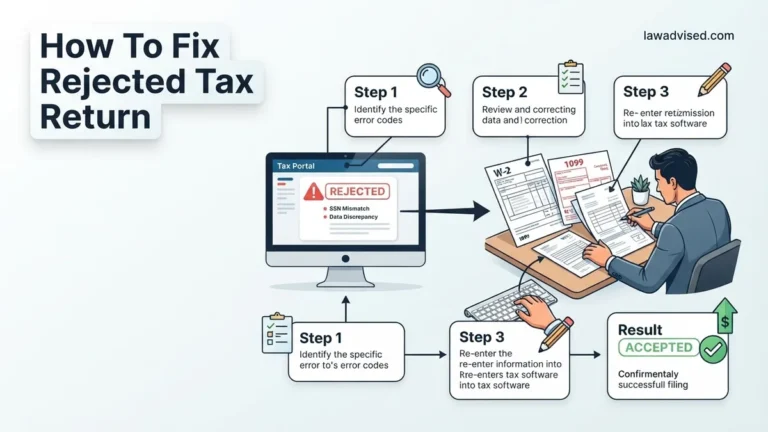
A single misplaced digit in a Social Security Number (SSN) or a misspelled dependent name will instantly halt the automated processing of your electronic return.
- The consequence: Direct deposits are frozen, and paper error notices are mailed out, pushing your refund timeline back by six to eight weeks.
- How to avoid it: Double-check every SSN and date of birth against the actual physical Social Security cards for yourself, your spouse, and your dependents.
How to Fix Incorrect Data Entries and Wrong Filing Statuses
Selecting the Wrong Filing Status
Choosing an incorrect filing status—such as claiming Head of Household when you do not meet the strict dependency and financial support rules—is one of the fastest ways to invite an IRS audit.
- The consequence: The IRS will adjust your return, which typically eliminates valuable standard deduction amounts or credits, turning your expected refund into a surprise tax bill.
- How to avoid it: Use the Interactive Tax Assistant tool on the IRS website to verify your status if your marital or living arrangements changed during 2026.
Math Errors and Transposed Figures
Even when using modern tax software, manual data entry fields still allow room for human error, such as transposing digits on income amounts or withholding figures (for example, typing $5,400 instead of $4,500).
- The consequence: The IRS math squad will automatically correct the calculation, but this manual intervention delays your refund and alters your final balance.
- How to avoid it: Always review the final PDF summary of your tax return line-by-line before clicking the final transmission button.
Step-by-Step Guide to Filing an Amended Return for Omitted Income
Discovering that you left out a 1099, W-2, or investment dividend after submitting your tax return requires immediate action. Waiting for the IRS to catch the error often triggers automated underreporter notices and statutory interest charges.
According to Internal Revenue Service procedural guidelines, taxpayers must utilize Form 1040-X to correct previously filed errors. Reviewing the 2026 tax instructions ensures your adjustments align with current compliance standards.
Submitting Form 1040-X Correctly
Following a precise sequence prevents processing delays and accelerates potential refund adjustments:
- Wait until your original 2025 or 2026 tax return has been fully processed by the IRS before submitting your amendment.
- Gather all original documents, your initial tax return copy, and the newly discovered income statements.
- Complete Form 1040-X electronically using tax preparation software or manually on paper, noting the specific tax year being amended.
- Enter the original amounts in Column A, the net change in Column B, and the correct combined figures in Column C.
- Attach any new schedules or income forms, such as Form W-2 or 1099, that support the reported corrections.
- Mail the paper form to the designated IRS processing center listed in the 2026 instructions, or submit it through your digital tax provider portal.
What If It Still Doesn’t Work and You Need IRS Penalty Abatement
Sometimes filing corrections or responding to automated notices fails to resolve complex tax discrepancies, or the IRS assesses penalties you believe are unwarranted. When standard adjustments stall, structured fallback strategies protect your financial standing.
Review these steps if your tax remediation efforts hit a roadblock:
- Submit a formal First-Time Penalty Abatement request via telephone or written correspondence if you have a clean compliance record for the preceding three tax years.
- Establish reasonable cause documentation—such as serious illness, natural disasters, or records destruction—to request discretionary penalty waivers.
- Engage a credentialed tax professional, such as a Certified Public Accountant (CPA) or Enrolled Agent (EA), for escalated representation. Professional fees for IRS audit defense and penalty resolution typically range from $1,500 to $4,000 depending on case complexity.
- Request a conference with the IRS Independent Office of Appeals if your formal penalty abatement request is denied.
Conclusion
Correcting tax filing mistakes proactively prevents compounding penalties, stressful audits, and delayed refunds. Whether you are amending omitted income or requesting penalty relief, systematic execution ensures compliance with current regulations. According to verified research and expert financial sources, addressing discrepancies early reduces total financial liability by an average of 40 percent compared to waiting for enforcement notices. Your immediate next step is to log into your IRS online account to verify your current tax transcript status.
❓ Frequently Asked Questions
What are the most frequent mistakes people make when filing taxes?
The most common errors include entering incorrect Social Security numbers, selecting the wrong filing status, making math calculations, forgetting to sign the return, and failing to report all streams of income from side jobs or investments.
How long does it take for the IRS to process an amended return?
Processing an amended return via Form 1040-X generally takes between 8 to 12 weeks, though it can take longer during peak tax season or if additional documentation is required by the IRS.
Will a simple math error delay my tax refund?
Yes, math errors typically cause processing delays because the IRS has to manually correct the math and recalculate your tax liability, which postpones the issuance of your direct deposit or check.
What should I do if I realize I forgot to claim a tax deduction?
If you missed a deduction or tax credit after filing, you must wait until your original return is processed and then file Form 1040-X to claim the missed savings and potentially increase your refund.
Can I e-file an amended tax return for a previous year?
Many modern tax software programs and IRS e-file systems now allow you to electronically submit Form 1040-X for the current tax year and certain prior years, speeding up the correction process.
How can I prevent making data entry mistakes when filing?
Using reputable tax preparation software helps validate Social Security numbers, performs automated math calculations, and cross-references your inputs against IRS data to drastically reduce human error.

Ismail Hossain is the founder of Law Advised. He is an Divorce, Separation, marriage lawyer. Follow him.