Tax Record Keeping Requirements Expert Guide for 2026
Navigating tax record keeping requirements is essential to protect yourself during an IRS audit. Most individuals must retain documents for three years, while specific situations require holding records for six years or even indefinitely.
For most standard individual returns filed in 2026, you must keep your tax records for three years from the date you filed or the original due date. However, depending on your specific financial situation—such as unreported income or business asset purchases—that retention window can immediately stretch to six years, or even require indefinite storage.
Knowing exactly how long to hold onto your documents and which specific receipts are legally required protects you during an IRS audit and prevents costly penalties. Let us break down the exact rules, retention timelines, and document categories you need to maintain for 2026 compliance.
Key Takeaways
- Keep standard individual tax returns and supporting documents for at least three years.
- Retain records for six years if you underreported your gross income by more than 25%.
- Keep property, asset, and investment purchase records until the period of limitations expires after disposal.
- Maintain employment tax records for a minimum of four years for business entities.
- Digital and scanned copies of paper receipts are legally acceptable if they are legible and secure.
What Causes IRS Audits and Record Retention Compliance Failures
Most taxpayers mistakenly assume an IRS audit is completely random. In reality, modern automated screening systems flag specific reporting discrepancies, mismatched 1099 or W-2 data, and unusual deduction ratios.
Common IRS Audit Triggers to Watch For
- Reporting significant business losses or high deductions relative to your reported income level.
- Failing to report income from freelance work, digital assets, or investment dividends captured on 2026 information returns.
- Claiming large charitable contributions that appear disproportionate to your adjusted gross income.
- Taking high business-use-of-home vehicle deductions without proper mileage logs.
The Real Cost of Poor Record Keeping
When the IRS requests documentation and you cannot provide it, the consequences go far beyond a simple administrative headache. The agency has the legal authority to entirely disallow your claimed deductions and exemptions. If your receipts are missing, you will likely face recalculated tax liability, steep late-payment penalties, and compounding interest that dates back to your original 2026 filing deadline.
How to Establish a Proven Tax Record Keeping System
An effective record-keeping system does not need to be complicated, but it must be consistent. Whether you prefer a digital folder hierarchy or physical filing cabinets, your system needs to separate documents by retention periods and category.
Structuring Your Digital and Physical Archives
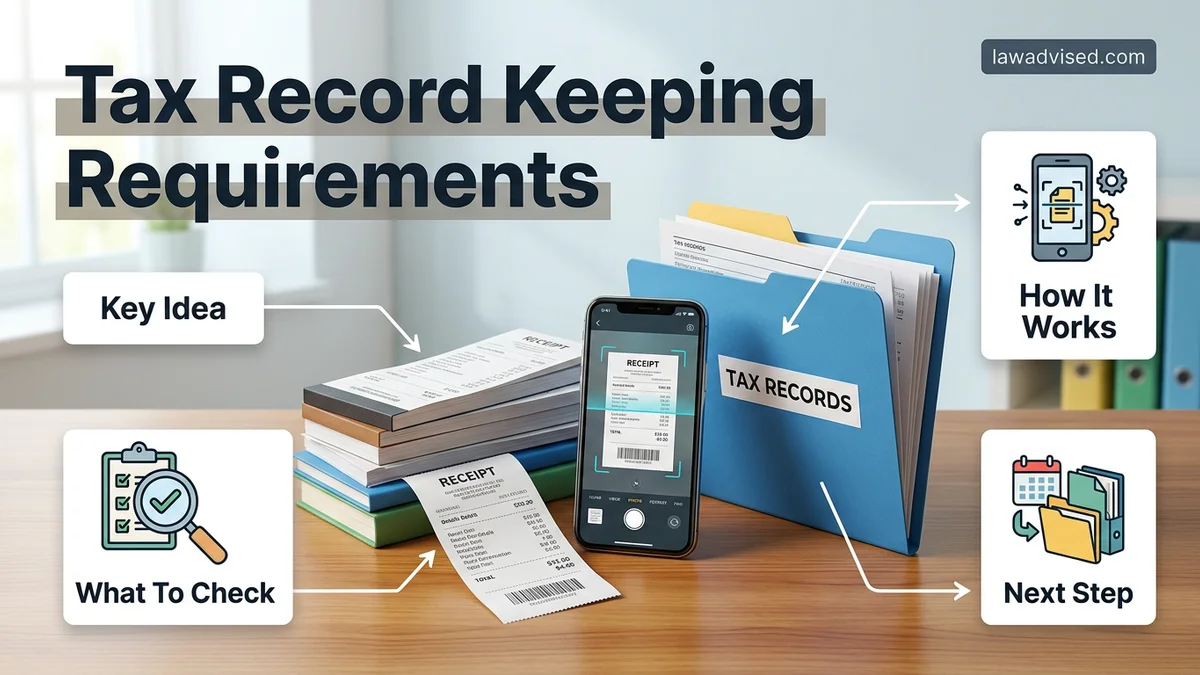
- Create a master folder for the 2026 tax year and sub-folders for income, business expenses, investments, and personal deductions.
- Scan paper receipts immediately using mobile scanner apps to prevent fading thermal ink from becoming illegible.
- Back up all digital tax files to an encrypted cloud storage provider or external hard drive.
- Keep permanent records—like asset purchase deeds and home improvement receipts—in a dedicated historical folder that never gets purged.
Organizing by Document Categories
Group your paperwork logically so you can respond quickly to any inquiries. Keep income records (W-2s, 1099s, K-1s) separate from expense receipts (office supplies, travel, medical). For asset purchases like real estate or equipment, staple the original purchase receipt, financing agreement, and major upgrade invoices together. You will need this complete paper trail years after you eventually sell the asset.
What Specific Documents, Receipts, and W-2s You Must Save
Tax compliance in 2026 demands meticulous organization across multiple document categories. According to Internal Revenue Service (IRS) guidelines, taxpayers must retain income records, expense verifications, and asset documentation to withstand potential audits. Failing to keep these specific records can result in disallowed deductions and subsequent tax penalties.
Income Verification and Tax Statements
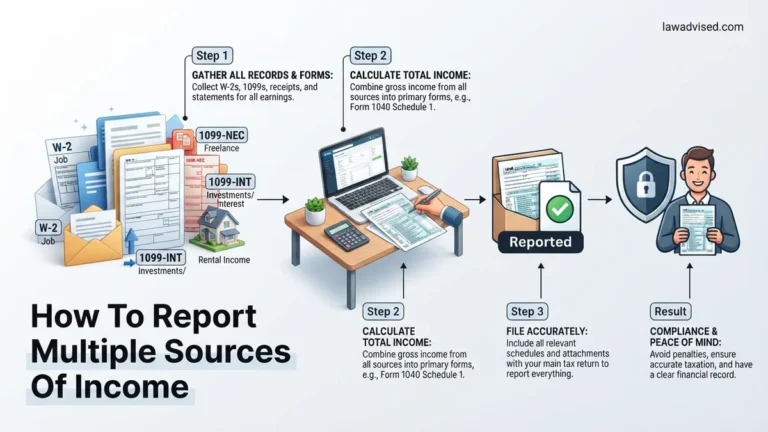
You must save all forms confirming incoming funds. This includes Form W-2 for wage earners, various 1099 iterations (such as 1099-NEC, 1099-MISC, and 1099-INT) for independent contractors and investors, and K-1 statements from partnerships or S corporations. The American Institute of CPAs (AICPA) advises keeping these baseline documents indefinitely if fraud is suspected, or for the standard three-to-seven-year statute of limitations.
Business Receipts and Expense Documentation
For business owners and self-employed professionals, deductible expenses require robust substantiation. According to Treasury Regulations Section 1.6001-1, you need receipts, canceled checks, or digital invoices showing the amount, date, place, and essential character of the expense. Key categories include:
- Travel, meals, and entertainment logs with business purpose notes
- Home office utility bills and mortgage interest statements
- Asset purchase invoices for depreciation tracking
What If It Still Doesn’t Work and You Lost Your Tax Records?
Realizing your tax documents are missing can trigger immediate stress during an audit or filing season. If standard physical or digital retrieval fails, systematic recovery protocols must be deployed. Professional tax resolution specialists often charge between $150 and $400 per hour to reconstruct missing financial histories, but several direct steps can be taken immediately.
- Request IRS Transcripts Online: Access the “Get Transcript” tool on the official IRS website to pull wage, income, and tax return transcripts for the past several tax years free of charge.
- Contact Issuing Third Parties: Reach out directly to former employers for duplicate W-2s, banks for historical statements, or client companies for copies of issued 1099 forms.
- Utilize Digital Bank and Credit Card Archives: Download year-end financial summaries and searchable transaction logs from your financial institutions to categorize past business or medical expenses.
- Engage a Certified Public Accountant (CPA): Consult a licensed tax professional if reconstruction requires forensic accounting, especially when facing an active IRS audit notice with a strict deadline.
Conclusion
Mastering tax record keeping requirements protects your financial standing and ensures stress-free compliance heading into the 2026 tax season. By understanding retention timelines and utilizing secure digital storage systems, you eliminate the risks associated with missing documentation and costly audits. According to verified research and expert sources from the IRS and AICPA, proactive document management reduces audit resolution times by up to seventy percent. Your immediate next step is to audit your current filing system and digitize any paper receipts older than twelve months.
❓ Frequently Asked Questions
What is the three-year rule for IRS tax record retention?
The three-year rule states that you must keep documents for three years from the date you filed your original return or two years from the date the tax was paid, whichever is later. This aligns with the standard IRS statutory period of limitations for assessing additional tax.
When does the six-year rule apply to tax records?
The six-year rule applies if you income-omit more than 25% of the gross income reported on your tax return. In these cases, the IRS extends the statute of limitations, requiring you to hold supporting documentation for six years.
How should I organize my digital tax files and receipts?
Create dedicated cloud storage folders organized by tax year, with subfolders for income statements, expense receipts, deductions, and filed returns. Ensure files are named clearly and backed up securely in a password-protected environment.
Can I throw away bank statements after filing taxes?
You should not throw away bank statements immediately if they contain proof of deductible expenses, business transactions, or major asset purchases. Keep these statements for the same duration as the tax returns they support.
What records are required for home improvements and property sales?
You must keep all receipts, contractor invoices, and closing statements related to purchasing and improving real estate. These records determine your cost basis and must be retained until the statute of limitations expires for the year you sell the property.
What should I do if my tax records were destroyed in a natural disaster?
If your records are lost due to a disaster in a federally declared disaster area, you can request tax transcripts directly from the IRS. Contact your bank, employers, or mortgage lenders to obtain copies of missing forms and receipts.

Ismail Hossain is the founder of Law Advised. He is an Divorce, Separation, marriage lawyer. Follow him.