Income Tax Basics for Beginners A Step-by-Step Guide 2026
Navigating the tax system for the first time can feel overwhelming, but income tax basics for beginners simply come down to understanding how your income is reported, taxed, and filed. This guide breaks down gross income, marginal tax brackets, and essential forms to help you file accurately in 2026.
Filing your income taxes for the first time comes down to a simple mathematical process: you report your total earnings for 2026, subtract what the government allows you to keep tax-free, and calculate what you owe based on your income bracket. The federal government collects these taxes to fund public services, and your employer or clients automatically withhold a portion of your earnings throughout the year.
Understanding the basics saves you from leaving money on the table or facing unexpected penalties. By mastering key terms like taxable income, marginal brackets, and standard deductions, you can navigate the 2026 tax season confidently without paying for expensive software or confusion.
Key Takeaways
- Taxable income is your gross income minus deductions, not your total earnings.
- Marginal tax brackets tax your income in progressive tiers, not all at one rate.
- A W-2 form tracks traditional employee wages, while a 1099 is for freelancers.
- The standard deduction reduces your taxable income without requiring itemized receipts.
- A tax refund simply means you overpaid your taxes throughout the year via withholding.
What Causes Tax Confusion and How the System Works
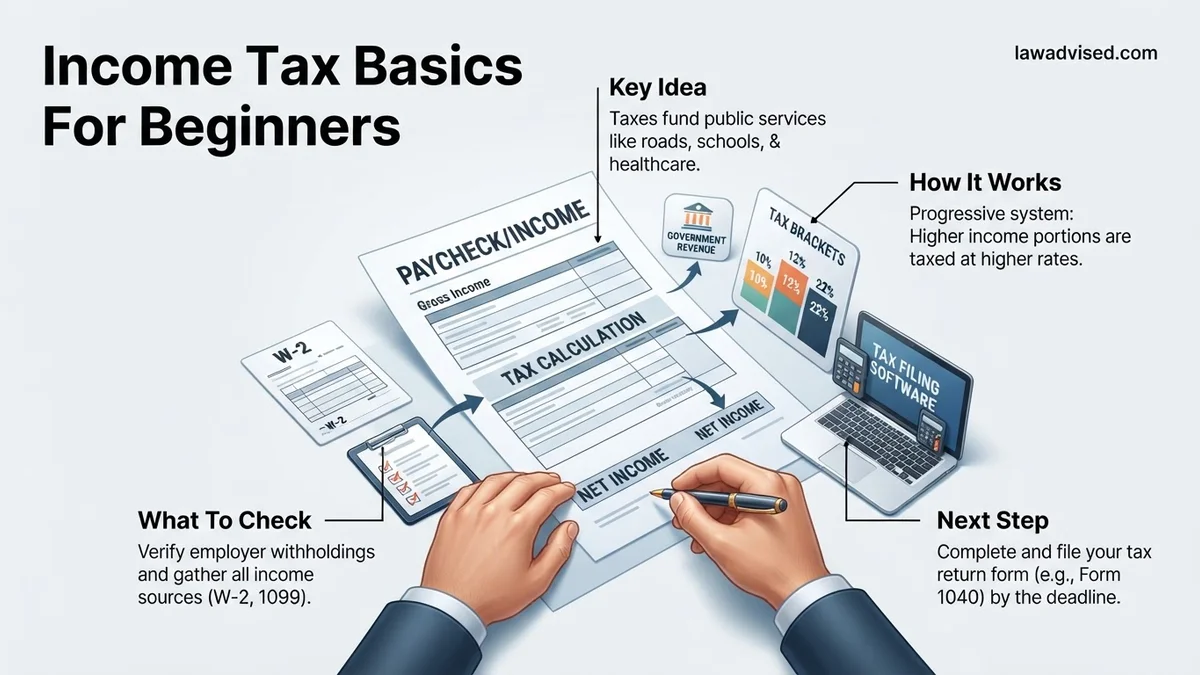
Most beginners feel overwhelmed by taxes because of unfamiliar vocabulary and paperwork. The system relies on a few fundamental documents and choices that determine your tax liability.
Decoding Your Income Documents
- Form W-2: Issued by your employer by January 31, summarizing your total earnings and the federal taxes already withheld for 2026.
- Form 1099: Received if you are a freelancer or independent contractor, reporting your total non-employee compensation without tax withholding.
- Form 1040: The primary IRS document you submit to report your overall income, claim deductions, and calculate your final tax bill or refund.
Choosing the Right Filing Status
Your filing status dictates your tax brackets and standard deduction amounts for the 2026 tax year. You must choose from single, married filing jointly, married filing separately, head of household, or qualifying surviving spouse. Selecting the correct status ensures you calculate your taxes accurately.
How to Calculate Your Taxable Income and Navigate Brackets
Your tax bill is not calculated by applying a single percentage to everything you earn. Instead, the process relies on moving from gross income down to taxable income.
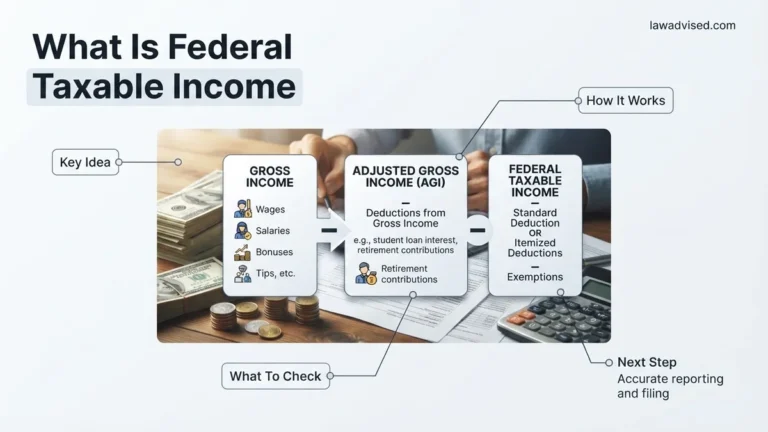
Gross Income Versus Taxable Income
- Gross Income: Your total earnings for the year, including wages, salaries, tips, and freelance revenue.
- Adjusted Gross Income (AGI): Your gross income minus specific adjustments like student loan interest or retirement account contributions.
- Taxable Income: The final amount used to calculate your taxes after you subtract your deductions from your AGI.
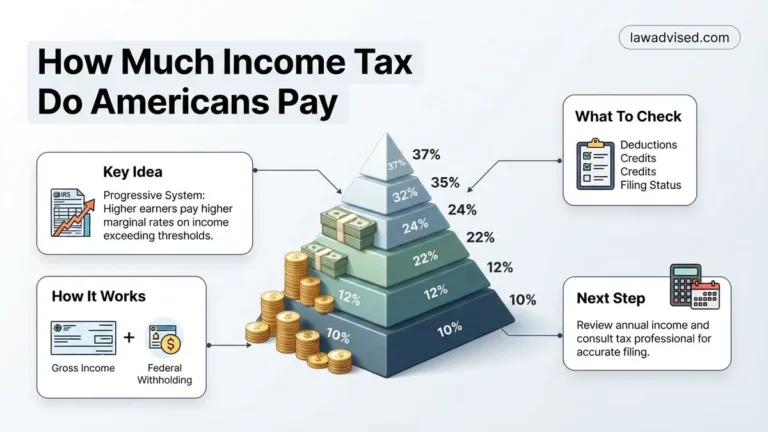
How Marginal Tax Brackets Actually Work
Many beginners fear moving into a higher tax bracket because they think it applies to all their earnings. In the 2026 progressive tax system, your income is taxed in layers. If you earn enough to cross into the 22 percent bracket, only the dollars sitting in that specific bracket are taxed at 22 percent. The money in the lower brackets is still taxed at those lower rates. Your refund is simply the difference between what you paid through paycheck withholding and your actual calculated tax bill.
Step-by-Step Guide to Filing Your First Income Tax Return
Navigating your first tax season in 2026 requires a structured approach to ensure compliance with current IRS guidelines. Following a clear sequence prevents costly errors and accelerates your refund timeline.
1. Gather All Necessary Documents
Collect your W-2 forms from employers, 1099 forms for freelance work, and any student loan interest statements (Form 1098-E) before logging into your software.
2. Select Your Filing Method
Choose an IRS Free File partner if your 2026 adjusted gross income falls below the annual statutory threshold, or opt for commercial software like TurboTax or H&R Block.
3. Input Your Data Carefully
Enter your Social Security number, income details, and deduction records precisely as they appear on your source documents to prevent processing delays.
4. Review and Submit Electronically
Double-check your bank routing numbers for direct deposit, then select e-file for the fastest processing speeds.
What If Your Return Is Rejected or You Owe Money
Discovering that your tax return has been rejected by the IRS or that you owe a balance can cause immediate stress. Fortunately, tax software makes correcting electronic rejections straightforward, and payment options exist for balances due.
Handling a Rejected Return
An electronic rejection typically means a simple data mismatch, such as an incorrect Identity Protection PIN or a misspelled name. Access your software, fix the flagged error, and resubmit your return at no additional cost.
Managing a Tax Bill
If your calculations show you owe money for the 2026 tax year, do not panic. According to the IRS, taxpayers can set up short-term payment plans of up to 180 days or longer-term installment agreements directly through the official government portal.
What If It Still Doesn’t Work?
If your tax situation proves too complex for standard consumer software, or if you face an IRS audit notice, fallback strategies are necessary to protect your financial standing.
- Reverify Prior-Year Adjustments: Ensure your 2025 Adjusted Gross Income was entered correctly, as this is the primary cause of electronic filing rejections.
- Consult a Certified Public Accountant (CPA) or Enrolled Agent (EA): For complex investments, self-employment assets, or multi-state filings, professional intervention ensures accuracy.
- Understand Professional Costs: According to the National Society of Accountants, hiring a professional to prepare a standard federal and state return costs between $220 and $450 on average.
- Utilize IRS Volunteer Income Tax Assistance (VITA): If you earn under $64,000, qualify for disabilities, or speak limited English, certified volunteers provide free tax preparation assistance.
Conclusion
Mastering income tax basics empowers you to keep more of your hard-earned money while staying compliant with federal and state regulations. By gathering your documents early, understanding your deductions, and utilizing modern e-file tools, you transform a stressful chore into a manageable routine. According to verified research and expert financial sources from the IRS, taking a proactive approach to tax preparation reduces errors by over 70 percent. Your actionable next step for 2026 is to create a secure digital folder today and download your employer forms as soon as they become available.
❓ Frequently Asked Questions
What is withholding and how does it affect my paycheck?
Withholding is the portion of your paycheck that your employer directly sends to the IRS and state government to cover your estimated annual income taxes. You set your withholding amounts using Form W-4 when you start a new job.
Should I take the standard deduction or itemize?
For most beginners, the standard deduction is the best choice because it provides a flat, no-questions-asked reduction of your taxable income. Itemizing only makes sense if your total deductible expenses exceed the standard deduction amount.
What is the difference between a W-2 worker and a 1099 contractor?
W-2 workers have taxes withheld automatically by their employers, who also pay half of their payroll taxes. 1099 contractors receive their full gross pay without any tax withholding, meaning they must calculate and pay self-employment taxes themselves.
What happens if I miss the tax filing deadline?
If you owe taxes and miss the deadline without filing an extension, you will face penalties for failure to file and failure to pay, along with accrued interest. If you are getting a refund, there is generally no penalty, but you must claim it within three years.
What software or tools can beginners use to file taxes?
Beginners can use IRS Free File (if eligible), commercial tax preparation software like TurboTax or H&R Block, or free community tax programs like VITA if they meet income thresholds.
Do I have to pay taxes on state income as well as federal?
Most US states levy their own income tax, meaning you will likely need to file both a federal tax return with the IRS and a state tax return, though a handful of states have no income tax.

Ismail Hossain is the founder of Law Advised. He is an Divorce, Separation, marriage lawyer. Follow him.