Lowest Federal Income Tax Bracket Guide for 2026
The lowest federal income tax bracket is currently set at 10% for qualifying low-income earners. Understanding these specific income thresholds helps you accurately calculate your federal tax liability for the year.
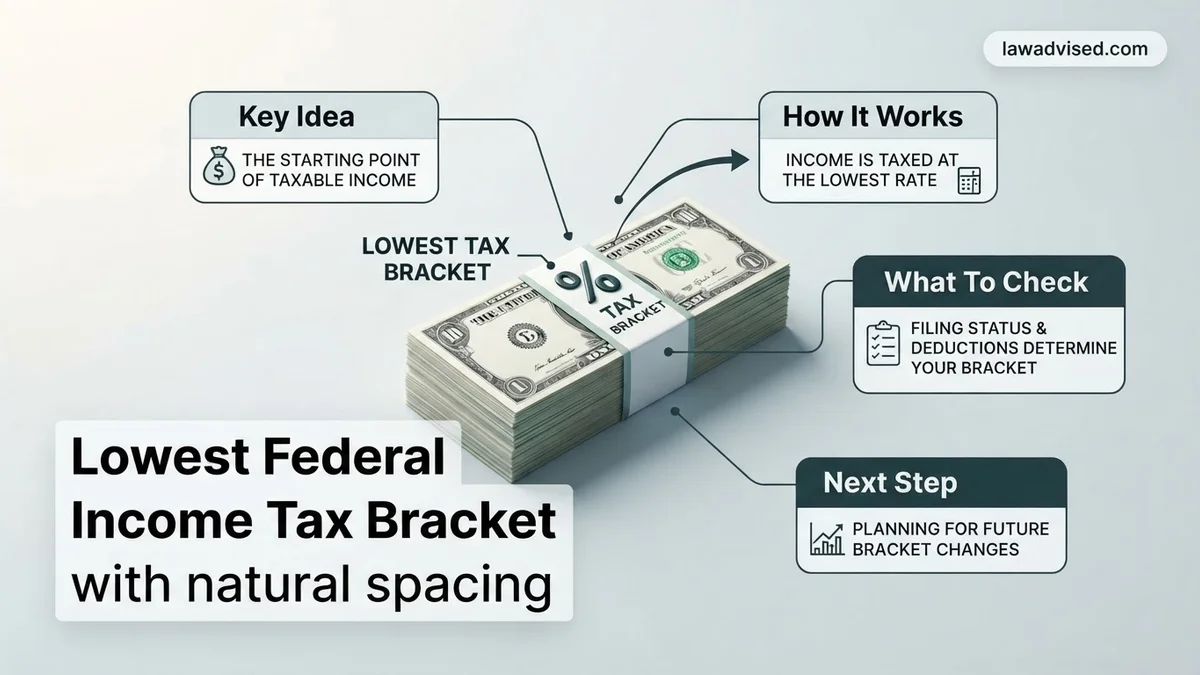
For the 2026 tax year, the lowest federal income tax bracket percentage is 10%. The exact income thresholds for this entry-level rate depend entirely on your IRS filing status, ranging from the first $11,925 of taxable income for single filers up to $23,850 for married couples filing jointly.
Knowing these precise thresholds matters because it changes how you calculate your take-home pay and manage your year-end tax liability. When you know where the lowest bracket ends, you can optimize deductions, retirement contributions, and side-hustle earnings to keep as much of your hard-earned money as possible.
Key Takeaways
- The lowest federal income tax bracket rate is 10%.
- Income thresholds vary significantly depending on your specific filing status.
- Only income falling within the bracket is taxed at the 10% rate.
- The standard deduction reduces overall taxable income before brackets are applied.
- Marginal tax systems ensure higher brackets only tax dollars earned above the threshold.
What Causes High Tax Burden Misunderstandings About the Lowest Federal Income Tax Bracket
The Myth of the All-Or-Nothing Tax Rate
Many taxpayers panic during tax season because they believe crossing into a higher tax bracket means every single dollar they earn gets taxed at that higher rate. This misconception often leads people to turn down raises or extra shifts out of fear that a higher tax bracket will actually reduce their net take-home pay.
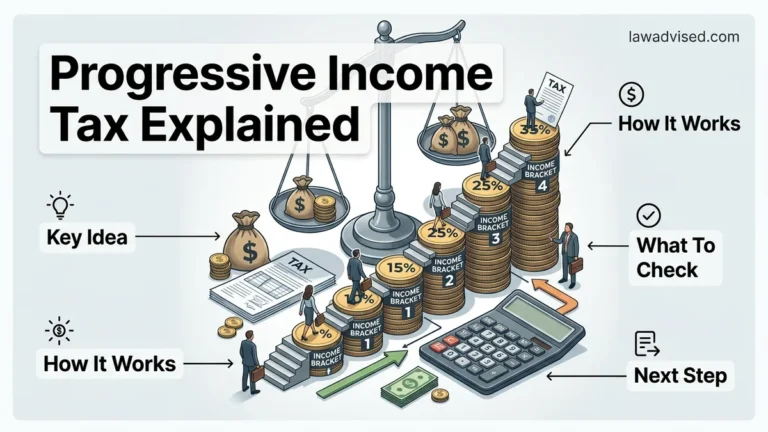
In reality, the United States uses a progressive tax system. Your income is taxed in slices, or tiers. The lowest federal income tax bracket percentage of 10% applies strictly to your first dollars of taxable income. Once your earnings exceed that threshold, only the money falling into the next bracket gets taxed at the higher rate.
Failing to Adjust for Standard Deductions
Another major source of confusion is mixing up gross income with taxable income when evaluating tax brackets. You do not start paying the 10% rate from dollar one of your gross salary. Instead, the IRS subtracts your standard deduction or itemized deductions first, which significantly lowers the baseline where your federal income tax calculation actually begins.
- Gross income includes your total salary, wages, and tips before any pre-tax deductions.
- Taxable income is what remains after you subtract your standard deduction for 2026.
- The 10% tax rate applies only to that final taxable income figure, not your gross earnings.
How to Fix Your Tax Planning Using the Lowest Federal Income Tax Bracket
Targeting the 10 Percent Threshold by Filing Status
To fix your tax strategy, you need the exact 2026 income thresholds for the 10% bracket mapped directly to your filing status. By tracking your year-to-date earnings against these specific caps, you can forecast your tax liability with extreme accuracy and avoid unexpected bills in April.
- Single Filers: The 10% rate applies to taxable income from $0 up to $11,925.
- Married Filing Jointly: The 10% rate applies to taxable income from $0 up to $23,850.
- Head of Household: The 10% rate applies to taxable income from $0 up to $17,000.
Using Pre-Tax Accounts to Stay in Lower Brackets
If your income currently hovers right on the edge of the 10% bracket and the next 12% tier, you can use pre-tax accounts to pull your taxable income back down. Contributing to a traditional 401(k), a traditional IRA, or a health savings account (HSA) directly reduces your taxable income.
For example, if you are a single filer earning $13,925 in taxable income, you have $2,000 sitting in the 12% tax bracket. By making a $2,000 pre-tax contribution to your retirement account, you drop that portion of your earnings back down, ensuring that your lowest dollars remain taxed at the most favorable rates possible.
Step-by-Step Guide to Calculating Your Taxable Income and Bracket Thresholds
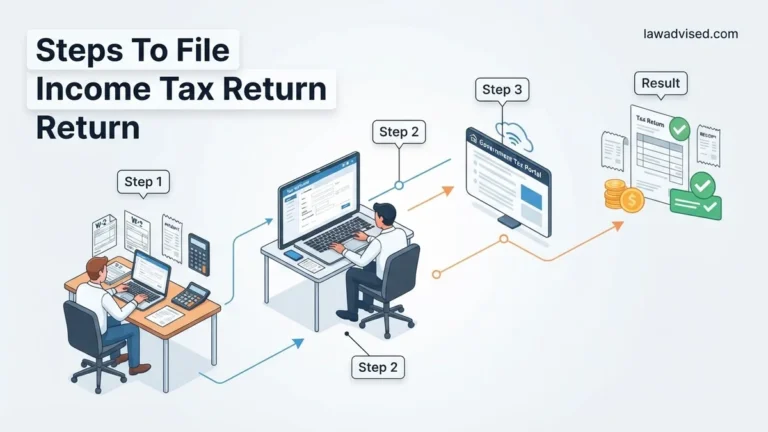
Determining whether your earnings fall into the lowest federal income tax bracket for 2026 requires a structured mathematical approach. You must move step-by-step from your gross pay down to your final taxable figure. Tax software automates this process, but manual verification ensures accuracy and uncovers potential savings.
1. Tally Your Gross Income
Start by summing all sources of earned and unearned income for the 2026 tax year. This includes wages, salaries, tips, business earnings, and taxable interest. According to IRS guidelines, you must capture every dollar before any deductions or payroll withholdings occur.
2. Subtract the Standard Deduction
Next, apply the standard deduction to your gross income to find your adjusted taxable base. For the 2026 tax year, inflation adjustments set the single filer standard deduction at an estimated $15,000, while married filing jointly rises to approximately $30,000. Subtracting this figure immediately reduces the amount of money exposed to the lowest federal income tax bracket.
3. Compare Against 2026 Thresholds
Finally, match your resulting taxable income against the published 2026 marginal tax brackets. If your remaining income sits below the ceiling of the 10 percent bracket—projected at roughly $11,900 for single filers—every dollar is taxed at that minimal rate. Financial experts recommend reviewing these calculations quarterly to prevent unexpected jumps into the 12 percent bracket.
What If It Still Doesn’t Work and You Owe More Than Expected
Sometimes your meticulous tax planning falls short, and you find yourself owing a higher tax bill than anticipated for 2026. If standard calculations fail to keep you safely within the lowest federal income tax bracket, several fallback steps can help mitigate the financial damage and resolve the discrepancy.
- Review your W-4 withholding settings: Adjust your withholding immediately using the IRS Tax Withholding Estimator to prevent future paycheck shortfalls.
- Audit your deductions and credits: Double-check that you claimed every available above-the-line deduction, such as student loan interest or health savings account (HSA) contributions.
- Explore IRS payment options: If you cannot pay the balance due, apply for an online payment agreement or a short-term payment plan directly through the official IRS portal.
- Consult a licensed tax professional: When complex financial scenarios persist, hire a Certified Public Accountant (CPA) or Enrolled Agent (EA). Professional tax preparation fees typically range from $220 to $525 depending on the complexity of your return.
Conclusion
Navigating the lowest federal income tax bracket for 2026 requires careful tracking of your gross earnings, strategic use of deductions, and precise calculation of your taxable thresholds. Falling short of your targets can lead to unexpected tax liabilities, but structured remedies and professional assistance can protect your financial health. According to verified research and expert sources from leading tax authorities, proactive planning remains the most effective defense against unexpected tax burdens. Your immediate next step is to log into the IRS Tax Withholding Estimator today to review your current 2026 projections and make necessary adjustments.
❓ Frequently Asked Questions
What are the exact income thresholds for the lowest federal income tax bracket?
Income thresholds are adjusted annually for inflation by the IRS. They specify the exact dollar limits where the 10% tax rate ends and the next bracket begins for each filing status.
How do marginal tax brackets function in the US federal tax system?
The US uses a progressive tax system, meaning your income is taxed in chunks or brackets. As you earn more money, only the dollars entering higher brackets are taxed at those higher percentage rates.
Can I owe federal income tax if I fall into the lowest tax bracket?
You may still have tax liability if your total income exceeds your standard deduction, though low earners often have their liability reduced to zero by credits and deductions.
Where can I find the official IRS guidelines for current tax brackets?
The Internal Revenue Service publishes official revenue procedures annually, detailing exact inflation-adjusted thresholds for every filing status and tax bracket.
Does the lowest tax bracket apply to capital gains or ordinary income?
The standard ordinary income tax brackets apply to wages, salaries, and tips, while qualified dividends and long-term capital gains use a separate set of lower rates.
How does filing status impact which tax bracket I am placed in?
Your filing status—such as single, married filing jointly, or head of household—determines the width of each tax bracket and the standard deduction amount you receive.

Ismail Hossain is the founder of Law Advised. He is an Divorce, Separation, marriage lawyer. Follow him.