Can You Claim Standard Deduction With No Income? 2026 Guide
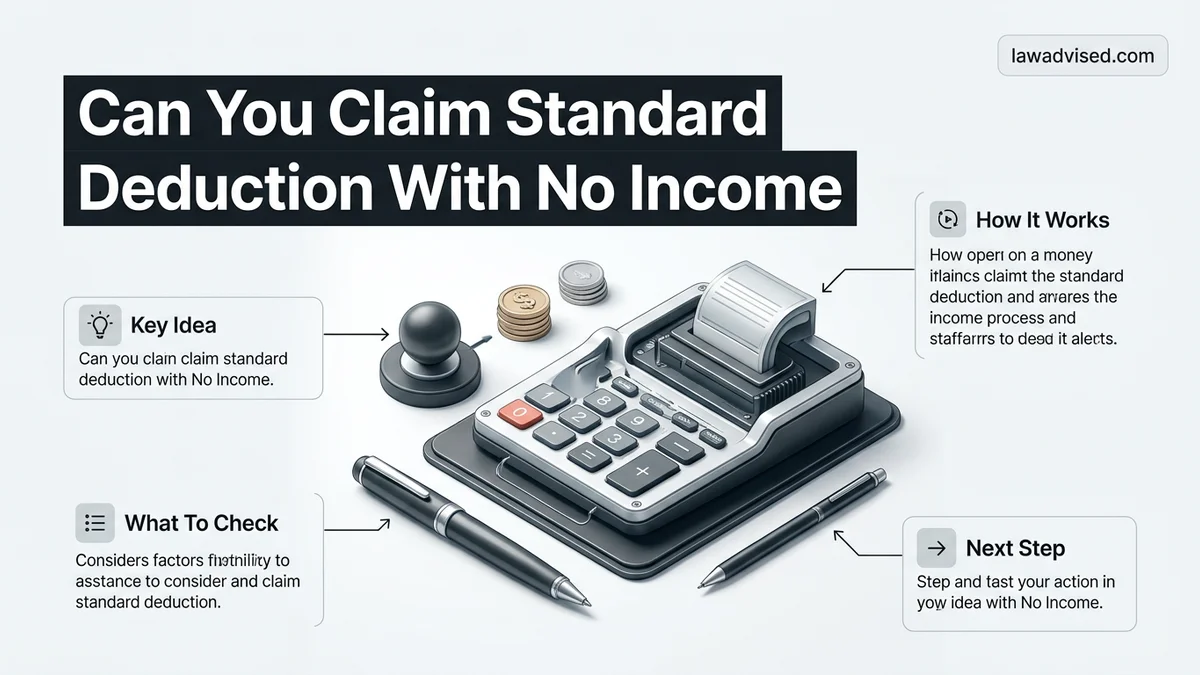
Technically, you can claim the standard deduction with no income, but because it only reduces taxable income, it will not generate a tax refund on its own. Filing a federal tax return with zero income is generally not required by the IRS unless you qualify for specific refundable tax credits or had taxes withheld.
The short answer is yes, you can technically claim the standard deduction when you have no income, but it will not generate a tax refund on its own. For the 2026 tax year, the standard deduction reduces your taxable income to zero, but because you started with zero income, the deduction has nothing left to offset.
Many taxpayers mistakenly believe that the standard deduction acts like a refundable credit, assuming that claiming it with zero earnings results in a payout from the IRS. Understanding how the deduction actually works prevents filing confusion and helps you decide whether submitting a return makes financial sense for your specific situation.
Key Takeaways
- The standard deduction reduces taxable income to zero if you have no earnings.
- Zero income means you typically do not meet the mandatory IRS filing thresholds.
- Filing a return with no income is necessary to claim refundable tax credits.
- Having no taxable income means the standard deduction cannot create a cash refund.
- Check state-specific rules, as some state returns offer unique zero-income benefits.
What Causes Confusion About Claiming the Standard Deduction With No Income
The Mechanism of a Tax Deduction
A tax deduction is designed to lower the amount of your income that is subject to federal income taxes. If your total earned and unearned income for 2026 is $0, applying a standard deduction of several thousand dollars simply keeps your taxable income at $0. It does not create a negative taxable income balance that the government pays out to you.
Refundable Credits vs. Deductions
Confusion often arises because people mix up deductions with refundable tax credits.
- Deductions: Lower your taxable income, meaning they are worth zero if you have no income to deduct against.
- Refundable Credits: Can pay out cash refunds even if you owe zero income tax and have no earnings.
If you have zero income, you need specific refundable credits like the Earned Income Tax Credit (EITC) to get money back, rather than relying on the standard deduction alone.
How to Determine If You Need to File a Tax Return With Zero Income
IRS Filing Thresholds for 2026
The IRS sets strict income thresholds each year that dictate whether you are legally required to file a federal tax return. For 2026, if your gross income falls below the standard deduction threshold for your filing status, you generally are not required to file a return.
Exceptions When Filing Makes Sense
Even if you are not legally required to file because your income is zero, you may still want to submit a tax return in 2026.
- You had federal income tax withheld from a previous job or investment account and want it refunded.
- You qualify for certain refundable tax credits that do not require earned income.
- You need to establish an official record of zero income for student loans, housing, or government assistance programs.
Evaluating your specific financial documents will tell you whether filing an empty or low-income return unlocks hidden money.
Step-by-Step Guide to Filing When You Earned No Money This Year
Filing a federal tax return with zero gross income requires a structured approach to ensure the IRS processes your submission correctly. According to tax compliance guidelines from the IRS, electronic filing remains the most efficient method even when your taxable income is zero.
1. Gather Necessary Identification Documents
You must assemble core identity verification documents before starting your tax return. Gather your Social Security card, official photo identification, and any Form 1099 or Form W-2 you might have received earlier in the year, even if they show zero or minimal earnings. Accurate personal data prevents electronic rejection by IRS processing servers.
2. Select an Approved Free Filing Software
Choose an IRS Free File partner or standard tax preparation software that accommodates zero-income returns without imposing hidden upgrade fees. Most commercial platforms support returns with zero gross income, though navigating the prompts requires entering zeros in income fields rather than leaving them blank.
3. Complete Form 1040 and Review Entries
Input your personal information and report zero dollars on the wage, salary, and tip lines of Form 1040. The tax software will automatically calculate your standard deduction, resulting in a taxable income of negative or zero dollars. Verify that your total tax liability reflects zero before submitting the return electronically.
What If It Still Doesn’t Work?
Encountering software rejections or unexpected tax calculations when filing with zero income can stall your submission. According to tax professional associations, taxpayers facing persistent filing roadblocks should evaluate specific fallback strategies to resolve compliance issues without incurring penalties.
- Switch to an IRS-Vetted Free Filing Option: If commercial software rejects a zero-income return, utilize the IRS Free File program directly from the official agency website to bypass software limitations.
- Check for Dependent or Filing Status Errors: Ensure your filing status—such as Head of Household or Single—correctly aligns with your current life situation, as incorrect status selections often trigger processing halts.
- Consult a Certified Public Accountant (CPA): When software errors persist, schedule a consultation with a licensed tax professional. Hiring a CPA typically ranges from $150 to $400 for standard individual federal filings, depending on geographic location and return complexity.
- Utilize Volunteer Income Tax Assistance (VITA): Taxpayers who qualify based on income limits can access free, in-person tax preparation help through IRS-certified VITA or TCE community programs.
Conclusion
Claiming the standard deduction with no income is entirely possible and often serves as the legal foundation for establishing non-filer status, securing vital financial records, or unlocking refundable credits. According to verified research and expert sources from the Internal Revenue Service, filing an annual return with zero earned wages protects your taxpayer profile and prevents administrative delays. Take action today by visiting the official IRS portal to select a trusted, free electronic filing option and submit your zero-income return before the annual deadline.
❓ Frequently Asked Questions
What happens if I claim the standard deduction when my income is zero?
Your taxable income simply remains at zero. Because the deduction cannot drop your income below zero to create a negative balance, it results in no tax liability and no direct cash refund.
Am I legally required to file a federal tax return if I earned $0?
No, the IRS does not require individuals to file a tax return if their gross income is below the standard deduction threshold for their specific filing status and age.
Can I get the Earned Income Tax Credit (EITC) with no income?
To qualify for the EITC, you generally must have earned income from working. Having completely zero earned income usually disqualifies you from claiming this specific credit.
What if my employer withheld federal income tax from my paycheck earlier in the year?
Even if your total annual income ended up at zero, you should file a tax return to claim a refund for any federal income taxes that were prematurely withheld.
Does claiming the standard deduction require me to itemize expenses?
No, the standard deduction is a flat amount that reduces your income without needing to list or itemize individual deductions like mortgage interest or charitable donations.
Will my state tax return require me to file if I have zero income?
State filing thresholds vary, and some states have lower income limits than the federal government. Check your specific state department of revenue guidelines to be certain.

Ismail Hossain is the founder of Law Advised. He is an Divorce, Separation, marriage lawyer. Follow him.