How Tax Credits Reduce Taxes A Step-by-Step Guide for 2026
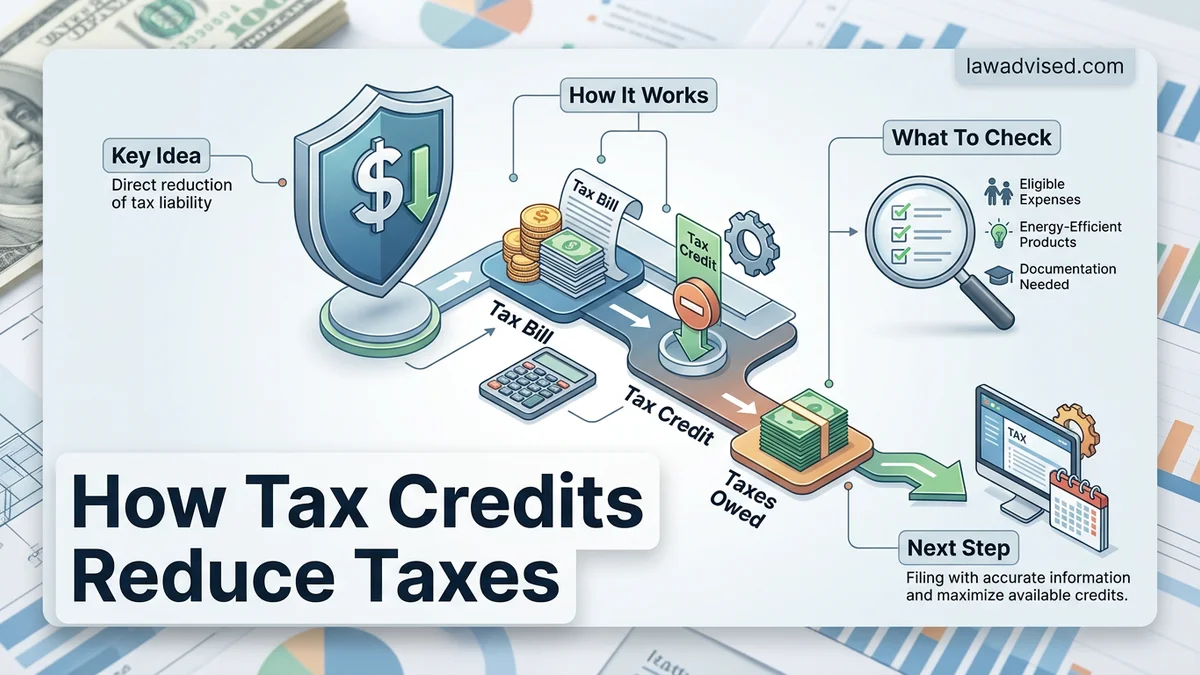
Tax credits provide a dollar-for-dollar reduction in your actual tax liability, making them significantly more valuable than standard deductions. Understanding how these credits work ensures you maximize your savings during the 2026 tax season.
A tax credit reduces your actual tax bill on a strict dollar-for-dollar basis, meaning a one-thousand-dollar credit slashes your final tax liability by exactly one thousand dollars. This makes credits significantly more valuable than standard tax deductions, which only lower the amount of income subject to taxation rather than wiping out the tax itself.
Navigating the 2026 tax landscape requires knowing this exact mechanical difference. Whether you are planning your estimated quarterly payments or preparing your annual return, understanding how credits interact with your bottom-line liability prevents you from leaving valuable savings on the table.
Key Takeaways
- Tax credits reduce your tax bill dollar-for-dollar, unlike deductions which only lower taxable income.
- A $1,000 tax credit reduces your actual tax owed by a full $1,000.
- Refundable credits can pay out money to you even if your tax liability drops to zero.
- Non-refundable credits can eliminate your tax bill, but excess amounts are lost.
- Common credits include the Child Tax Credit and the Earned Income Tax Credit.
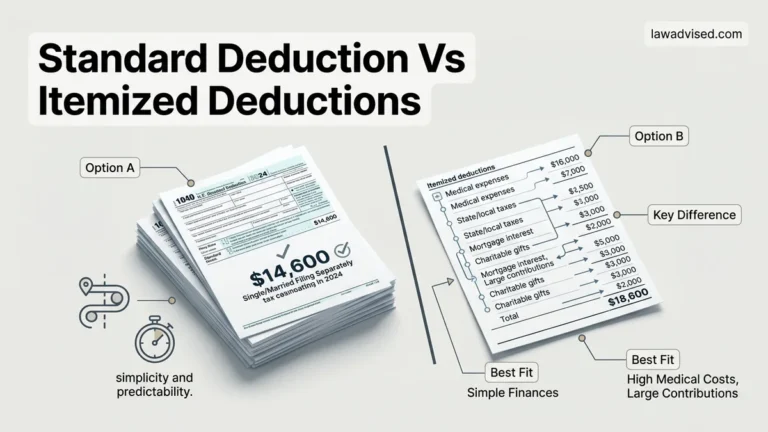
What Causes Confusion Between Tax Credits and Tax Deductions
Taxpayers frequently confuse deductions and credits because both terms are marketed as ways to lower what you pay the IRS. However, they operate at completely different stages of your tax calculation.
The Mechanics of Tax Deductions
Deductions reduce your taxable income before the government applies your tax rate. If your taxable income is eighty thousand dollars and you claim a ten-thousand-dollar deduction, you are simply changing your taxable baseline to seventy thousand dollars. Your actual tax savings depend entirely on your marginal tax bracket for 2026.
The Advantage of Tax Credits
Credits bypass your tax bracket entirely and apply directly to the final tax number calculated on your return. If you owe five thousand dollars in taxes and qualify for a twelve-hundred-dollar tax credit, your liability drops instantly to thirty-eight hundred dollars. You do not need to multiply the credit by any percentage or factor.
How to Calculate Your Savings Using Dollar-for-Dollar Tax Credits
Calculating the exact financial impact of a tax credit is straightforward because there is zero estimation required for the value of the credit itself.
Comparing a Deduction to a Credit
-
A $2,000 Deduction: At a 22 percent tax rate, this saves you $440 in actual cash.
A $2,000 Credit: This saves you exactly $2,000 in actual cash, regardless of your bracket.
Evaluating Your Final Tax Outcome
When you map out your 2026 financial strategies, prioritize activities that generate tax credits over those that merely produce deductions. Because credits reduce your tax liability dollar-for-dollar, they provide an identical financial benefit to a high-earner and a middle-income filer alike.
Step-by-Step Guide to Applying Refundable and Non-Refundable Credits
Successfully claiming tax credits requires a structured approach to ensure compliance with the Internal Revenue Service (IRS). Whether navigating green energy incentives or family benefits in 2026, a methodical process prevents costly calculation errors and processing delays.
1. Identify Qualified Expenses and Eligibility
Review the specific criteria for each credit before filing. For instance, the expanded Energy Efficient Home Improvement Credit requires specific manufacturer certification statements for equipment installed during the 2026 tax year. Cross-reference your receipts against updated IRS publication guidelines.
2. Complete the Required IRS Schedules
Unlike standard deductions that simply lower your adjusted gross income, tax credits demand precise paperwork. You must attach specific IRS forms to your Form 1040. For example, use Form 8812 for child-related credits or Form 5695 for residential energy credits.
3. Calculate Non-Refundable Credits First
Tax software or your accountant will apply non-refundable credits against your tax liability first. Ensure your total tax liability is fully utilized before factoring in any refundable portions, as the sequence impacts your final financial outcome.
4. Claim Refundable Credits for Excess Benefit
Input your refundable credit amounts on the designated lines of your 2026 Form 1040. These figures will combine with your withheld taxes to generate your final refund amount, even if the resulting total exceeds your total tax liability.
What If It Still Doesn’t Work?
If your calculated tax credits fail to adequately reduce your tax liability or your return is flagged for review by the IRS, specific troubleshooting steps can resolve the issue. According to the National Taxpayer Advocate, proactive intervention prevents long processing delays.
- Audit your Form 1040 attachments: Missing or incorrectly filled IRS schedules are the primary reason tax credits are rejected or delayed during initial processing.
- Verify income phase-out thresholds: Many 2026 credits feature strict Modified Adjusted Gross Income limits that may disqualify high earners from claiming the full credit amount.
- Amend your previous return: If you discovered eligible expenses from prior tax years, file Form 1040-X within the three-year statutory window to retroactively claim missed credits.
- Consult a certified tax professional: For complex business or multi-layered green energy credits, retain a Certified Public Accountant (CPA) or Enrolled Agent. Professional tax advisory fees typically range from $300 to $1,000+ depending on the complexity of your financial portfolio.
Conclusion
Tax credits remain the most powerful mechanism for dollar-for-dollar reductions in your overall tax burden, often transforming a significant tax bill into a substantial refund. By systematically distinguishing between non-refundable and refundable incentives and properly filing the required IRS schedules, you maximize your financial returns. According to verified research and expert sources from the Brookings Institution and the IRS, utilizing every eligible credit optimizes household cash flow. Take action today by gathering your 2026 receipts and reviewing your potential credit eligibility with a qualified tax advisor.
❓ Frequently Asked Questions
How does the dollar-for-dollar reduction of a tax credit work in practice?
If you owe $3,000 in federal income taxes and qualify for a $1,000 tax credit, your new tax liability becomes exactly $2,000. This direct subtraction applies after your tax brackets and deductions are already calculated.
What is the primary difference between a tax credit and a tax deduction?
A tax deduction lowers your taxable income based on your marginal tax rate, meaning a $1,000 deduction saves a 22% bracket earner $220. Conversely, a $1,000 tax credit saves every eligible filer the full $1,000 regardless of their tax bracket.
Can a non-refundable tax credit result in a cash refund?
No, non-refundable tax credits can only reduce your tax liability until it reaches zero. If your credit is larger than your tax liability, the unused portion is simply forfeited and cannot be refunded.
How do refundable tax credits provide money back to taxpayers?
Refundable credits are designed to support low-to-moderate-income families. If the credit amount exceeds your total tax liability, the IRS issues the remaining balance directly to you as a tax refund.
Do I need to itemize my deductions to claim tax credits?
No, tax credits are entirely separate from itemized or standard deductions. You can claim most major tax credits whether you take the standard deduction or choose to itemize your deductions.
Are tax credits applied before or after calculating tax brackets?
Tax credits are applied at the very end of the tax calculation process. First, your income is taxed according to marginal brackets, then deductions are subtracted from income, and finally, tax credits are subtracted directly from the resulting tax liability.

Ismail Hossain is the founder of Law Advised. He is an Divorce, Separation, marriage lawyer. Follow him.