Filing Taxes for a Child in 2026 Step-by-Step Guide
Determining whether you need to file taxes for a child depends strictly on their age, filing status, and whether their income is earned or unearned. Dependent minors must file a separate return only if their gross income crosses specific IRS thresholds for the tax year.
Whether your child needs to file a federal tax return in 2026 depends entirely on how much money they made and the source of that income. Many parents assume minors are automatically exempt from the IRS, but a child who earns a paycheck or receives investment payouts can easily cross the legal threshold.
Getting this right prevents unnecessary paperwork while keeping your young earner compliant with federal tax laws. Knowing the exact IRS rules for dependents saves you time and avoids surprise penalties from the IRS.
Key Takeaways
- Dependent children must file a return if their earned income exceeds the standard deduction.
- Unearned income (like investments) has a much lower filing threshold for minors.
- Parents can sometimes report a child’s investment income directly on the parental return using Form 8814.
- Minors cannot sign their own tax returns, so a parent or legal guardian must sign on their behalf.
- Filing a return for a child is required if they had federal income tax withheld and want a refund.
What Causes a Child to Need-to-File a Tax Return
Dependents with Earned Income
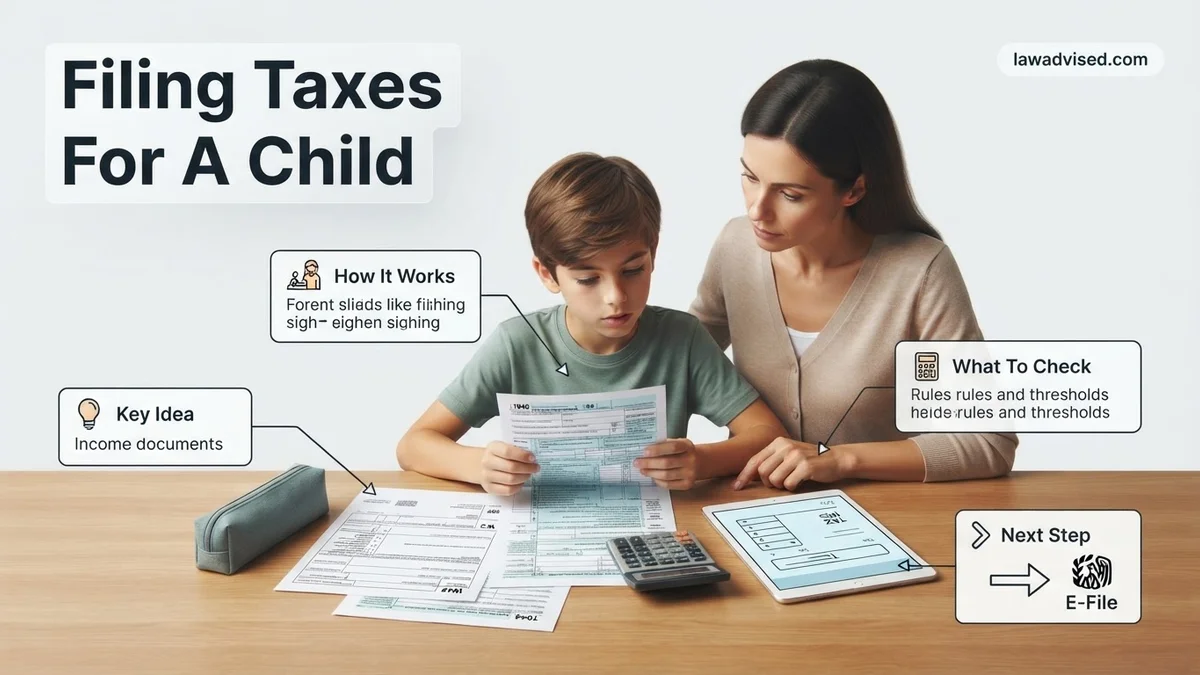
If your child is claimed as a dependent on your 2026 tax return, their filing requirement depends heavily on the standard deduction rules. For the 2026 tax year, a dependent child generally must file a federal income tax return if their earned income exceeds the standard deduction for dependents. Earned income includes wages, tips, salaries, and taxable professional fees from a part-time job or freelance gig. If your teenager works a summer job and brings home wages below the standard deduction limit, they typically do not have to file, though they may still want to file to get a refund of any federal income tax withheld from their paychecks.
Dependents with Unearned Income
Unearned income changes the game completely for minor tax filers. Unearned income includes interest, dividends, capital gains, and distributions from a trust. For 2026, a dependent child with unearned income usually must file a return if that income exceeds the specified minimum unearned income threshold set by the IRS (typically starting at a low baseline, such as $1,300, plus any additional earned income up to the maximum standard deduction limit). If your child has a custodial investment account generating substantial dividends or capital gains, review these precise thresholds carefully.
How to Determine Earned Versus Unearned Income Thresholds
Calculating Earned Income Limits
To see if your child crosses the 2026 filing threshold, you must separate their money into distinct buckets. Earned income represents compensation for physical or mental effort.
- Wages from a traditional W-2 job at a retail store or restaurant
- Tips earned in a service position
- Net earnings from self-employment, such as babysitting or lawn care, if net profits exceed $400
If your child only has earned income, they do not need to file a 2026 return unless their total earnings surpass the standard deduction amount for dependents for that tax year.
Evaluating Unearned Income and Combinations
Unearned income requires closer inspection because the IRS applies much lower tolerance levels before requiring a return. If your child has a combination of both earned and unearned income, the calculation becomes slightly more complex.
- Add the child’s earned income to $450 (or the specific 2026 statutory adjustment amount), up to the maximum standard deduction.
- Compare the unearned income total against the strict unearned income minimum threshold.
- Check if the gross total income exceeds the standard deduction for a single dependent.
If any of these specific IRS thresholds are met or exceeded for the 2026 tax year, your child must file their own return or be reported directly on your return.
Step-by-Step Guide to Filing a Separate Return or Using Form 8814
When a minor earns unearned income like dividends or capital gains, parents face a strategic choice for the 2026 tax year. You can report the child’s income directly on your own return or file a separate return for them. According to Internal Revenue Service guidelines, understanding the mechanics of both options prevents costly overpayments.

Option A: Filing Form 8814 (Parents’ Election)
- Verify that your child’s total income for 2026 consists solely of interest, dividends, and capital gain distributions.
- Ensure the total unearned income falls between the IRS minimum threshold and $13,000.
- Attach Form 8814, Parents’ Election to Report Child’s Interest and Dividends, directly to your Form 1040.
- Calculate the tax on the child’s income using the specific rates defined by the IRS for the 2026 tax year.
Option B: Filing a Separate Child Return (Form 1040)
- Obtain a Social Security Number for the child and gather all 2026 Form 1099 statements.
- Complete a separate Form 1040 specifically for the dependent child, checking the box indicating they can be claimed as a dependent.
- Compare the total tax liability under this separate filing method against the Form 8814 calculation.
- Submit the return electronically via commercial tax software to ensure rapid processing by the IRS.
What If Your Child Still Doesn’t Meet the Threshold But Had Tax Withheld?
Minors often have federal income tax withheld from their paychecks even if their total earnings fall below the mandatory 2026 filing requirement. If an employer withheld money from a teenager’s part-time job, failing to file means forfeiting those funds. The child must file a tax return to claim a full refund of any withheld income tax.
Recovery Steps for Withheld Taxes
- Collect all 2026 Form W-2 statements issued by the minor’s employers showing federal tax withheld.
- Check the box on Form 1040 indicating that someone else can claim the child as a dependent.
- Enter zero for taxable income if earnings remain below the standard deduction, but accurately report the federal income tax withheld in the payments section.
- File electronically to receive the direct deposit refund within the standard 21-day processing window.
What If It Still Doesn’t Work?
Tax situations involving unearned investment income and Kiddie Tax rules can quickly become complex. If automated software rejections or calculation errors persist for your 2026 filing, specific troubleshooting steps can resolve the issue.
- Review all Form 1099 and Form W-2 entries for transcription errors in Employer Identification Numbers or Social Security Numbers.
- Consult a certified public accountant or Enrolled Agent specializing in family tax compliance if investment portfolios involve complex trusts or complex capital gains distributions.
- Expect professional tax preparation fees for a separate dependent return to range between $150 and $350 depending on local market rates and document complexity.
- Utilize the IRS Free File program if the family’s adjusted gross income meets the annual program threshold for 2026.
Conclusion
Filing taxes for a child requires careful evaluation of income thresholds, unearned versus earned revenue sources, and the strategic choice between Form 8814 and a separate return. According to verified research and tax policy experts, evaluating both filing methods annually prevents overpayment and secures rightful refunds. One actionable next step is to gather all 2026 income documents and run a side-by-side comparison using certified tax software before the April deadline.
❓ Frequently Asked Questions
What is the exact income threshold for a dependent child to file taxes?
For earned income, a dependent child generally must file if their income exceeds the standard deduction for dependents. For unearned income, the threshold is significantly lower, often triggering filing requirements or the kiddie tax at much smaller amounts.
What is the Kiddie Tax and how does it apply to my child?
The Kiddie Tax applies to the unearned income of children above a certain financial threshold. It taxes a portion of the child’s investment income at the parents’ higher marginal tax rates instead of the child’s lower tax rate.
When should I choose Form 8814 instead of filing a separate return for my child?
You can use Form 8814 to report your child’s interest and dividend income on your own return if their gross income is below the statutory limit, they only have income from interest and dividends, and no estimated tax payments were made for them.
Can my child claim themselves on their tax return if I claim them as a dependent?
No. If you claim your child as a dependent on your tax return, they cannot claim a personal exemption or standard deduction for themselves in the same way an independent taxpayer would.
How do I obtain a Social Security Number or ITIN for my child to file taxes?
Every individual filing a tax return or being claimed as a dependent must have a valid Social Security Number (SSN) or Individual Taxpayer Identification Number (ITIN) issued by the Social Security Administration or IRS.
What happens if my child fails to file a required tax return?
Failing to file a required tax return can result in IRS penalties and interest charges on any unpaid taxes, even if the taxpayer is a minor. Parents are generally responsible for ensuring compliance for their dependent children.

Ismail Hossain is the founder of Law Advised. He is an Divorce, Separation, marriage lawyer. Follow him.