Tax Rules for Children with Income 2026 A Step-by-Step Guide
Minors earning money may need to file a federal return depending on their age, filing status, and whether the income is earned or unearned. Understanding IRS thresholds prevents costly penalties and ensures proper compliance with tax laws.
When a minor child earns their own money, the IRS requires them to file a federal income tax return once their earnings cross specific statutory thresholds. For the 2026 tax year, the rules depend heavily on whether that money comes from a W-2 job, self-employment, or passive investments like dividends and interest.
Navigating these rules prevents unexpected tax bills and penalties. Whether your teenager is working a summer retail job or your younger child is earning royalties or investment yields, knowing the exact 2026 filing thresholds ensures compliance without overpaying.
Key Takeaways
- Earned income thresholds mirror standard deduction limits for single dependents.
- Unearned income over specific limits triggers the Kiddie Tax.
- Parents can sometimes report a child’s unearned income on Form 8814.
- W-2 earnings under the standard deduction generally require no filing.
- Investment income includes dividends, interest, and capital gains distributions.
What Causes Filing Requirements for Minors with Income
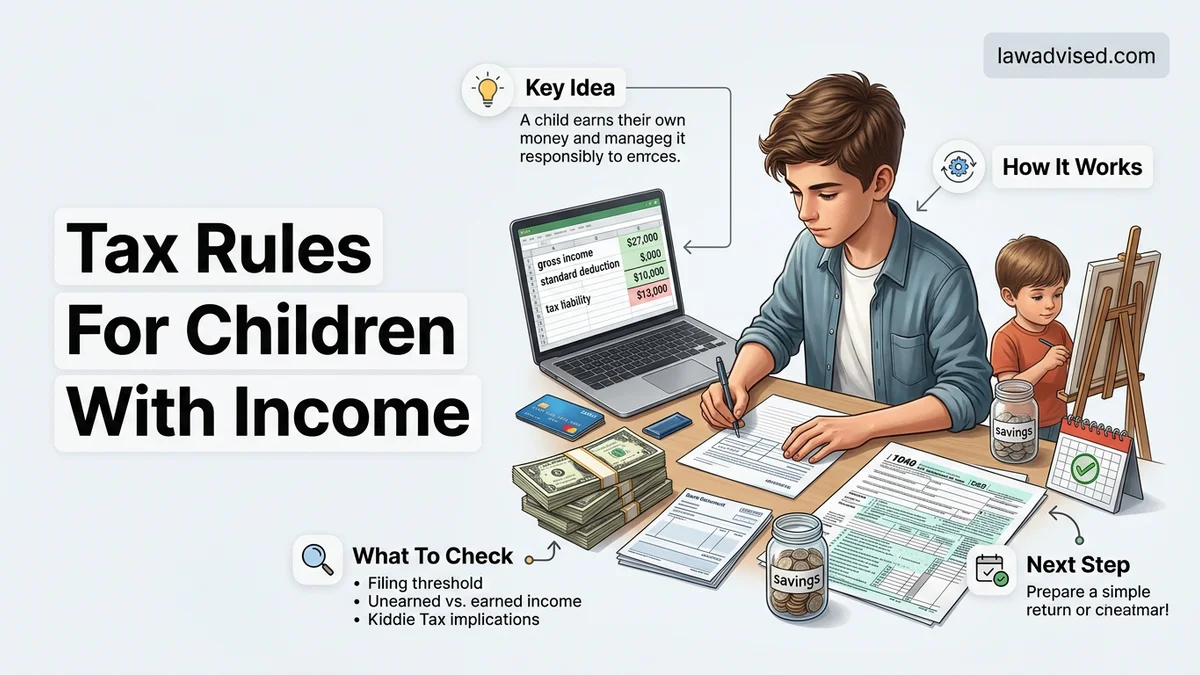
A child must file a tax return in 2026 based on the type and amount of income they receive. The IRS separates income into two main categories: earned income (wages and salaries) and unearned income (investments, interest, and dividends).
Earned Income Thresholds for 2026
If your child only has earned income from a traditional job, their 2026 filing requirement mirrors the standard deduction for single dependents. For the 2026 tax year, a dependent child generally must file a federal income tax return if their earned income exceeds the inflation-adjusted standard deduction, projected to be around $15,000.
- W-2 employee earnings below the standard deduction typically do not require a filing.
- Even if filing is not mandatory, your child should file a return if federal income tax was withheld from their paycheck so they can claim a refund.
Self-Employment and Unearned Income Triggers
The rules change drastically if your child works for themselves or receives passive income. Self-employed minors face a much lower threshold.
- Self-Employment Income: If your child nets more than $400 from self-employment (like babysitting, lawn care, or freelance gig work), they must file a tax return to pay self-employment tax (Social Security and Medicare), regardless of their total income.
- Unearned Income: If a child has unearned income—such as interest from a savings account, capital gains, or dividends—the 2026 filing threshold is much lower, typically triggered if unearned income exceeds $1,350 or if total income exceeds the standard deduction.
How to Fix and Determine Child Tax Filing Status Step-by-Step
Determining whether your child must file requires calculating their total gross income and categorizing every dollar. Follow these steps to sort out their 2026 tax obligations accurately.
Step 1: Calculate and Categorize All Income Sources
Gather all tax documents issued to your child for the 2026 calendar year. Look for W-2 forms from employers, 1099 forms for freelance work, and 1099-INT or 1099-DIV forms from banks and brokerages.
- Separate wages from interest, dividends, and self-employment proceeds.
- Calculate net self-employment earnings by subtracting any ordinary and necessary business expenses from gross receipts.
Step 2: Compare Against 2026 IRS Thresholds
Compare the categorized totals against the IRS rules for dependents for the 2026 tax year to see if filing is mandatory.
- Check if earned wages surpass the standard deduction limit.
- Check if net self-employment earnings hit the $400 mark.
- Check if unearned investment income exceeds the minimum threshold for dependents.
- Evaluate if the child’s unearned income crosses the threshold that triggers the Kiddie Tax, which requires filing Form 8615 to tax a portion of that income at the parents’ marginal tax rate.
Step-by-Step Guide to Calculating the Kiddie Tax and Form 8615
When unearned income surpasses specific IRS thresholds, the Kiddie Tax applies. For the 2026 tax year, the first $1,350 of unearned income is generally tax-free, and the next $1,350 is taxed at the child’s standard rate. Any unearned income exceeding $2,700 is taxed at the parent’s marginal tax rate. Completing this calculation requires meticulous attention to financial details.
Gathering Necessary Financial Documents
Before filing, collect all relevant tax documents associated with the child and parents. According to IRS guidelines, accurate calculation relies on matching specific forms to prevent processing delays.
- Retrieve the child’s Form W-2 if they had a job, or 1099 forms reporting interest, dividends, or capital gains.
- Locate the parents’ completed Form 1040 to identify the correct marginal tax bracket and taxable income figures.
- Obtain any brokerage statements detailing the exact breakdown of qualified versus ordinary dividends.
Completing Form 8615
Form 8615 calculates the net unearned income and applies the appropriate tax rates. Tax software typically automates this, but manual completion follows a strict sequence.
- Enter the child’s total unearned income on line 1 and subtract the statutory $2,700 threshold to find the net unearned income.
- Calculate the tax on the child’s taxable income using single filer rates, then compute the tax using the parents’ tax rate.
- Determine the final tax liability by comparing the child’s standard tax calculation with the parent-adjusted computation.
What If It Still Doesn’t Work and You Need Parent Return Reporting
Sometimes, traditional filing routes fail due to missing parental data or complex investment portfolios. If standard software calculations throw errors or the child’s income structures do not align neatly with Form 8615, alternative reporting measures are required. Certified Public Accountants emphasize that attempting to bypass parental reporting rules often triggers automated IRS audits.
If standard filing hurdles persist, consider these verified fallback steps to ensure compliance:
- File Form 8814 (Parents’ Election to Report Child’s Interest and Dividends) directly on the parents’ tax return, provided the child’s income is strictly between $1,350 and $13,500 from interest and dividends only.
- Request a formal transcript of the parents’ tax return from the IRS online portal to verify exact adjusted gross income figures before finalizing the child’s return.
- Consult a certified tax professional or Enrolled Agent if capital loss carryovers or complex trust distributions complicate the household calculation. Professional tax preparation fees typically range from $300 to $600 for multi-return household filings involving Kiddie Tax provisions.
- File for an extension using Form 4868 if parental income data is delayed, ensuring estimated taxes are paid to avoid late-payment penalties.
Conclusion
Navigating tax rules for children with income in 2026 requires understanding standard deduction limits and applying Form 8615 correctly when unearned thresholds are crossed. According to verified research and expert sources from the IRS and leading national CPA associations, proactive planning prevents costly calculation errors and potential audits. As an actionable next step, review your child’s 1099 and W-2 forms today to determine whether their unearned income crosses the $2,700 Kiddie Tax threshold for the 2026 tax year.
❓ Frequently Asked Questions
What is the exact income threshold for a dependent child to file a tax return?
For earned income, a single dependent must file if their total earnings exceed the standard deduction for that tax year. For unearned income, the filing threshold is much lower, typically starting at a few hundred dollars.
How do I know if my child’s investment income is subject to the Kiddie Tax?
The Kiddie Tax applies if a child has unearned income above the annual inflation-adjusted threshold, has at least one living parent, and is under age 18 (or meets specific student criteria up to age 23).
What form is required to report a child’s unearned income under the Kiddie Tax?
Form 8615, ‘Tax for Certain Children Who Have Unearned Income,’ must be attached to the child’s tax return to calculate the tax at the parents’ higher tax rates.
What are the eligibility rules for reporting a child’s income on a parent’s return using Form 8814?
The child’s gross income must consist solely of interest and dividends, total less than the upper unearned income threshold, and the child cannot have had federal income tax withheld or estimated tax payments made.
Do state taxes also apply to a minor child who meets federal filing thresholds?
Yes, state tax filing requirements typically mirror federal rules, meaning if a child meets the federal threshold or has state tax withheld, they may need to file a state return.
What happens if a child with filing requirements fails to submit a tax return?
Failing to file when required can result in IRS failure-to-file penalties, interest charges, and potential notices sent to both the dependent and their legal guardians.

Ismail Hossain is the founder of Law Advised. He is an Divorce, Separation, marriage lawyer. Follow him.