1099 INT Explained Expert Step-by-Step Guide for 2026
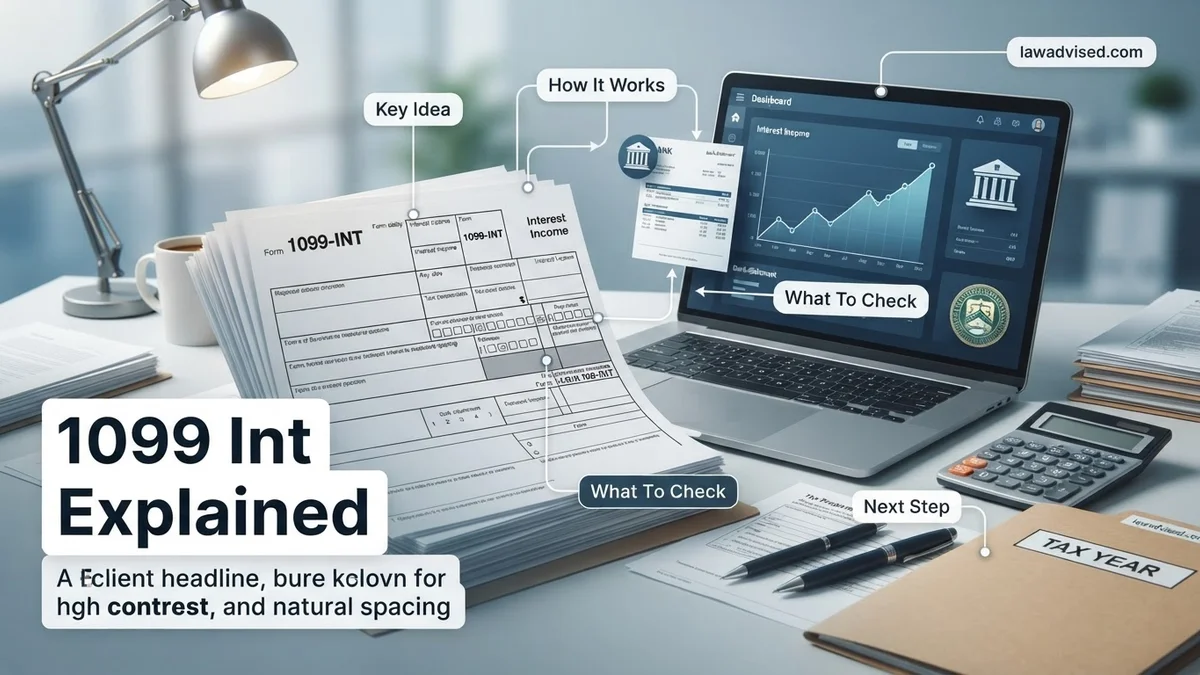
Form 1099-INT is an official tax document issued by banks and financial institutions to report taxable interest income earned during the year. Anyone who earns $10 or more in interest from a single institution generally receives this form to report on their federal tax return.
Form 1099-INT is the official IRS document used to report taxable interest income you earned throughout the year from banks, brokerages, or other financial institutions. If you kept cash in a standard savings account, certificate of deposit (CD), or treasury bond that grew, the institution that held your money is required to send you this form.
As you prepare your tax return for 2026, dealing with this form correctly ensures your reported income matches what the IRS already has on file, preventing costly processing delays or automated matching notices. Let us break down exactly why you received this document and how to read it.
Key Takeaways
- Form 1099-INT reports interest income earned from banks and financial institutions.
- Financial institutions must issue this form if you earned $10 or more in interest.
- Box 1 shows your total taxable interest income earned during the tax year.
- Interest over $1,500 requires you to report details on IRS Schedule B.
- You must report interest income even if you did not receive a 1099-INT.
What Causes You to Receive a 1099-INT Form
Financial institutions issue a 1099-INT whenever they pay you interest above a specific statutory threshold during the calendar year. Knowing the triggers helps you anticipate your tax documents before they arrive in your mailbox or digital inbox.
The $10 Interest Threshold Rule
Banks and financial entities must send you and the IRS a Form 1099-INT if you earned at least $10 in taxable interest from a single account. Even if you earn less than $10, you are still legally required to report that interest income on your tax return, though you likely will not receive the physical form.
- Traditional and high-yield savings accounts
- Checking accounts that pay interest
- Certificates of Deposit (CDs) that matured or accrued interest
- U.S. Savings Bonds and Treasury securities
Common Scenarios That Generate Interest Income
Aside from standard banking, you might receive a 1099-INT from unexpected places. For instance, if you received a payout from a legal settlement that included interest, or if an insurance company held funds that accumulated interest over time, you will see a 1099-INT. Additionally, promotional cash bonuses from opening a new checking or savings account are frequently reported as interest income on this form rather than miscellaneous income.
How to Read the Key Boxes on Your 1099-INT
Looking at a 1099-INT can feel intimidating with all the numbered boxes, but you only need to focus on a few key sections for a standard tax return. Most boxes will be completely blank depending on your specific financial products.
Box 1 and Box 3: Taxable Interest and U.S. Savings Bonds
Box 1, labeled Taxable Interest Income, is the most important number on the entire form. This represents the total interest paid to you during the tax year. You must report this exact figure on your federal tax return.
- Box 1: Total taxable interest from your savings, CDs, and bank accounts.
- Box 3: Interest on U.S. Savings Bonds and Treasury obligations, which is exempt from state and local income taxes but subject to federal tax.
Box 2 and Other Essential Withholding Fields
If your bank withheld federal income tax from your interest earnings—typically due to missing your Social Security Number or backup withholding rules—you will find that amount listed in Box 4, Federal Income Tax Withheld. You get credit for this money, so make sure it gets transferred onto your tax forms. Other boxes, such as foreign tax paid or state tax withheld, only apply if you hold specific international assets or live in states with distinct local tax requirements.
Step-by-Step Guide to Reporting 1099-INT on Your Tax Return
Filing your interest income accurately ensures compliance with the IRS and prevents processing delays for your 2026 tax return. According to Internal Revenue Service data, reporting discrepancies are among the leading triggers for automated underreporter notices. Follow these precise procedural steps to report your form correctly.
Step 1: Locate and Verify Tax Software Entry Points
If you are using commercial tax preparation software for your 2026 filing, navigate to the income section and select “Interest Income.” Most modern platforms allow you to import your 1099-INT directly using the Payer’s Terminal Identification Number or a secure financial aggregator.
Step 2: Transfer Form Data to Schedule B
If your total taxable interest exceeds $1,500, federal tax regulations require you to list each payer on Schedule B of Form 1040. Accurate transcription is critical here. Match Box 1 data to Part I, Line 1 of Schedule B, and carry the subtotal over to your main 1040 form.
Step 3: Account for Tax-Exempt and Foreign Items
Review Boxes 3 and 8 for tax-exempt interest and foreign tax paid. Even if interest from municipal bonds is exempt from federal income tax, you must still report the amount on your Form 1040 for informational purposes, as it may impact the taxable portion of your Social Security benefits.
What to Do If Your 1099-INT is Incorrect or Missing
Discovering an error on your tax document or waiting for a missing form creates filing anxiety, but established resolution protocols exist. Financial institutions are federally mandated to issue corrected statements promptly when notified of discrepancies.
Dealing with an Incorrect Amount in Box 1
Compare the figure on your 1099-INT against your year-end bank or brokerage statements. If the payer reported an inflated interest amount, contact their customer service department immediately to request a corrected 1099-INT form before submitting your return.
Handling Missing Forms Below the Threshold
Banks are not legally required to issue a 1099-INT if your total interest earnings for the calendar year are under $10. However, tax compliance guidelines mandate that you still report all earned interest. Calculate your total earnings from your monthly statements and report the aggregate sum directly on your tax return.
What If It Still Doesn’t Work?
If automated software imports fail, payer corrections stall, or complex multi-state interest scenarios arise during your 2026 tax preparation, specific fallback steps can resolve the issue:
- File an Extension: If your corrected 1099-INT does not arrive by early April 2026, file Form 4868 to secure an automatic six-month extension, preventing premature filing errors.
- Report as Estimated Income: Enter the best available estimate based on your final December 2025 statement, then amend your return later using Form 1040-X once the official document arrives.
- Consult a Certified Public Accountant: For complex foreign interest or inherited bond portfolios, engage a licensed CPA. According to industry surveys by the National Society of Accountants, professional tax preparation services typically cost between $250 and $500 depending on the complexity of your investment schedules.
- Utilize IRS Volunteer Programs: Taxpayers who meet income thresholds can access free assistance through the IRS Volunteer Income Tax Assistance (VITA) program.
Conclusion
Navigating the 1099-INT process requires careful attention to reporting thresholds, precise data entry, and proactive handling of missing documents. By following systematic verification steps, you can avoid costly processing delays and accurately account for all earned interest. According to verified research and expert tax sources, maintaining meticulous financial records throughout the year remains the single most effective method for ensuring seamless, error-free tax compliance. Take the next actionable step today by organizing your year-end financial statements and logging into your preferred tax preparation platform to begin your 2026 filing.
❓ Frequently Asked Questions
What should I do if I didn’t receive a 1099-INT for my bank account interest?
You are still legally required to report all interest income on your tax return. Check your year-end bank statements to calculate the exact amount of interest earned and report it accordingly.
Why is the interest amount on my 1099-INT different from what I calculated?
Discrepancies often occur due to interest credited in early January for the previous December, or tax-exempt interest included on statements. Compare your bank statements line by line to verify the exact figures.
Is all interest reported on Form 1099-INT taxable?
No, certain types of interest—such as interest from municipal bonds—may be tax-exempt at the federal or state level. Box 8 on the form typically reports tax-exempt interest.
What is an early withdrawal penalty shown on Form 1099-INT?
If you withdrew funds from a Certificate of Deposit (CD) before its maturity date, the penalty charged by the bank is reported in Box 2. You can usually deduct this penalty on your tax return.
What happens if I report incorrect 1099-INT information on my taxes?
The IRS matches tax returns against copies sent by financial institutions. Mismatched data can trigger an automated IRS notice or delay your tax refund.
Do I need Schedule B if I have multiple 1099-INT forms?
You only need to file Schedule B if your total taxable interest and ordinary dividends from all sources combined exceed $1,500 for the tax year.

Ismail Hossain is the founder of Law Advised. He is an Divorce, Separation, marriage lawyer. Follow him.