Who Qualifies as a Dependent Expert 2026 Guide
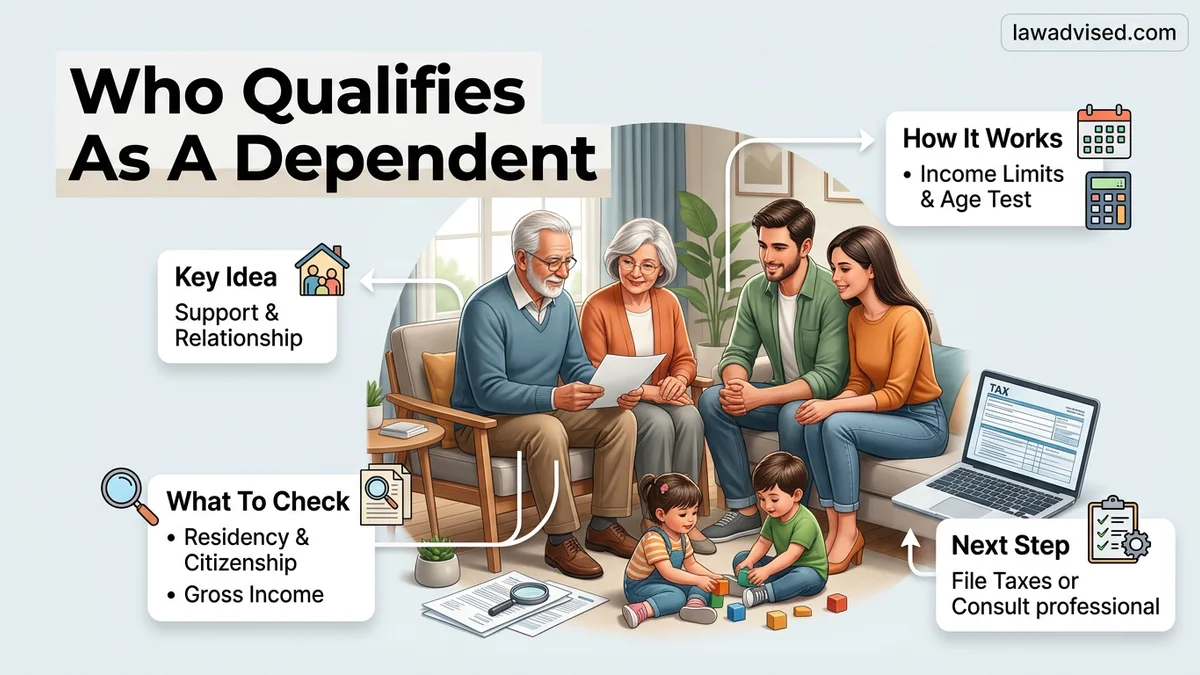
Determining who qualifies as a dependent requires meeting strict IRS tests for either a Qualifying Child or a Qualifying Relative. You must evaluate specific criteria regarding relationship, age, residency, and financial support to legally claim someone on your tax return.
You are allowed to claim a specific person as your dependent on your 2026 tax return if they meet strict IRS criteria defined under two main categories: a Qualifying Child or a Qualifying Relative. There is no middle ground or guessing allowed, as the IRS matches Social Security numbers and enforces these rules strictly during tax processing.
Getting this right matters practically because claiming an eligible dependent unlocks valuable tax benefits like the Child Tax Credit, the Credit for Other Dependents, and head of household filing status. Mistakenly claiming someone triggers automatic math errors, delayed refunds, and potentially costly audits.
Key Takeaways
- A dependent must pass either the Qualifying Child or Qualifying Relative IRS tests.
- Qualifying children must be under age 19, or 24 if a full-time student.
- Qualifying relatives cannot exceed the annual gross income limit set by the IRS.
- You must provide more than 50% of the individual’s total financial support.
- A dependent cannot file a joint tax return unless it is only to claim a refund.
What Causes Confusion Around Who Qualifies as a Dependent
The Myth of Total Financial Maintenance
Many taxpayers assume that simply sending money to a family member makes that person a dependent. The IRS requires you to meet specific percentage thresholds of total financial support rather than just looking at your out-of-pocket contributions. For a qualifying relative, you must provide over 50 percent of their total annual support for the 2026 tax year.
Overlapping Claims and Shared Custody
Divorced parents or multi-generational households frequently run into conflicts over who gets to claim a child or aging parent. Confusion arises because a person might pass the relationship test for multiple people, but IRS tie-breaker rules strictly dictate who gets the tax claim. Key areas of confusion include:
- Assuming the parent with the higher income automatically wins tie-breakers.
- Forgetting that a dependent cannot be claimed by more than one taxpayer in the same tax year.
- Misunderstanding how temporary absences, like college attendance, impact residency tests.
How to Evaluate Your Dependent Step-by-Step
Running the Five Tests for a Qualifying Child
To claim someone as a qualifying child on your 2026 return, they must pass five distinct IRS tests without exception. If they fail even one of these criteria, you must evaluate them under the qualifying relative rules instead. Walk through this checklist for the person you want to claim:
- Relationship Test: The individual must be your son, daughter, stepchild, foster child, brother, sister, half-brother, half-sister, stepbrother, stepsister, or a descendant of any of them.
- Age Test: The child must be under age 19 at the end of 2026, or under age 24 if they are a full-time student for at least five months of the year. Permanently and totally disabled children have no age limit.
- Residency Test: The child must share your principal place of abode for more than half of 2026, with standard exceptions for school, illness, or military service.
- Support Test: The child cannot have provided more than half of their own financial support during the 2026 tax year.
- Joint Return Test: The child cannot file a joint tax return for 2026, unless they are only filing to claim a refund of withheld income tax or estimated tax paid.
Checking the Four Tests for a Qualifying Relative
If your intended dependent is an adult child over age 24, an aging parent, or a non-relative living with you, they must satisfy the qualifying relative tests. The framework shifts away from age and residency toward income limits and household membership:
- Not a Qualifying Child Test: The person cannot be your own qualifying child or anyone else’s qualifying child for the 2026 tax year.
- Member of Household or Relationship Test: They must either live with you all year as a member of your household, or be related to you in one of several specific ways, such as a parent, grandparent, aunt, uncle, or sibling.
- Gross Income Test: For 2026, the person’s gross taxable income must be below the statutory threshold established by the IRS for the tax year.
- Support Test: You must provide more than 50 percent of the person’s total financial support for the entire calendar year.
How to Test the Qualifying Child Rules
Determining eligibility for a dependent requires evaluating five distinct statutory tests established by the IRS. Tax professionals recommend assessing these criteria systematically to avoid costly math errors or IRS audits during the 2026 filing season.
The Five Core Verification Steps
- Verify the Relationship Test: Confirm the individual is your son, daughter, stepchild, foster child, brother, sister, half-brother, half-sister, stepsister, stepbrother, or a descendant of any of these.
- Check the Age Test: Ensure the child is under age 19 at the end of 2026, or under age 24 and a full-time student for at least five months of the year. Permanently and totally disabled children are exempt from age limits entirely.
- Evaluate Residency: Document that the individual lived with you for more than half of 2026, accounting for temporary absences due to school, medical treatment, or military service.
- Analyze Financial Support: Verify that the individual did not provide more than 50 percent of their own total financial support throughout the 2026 tax year.
- Review Joint Return Status: Confirm the dependent does not file a joint tax return for 2026, unless they are filing solely to claim a refund of withheld income tax.
What If It Still Doesn’t Work? Handling Edge Cases and Relatives
When standard tests fail or family dynamics involve non-traditional dependents like aging parents or adult siblings, navigating the rules becomes significantly more complex. Applying the Qualifying Relative rules requires tracking gross income limits and total support percentages down to the dollar for the 2026 tax year.
Fallback Strategies for Complex Situations
- Calculate the exact 2026 gross income of the potential dependent to ensure it stays below the IRS statutory threshold.
- Execute a formal multiple support agreement using IRS Form 2120 if multiple family members collectively provide more than 50 percent of a relative’s support.
- Consult a certified public accountant (CPA) or Enrolled Agent when dealing with multi-household custody arrangements or divorced parents sharing custody.
- Retain a tax professional for complex filings; expert tax preparation fees generally range from $250 to $600 depending on the complexity of your dependent scenarios.
Conclusion
Mastering the dependency rules prevents compliance errors and maximizes valuable tax credits during the 2026 tax season. According to verified research and IRS data, applying the correct relationship, age, and support tests is the single most effective way to secure your rightful deductions. As an immediate next step, gather all 2026 financial records, school transcripts, and residency documentation before beginning your tax software data entry or meeting with a professional advisor.
❓ Frequently Asked Questions
What are the five tests for a Qualifying Child?
To claim a qualifying child, they must meet the relationship, age, residency, support, and joint return tests. The child must be your son, daughter, stepchild, foster child, sibling, or a descendant of any of them.
How does the residency test work for a Qualifying Child?
The child must have lived with you for more than half of the year, though temporary absences for school, medical care, or vacations count as time lived with you.
What are the four tests for a Qualifying Relative?
They must not be a qualifying child, must meet the member of household or relationship test, must satisfy the gross income limit, and you must provide over half of their support.
Can I claim an aging parent who lives in a different home or facility?
Yes, you can claim a parent as a qualifying relative even if they do not live with you, provided you meet the financial support test and they pass the gross income limit.
What happens if both parents try to claim the same child?
The IRS uses tie-breaker rules based on who the child lived with longest, the parent with the highest adjusted gross income, or specific court agreements in divorce cases.
Can a foster child qualify as my dependent?
Yes, a foster child placed by an authorized agency or court order can qualify as your dependent if they meet all the standard qualifying child tests.

Ismail Hossain is the founder of Law Advised. He is an Divorce, Separation, marriage lawyer. Follow him.