Safe Harbor Rule for Estimated Taxes 2026 Guide
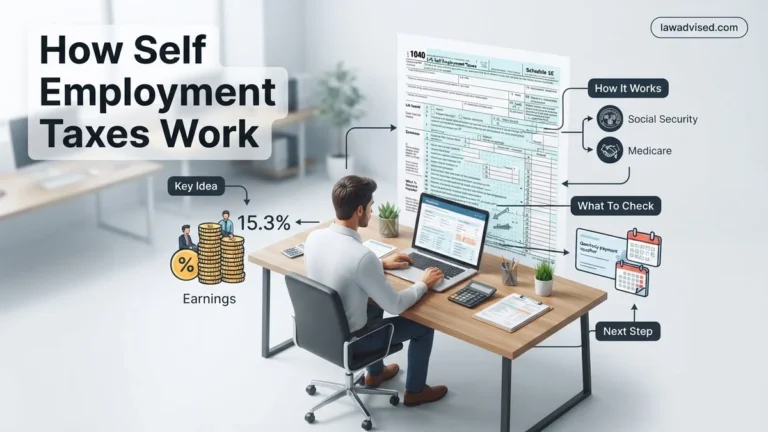
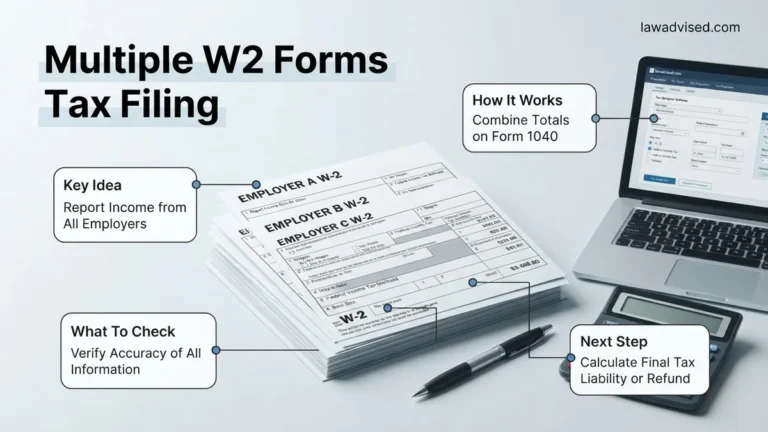
The IRS safe harbor rule for estimated taxes allows taxpayers to completely avoid underpayment penalties by meeting specific percentage thresholds of their current or prior year’s tax liability. To qualify, you must pay a minimum percentage of what you owe through quarterly estimated payments or withholding. Missing these precise thresholds triggers mandatory IRS penalties regardless of your final tax bill.
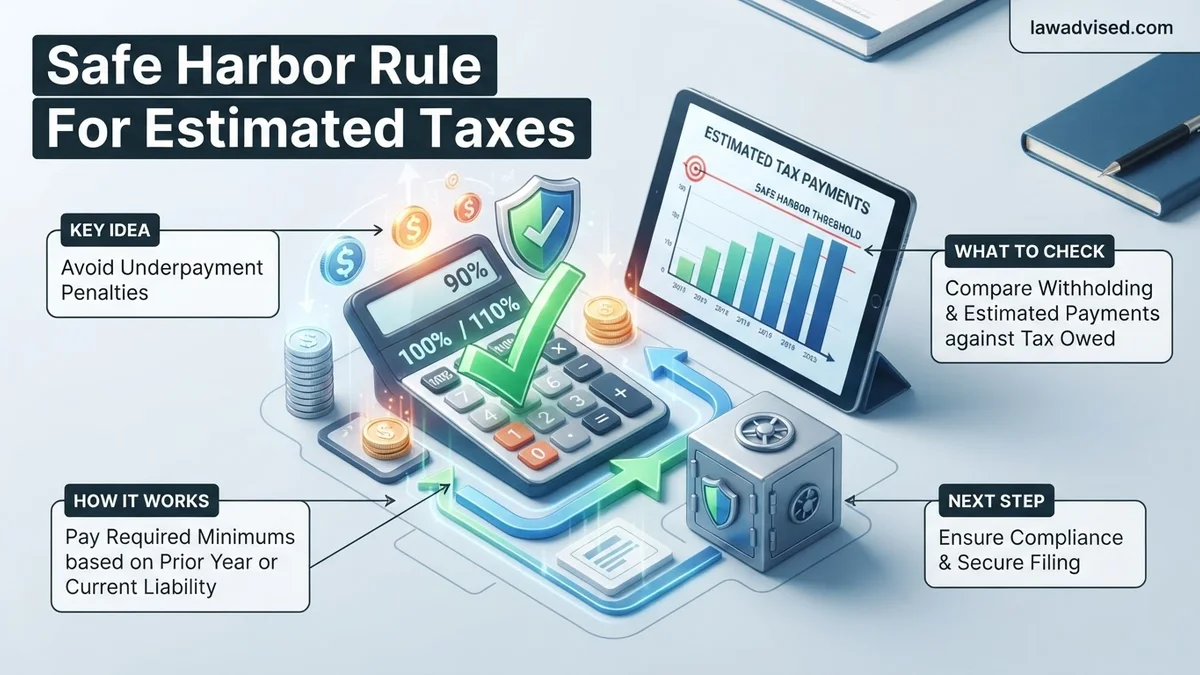
To completely avoid IRS underpayment penalties for your 2026 tax year, you must satisfy the safe harbor rule by paying through withholding and quarterly estimated payments either 90 percent of your actual 2026 tax liability or 100 percent of your 2025 tax liability (raising to 110 percent if your adjusted gross income exceeds certain thresholds). If you hit one of these specific percentage targets, the IRS will not charge you a penalty, even if you owe a massive lump sum when you file your return next year.
Managing your quarterly payments correctly protects you from unexpected cash flow hits and interest charges. Because the IRS operates on a pay-as-you-go system, failing to meet these exact safe harbor thresholds triggers an underpayment penalty calculated daily based on federal interest rates. Knowing the precise formulas lets you automate your payments with confidence and keep more money in your bank account.
Key Takeaways
- Pay 90% of your current year’s actual tax liability to satisfy the safe harbor rule.
- Pay 100% of your prior year’s tax liability if your AGI is under the threshold.
- High earners with AGI over $150,000 must pay 110% of prior year taxes.
- Prior year tax liability must reflect a full 12-month return period.
- Taxpayers with zero tax liability in the previous year are generally exempt from penalties.
What Triggers IRS Underpayment Penalties on Estimated Taxes
The Cost of Missing the Mark
The IRS expects you to pay your income tax liability evenly throughout the year as you earn your income. If you wait until April 2027 to pay what you owe for 2026, you face an underpayment penalty. This penalty acts essentially like an interest charge on the amount you underpaid for each quarter. If your total withholding and estimated payments do not clear the minimum safe harbor floor, you cannot negotiate your way out of the penalty unless you qualify for a specific waiver, such as a casualty disaster or newly acquired disability.
How the IRS Measures Your Compliance
The IRS tests your compliance across four payment periods during the tax year. Each quarterly deadline requires you to have paid roughly one-quarter of your annual safe harbor target. Falling short in Q1 means you rack up penalties for that specific chunk of money, even if you overpay in Q3 or Q4. Staying safe means looking at your total annual tax picture right now for 2026 and ensuring your cumulative payments track correctly against the rules.
How to Calculate the Exact Safe Harbor Thresholds for 2026
The 90 Percent Current Year Rule
Your first option for 2026 is paying 90 percent of the total tax liability you ultimately calculate on your 2026 federal return.
- Calculate your expected total tax for 2026 based on your projected business income, investments, and deductions.
- Multiply that final expected tax number by 0.90.
- Subtract any W-2 tax withholding you or your spouse expect to have taken out through traditional jobs.
- Divide the remaining balance evenly across the four 2026 quarterly estimated tax payment due dates.
The catch here is accuracy. If you underestimate your 2026 income and your payments fall below 90 percent of your actual liability, the safe harbor fails.
The 100 or 110 Percent Prior Year Rule
Your second, and usually safer, option is basing your 2026 payments on your 2025 tax return. This removes the guesswork of predicting your 2026 income.
- Look at line 24 (total tax) of your 2025 Form 1040.
- If your 2025 Adjusted Gross Income was $150,000 or less (or $75,000 or less if married filing separately), your safe harbor target is 100 percent of that prior year tax.
- If your 2025 Adjusted Gross Income exceeded $150,000 (or $75,000 if married filing separately), your safe harbor target jumps to 110 percent of that prior year tax.
Paying this exact prior-year baseline guarantees zero underpayment penalties for 2026, regardless of how much money you make this year.
Step-by-Step Guide to Applying the Prior Year AGI Safe Harbor
Utilizing the prior year Adjusted Gross Income (AGI) safe harbor rule remains the most reliable strategy to avoid 2026 underpayment penalties. Because exact current-year earnings fluctuate, anchoring your calculations to a known historical number removes guesswork.
Calculating Your Baseline
According to Internal Revenue Service guidelines, taxpayers must first determine their exact total tax liability from the prior tax year, typically found on line 24 of Form 1040. Next, evaluate your current gross income to establish which AGI threshold applies to your filing status for 2026.
- Locate your total tax liability from your previous year tax return to establish the minimum payment benchmark.
- Review your projected 2026 gross income to determine if your prior-year AGI exceeds the $150,000 threshold (or $75,000 if married filing separately).
- Calculate the required 100 percent baseline for incomes below the threshold, or adjust the requirement to 110 percent if your prior AGI surpassed those limits.
- Divide your final calculated annual safe harbor target evenly across four quarterly installment periods.
- Schedule your payments through the official IRS Direct Pay portal or submit Form 1040-ES vouchers by the quarterly deadlines.
What to Do If You Miss the Safe Harbor Deadlines
Missing a quarterly estimated tax deadline triggers potential IRS underpayment penalties, but proactive measures mitigate the financial damage. Tax specialists emphasize that failing to meet one quarter does not disqualify you from safe harbor protection for subsequent periods.
Corrective Action Steps
If a quarterly payment is late or missed entirely, immediate correction minimizes accumulated interest charges. Financial advisors recommend specific steps to rectify the discrepancy before the next filing cycle.
- Submit the missed payment immediately to halt the daily compounding of IRS interest penalties.
- Calculate whether increasing your remaining quarterly payments can offset the shortfall under the annualized income installment method.
- File IRS Form 2210 with your annual return to formally request a waiver if the missed deadline resulted from casualty, disaster, or unusual circumstances.
- Consult a certified public accountant or licensed tax attorney if your total underpayment exceeds $5,000 or involves complex income streams.
What If It Still Doesn’t Work?
If standard safe harbor calculations and retroactive payments fail to resolve your penalty assessment, structured fallback options exist. Tax resolution specialists recommend the following sequence to address persistent underpayment disputes:
- Review your IRS notice of penalty carefully to identify calculation errors regarding quarterly crediting dates.
- Utilize the First-Time Penalty Abatement administrative waiver if you have a clean compliance record for the preceding three tax years.
- Engage a licensed tax professional or enrolled agent to draft a formal abatement request citing reasonable cause under Internal Revenue Code Section 6654. Professional representation for penalty appeals typically ranges from $300 to $1,200 depending on complexity.
- Request a formal reconsideration or appeals conference if the IRS denies your initial penalty waiver request.
Conclusion
Navigating estimated tax penalties requires strict adherence to the safe harbor rules by leveraging prior-year AGI benchmarks to guarantee compliance. By dividing your baseline liability into accurate quarterly installments, you eliminate unexpected IRS fees. According to verified research and expert tax sources, proactive quarterly planning remains the single most effective defense against statutory underpayment charges. Schedule your next quarterly payment review today to secure your financial standing for the 2026 tax year.
❓ Frequently Asked Questions
What happens if I had zero tax liability last year?
If you were a U.S. citizen or resident for the entire previous tax year and had a zero tax liability, you do not need to make estimated tax payments to meet the safe harbor rule.
How does the IRS define prior year tax liability for the safe harbor?
Prior year tax liability is the total tax shown on your return, which generally means line 24 on IRS Form 1040, minus certain refundable credits like the earned income credit.
Can I use the prior year safe harbor if I filed a joint return last year but filing separately this year?
Yes, but calculating the individual safe harbor thresholds gets complicated when splitting prior joint liabilities, and you may need professional guidance to allocate the prior tax correctly.
Are farmers and fishermen subject to different safe harbor rules?
Yes, qualifying farmers and fishermen only need to pay 66.67% (two-thirds) of their current year tax liability or 100% of their prior year tax to meet the safe harbor.
What if my income fluctuates heavily throughout the year?
If your income is uneven, you can use the annualized income installment method to calculate different payment amounts for each quarter, which can help satisfy safe harbor exceptions.
Does withholding from a W-2 job count toward the safe harbor?
Yes, tax withholding from a W-2 job or pension is treated as paid evenly throughout the year, making it a powerful tool to bridge gaps in your estimated tax safe harbor calculations.

Ismail Hossain is the founder of Law Advised. He is an Divorce, Separation, marriage lawyer. Follow him.