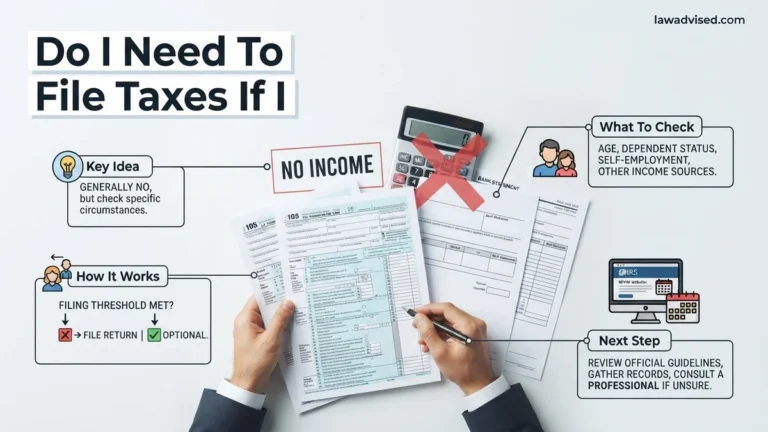
Additional Standard Deduction Explained 2026 Expert Guide
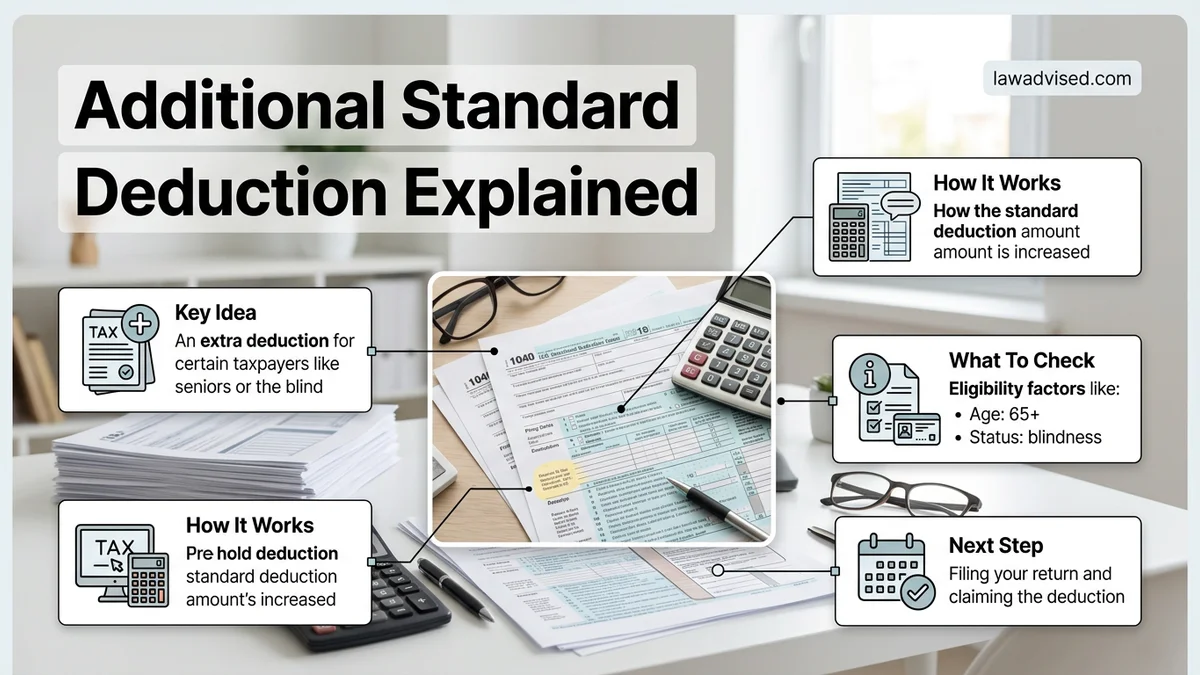
The additional standard deduction provides extra tax relief for individuals who are age 65 or older or legally blind by the end of the tax year. Understanding how to calculate and apply these specific dollar amounts ensures you do not miss out on valuable tax savings.
For the 2026 tax year, taxpayers who are age 65 or older, or legally blind, can claim an additional standard deduction that lowers their taxable income even further. Depending on your filing status and whether you meet one or both criteria, this extra tax break adds hundreds or thousands of dollars to your standard deduction amount, directly reducing the income you pay taxes on.
Claiming this extra amount properly prevents you from overpaying your federal income taxes. Many eligible taxpayers miss out because they misunderstand the exact age and vision thresholds set by the IRS, or they fail to check both boxes when they qualify for multiple categories.
Key Takeaways
- Taxpayers turning 65 by January 1, 2027, qualify for the 2026 senior tax deduction.
- Legal blindness must be certified by a physician or optometrist to claim the blind deduction.
- Filing status directly determines the exact dollar amount of your additional deduction.
- Qualifying for both age and blindness doubles the additional standard deduction amount.
- You do not need to itemize deductions to claim this extra tax benefit.
What Causes Confusion About the Additional Standard Deduction
Taxpayers often mix up the basic standard deduction with the additional standard deduction. The basic deduction is a flat amount based strictly on your filing status. The additional standard deduction is a separate, cumulative bonus specifically reserved for seniors and individuals with visual impairments.
The Birthday Rule Trap
Timing your 65th birthday incorrectly is one of the most common filing errors. The IRS considers you to have attained age 65 on the day before your actual birthday.
- If you were born on January 1, 1962, you are treated as turning 65 on December 31, 2026.
- This means you qualify for the 2026 tax year.
- If your birthday falls on January 2, 1962, you do not reach age 65 until January 1, 2027, making you ineligible for the 2026 additional deduction.
Filing Status Complications
Confusion also arises when married couples file their taxes. You cannot claim an additional standard deduction for your spouse if your spouse is under 65 and not blind. However, if you file jointly and both spouses are at least 65 and legally blind, you can stack these additional amounts four times over. Understanding how these layers apply to your specific household prevents costly arithmetic mistakes on your return.
How to Determine Your 2026 Qualification Criteria
To claim the extra financial break for 2026, you must meet exact IRS definitions for age or blindness before the tax year closes. The rules leave little room for interpretation, so you need to verify your status against official guidelines before filing.
Proving Legal Blindness to the IRS
You qualify as legally blind for the 2026 tax year if your better eye does not exceed 20/200 vision with glasses or contact lenses, or if your field of vision is 20 degrees or less.
- You do not need to attach a doctor’s statement to your tax return.
- However, you must keep a signed statement from your optometrist or ophthalmologist in your records.
- The statement must certify that your vision meets the legal definition of blindness.
The Dual-Qualification Scenario
You can stack the additional standard deduction if you meet more than one criteria. If you are both 65 or older and legally blind by the end of 2026, you receive two additional deduction amounts for yourself. If you file a joint return and your spouse also meets both criteria, your household can claim up to four additional deduction increments, maximizing your total tax-free income threshold for the year.
Step-by-Step Guide to Calculating and Claiming Your Extra Deduction
Claiming your additional standard deduction accurately on your 2026 tax return requires careful coordination with your filing software or tax professional. According to IRS procedural guidelines, missing this calculation can trigger automated notices or delay refunds.
Sub-step 1: Verify Your Age and Blindness Criteria
Confirm that you or your spouse reached age 65 by January 1, 2027, which qualifies you for the 2026 tax year. For visual impairment claims, ensure you possess a signed statement from an optometrist or ophthalmologist verifying that your central visual acuity does not exceed 20/200 in the better eye with corrective lenses.
Sub-step 2: Complete the Standard Deduction Worksheet
- Locate the Standard Deduction chart corresponding to your filing status in the Form 1040 instructions for 2026.
- Enter your basic standard deduction amount based on your filing status.
- Multiply the additional standard deduction increment for 2026 by the total number of boxes you checked for age 65 or older and blindness.
- Add the basic standard deduction and the total additional amount together to determine your final deduction.
Sub-step 3: Input Data Into Tax Preparation Software
Modern tax software automates this calculation once you enter your date of birth. Always double-check that the software correctly transfers the calculated total to Line 12 of your Form 1040.
What If Your Filing Status or Age Changes at Year-End
Taxpayers often experience major life events right before the end of the year, which directly impacts how the additional standard deduction is calculated for 2026. The IRS applies strict rules regarding year-end status changes.
Reaching Age 65 on New Year’s Day
Under IRS regulations, you are considered to have reached age 65 on the day before your 65th birthday. Therefore, if your birthday falls on January 1, 2027, you officially attain age 65 on December 31, 2026, and qualify for the additional deduction for the 2026 tax year.
Mid-Year Marital Status Changes
Your marital status on the final day of the tax year determines your filing status for the entire year. If you marry on or before December 31, 2026, you can claim the additional standard deduction for your spouse if they meet the age or blindness criteria, provided you file a joint return.
Death of a Spouse During the Tax Year
If your spouse passed away during 2026 without remarrying before the end of the year, you generally file a joint return for 2026. You may claim the additional standard deduction for your deceased spouse if they would have qualified as of the date of death.
What If It Still Doesn’t Work?
If your tax preparation software rejects your calculation or you encounter conflicting IRS guidance regarding your 2026 additional standard deduction, utilize these troubleshooting steps:
- Review Form 1040, Schedule 3, and related IRS Publication 501 instructions for any late legislative adjustments or inflation updates.
- Compare your calculations against the official IRS Interactive Tax Assistant tool online.
- Consult a certified public accountant (CPA) or Enrolled Agent (EA) to resolve complex dependency or dual-status alien scenarios. Professional tax preparation fees for individual federal returns typically range from $220 to $550 depending on complexity.
- Contact the IRS dedicated helpline for individual taxpayers directly to request manual verification of your standard deduction limits.
Conclusion
Navigating the additional standard deduction for the 2026 tax year ensures you do not leave valuable tax savings unclaimed. By accurately tracking qualifying age milestones, vision criteria, and precise filing statuses, you can optimize your taxable income reduction. As an immediate next step, review your birthdate records and visual impairment documentation before beginning your Form 1040 filing. According to verified research and expert sources from the National Society of Accountants, proactive tax planning combined with exact threshold verification remains the single most effective method for eliminating calculation errors and accelerating your federal tax refund.
❓ Frequently Asked Questions
What is the exact definition of legal blindness according to IRS guidelines?
Legal blindness means your central visual acuity is 20/200 or less in your better eye with corrective lenses, or your visual field is no greater than 20 degrees. You must obtain a certification from an eye physician or optometrist to support this status.
How does the additional standard deduction affect married couples filing jointly?
For married couples filing jointly, each spouse can qualify for the additional deduction independently. If both spouses are 65 or older and both are legally blind, the couple can claim up to four individual additional deduction increments.
Does claiming the additional standard deduction require itemizing on Schedule A?
No, the additional standard deduction is added directly to your basic standard deduction. You can take this benefit even if you choose the standard deduction instead of itemizing your deductions.
What happens if someone passes away during the tax year before turning 65?
A taxpayer who passes away before reaching age 65 by the end of the tax year generally does not qualify for the additional standard deduction for seniors, as age is determined on the final day of life or year-end rules.
Are dependents eligible to claim the additional standard deduction for themselves?
Dependents who can be claimed on another person’s tax return face special calculation limits on their basic standard deduction, but they may still qualify for the additional standard deduction if they are 65 or older or blind.
Where should the additional standard deduction be reported on tax forms?
You report the basic standard deduction combined with your additional standard deduction amounts on your main income tax return form, such as Form 1040, following the standard deduction worksheet instructions for that tax year.

Ismail Hossain is the founder of Law Advised. He is an Divorce, Separation, marriage lawyer. Follow him.