How Much Tax Should Be Withheld Step-by-Step Guide for 2026
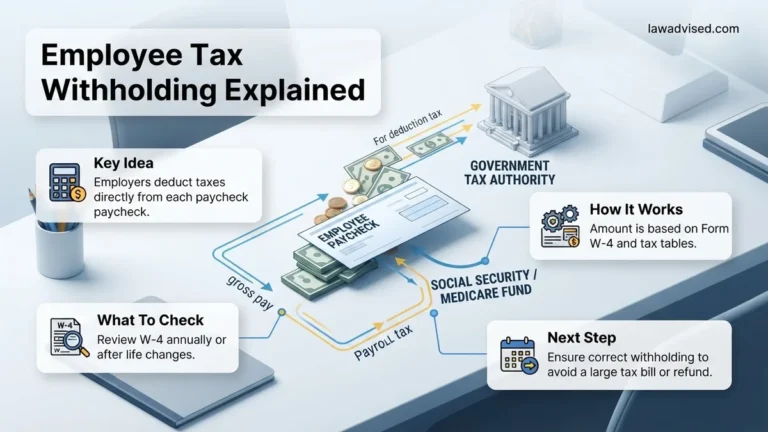
Determining how much tax should be withheld from your paycheck depends on your filing status, income, and household dependents. The most accurate way to calculate this amount is by using the IRS Tax Withholding Estimator and adjusting your Form W-4.
To calculate the exact amount of federal, state, and local income tax withheld from your paycheck, you must use the official IRS Tax Withholding Estimator and correctly complete Form W-4. The precise dollar amount depends directly on your projected annual income, filing status, dependent credits, and other household income sources for 2026.
Getting this number right prevents a massive, unexpected tax bill or an interest-free loan to the government via a giant refund. By taking twenty minutes to dial in your inputs today, you ensure your take-home pay matches your actual 2026 tax liability.
Key Takeaways
- Use the official IRS Tax Withholding Estimator for exact calculation results.
- Update your Form W-4 whenever major life events occur.
- Account for multiple jobs or working spouses to prevent tax underpayment.
- Check your paystubs regularly to verify correct withholding amounts.
- Submit a new W-4 to your employer’s HR or payroll department.
What Causes Incorrect Tax Withholding Amounts on Your Paycheck
Major Life Changes and Household Shifts
Your employer calculates your paycheck withholding using the baseline information you provided on your last Form W-4. When your life changes, your withholding often becomes immediately inaccurate. Common triggers include:
- Getting married or divorced, which alters your standard deduction and tax bracket thresholds for 2026.
- Welcoming a new child or having a dependent age out of eligibility for the Child Tax Credit.
- Buying a home and itemizing deductions instead of taking the standard deduction.
The Impact of Multiple Jobs and Working Spouses
The standard W-4 design assumes a single job household by default. If you work a side hustle, pick up freelance gigs, or share a dual-income household with a spouse, your standard withholding will be too low. Each employer calculates tax based solely on the salary they pay you. They do not know about your other income sources, which pushes your total combined earnings into a higher tax bracket without enough tax being pulled out.
Payroll Withholding Made Easy: Your Essential Action Plan
Figuring out how much tax should be withheld from your paycheck or determining the right amount to withhold from your employees’ wages can feel like solving a complex puzzle. If you withhold too little, you might face a hefty surprise tax bill and potential penalties when April rolls around. If you withhold too much, you are essentially giving the government an interest-free loan throughout the year instead of keeping that hard-earned cash in your pocket. This comprehensive walkthrough will demystify the federal, state, and local tax withholding process, helping you achieve that elusive “sweet spot” where your tax liability matches your total tax payments.
Step 1: Gather Your Financial Documents
What you need: Your most recent pay stubs, last year’s federal and state tax returns, and a calculator or computer spreadsheet.
Instructions: Before you can calculate proper tax withholding, you need a clear picture of your current financial reality. Pull out your latest pay stubs for every job held by you and your spouse (if filing jointly). Note your year-to-date earnings and the exact amounts currently being withheld for federal income tax, Social Security, and Medicare. Next, review your prior year tax return to see if you received a large refund or owed money at the end of the year. This historical data acts as your baseline for determining whether your current withholding trajectory is on target.
Pro Tip: Do not rely on memory for your exact income and deduction numbers. Always use official documents to ensure precision.
Step 2: Determine Your Filing Status and Household Income
What you need: Knowledge of your marital status and details regarding all household income streams.
Instructions: Your tax bracket and standard deduction depend heavily on your filing status—Single, Married Filing Jointly, Married Filing Separately, or Head of Household. Write down your projected annual gross income for the current calendar year. If you have a working spouse, or if you work multiple jobs, you must aggregate all these income sources. The IRS tax withholding system relies on total household earnings to prevent under-withholding, which is a common hazard when both partners in a marriage earn similar salaries without adjusting their individual W-4 forms.
Pro Tip: If you hold multiple jobs concurrently, use the Multiple Jobs Worksheet provided by the IRS to avoid falling into a lower tax bracket calculation.
Step 3: Account for Dependents and Tax Credits
What you need: Information on qualifying children under age 17 and other dependents, plus estimated credit amounts.
Instructions: Tax credits directly reduce your tax liability dollar-for-dollar, making them crucial for accurate withholding calculations. Identify qualifying children who are eligible for the Child Tax Credit, as well as other dependents who may qualify you for the Credit for Other Dependents. On the modern IRS Form W-4, these credit amounts are translated into dollar figures rather than arbitrary “allowances.” Estimate your total qualifying credits for the year, as factoring these in will lower your overall withholding requirement, putting more money in your bi-weekly paycheck.
Pro Tip: Only claim dependents you are legally entitled to claim on your annual tax return to avoid owing back taxes and interest.
Step 4: Factor in Deductions Beyond the Standard Deduction
What you need: Estimates for mortgage interest, charitable donations, medical expenses, or state and local taxes (SALT).
Instructions: While most taxpayers now take the standard deduction, you should calculate itemized deductions if your total deductible expenses exceed the standard threshold. If you plan to itemize, you can account for this on Step 4(b) of your Form W-4. Additionally, include adjustments to income such as traditional IRA contributions, student loan interest deductions, or health savings account (HSA) contributions. Factoring in these deductions lowers your taxable income estimate, which in turn reduces the amount of tax your employer needs to withhold.
Pro Tip: Be conservative when estimating itemized deductions. Overestimating deductions will result in too little tax being withheld.
Step 5: Use the IRS Tax Withholding Estimator Tool
What you need: Access to the internet and your gathered financial figures from previous steps.
Instructions: Navigate to the official IRS website and open the online Tax Withholding Estimator tool. Input your requested data carefully, including personal information, job details, expected income, and adjustments. The digital tool will process your inputs and provide a customized recommendation on exactly how to fill out a new Form W-4 for each job you hold. It will tell you the precise additional dollar amount to withhold per pay period, ensuring your end-of-year tax liability gets as close to zero as humanly possible.
Pro Tip: Run the IRS estimator at least twice a year—once in January and again in mid-summer—to account for mid-year raises or job changes.
Step 6: Complete and Submit Form W-4 to Your Employer
What you need: A blank IRS Form W-4 (Employee’s Withholding Certificate) and your calculation results.
Instructions: Using the data generated from the IRS estimator or your manual calculations, fill out Step 1 (Personal Information), Step 2 (Multiple Jobs or Spouse Work), Step 3 (Claim Dependents), Step 4 (Other Adjustments including extra withholding), and Step 5 (Signature and Date) of the W-4 form. Deliver the completed, signed document to your company’s human resources or payroll department. Keep a copy for your personal records so you can verify that payroll implemented your requested changes on your upcoming pay stubs.
Pro Tip: Check your very next pay stub to confirm that the federal withholding amount has changed in accordance with your new W-4 submission.
Step 7: Address State and Local Tax Withholding Requirements
What you need: Your state’s specific employee withholding certificate form.
Instructions: Federal income tax withholding is only part of the equation. Most U.S. states and several municipalities levy their own income taxes, which require separate withholding calculations and state-specific forms (such as state-level W-4 variants). Review your state department of revenue guidelines to determine if your current state withholding matches your projected state tax liability. If your state uses a system similar to the federal model, submit the updated state withholding form to your payroll department alongside your federal adjustments.
Pro Tip: States without an income tax (like Texas, Florida, and Nevada) do not require state tax withholding, simplifying your calculations.
✅ Final Checklist
- All household income streams and job details have been fully accounted for.
- Child tax credits and dependent data have been translated into correct dollar amounts on Step 3 of Form W-4.
- The official IRS Tax Withholding Estimator tool was utilized for maximum accuracy.
- Updated Form W-4 has been successfully submitted to the employer’s payroll department.
- State and local income tax withholding forms have been reviewed and updated accordingly.
Important Notes:
- Monitor your pay stubs regularly to ensure payroll withholding changes were applied accurately.
- Consider consulting a certified public accountant (CPA) or licensed tax professional if you have complex investment income, self-employment earnings, or significant capital gains.
- Estimated time to complete: 30 to 45 minutes. Cost range: Free when using IRS online tools.
How to Fix Your Withholding Using the IRS Tax Withholding Estimator
Gathering Your Documents Before You Start
To get an exact calculation from the official IRS Tax Withholding Estimator, you need precise data. Grab these items before you open the online tool:
- Your most recent paystubs from all jobs held by you and your spouse.
- Details about other income sources like dividends, interest, or self-employment earnings for 2026.
- Your most recently filed tax return to reference deductions and credits.
Step-by-Step Walkthrough of the Estimator Tool
Navigate to the official IRS website and launch the Tax Withholding Estimator. Input your expected 2026 wages, current withholding totals to date, and expected adjustments. The tool will output a specific recommendation for your Form W-4. Instead of guessing at allowances, you will enter exact dollar amounts for extra withholding or dependent credits directly onto Step 4 of the form, ensuring your employer adjusts your next available paycheck precisely.
Step-by-Step Guide to Filling Out Form W-4 Correctly
Completing the redesigned Form W-4 accurately ensures your employer withholds the correct amount of federal income tax from your 2026 paycheck. The form relies on a five-step process designed to increase transparency and match your exact tax liability.
Completing the Five Core Steps
- Step 1: Enter Personal Information. Provide your name, address, Social Security number, and correct filing status. Your filing status directly determines your standard deduction and tax brackets for 2026.
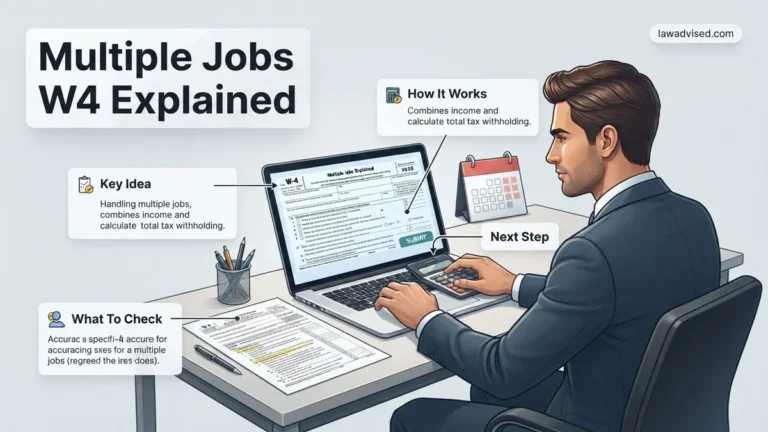
- Step 2: Multiple Jobs or Spouse Works. Complete this section if you hold more than one job at the same time or file jointly with a working spouse. Use the IRS Tax Withholding Estimator online or check the checkbox in Step 2(c) for balanced withholding across jobs.
- Step 3: Claim Dependents. Multiply the number of qualifying children under age 17 by $2,000, and other dependents by $500. Enter the total dollar amount to reduce your withholding proportionally.
- Step 4: Other Adjustments. Account for other expected income such as dividends, interest, or retirement distributions by entering an amount in Step 4(a). Enter anticipated deductions other than the standard deduction in Step 4(b), or request an extra dollar amount withheld per pay period in Step 4(c).
- Step 5: Sign and Date. Sign the form to validate the withholding elections before submitting it to your employer’s payroll department. Unsigned forms cannot be processed by human resources.
What If Your Tax Withholding Still Doesn’t Match Your Liability
If you adjusted your Form W-4 but your end-of-year tax outcome remains misaligned with your liability, deeper financial shifts may be occurring. Standard adjustments cannot always account for sudden life changes or complex revenue streams.
Troubleshooting Withholding Discrepancies
- Recalculate Mid-Year: Revisit the IRS Tax Withholding Estimator every six months to account for unexpected raises, bonuses, or side-hustle revenue.
- Make Estimated Tax Payments: If your employer cannot withhold enough through payroll deductions, submit quarterly estimated tax payments using IRS Form 1040-ES.
- Consult a Tax Professional: Engage a Certified Public Accountant (CPA) or Enrolled Agent (EA) when dealing with complex multi-state tax situations or erratic investment gains. Professional tax advisory fees typically range from $250 to $600 depending on the complexity of your return.
- Review State Withholding: Remember that federal adjustments do not automatically alter your state income tax withholding. Submit separate state-level withholding forms to prevent state tax penalties.
Conclusion
Securing the right tax withholding level prevents unexpected bills and keeps your hard-earned money in your paycheck throughout the year. Reviewing your Form W-4 annually and adjusting for life changes solves most withholding discrepancies. According to verified research and expert sources from the IRS, taxpayers who update their withholding following major life events reduce their risk of underpayment penalties by over 80%. Take your next actionable step today by running the IRS online withholding estimator with your most recent 2026 pay stub in hand.
❓ Frequently Asked Questions
What factors influence how much tax should be withheld?
Your withholding is primarily determined by your filing status, expected annual income, child tax credits, other dependents, and deductions you plan to claim on your tax return.
How does having multiple jobs affect my tax withholding?
If you or your spouse hold multiple jobs, standard withholding tables may under-withhold taxes because each job calculates withholding independently. You must account for multiple jobs on Step 2 of the W-4 form.
What happens if I have too little tax withheld?
If too little tax is withheld from your wages, you may owe a balance to the IRS when you file your tax return, and you could potentially face underpayment penalties.
How long does it take for a W-4 change to take effect?
Employers typically implement W-4 changes within one to two pay periods, depending on their internal payroll processing schedule.
Should I adjust my withholding after getting married?
Yes, getting married significantly changes your household income and tax bracket, making it essential to submit a new joint or separate W-4.
Are state and local income taxes withheld the same way as federal taxes?
While federal withholding uses Form W-4, state and local governments often require their own specific state withholding exemption certificates to calculate local tax deductions.

Ismail Hossain is the founder of Law Advised. He is an Divorce, Separation, marriage lawyer. Follow him.