Alcohol Laws in Arizona 2027 Expert Guide to Rules
Navigating alcohol laws in Arizona requires understanding strict regulations on purchasing hours, public consumption, and driving limits. Knowing the rules prevents costly legal penalties and ensures safe compliance across the state.
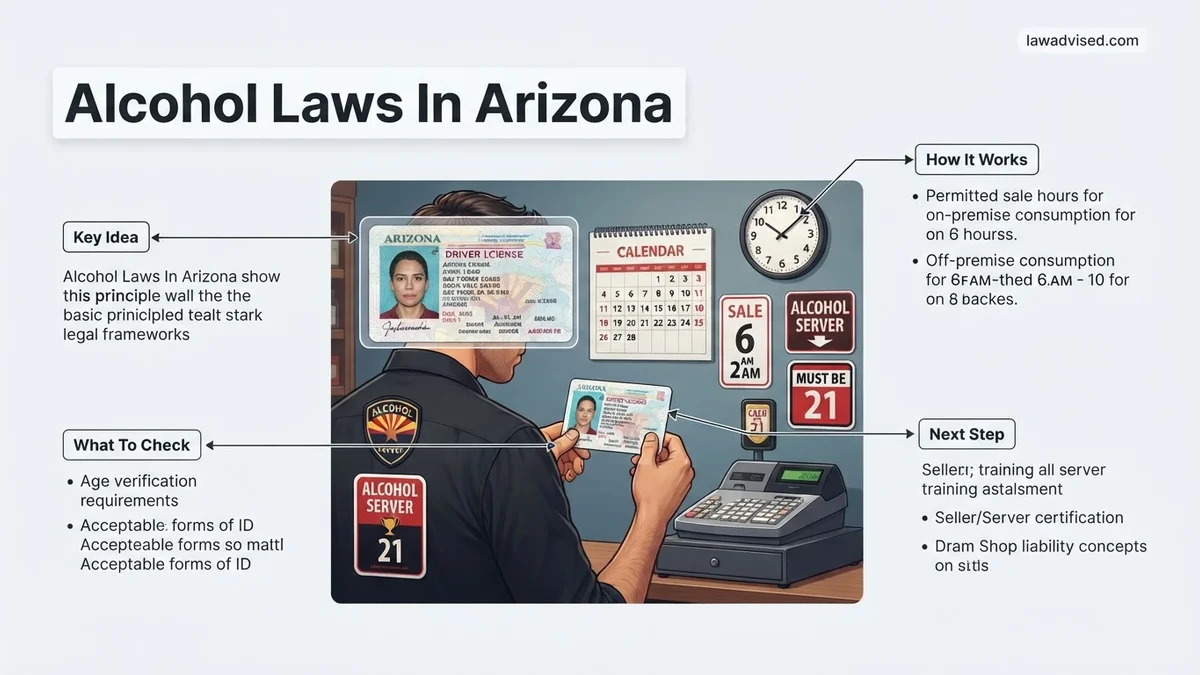
Arizona enforces a strict legal drinking age of 21, matching federal mandates, and requires valid, unexpired government-issued photo identification for anyone purchasing or consuming alcohol. Whether you are a resident or visiting the Grand Canyon State in 2027, navigating local regulations requires understanding specific purchase limits, hours of operation, and strict zero-tolerance policies for minors.
Failing to understand these rules can result in steep fines, confiscation, or misdemeanor charges. This guide breaks down the exact legal thresholds, acceptable identification forms, and operational hours you need to follow to stay compliant with Arizona law.
Key Takeaways
- The legal drinking age is 21 with valid government identification.
- Retail alcohol sales are permitted daily from 6:00 AM to 2:00 AM.
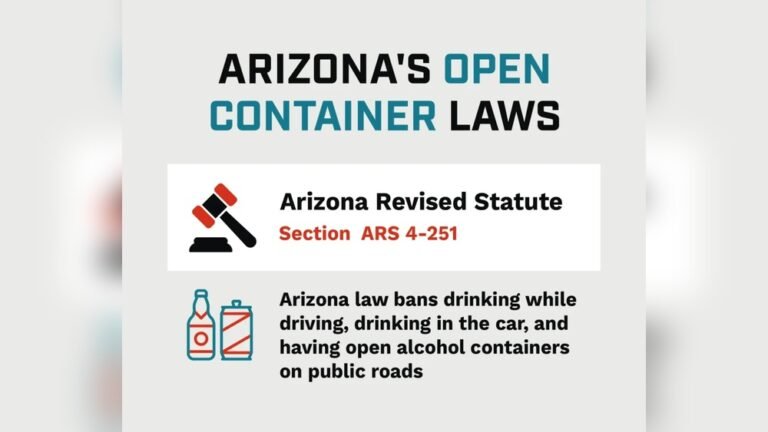
- Open containers are strictly prohibited in the passenger area of vehicles.
- The legal blood alcohol concentration (BAC) limit for drivers is 0.08%.
- Public consumption outside of licensed establishments is generally illegal.
What Causes Confusion Regarding Arizona Alcohol Regulations
Many visitors and newcomers misunderstand Arizona alcohol laws due to a mix of strict state statutes and local venue policies. The confusion typically centers around what constitutes legal identification and how the state handles underage possession in various environments.
Legal Drinking Age and Strict Zero-Tolerance Policies
The legal age to consume, buy, or possess spirituous liquor in Arizona is strictly 21 years old. If you are under 21, possessing alcohol—even inside a private residence—can lead to a minor in possession (MIP) charge. Arizona courts treat these violations seriously, often mandating driver’s license suspensions and mandatory alcohol education classes.
- Possessing any amount of alcohol under 21 is a class 1 misdemeanor.
- Providing alcohol to an underage person carries heavy civil and criminal liabilities.
- Parents and guardians have very limited exceptions, primarily related to religious ceremonies.
Acceptable Forms of Identification for Purchase
Retailers and bartenders in Arizona face severe penalties for serving minors, so they check IDs rigorously. As a buyer, you must present a physical, valid, and unexpired form of identification. Expired documents, paper temporary IDs without security features, or digital photos on a smartphone are routinely rejected by establishments.
- Valid U.S. driver’s licenses or state-issued non-driver identification cards.
- U.S. passports or passport cards.
- Active U.S. military identification cards.
- Foreign government-issued passports with verifiable English translations.
How to Navigate Purchasing, Hours, and Public Consumption Rules
Knowing when and where you can buy alcohol prevents awkward encounters at checkout counters and ensures you stay on the right side of local ordinances. Arizona separates sales into on-sale (bars and restaurants) and off-sale (grocery and liquor stores), each governed by specific time constraints.
Retail and Bar Hours of Operation
Arizona permits the sale of alcohol across wide time windows, but the exact hours depend on whether you are buying bottles to take home or ordering a drink at a venue. Convenience stores, grocery stores, and dedicated liquor shops operate under uniform state schedules.
- Off-Sale (Stores): You can purchase beer, wine, and spirits from 6:00 AM to 2:00 AM, Monday through Sunday.
- On-Sale (Bars and Restaurants): Licensed establishments can serve alcohol from 6:00 AM straight through to 2:00 AM every day of the week.
- Sales are completely unrestricted on major holidays, provided they fall within the standard daily time frame.
Public Consumption and Open Container Laws
Consuming alcohol outside of licensed establishments requires caution. Arizona prohibits drinking in most public spaces, including public parks, sidewalks, and streets, unless the municipality has explicitly permitted a special event or entertainment district.
- Open containers of alcohol are strictly illegal in the passenger area of any moving vehicle.
- Unopened containers must be stored in the trunk or a designated area away from the driver and passengers.
- Public intoxication combined with disruptive behavior can lead to immediate arrest for disorderly conduct.
How to Comply with DUI Limits and Open Container Laws
Navigating Arizona’s strict traffic statutes requires precise awareness of Blood Alcohol Concentration (BAC) limits and vehicle regulations. Law enforcement agencies across the state enforce zero-tolerance policies alongside standard impairment thresholds. Drivers must understand the legal parameters to maintain full compliance.
Understanding BAC Thresholds and Commercial Rules
The standard legal limit for adult drivers in Arizona is 0.08% BAC. However, drivers operating commercial vehicles face a stricter standard at 0.04% BAC. Furthermore, Arizona enforces an Extreme DUI charge for drivers testing at 0.15% or higher, and a Super Extreme DUI for readings reaching or exceeding 0.20%. According to traffic safety experts, even trace amounts can lead to an Impairment DUI if an officer observes erratic driving behavior.
Open Container Regulations in Motor Vehicles
Arizona Revised Statutes strictly regulate open alcoholic beverage containers inside passenger areas of vehicles. To remain compliant, drivers and passengers must adhere to specific spatial rules:
- Store any opened containers of alcohol in the locked trunk of the vehicle.
- Place containers in an area behind the last upright seat if the vehicle lacks a conventional trunk.
- Ensure that no passenger consumes alcohol within a taxi, limousine, or rideshare vehicle unless it is a commercially licensed for-hire partition service.
- Keep all sealed and unsealed products away from the immediate reach of the driver and front-seat occupants.
What If Legal Rules or Venue Policies Still Seem Unclear
Ambiguity regarding private venue rules, municipal ordinances, or specialized permit requirements can still arise despite careful research. When standard compliance guidelines leave room for doubt, individuals and event organizers must take proactive mitigation steps. Legal experts recommend structured fallback procedures to avoid liability.
- Consult the official Arizona Department of Liquor Licenses and Control (DLLC) database to verify specific local licensing jurisdictions.
- Contact the local police department or county sheriff’s non-emergency line to clarify municipal-specific public consumption laws.
- Obtain written confirmation from venue management regarding their internal alcohol service policies and private event liability rules.
- Consult with a licensed attorney specializing in Arizona liquor law if hosting a large-scale commercial event or festival. Professional legal consultations typically range from $250 to $500 per hour depending on complexity.
Conclusion
Complying with Arizona’s alcohol laws in 2027 requires strict adherence to purchase hours, identification protocols, and zero-tolerance driving statutes. Staying informed prevents costly legal penalties and ensures safe social practices across the state. For your next step, review the current DLLC guidelines before planning any large social gatherings or business operations involving alcohol service. According to verified research and expert legal sources, proactive compliance remains the single most effective defense against accidental regulatory violations.
❓ Frequently Asked Questions
Can minors consume alcohol under parental supervision in Arizona?
Arizona law contains narrow exceptions for consumption of alcohol by minors for religious, medical, or educational purposes, but general consumption by minors even with parental consent in public is illegal.
What forms of identification are acceptable to buy alcohol?
Retailers and bars accept a valid driver’s license or non-driving identification card issued by any U.S. state, a valid U.S. passport, or a valid military identification card.
What are the serving hours for bars and restaurants?
Licensed bars and restaurants are permitted to serve alcohol for on-premise consumption daily from 6:00 AM until 2:00 AM the following morning.
Is public intoxication legal in Arizona?
Public intoxication itself is not a specific criminal offense in Arizona, but related behaviors such as disorderly conduct, disturbing the peace, or driving under the influence are illegal.
Can you bring your own alcohol into a restaurant?
BYOB policies depend entirely on the specific establishment’s liquor license and management rules, as Arizona state law does not universally permit patrons to bring outside alcohol into licensed venues.
What are the penalties for an Extreme DUI in Arizona?
An Extreme DUI applies when a driver’s BAC tests at 0.15% or higher within two hours of driving, carrying mandatory jail time, steep fines, and ignition interlock device requirements.

Ismail Hossain is the founder of Law Advised. He is an Divorce, Separation, marriage lawyer. Follow him.