Can Parents Be Claimed As Dependents? Expert 2026 Guide
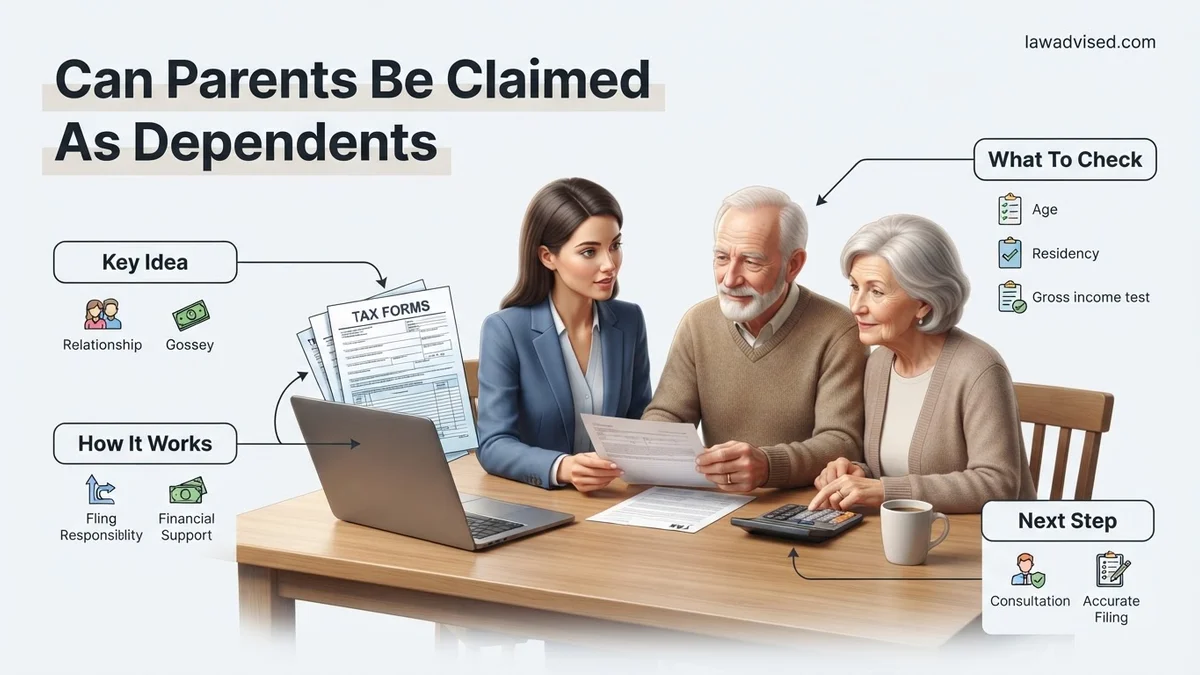
Yes, you can claim your parents as dependents on your tax return if they meet specific IRS Qualifying Relative criteria. You must pass tests regarding gross income, financial support, and citizenship to qualify. Failing to meet even one of these three primary thresholds will result in IRS rejection.
Yes, you can claim your parents as dependents on your 2026 tax return, provided they meet specific IRS criteria known as the “Qualifying Relative” tests. Unlike claiming children, you do not need to live with your parents to claim them, but you must pass strict financial support, gross income, and relationship thresholds to avoid an IRS rejection.
Navigating these rules correctly can unlock valuable tax breaks like the Credit for Other Dependents. However, missing even one statutory threshold during your calculations will trigger an audit or automated tax return adjustment. Here is a breakdown of the exact requirements you must satisfy for the 2026 tax year.
Key Takeaways
- Parents must pass the IRS gross income test for the specific tax year.
- You must provide more than 50% of your parent’s total annual financial support.
- Parents do not need to live with you to qualify as your dependent.
- Claiming a parent may make you eligible for the non-refundable Credit for Other Dependents.
- A parent filing their own tax return just to get a refund can invalidate your claim.
What Causes IRS Rejections When Claiming Parents
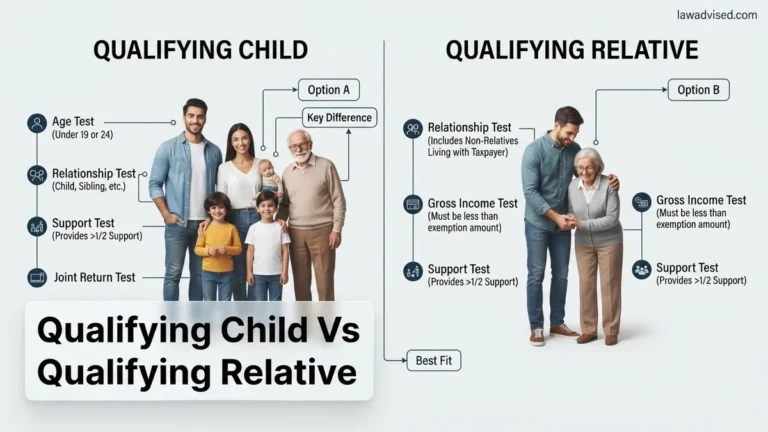
The IRS rejects thousands of parent-dependent claims every year because taxpayers assume emotional support or partial financial help is enough. To successfully claim your mother or father, you must clear four distinct hurdles: the Not a Qualifying Child test, Member of Household or Relationship test, Gross Income test, and Total Support test.
The Gross Income Threshold
Your parent’s gross income for 2026 must fall below the statutory limit set by the IRS. Gross income includes all taxable money received, such as pensions, wages, interest, dividends, and taxable rental income. Note that tax-exempt income like Social Security benefits does not count toward this limit unless the benefits become taxable under specific income formulas. If your parent brings in too much money from a part-time job or retirement accounts, you cannot claim them.
Citizenship and Residency Rules
Your parent must be a U.S. citizen, U.S. national, U.S. resident alien, or a resident of Canada or Mexico. If your parent lives abroad in a non-qualifying country, they generally fail the residency test. Furthermore, your parent cannot file a joint return with a spouse unless they are filing solely to claim a refund of withheld income tax or estimated tax paid.
How to Calculate the 50% Financial Support Test Step-by-Step
The most common reason for IRS disallowance is failing the 50% support test. You must prove that you provided more than half of your parent’s total financial support for the entire calendar year of 2026. This requires adding up every single dollar spent on your parent from all sources—including their own money, government benefits, and your contributions.
What Counts as Financial Support
To calculate support accurately, you need to tally all items that directly benefit your parent. The pool of total support includes:
- Housing expenses, including fair rental value of a home if they live with you
- Food and grocery costs
- Medical and dental care, including health insurance premiums and out-of-pocket prescription costs
- Clothing, transportation, and entertainment
Running the 2026 Support Math
Imagine your mother’s total living expenses for the year equal twenty-four thousand dollars. For you to claim her, you must prove that you personally paid more than twelve thousand dollars toward those expenses. If she spent ten thousand dollars of her own Social Security income on herself, and you contributed fourteen thousand dollars, you pass the test. Always keep detailed receipts, bank statements, and canceled checks. If multiple siblings chip in to support a parent, use an IRS Multiple Support Declaration (Form 2120) to designate who gets the deduction.
How to Verify Parent Gross Income and Residency Requirements
Proving eligibility for your parents requires careful calculation of their gross income and adherence to IRS residency rules. The IRS enforces strict definitions for taxable income and household membership for the 2026 tax year. Failing to verify these details accurately can trigger a swift IRS audit or tax return rejection.
Calculating Gross Income Correctly
To meet the gross income test for a relative, your parent must earn less than the statutory limit set for 2026. This calculation includes all taxable income items received during the calendar year.
- Gather all Form SSA-1099 documents to check Social Security benefit amounts. Note that taxable Social Security benefits count toward the gross income limit, while non-taxable portions generally do not.
- Collect all pension, retirement account distribution, and annuity statements. Traditional IRA and 401(k) withdrawals count fully toward the gross income threshold.
- Sum up any investment earnings, including interest, dividends, and capital gains reported on brokerage statements.
- Subtract any non-taxable income sources, such as welfare benefits or municipal bond interest, to determine the final gross income figure.
Verifying Residency and Citizenship
Your parent must also satisfy citizenship and domicile requirements to qualify as your dependent. According to IRS guidelines updated for 2026, the individual must be a U.S. citizen, U.S. national, U.S. resident alien, or a resident of Canada or Mexico.
- Review official identification documents, such as a valid U.S. passport, green card, or birth certificate, to confirm citizenship status.
- Examine household records, utility bills, or lease agreements if your parent does not live in your home, ensuring they lived with you all year as a member of your household.
- Confirm that your parent does not file a joint return with a spouse, unless they are filing solely to claim a refund of withheld income tax.
What If Your Parent Filed Their Own Tax Return
Many taxpayers discover that an elderly parent has already filed an independent tax return out of habit, claiming their own personal exemption or standard deduction. This creates a duplicate filing conflict within the IRS e-file system. Resolving this issue requires a systematic approach to correct the record and secure your rightful tax benefits for 2026.
Steps to Correct a Duplicate Filing
- Check your parent’s filed return to determine if they claimed themselves as a dependent or took a personal exemption improperly.
- Prepare an amended tax return for your parent using Form 1040-X, removing any status or deduction they were ineligible to claim because you provide more than half of their support.
- File your parent’s amended return via mail or through an authorized tax professional, as electronic filing is often restricted for prior-year or amended dependent status updates.
- Submit your own tax return with your parent listed as a dependent once the amendment process is initiated, or expect to file your return by paper mail if the electronic system rejects it due to a duplicate Social Security Number.
What If It Still Doesn’t Work?
Navigating IRS dependent rules for elderly parents can occasionally result in persistent rejections, complex support calculations, or conflicting documentation. If standard filing methods fail, consider these fallback steps:
- Gather all canceled checks, bank statements, and medical expense receipts into a single digital folder to prepare for a potential IRS audit or correspondence review.
- Consult a Certified Public Accountant (CPA) or Enrolled Agent (EA) who specializes in senior tax planning to review your unique financial support records. Professional fees for this specialized review typically range from $300 to $700 depending on complexity.
- Utilize IRS Free File or professional tax software error-resolution desks to identify specific rejection codes, such as Code Reject IND-516 for duplicate Social Security Numbers.
- File a paper tax return by mail including Form 8453 and supporting documentation if electronic filing repeatedly fails despite correct data entry.
- Contact the IRS dedicated support line for taxpayers or visit a local Taxpayer Assistance Center for direct guidance on correcting dependency disputes.
Conclusion
Claiming your parents as dependents on your 2026 tax return can significantly reduce your tax liability, provided you carefully verify the financial support, gross income, and residency tests. When filing conflicts or calculation uncertainties arise, methodical documentation remains your best defense against audits. According to verified research and expert tax sources, maintaining meticulous records of over 50 percent financial support ensures full compliance with evolving IRS regulations. Take the proactive step today to audit your parent’s income statements and support tracking records before submitting your annual return.
❓ Frequently Asked Questions
What are the exact IRS tests required to claim a parent as a dependent?
To claim a parent, they must meet the Qualifying Relative rules, which include the Not a Qualifying Child test, Member of Household or Relationship test, Gross Income test, and the Support test.
How do I calculate whether I provided more than 50% of their total support?
You must compare the total dollar amount you spent on their housing, food, medical care, and utilities against all other sources of income they spent on themselves, including their own savings and government benefits.
What happens if my parent files their own tax return?
If your parent files a tax return to claim a refund of withheld taxes, they generally cannot be claimed as a dependent unless they are filing solely to claim that refund and have no tax liability.
Does medical insurance I pay for my parent count as support?
Yes, health insurance premiums, doctor visits, prescription medications, and long-term care costs that you pay on behalf of your parent count directly toward the support test.
Can I claim my in-laws as dependents using these same rules?
Yes, parents-in-law can qualify as dependents if you meet all the financial support and gross income tests, even if they pass away during the tax year.
What tax credit do I receive for claiming an aging parent?
Qualifying parents typically make you eligible for the Credit for Other Dependents (ODC), which is a non-refundable tax credit of up to a specific dollar amount per dependent.

Ismail Hossain is the founder of Law Advised. He is an Divorce, Separation, marriage lawyer. Follow him.