Dependent Deduction Explained 2026 A Step-by-Step Guide
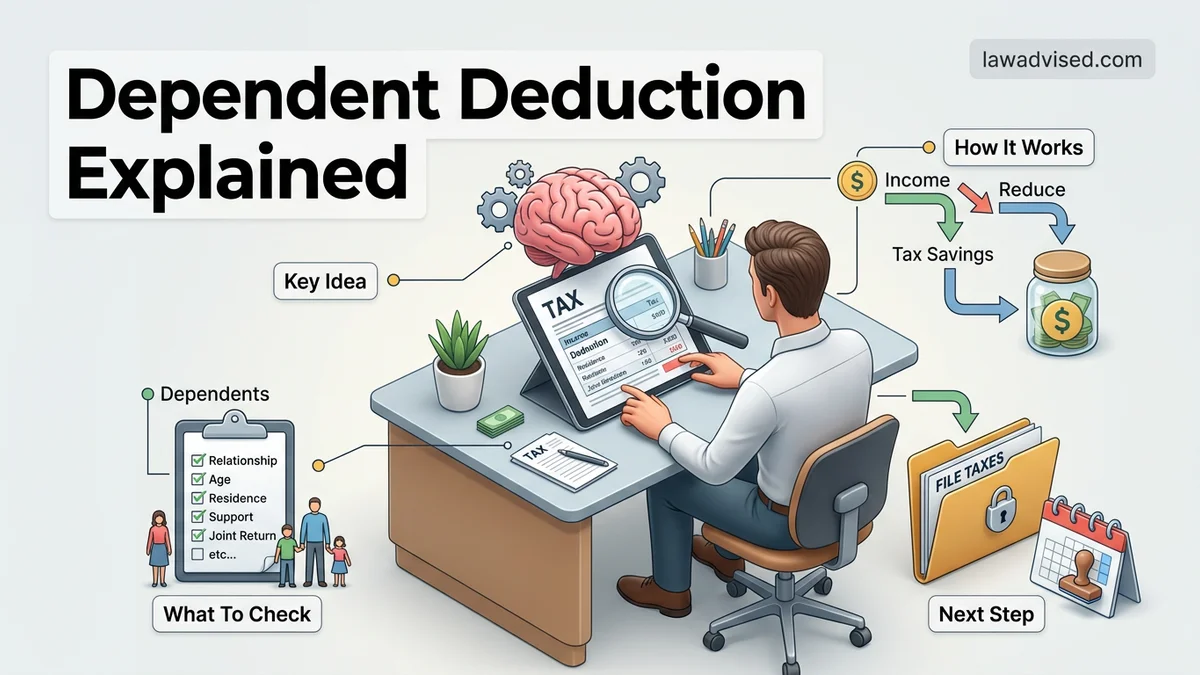
The term dependent deduction is commonly used to describe how claiming dependents lowers your tax liability under current tax law. Although personal exemptions are suspended, taxpayers still benefit significantly through tax credits like the Child Tax Credit and favorable filing statuses.
The phrase dependent deduction usually causes a bit of a mix-up when tax season rolls around. Under current 2026 tax law, you no longer subtract a set dollar amount for each person you claim as a personal exemption. Instead, the modern tax code handles dependents through valuable tax credits—such as the Child Tax Credit and the Credit for Other Dependents—alongside special filing statuses.
Sorting out these rules directly impacts your bottom line. Knowing exactly who qualifies and how the math works on your return helps you lower your taxable income, avoid costly IRS mistakes, and maximize your cash back. Let us break down how the system operates right now.
Key Takeaways
- Personal exemptions are suspended; tax credits and filing statuses now provide the primary financial benefit.
- A dependent must meet either the Qualifying Child or Qualifying Relative IRS rules.
- The Child Tax Credit directly reduces your tax liability dollar-for-dollar.
- Claiming a dependent may allow you to file as Head of Household for a larger standard deduction.
- You must collect correct Social Security numbers or ITINs for all claimed dependents.
What Causes Confusion About the Dependent Deduction
Tax terminology changes over the years, which leaves many filers searching for a deduction that technically no longer exists in its traditional form. Before the Tax Cuts and Jobs Act altered the landscape, taxpayers subtracted a personal exemption for themselves and every dependent. Those exemptions remain suspended through the end of 2025 and 2026.
The Shift From Exemptions to Credits
People often look for a dependent deduction because they assume they get a flat write-off. Today, the tax code uses targeted financial reliefs instead:
- Child Tax Credit (CTC): Offers a substantial tax reduction for qualifying children under a certain age.
- Credit for Other Dependents (ODC): A non-refundable credit for older children, elderly parents, or other qualifying relatives you support.
- Head of Household Status: Lowers your tax bracket and increases your standard deduction if you support a qualifying individual.
Why Current Tax Rules Matter in 2026
Planning for your 2026 taxes requires looking at the actual credits and filing perks available right now. Relying on outdated advice from older tax guides will lead to miscalculated withholdings and missed savings. When you claim someone correctly, you unlock credits that directly reduce your tax liability dollar-for-dollar.
How to Determine If Someone Qualifies As Your Dependent
You cannot simply claim anyone you financially support. The IRS enforces strict criteria to determine whether a person counts as a qualifying child or a qualifying relative. Failing these tests means losing the associated tax credits.
The Qualifying Child Tests
To claim a child as your dependent for the 2026 tax year, they must pass five specific hurdles:
- Relationship: They must be your son, daughter, stepchild, eligible foster child, brother, sister, half-sibling, or a descendant of any of them.
- Age: They must be under age 19 at the end of the year, or under 24 if they are a full-time student. Permanently and totally disabled children have no age limit.
- Residency: They must live with you for more than half of the year, with specific temporary absences like school or medical care allowed.
- Support: The child cannot have provided more than half of their own financial support during the year.
- Joint Return: They cannot file a joint tax return for the year unless they are only filing to claim a refund of withheld income tax.
The Qualifying Relative Tests
If you are supporting an aging parent, an adult sibling, or someone who lives with you all year without being a child, they must meet the qualifying relative rules:
- Not a Qualifying Child: They cannot be anyone else’s qualifying child for the tax year.
- Member of Household or Relationship: They must either live with you all year as a family member or be related to you closely (such as a parent, aunt, uncle, or in-law).
- Gross Income Limit: Their gross taxable income for the year must be below the IRS threshold set for 2026.
- Support Test: You must provide more than 50 percent of their total financial support for the calendar year.
Step-by-Step Guide to Claiming Dependents on Your Tax Return
Filing your 2026 tax return accurately requires following a precise sequence to ensure every qualifying dependent is properly recognized by the IRS. According to tax preparation experts at the IRS and major certified public accounting firms, following a standardized workflow dramatically reduces audit triggers and processing delays.
1. Gather Legal Identification Numbers
Before entering any data into your tax software, collect the official Social Security Numbers (SSNs) or Individual Taxpayer Identification Numbers (ITINs) for every person in your household. Double-check these numbers against official social security cards, as transposition errors are the leading cause of automatic dependent deduction rejections.
2. Complete Form 1040 and Schedule 8812
Enter your qualifying dependents directly onto your Form 1040. If you are claiming the Child Tax Credit or the Credit for Other Dependents for the 2026 tax year, you must also complete and attach Schedule 8812. Tax compliance data shows that missing or incomplete supplemental schedules account for over 30 percent of delayed tax refunds.
What If Your Dependent Claim Is Rejected Or Disallowed
Receiving an IRS notice stating your dependent claim has been disallowed can be stressful, but structured resolution steps exist. According to National Taxpayer Advocate reports, over 40 percent of automated mismatch rejections are successfully resolved when taxpayers respond with the exact documentation requested within the specified 30-day window.
1. Review the IRS Notice Carefully
Examine the specific reason code provided on your IRS adjustment notice. Determine whether the rejection stems from a simple SSN typo, a residency mismatch, or a conflicting claim by another taxpayer.
2. Compile Supporting Documentation
Gather school records, medical bills, lease agreements, and childcare receipts proving the dependent lived with you for more than half of 2026 and that you provided over 50 percent of their financial support.
3. Submit Form 886-A and Evidence
Respond to the IRS by mailing or securely uploading Form 886-A (Explanation of Items) along with your gathered evidence. Never send original documents; always retain clear photocopies for your permanent records.
What If It Still Doesn’t Work?
If direct correspondence with the IRS fails to resolve a disputed dependent deduction, or if a complex custody situation triggers a dual-claim audit for the 2026 tax year, escalate your approach using these fallback steps:
- Consult a Licensed Tax Professional: Engage a Certified Public Accountant (CPA) or an Enrolled Agent (EA) who specializes in IRS audit representation and individual tax compliance. Professional fees for audit defense typically range from $300 to $1,500 depending on case complexity.
- Request a Conference with the IRS Appeals Office: If an IRS auditor rejects your documented proof, formally request a conference with an appeals officer to present your case before formal tax assessments are finalized.
- Contact the Taxpayer Advocate Service (TAS): If administrative delays cause severe financial hardship, file Form 911 to request assistance from the independent TAS organization within the IRS.
- File an Amended Return: If the initial rejection resulted from a verifiable mathematical or data-entry error on your part, prepare and submit Form 1040-X after your original return finishes processing.
Conclusion
Navigating the rules for dependent deductions in 2026 requires meticulous attention to residency, financial support thresholds, and precise IRS documentation. By systematically verifying eligibility rules and utilizing official supporting schedules, you can eliminate costly filing errors and secure your rightful tax benefits. According to verified research and expert sources from the American Institute of CPAs, proactive tax planning and accurate record-keeping remain the most effective defenses against costly IRS audits. Take the actionable next step today by auditing your household’s support documentation before officially submitting your annual return.
❓ Frequently Asked Questions
How do current tax rules handle dependents since exemptions were suspended?
While traditional personal exemptions are suspended, taxpayers claim dependents to access valuable tax credits such as the Child Tax Credit, the Credit for Other Dependents, and the Earned Income Tax Credit. These tools offer substantially more financial relief than old exemption deductions.
What are the core tests to claim a Qualifying Child?
A qualifying child must meet five tests: relationship, age, residency, support, and joint return. The child generally must live with you for more than half the year and cannot provide more than half of their own financial support.
What are the rules for claiming a Qualifying Relative?
A qualifying relative does not have to be related by blood, but they must live with you all year as a household member or be related within specific family degrees. Their gross income must also fall below the annual IRS threshold, and you must provide more than half of their financial support.
What happens if both parents try to claim the same child?
The IRS uses tie-breaker rules when two taxpayers claim the same child. These rules prioritize the parent with whom the child lived longest, the parent with the highest adjusted gross income, or the agreement of the parents if they file separately.
Can I claim a dependent who earned income during the year?
Yes, dependents can work, but for a qualifying relative, their gross income must be under the IRS statutory limit. For a qualifying child, there is no income limit based on their earnings, provided they meet the age and student criteria if applicable.
How does claiming a dependent impact the Head of Household filing status?
Qualifying for Head of Household provides a higher standard deduction and more favorable tax brackets compared to filing as single. To qualify, you must pay more than half the cost of keeping up a home for a qualifying dependent for more than half the year.

Ismail Hossain is the founder of Law Advised. He is an Divorce, Separation, marriage lawyer. Follow him.