Estimated Taxes for Investors Step-by-Step 2026 Guide
Investors must pay estimated quarterly taxes to the IRS on capital gains, dividends, interest, and rental income to avoid severe underpayment penalties. Missing these deadlines triggers statutory interest charges, making proper calculation via Form 1040-ES essential. Utilizing safe harbor rules ensures you stay compliant while managing unpredictable investment returns.
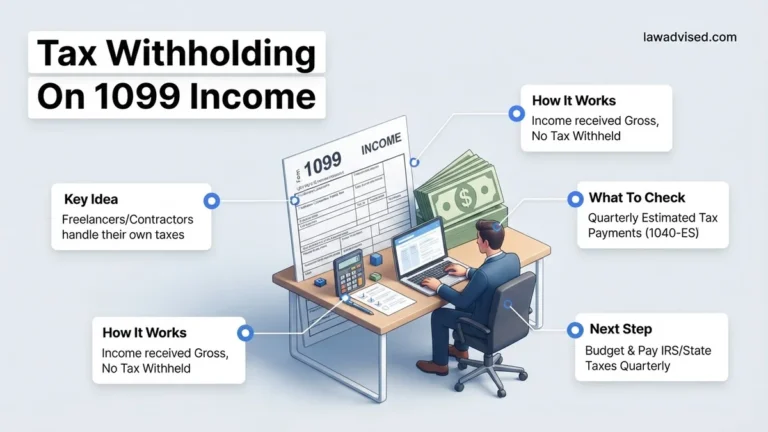
As an investor, you must pay quarterly estimated taxes using IRS Form 1040-ES if you expect to owe at least $1,000 in taxes after subtracting your withholding and credits. Unlike W-2 employees who have taxes automatically deducted from each paycheck, investment income like capital gains, dividends, and interest arrives without tax withholding, making quarterly payments your responsibility.
Managing these payments correctly protects you from unexpected underpayment penalties when you file your 2026 tax return. By calculating your liability accurately and adhering to IRS deadlines, you keep your cash flow predictable and avoid costly state and federal penalties.
Key Takeaways
- Calculate estimated taxes quarterly using Form 1040-ES for investment income streams.
- Apply safe harbor rules to pay 100% (or 110%) of prior-year tax.
- Submit payments online using IRS Direct Pay or EFTPS to avoid penalties.
- Include capital gains, dividends, and rental income in your calculations.
- Adjust payments mid-year if investment performance changes significantly.

Why Investors Face Underpayment Penalties on Investment Income
The U.S. tax system operates on a pay-as-you-go basis. When your portfolio generates substantial returns, the IRS expects you to pay taxes throughout the year rather than waiting until April 2027.
The Problem with Lumpy Investment Returns
Stock market rallies, sudden crypto gains, or concentrated dividend payouts rarely arrive in equal monthly installments. If you sell a winning stock in July, you cannot wait until the following spring to pay taxes on that gain without triggering interest and penalties.
How Safe Harbor Rules Protect You
You can completely avoid underpayment penalties by utilizing IRS safe harbor rules for 2026. You are safe from penalties if your total withholding and estimated payments equal at least:
- 90 percent of your total expected tax liability for 2026.
- 100 percent of your total tax liability from 2025 (increased to 110 percent if your 2025 Adjusted Gross Income exceeded $150,000).
How to Calculate Quarterly Estimated Taxes Using Form 1040-ES
Calculating your quarterly obligation requires projecting your total income, deductions, and investment gains for the entire 2026 tax year. Form 1040-ES provides the official worksheet to break this down.
Step-by-Step Worksheet Calculation
To determine your exact quarterly payment, follow this calculation process using your projected 2026 numbers:
- Estimate Adjusted Gross Income: Add your expected investment income, capital gains, rental income, and any W-2 wages for 2026.
- Subtract Deductions: Factor in the standard deduction or your anticipated itemized deductions to find your taxable income.
- Calculate Total Tax: Apply the 2026 federal income tax brackets to your taxable income and add self-employment tax if applicable.
- Divide by Four: Subtract any employer tax withholding from your total estimated tax, then divide the remaining balance by four to find your quarterly payment.
2026 Quarterly Payment Deadlines
Estimated tax payments are split into four distinct payment periods. Mark these 2026 dates on your calendar to ensure on-time submission:
- Q1 Payment: April 15, 2026 (covers income earned January 1 to March 31)
- Q2 Payment: June 15, 2026 (covers income earned April 1 to May 31)
- Q3 Payment: September 15, 2026 (covers income earned June 1 to August 31)
- Q4 Payment: January 15, 2027 (covers income earned September 1 to December 31)
Step-by-Step Guide to Applying IRS Safe Harbor Rules
Navigating estimated taxes for investors in 2026 requires understanding IRS safe harbor provisions to avoid underpayment penalties. According to IRS guidelines, you can completely shield yourself from penalties if you pay a specific percentage of your prior-year or current-year tax liability through withholding and quarterly estimates.
Calculating Your Safe Harbor Target
Tax experts recommend evaluating your 2025 Adjusted Gross Income (AGI) before determining your 2026 baseline. High-income investors face specific thresholds that alter these calculations. Follow these steps to establish your target:
- Locate your total tax liability (Line 24) on your 2025 federal income tax return.
- Check if your 2025 AGI exceeds 150,000 dollars, or 75,000 dollars if married filing separately.
- Multiply your 2025 total tax liability by 100 percent normally, or 110 percent if your 2025 AGI crossed that 150,000 dollar threshold.
- Subtract any expected W-2 tax withholding for 2026 from that calculated target number.
- Divide the remaining balance evenly across the four quarterly IRS due dates for 2026 to set your installment amounts.
What to Do If Your Investment Income Fluctuates Unpredictably
Market volatility makes steady quarterly predictions difficult for active investors. When capital gains or dividend distributions spike mid-year, standard safe harbor estimates may fall short. The IRS provides an annualized income installment method to address volatile portfolios without overpaying in early quarters.
Using the Annualized Income Installment Method
When investment returns swing wildly month to month, calculating each quarter based on actual income up to that specific date prevents unnecessary cash tied up with the government. Follow this procedure:
- Track your actual net investment income and losses for each specific period ending before the quarterly due date.
- Complete IRS Form 2210, Schedule AI, to compute the required annualized installment for that specific period.
- Compare the annualized calculation against standard quarterly estimates and pay the lesser qualifying amount.
- Attach Form 2210 to your final 2026 tax return to justify any lower payments made during volatile quarters.
- Adjust your fourth-quarter projection immediately if a late-year market rally drastically increases your capital gains.
What If It Still Doesn’t Work?
Even with careful calculations, unexpected financial events or complex portfolio restructurings can cause underpayment penalties or payment errors. If your automated quarterly tax setup fails or calculations yield conflicting results, execute these fallback steps:
- Log into your IRS Direct Pay account immediately to verify that previous quarterly transfers cleared successfully and were credited to the correct tax year (2026).
- Submit an emergency catch-up estimated payment via IRS Direct Pay or EFTPS to minimize accumulating daily interest and late fees.
- Consult a certified public accountant (CPA) or a specialized tax attorney if your portfolio includes complex asset classes like cryptocurrency staking, foreign investments, or venture capital distributions. Professional CPA fees for quarterly tax planning typically range from 500 dollars to 2,500 dollars annually.
- File for a first-time penalty abatement with the IRS if you have a clean compliance history for the preceding three tax years.
Conclusion
Managing estimated taxes for investors in 2026 involves balancing volatile market returns against rigid IRS safe harbor requirements. Utilizing the annualized income installment method protects your portfolio from unnecessary cash flow drains during unpredictable market cycles. According to verified research and expert sources from the American Institute of CPAs (AICPA), proactive quarterly tax planning significantly reduces end-of-year penalty liabilities. Your immediate next step is to review your year-to-date 2026 capital gains and cross-reference them against your 2025 tax liability to confirm your safe harbor baseline.
❓ Frequently Asked Questions
How do I calculate estimated taxes if my investment income changes every month?
You can use the annualized income installment method on Form 2210 to calculate payments based on what you actually earned during each specific quarter, preventing overpayment early in the year.
Are state taxes also due quarterly for investment income?
Most states with an income tax require separate quarterly estimated payments using their own state-specific forms and deadlines, mirroring federal requirements.
Can I adjust my W-2 withholding instead of paying quarterly estimated taxes?
Yes, increasing tax withholding from a W-2 job is a common strategy to cover investment income tax liabilities without needing to file quarterly Form 1040-ES vouchers.
What constitutes the prior-year tax for safe harbor calculations?
Your prior-year tax is the total tax liability shown on line 24 of your previous year’s Form 1040, provided you filed a 12-month return.
Do I need to pay estimated taxes on unrealized capital gains?
No, estimated taxes are only triggered by realized capital gains when you actually sell an asset for a profit, not by paper gains.
What penalty rate does the IRS charge for underpaying estimated taxes?
The IRS adjusts the underpayment penalty interest rate quarterly based on the federal short-term rate plus three percentage points.

Ismail Hossain is the founder of Law Advised. He is an Divorce, Separation, marriage lawyer. Follow him.