Exotic Pet Laws in Arizona 2026 Expert Legal Guide
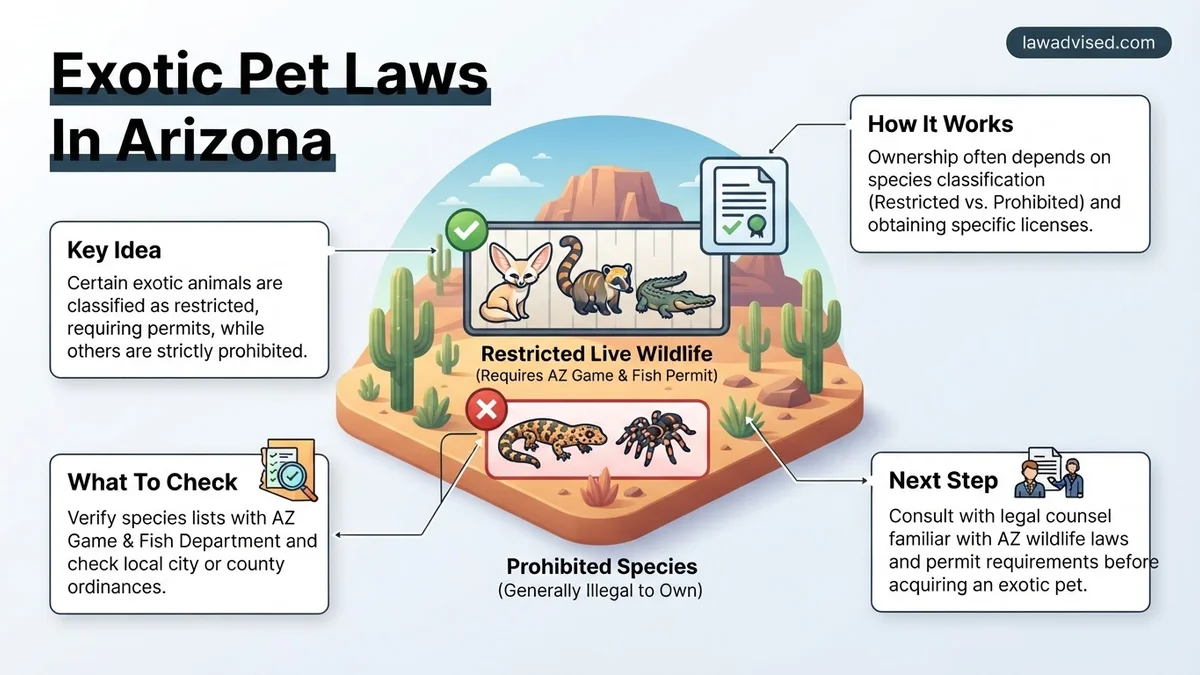
Navigating exotic pet laws in Arizona requires understanding the strict classifications enforced by the Arizona Game and Fish Department. Legal ownership depends entirely on whether an animal is classified as unrestricted, restricted, or entirely prohibited within state lines. Permits and licenses are mandatory for any restricted species to ensure public safety and animal welfare.
Arizona enforces strict regulations regarding exotic pet ownership through the Arizona Game and Fish Department (AZGFD). The state categorizes animals into restricted, unlisted, and unregulated species to protect native wildlife and public safety. If you want to keep a non-traditional animal in your home, you must navigate a complex framework of permits, housing inspections, and importation bans that carry heavy legal consequences if ignored.
Understanding these laws in 2026 is critical before bringing any unusual animal across state lines or purchasing one locally. Penalties for illegal possession range from steep financial fines to misdemeanor charges and the immediate confiscation of the animal. This guide breaks down the legal classifications, restricted species lists, and step-by-step permit acquisition processes required to keep you fully compliant.
Key Takeaways
- Unrestricted exotic pets require no state permits for private ownership in Arizona.
- Restricted species demand specific AZGFD permits, secure enclosures, and inspection.
- Banned animals include large cats, non-human primates, and aggressive indigenous wildlife.
- Local city and county ordinances often impose stricter bans than state laws.
- Importing exotic wildlife requires proper health certificates and legal documentation.
What Causes Confusion in Exotic Pet Laws in Arizona
Many prospective owners stumble because Arizona laws rely on specific biological classifications rather than common names. What seems like a harmless reptile or a domesticated hybrid might actually trigger strict state prohibitions. The Arizona Game and Fish Commission updates its restricted live wildlife rules frequently, meaning last year’s permissible pet could be illegal today.
Restricted Versus Unregulated Species Categories
The state splits exotic animals into distinct legal tiers. Unregulated species, such as standard sugar gliders or certain common geckos, generally require no state permits. Restricted species are further divided into:
- Restricted Live Wildlife (Group): Animals that pose a severe threat to native wildlife, agriculture, or human safety. This includes all bears, big cats, venomous reptiles (with specific local exceptions), and non-native wolves.
- Prohibited for Private Ownership: Species that cannot be kept by private citizens under any circumstances, restricted exclusively to zoos, research facilities, or accredited sanctuaries.
Ambiguity Around Native Wildlife and Hybrids
Another major trap involves native Arizona species and hybrid animals. You cannot simply capture a desert tortoise, Gila monster, or ringtail from the wild and keep it as a pet. Additionally, hybrid animals like wolf-dog crosses or Bengal cat hybrids face localized city and county ordinances that may be even stricter than state-level AZGFD regulations. You must check both state statutes and municipal codes before acquiring any animal.
How to Fix Compliance Issues and Obtain Permits Step-by-Step
If you currently possess an animal that requires a permit or if you want to legally acquire a restricted exotic pet in 2026, you must follow a rigid administrative protocol. Attempting to bypass the AZGFD application process will result in wildlife forfeiture and criminal citations. Correcting compliance issues proactively is your best defense.
Step-by-Step Permit Acquisition Process
Securing a valid holding permit from the Arizona Game and Fish Department requires careful preparation. Follow this workflow to ensure your application stands a chance of approval:
- Verify Species Legality: Check the current AZGFD restricted wildlife list to ensure your desired pet is eligible for private possession permits and not entirely banned.
- Review Facility Standards: Build or inspect your enclosure to meet strict state guidelines for containment, security, shelter, and square footage.
- Submit the Application: Complete the appropriate AZGFD special use or holding permit application and pay the required non-refundable processing fees.
- Pass the Inspection: Schedule and pass an on-site inspection by an AZGFD wildlife manager who will verify that your caging prevents escape and protects the public.
- Maintain Annual Records: Keep meticulous veterinary, feeding, and acquisition logs, as state officials retain the right to conduct unannounced compliance checks.
Handling Accidental Non-Compliance
If you realize an animal you own requires a permit you do not possess, do not release the animal into the wild, as this violates state environmental laws and spreads disease. Contact the Arizona Game and Fish Department directly to discuss voluntary surrender or emergency permitting options. Being proactive significantly reduces the likelihood of severe legal penalties.
What If Your Desired Exotic Pet Is Prohibited
Discovering that your dream animal is classified as restricted under Arizona law can be frustrating. However, state regulations exist for distinct public safety and ecological reasons. Navigating these legal hurdles requires understanding your precise options. Compliance protects both the community and the animal from legal confiscation.
Step 1: Verify the Exact Classification Status
Pet owners must cross-reference the Arizona Game and Fish Department restricted species list carefully. Common classifications include restricted live wildlife, prohibited species, and unregulated animals. Minor taxonomy differences can completely alter legal requirements. Consulting a specialized wildlife attorney clarifies these strict definitions.
Step 2: Explore Permitting and Educational Exemptions
Certain restricted species are legally obtainable with specific permits or under strict organizational exemptions. Educational facilities, accredited sanctuaries, and scientific researchers often qualify for special permits. Private hobbyists rarely meet these stringent criteria, but checking current 2026 application thresholds is essential. Never attempt to bypass these legal frameworks without explicit state authorization.
Step 3: Consider Legal Alternatives
Arizona permits many fascinating exotic species without requiring complex state permits or specialty licenses. Popular legal alternatives include certain morphs of reptiles, invertebrates, and captive-bred amphibians. Transitioning to a legally compliant species prevents severe fines and animal seizure. Always verify local municipal codes alongside state mandates before acquiring any animal.
What If It Still Doesn’t Work?
When initial efforts to legally acquire or permit an exotic pet in Arizona fail, private owners must pivot to compliant alternatives. Ignoring state wildlife mandates risks severe misdemeanor charges, steep financial penalties, and the immediate euthanasia of the animal. Consider these professional fallback steps if complications persist:
- Consult with a licensed Arizona wildlife attorney to review local municipal ordinances and state permit denials. Professional legal consultations typically range from $250 to $500 per hour.
- Surrender prohibited wildlife voluntarily to the Arizona Game and Fish Department or an accredited sanctuary to avoid criminal prosecution. Voluntary surrender incurs no state surrender fees.
- Engage an exotic animal veterinary specialist to verify species identification and ensure proper documentation. Veterinary certification services generally cost between $150 and $350.
- Reallocate your budget toward acquiring legally permissible captive-bred exotic species that require zero special permits within Arizona. Setup costs for compliant reptiles or invertebrates average $300 to $1,000.
Conclusion
Navigating exotic pet laws in Arizona demands rigorous attention to changing state statutes, municipal ordinances, and permitting thresholds. Failing to secure the correct documentation exposes owners to severe legal penalties and risks the welfare of the animal. According to verified research and expert wildlife sources from the Arizona Game and Fish Department, proactive legal compliance remains the single best defense for responsible exotic pet owners in 2026. Review your targeted species against the current restricted wildlife lists today before making any financial commitments.
❓ Frequently Asked Questions
What are the main categories of exotic pets under Arizona law?
Arizona categorizes exotic pets into unrestricted species, restricted live wildlife requiring a permit, and prohibited species that cannot be privately owned. Unrestricted pets need no state paperwork, while restricted animals mandate specific licensing, background checks, and secure housing inspections by wildlife officials.
Are local city ordinances stricter than Arizona state exotic pet laws?
Yes, municipalities and counties in Arizona have the legal authority to enact stricter bans or total prohibitions on certain exotic animals. Always check local city codes in addition to state statutes before acquiring any unusual pet.
What paperwork is needed to get a restricted wildlife permit in Arizona?
Applicants must submit a detailed application to the Arizona Game and Fish Department, pay applicable processing fees, prove adequate containment facilities, and sometimes provide proof of veterinary care and experience handling the specific species.
Are wolf-dog hybrids legal to own in Arizona?
Wolf-dog hybrids are regulated based on their generation percentage and local ordinances. Many Arizona cities ban them entirely, and state wildlife rules may apply depending on the specific lineage and captive status.
What happens if someone is caught with an illegal exotic pet in Arizona?
Possessing a prohibited or unlicensed restricted exotic pet can result in severe misdemeanor or felony charges, heavy financial fines, and the immediate confiscation and potential euthanasia of the animal.
Can I bring my exotic pet with me when moving to Arizona?
It depends entirely on the species. If the animal is on Arizona’s prohibited list, you cannot legally bring it into the state, and bringing restricted species requires securing the appropriate AZGFD permits prior to import.

Ismail Hossain is the founder of Law Advised. He is an Divorce, Separation, marriage lawyer. Follow him.