Hedgehog Laws in California 2027 Real Guide to Pet Bans
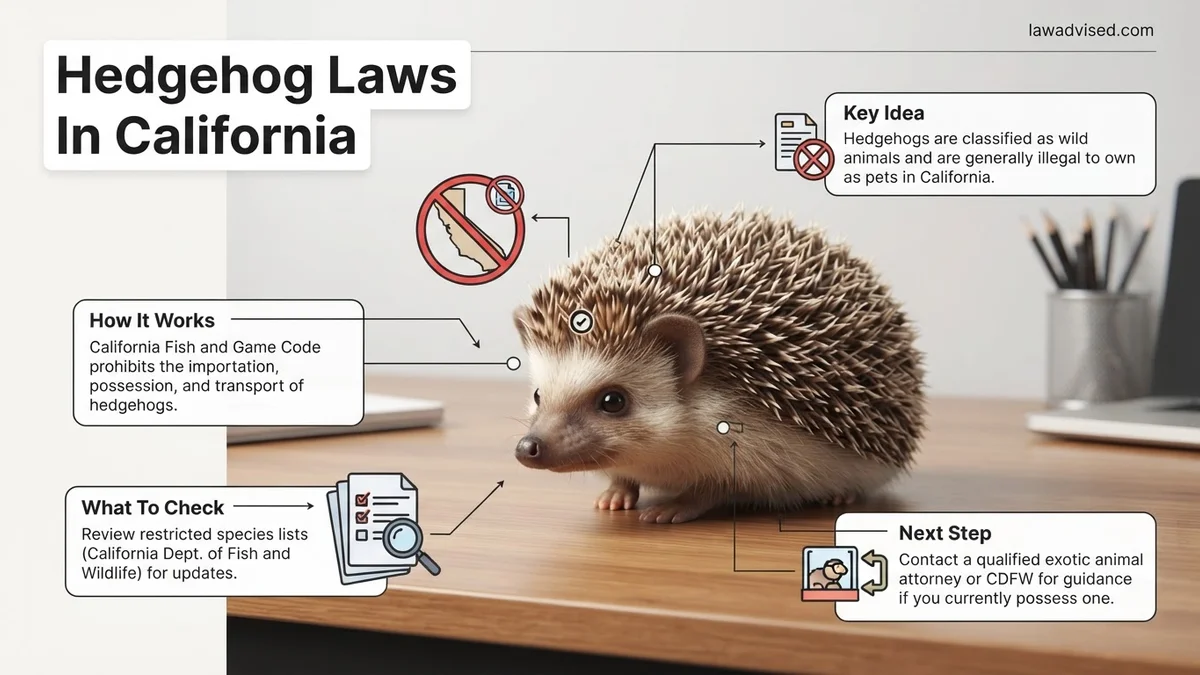
Hedgehogs are strictly illegal to own, import, or sell as pets in California under state wildlife regulations. The California Department of Fish and Wildlife classifies them as detrimental exotic animals that pose a threat to native ecosystems.
If you are wondering whether you can legally own a hedgehog in California as of 2027, the short and definitive answer is no. Hedgehogs are strictly illegal to own, import, transport, or sell anywhere within the state borders.
This prohibition catches many prospective pet owners off guard, especially since hedgehogs are commonly kept as legal pets across most of the United States. Ignoring these regulations does not just mean a mild warning; California takes exotic pet possession very seriously, and the legal consequences for breaking these wildlife codes can severely impact your finances and your freedom.
Key Takeaways
- Hedgehogs are completely banned as private pets throughout the state of California.
- The ban is enforced by the California Department of Fish and Wildlife.
- Possessing a hedgehog can result in animal confiscation and hefty financial fines.
- Exceptions only apply to accredited zoos, research facilities, and specific educational permits.
- Transporting a hedgehog across state lines into California violates state law.
What Causes the Strict Hedgehog Ban in California Regulations
The California Department of Fish and Wildlife (CDFW) enforces strict bans on specific exotic species to protect the local environment. When you look at the governing rules for 2027, the state targets animals that could destabilize local ecosystems if they escape or are intentionally released into the wild.
The Threat to Native Ecosystems and Agriculture
California possesses a fragile balance of native species and massive agricultural sectors. Hedgehogs are categorized as a potential invasive threat under Title 14 of the California Code of Regulations.
- Unchecked reproduction: Escaped pets could theoretically adapt to certain California climates and establish wild populations.
- Agricultural damage: These insectivores forage widely, potentially disrupting local pest balances and damaging crops.
- Predation: They can outcompete native small mammals and ground-nesting birds for local food sources.
Public Health Risks and Disease Vectors
Beyond ecological concerns, state agricultural authorities restrict hedgehogs due to health hazards. Hedgehogs are well-documented carriers of specific zoonotic pathogens, most notably Salmonella bacteria. Because California prioritizes public health safety in densely populated residential areas, the state legislature classifies these spiny mammals as high-risk exotic vectors that pose an unacceptable risk to domestic animal populations and human residents alike.
How to Identify Prohibited Exotic Animals Under Fish and Game Codes
Navigating California’s wildlife laws requires understanding how the state groups restricted species. The California Fish and Game Code explicitly designates certain animals as “detrimental animals,” making it unlawful to possess them without specialized scientific or educational permits.
Understanding California Fish and Game Code Section 2118
Section 2118 of the California Fish and Game Code outlines the exact categories of prohibited species. Hedgehogs fall under the family Erinaceidae, which is explicitly blacklisted.
- No permits for pets: You cannot obtain a standard private ownership permit for a prohibited exotic mammal.
- Confiscation protocol: State wildlife officers and local animal control agencies have the legal authority to seize illegal pets immediately upon discovery.
- Mandatory surrender: Surrendered animals are typically euthanized or transferred out of state to licensed sanctuaries, as rehoming them within California violates state law.
Penalties and Fines for Illegal Possession
If you are caught harboring a hedgehog in California in 2027, the penalties extend far beyond losing your pet. Under current state statutes, illegal possession of a restricted exotic animal is classified as a misdemeanor.
- Financial fines: Violators face steep monetary penalties ranging from $500 to upwards of $1,000 or more depending on the county prosecutor.
- Possible jail time: Repeat offenders or individuals attempting to traffic exotic animals commercially can face up to six months in county jail.
- Criminal record: A misdemeanor conviction for violating wildlife protection laws remains on your permanent record, impacting employment and background checks.
Step-by-Step Guide to Relinquishing Illegal Pets Safely
For California residents currently housing an illegal hedgehog as of 2027, unauthorized release into the wild is strictly prohibited and carries severe ecological penalties. Because African pygmy hedgehogs cannot survive Mediterranean or desert climates and lack native defense mechanisms, surrendering the animal correctly is paramount. Follow these procedures to protect both local ecosystems and personal liability.
1. Contact Local Humane Societies or Exotic Rescues
Reach out to licensed exotic animal rescues or the local humane society before making physical contact. Organizations such as the California Wildlife Center or regional SPCA branches occasionally coordinate with out-of-state sanctuaries authorized to accept banned exotic mammals. According to the California Department of Fish and Wildlife (CDFW), proactive surrender drastically reduces the likelihood of criminal prosecution.
2. Arrange an Anonymous or Good-Faith Transfer
Schedule an intake appointment with an approved facility that accepts restricted exotic pets. Most compliant shelters operate under amnesty protocols for minor exotic violations, meaning they will take the animal without reporting the owner to state authorities, provided the surrender is voluntary. Transport the hedgehog in a secure, ventilated carrier directly to the designated facility during daylight hours.
What If It Still Doesn’t Work and You Face Fines or Confiscation
If informal surrender options fail or if state inspectors issue an official citation, residents face immediate legal challenges under California Fish and Game Code. Ignoring a notice of illegal possession typically escalates administrative warnings into criminal misdemeanor charges. Consider these fallback steps if facing active confiscation or steep financial penalties in 2027:
- Consult an Environmental or Animal Law Attorney: Retain legal counsel specializing in California wildlife regulations immediately upon receiving a citation. Professional legal representation is critical when facing misdemeanor fines, which range from $500 to $1,000, alongside potential misdemeanor records. Retainer costs for environmental attorneys typically range from $1,500 to $3,500 depending on court appearances.
- Request an Administrative Hearing: File a formal request to contest the seizure timeline or fine amount within the designated statutory window, usually 10 days from the notice date. Documenting voluntary cooperation can persuade magistrates to reduce statutory financial penalties.
- Negotiate Interstate Transport Permits: Work with legal counsel to petition the CDFW for a temporary holding permit specifically designated for relocating the animal across state lines to a legal jurisdiction, such as Nevada or Arizona, where African pygmy hedgehogs are permitted.
- Comply with Humane Euthanasia Protocols: In scenarios where out-of-state placement is impossible and no licensed sanctuary has available intake capacity, state-mandated surrender to animal control may result in humane euthanasia. Authorizing this through a licensed veterinarian ensures the process adheres to humane standards rather than risking unsafe abandonment.
Conclusion
Navigating California’s strict exotic animal framework requires strict adherence to state laws banning African pygmy hedgehogs. Attempting to bypass these regulations through illegal ownership or risky local releases exposes owners to heavy fines and harms fragile native ecosystems. According to verified research and expert sources from the California Department of Fish and Wildlife, proactive surrender to licensed out-of-state sanctuaries remains the safest legal recourse. The definitive next step for any current owner is to contact a regional exotic animal rescue to arrange an authorized, compliant transfer immediately.
❓ Frequently Asked Questions
Why does California classify hedgehogs as detrimental exotic animals?
California has a unique and fragile Mediterranean ecosystem. Authorities worry that escaped or released exotic pets like hedgehogs could establish feral populations, compete with native species, or introduce foreign diseases and parasites.
What specific California Fish and Game code covers illegal pets?
California Code of Regulations Title 14 outlines restricted species. It explicitly prohibits the importation, transportation, and possession of wild animals not native to the state without proper institutional permits.
What are the exact penalties for illegally owning a hedgehog in California?
Violations of California’s exotic pet laws can be prosecuted as misdemeanors. Owners may face criminal fines ranging from hundreds to thousands of dollars, mandatory surrender of the animal, and potential probation.
Can I legally buy a hedgehog in Nevada and bring it to California?
No. Transporting a restricted exotic animal across state lines into California is a separate violation of both state and potentially federal wildlife laws.
Are African pygmy hedgehogs also banned, or just wild species?
All common pet hedgehog species, including the African pygmy hedgehog, are completely banned for private ownership under California law. There is no distinction made for domesticated pet varieties.
What should a California resident do if they accidentally inherited an illegal hedgehog?
Owners should immediately contact a local humane society, animal control agency, or the California Department of Fish and Wildlife to surrender the animal voluntarily to avoid severe legal consequences.

Ismail Hossain is the founder of Law Advised. He is an Divorce, Separation, marriage lawyer. Follow him.