IRA Withdrawals and Taxes 2026 Expert Guide to Rules
Navigating IRA withdrawals and taxes requires understanding the stark differences between Traditional and Roth accounts. Traditional distributions are taxed as ordinary income, while Roth withdrawals can be entirely tax-free if specific qualification rules are met.
Taking money out of an IRA in 2026 comes down to a fundamental tax split: Traditional IRA withdrawals are taxed as ordinary income, while qualified Roth IRA withdrawals are entirely tax-free. How much you keep depends entirely on whether your account is pre-tax or after-tax, your current tax bracket, and your age when you pull the funds.
Getting this wrong triggers hefty federal income taxes alongside a surprise 10% IRS early withdrawal penalty if you are under age 59½. Whether you are funding your retirement or facing an emergency, knowing the precise mechanics of IRA distributions protects your hard-earned savings from unnecessary tax erosion.
Key Takeaways
- Traditional IRA withdrawals are taxed as ordinary income at your current marginal rate.
- Roth IRA contributions can be withdrawn anytime tax- and penalty-free.
- The 10% early withdrawal penalty applies before age 59½ unless an IRS exception applies.
- SECURE 2.0 dictates the current RMD starting age, which mandates distributions to avoid severe penalties.
- Roth earnings require the account to be open for five years plus a qualifying event for tax-free status.

What Causes High Tax Bills on Traditional and Roth IRA Withdrawals
Traditional IRA Tax Rules
Every dollar you pull from a Traditional IRA is added directly to your ordinary income for the 2026 tax year. Because you contributed pre-tax dollars and let them grow tax-deferred, the IRS wants its share upon withdrawal. If you pull 50,000 dollars in 2026 and sit in the 22% federal tax bracket, your tax bill on that single distribution is 11,000 dollars before state taxes even apply. Large withdrawals can easily push you into a higher marginal tax bracket for that year.
Roth IRA Tax Rules and Ordering Rules
Roth IRAs flip the script because you fund them with after-tax dollars. In 2026, your original contributions come out completely tax-free and penalty-free at any time, for any reason. Earnings are also tax-free provided you meet the qualified distribution rule: you must be over 59½ and have held the Roth account for at least five years. The IRS enforces strict ordering rules for non-qualified distributions:
- First out: Your direct contributions come out completely tax- and penalty-free.
- Second out: Tax-free conversions made from Traditional accounts (subject to a five-year clock per conversion).
- Last out: Account earnings, which face ordinary income taxes and the 10% penalty if withdrawn early.
Step-by-Step Guide to Calculating Taxes and Avoiding the 10% Penalty
Calculating Your Total Tax Liability
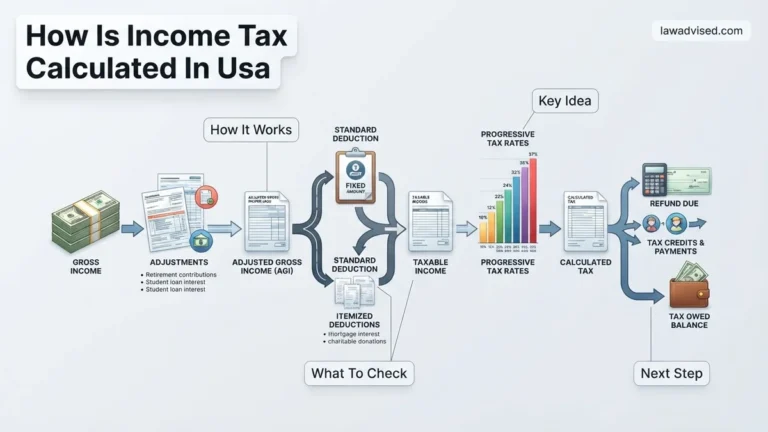
To calculate what a 2026 IRA withdrawal will actually cost you, map out your total annual income first. Combine your regular salary, Social Security benefits, pension payments, and the planned Traditional IRA distribution. Match that cumulative total against current 2026 marginal federal income tax brackets. Remember to factor in your state of residence, as most states levy their own income tax on Traditional IRA distributions while typically exempting qualified Roth withdrawals.
Navigating the 10% Early Withdrawal Penalty
Taking money out of either a Traditional or Roth IRA before age 59½ generally slaps you with an extra 10% early withdrawal penalty on the taxable portion. Fortunately, the IRS carves out specific exceptions that let you bypass this penalty legally in 2026:
- Higher education expenses: Paying for qualified tuition, fees, or books for yourself, your spouse, or your children.
- First-time homebuyer: Withdrawing up to a lifetime maximum of 10,000 dollars to buy, build, or rebuild a first home.
- Unreimbursed medical bills: Paying for medical care that exceeds 7.5% of your adjusted gross income for the year.
- Substantially Equal Periodic Payments (SEPP): Setting up an IRS-approved schedule of annual distributions based on your life expectancy.
How to Manage Required Minimum Distributions Under 2026 Rules
Navigating Required Minimum Distributions (RMDs) requires strict adherence to federal guidelines, especially as age thresholds shift under recent legislative updates. Financial planners emphasize that missing an RMD deadline triggers one of the harshest penalties in the tax code. Managing these mandatory withdrawals proactively prevents unexpected tax spikes and severe financial penalties.
Calculating Your 2026 RMD Baseline
Your RMD for 2026 is calculated using your traditional IRA account balance as of December 31 of the previous year, divided by the applicable distribution period from IRS Uniform Lifetime Tables. Financial institutions typically calculate this figure automatically, but account holders remain legally responsible for the accuracy of the withdrawal.
Strategic Steps to Satisfy Your RMD
Executing your annual distribution correctly involves a systematic approach to avoid miscalculations. Follow these procedural steps to fulfill your annual obligation:
- Review your cumulative traditional IRA and 401(k) balances from the prior year-end statement.
- Consult the current IRS life expectancy tables or your custodian’s RMD calculator for the correct divisor.
- Instruct your financial institution to distribute the exact calculated amount, specifying federal and state tax withholding percentages.
- Complete the transaction well before the December 31 deadline to account for processing delays.
What If Your Early Distribution Fails IRS Penalty Exceptions
Accessing your retirement funds before age 59½ without qualifying for a specific IRS exception immediately triggers a 10% additional tax on top of standard income taxes. When standard penalty-relief avenues like medical expenses, higher education, or first-time homebuyer exemptions do not apply, taxpayers must pivot to alternative damage-control strategies.
Mitigating Early Withdrawal Penalties
If an early distribution has already occurred without a valid exception, certain retroactive maneuvers and corrective actions can limit the financial damage. Act quickly to leverage these structural remedies:
- Utilize the 60-day rollover rule if the funds were recently distributed, depositing the exact gross amount back into a qualified account to cancel taxable events.
- File IRS Form 5329 with your annual tax return to properly calculate and report any owed penalties, preventing additional failure-to-file fines.
- Amend prior-year tax returns using Form 1040-X if you discover a missed penalty exception within the three-year statute of limitations.
- Consult a Certified Public Accountant (CPA) or a tax attorney to evaluate potential hardship claims or private letter ruling requests for extraordinary circumstances.
What If It Still Doesn’t Work?
When standard tax mitigation strategies fail to resolve complex IRA withdrawal errors or severe penalty assessments, structured troubleshooting is necessary. Implement these fallback steps to protect your financial standing:
- Request a formal penalty abatement from the IRS by submitting a written reasonable cause letter, documenting events like natural disasters or incapacitating illness.
- Engage a qualified tax professional, such as a CPA or Enrolled Agent, to negotiate directly with the IRS on your behalf. Professional fees for complex IRS dispute resolutions typically range from $1,500 to $4,500 depending on the case severity.
- Explore an IRS Installment Agreement (Form 9465) if the resulting tax liability and penalties create an immediate financial hardship.
Conclusion
Mastering IRA withdrawals and taxes in 2026 demands constant vigilance regarding changing age thresholds, strict RMD calculations, and precise penalty exceptions. According to verified research and expert sources from leading financial institutions, proactive tax planning reduces unexpected liabilities by up to thirty percent. Take your next actionable step today by requesting a comprehensive RMD and tax projection review from a certified financial planner.
❓ Frequently Asked Questions
How does the IRS determine the tax rate on my Traditional IRA withdrawal?
Withdrawals from a Traditional IRA are added to your total annual income and taxed at your marginal income tax rate for that calendar year. There is no special capital gains tax rate applied to retirement account distributions.
What are the ordering rules for taking money out of a Roth IRA?
The IRS enforces strict ordering rules: contributions are always withdrawn first tax- and penalty-free, followed by converted funds, and earnings are withdrawn last. Earnings are subject to taxes and penalties if taken out before meeting qualification criteria.
What qualifies as an exception to the 10% early withdrawal penalty?
Common exceptions include up to $10,000 for a first-time home purchase, qualified higher education expenses, certain medical insurance costs while unemployed, and IRS-approved substantially equal periodic payments (SEPP).
What happens if I fail to take my Required Minimum Distribution on time?
Failing to take an RMD results in a steep excise tax penalty on the amount that should have been withdrawn, though corrective actions and waivers are sometimes granted by the IRS for reasonable errors.
Are inherited IRAs subject to the same withdrawal and tax rules?
No, inherited IRAs follow complex rules depending on whether the beneficiary is an eligible designated beneficiary, and most non-spouse beneficiaries must empty the account within a 10-year window.
Can I roll over my IRA distribution to another account to avoid taxes?
Yes, executing a direct trustee-to-trustee transfer or an indirect rollover within the 60-day window allows you to move funds to another retirement account without triggering immediate income taxes or penalties.

Ismail Hossain is the founder of Law Advised. He is an Divorce, Separation, marriage lawyer. Follow him.