What Is the IRS in 2026 Expert Guide to Tax Roles
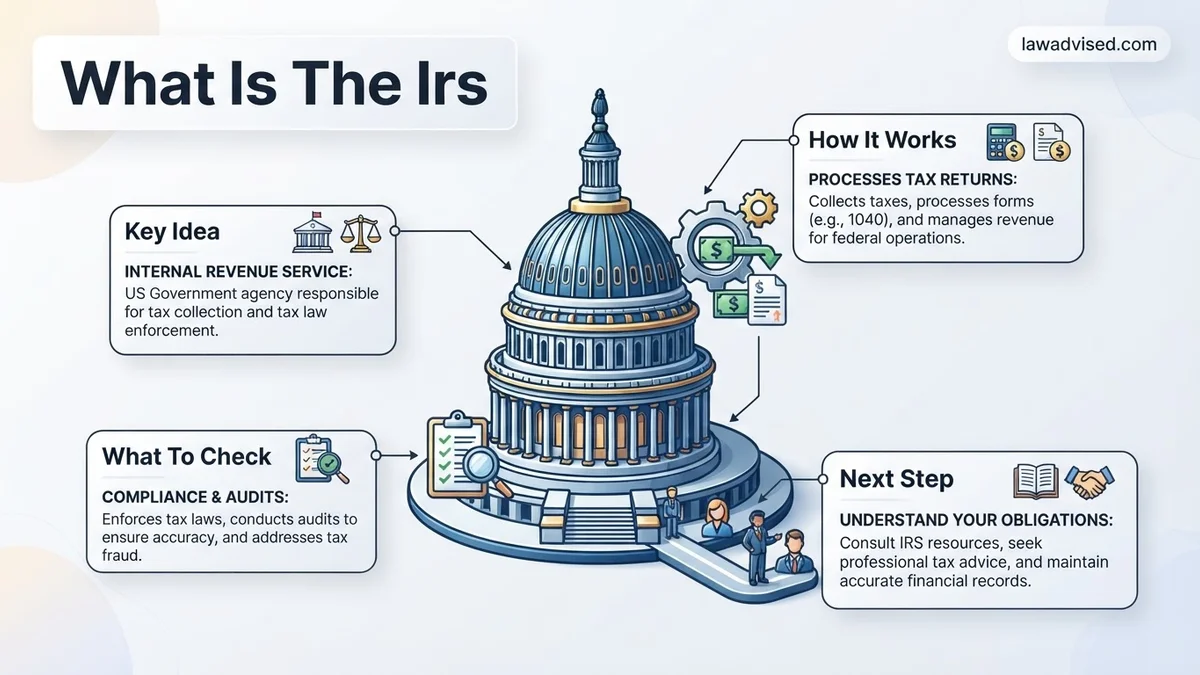
The Internal Revenue Service (IRS) is the federal agency responsible for administering and enforcing U.S. tax laws. Operating under the Department of the Treasury, it collects federal income taxes and processes returns for millions of citizens and businesses.
The Internal Revenue Service, commonly known as the IRS, is the primary federal agency responsible for administering and enforcing the tax laws passed by Congress. Operating as a bureau of the Department of the Treasury, the agency collects individual and corporate income taxes, processes millions of annual returns, and ensures compliance with the Internal Revenue Code.
For individuals and business owners navigating the financial landscape of 2026, understanding this agency’s core functions is essential for maintaining compliance and avoiding costly penalties. Rather than a monolithic policing force, the IRS operates primarily as the financial engine of the federal government, funding everything from national defense to public infrastructure.
Key Takeaways
- The IRS stands for the Internal Revenue Service.
- It operates as a bureau of the U.S. Department of the Treasury.
- Its primary duty is collecting federal taxes and enforcing the tax code.
- It affects nearly all U.S. citizens, resident aliens, and operating businesses.
- The agency processes hundreds of millions of tax returns annually.
What Causes Misconceptions About the IRS Role
The Myth of the Purely Punitive Agency
Many taxpayers view the agency solely through the lens of audits and enforcement. This widespread misconception overlooks the primary operational reality of the organization. Most of the agency’s annual workload centers on customer service, benefit distribution, and processing returns rather than launching aggressive investigations.
- Processing over 150 million individual tax returns each year efficiently
- Distributing critical federal credits, such as the Child Tax Credit and Earned Income Tax Credit
- Providing educational resources and digital tools to help taxpayers understand their filing obligations
Confusion Surrounding State Versus Federal Jurisdiction
Another frequent point of confusion involves the separation of tax authorities. You might wonder why you receive separate notices from different government bodies. The IRS operates strictly at the federal level. It does not collect state income taxes, local property taxes, or municipal sales taxes, which are handled entirely by state departments of revenue.
In 2026, technological updates have made the division between federal and state portals clearer, but taxpayers still frequently conflate the two. Knowing that the IRS only enforces federal tax statutes helps you respond appropriately to official correspondence.
How to Identify IRS Responsibilities and Jurisdiction
Core Functions of Federal Tax Administration
The agency’s official mandate is grounded in administering the Internal Revenue Code. When you examine what the organization actually does day-to-day, several primary responsibilities emerge. These actions ensure that the federal government maintains the revenue required to operate.
- Tax Collection: Gathering income, payroll, estate, and excise taxes from citizens and authorized resident entities
- Compliance and Auditing: Reviewing financial records to verify accuracy and detect discrepancies or fraudulent activity
- Code Enforcement: Penalizing non-compliance, issuing liens or levies for unpaid debts, and referring criminal tax evasion to the Department of Justice
The Boundaries of Agency Authority
Understanding the agency also means recognizing its strict legal boundaries. The IRS does not write tax laws; that legislative power belongs exclusively to Congress. The organization only interprets and enforces the statutes enacted by lawmakers.
Furthermore, the agency must operate within strict privacy laws, such as Section 6103 of the Internal Revenue Code, which protects your personal financial data. As compliance standards evolve through 2026, recognizing these jurisdictional limits protects you from common impersonation scams and ensures you interact only with verified federal representatives.
Step-by-Step Guide to Interacting With the IRS
Successfully navigating an interaction with the Internal Revenue Service requires a structured, methodical approach. According to tax compliance experts, adherence to official communication channels significantly reduces processing delays and prevents compounding penalties.
Step 1: Gather Documentation and Verify Notices
Before initiating contact, compile all relevant financial documents, prior-year returns, and official IRS notices. Fraudulent tax scams remain prevalent in 2026, so verifying the authenticity of any communication through your secure online account is critical.
Step 2: Utilize Digital Self-Service Tools
The IRS digital portal allows taxpayers to track refunds, set up payment plans, and view transcripts without waiting on hold. Leveraging these automated tools resolves the vast majority of routine inquiries instantly.
Step 3: Initiate Direct Contact Through Official Channels
If digital resolution fails, call the official IRS helpline or schedule an appointment at a local Taxpayer Assistance Center. Follow these procedural actions:
- Call the designated phone number listed on your official notice during operational hours, typically early morning to minimize wait times.
- Have your Social Security Number, filing status, and a copy of your tax return ready for identity verification.
- Clearly state the specific issue, referencing any notice numbers or prior correspondence dates.
- Request and document a confirmation or badge number for every phone representative you speak with.
- Follow up in writing via certified mail if the telephone representative instructs you to submit additional evidence.
What If Your Tax Issue Still Does Not Resolve
When standard communication channels and digital self-service tools fail to resolve a complex dispute, taxpayers must escalate their cases. Persistent tax problems require specialized intervention to prevent asset seizure or mounting interest charges.
Consider these fallback steps if your initial efforts stall:
- Contact the Taxpayer Advocate Service (TAS), an independent organization within the IRS that helps taxpayers resolve systemic problems and financial hardships.
- Engage a licensed credentialed professional, such as a Certified Public Accountant (CPA), Enrolled Agent (EA), or tax attorney, for formal representation. Professional representation fees typically range from $1,500 to $5,000 depending on the complexity of the audit or collection appeal.
- File a formal appeal through the IRS Office of Appeals if you disagree with an audit adjustment or collection action, initiating an independent review outside of the collection division.
- Submit an Offer in Compromise (OIC) if you qualify under strict financial guidelines, allowing you to resolve your tax liability with the government for a lower amount than what you owe.
Conclusion
Understanding the function of the IRS and following structured communication protocols ensures that you can effectively manage tax obligations and resolve disputes without unnecessary stress. By leveraging secure digital portals and official escalation paths, taxpayers maintain control over their financial standing. According to verified research and expert sources from the National Taxpayer Advocate, proactive engagement and meticulous record-keeping remain the most reliable defenses against prolonged tax penalties. Your immediate actionable next step is to log into your secure IRS online account today to verify your current tax transcripts and ensure no unresolved notices require your attention.
❓ Frequently Asked Questions
What is the primary function of the IRS in the U.S. government?
The primary function of the IRS is to collect federal taxes and enforce the tax laws passed by Congress. It administers the Internal Revenue Code, processes tax returns, and ensures taxpayers pay the correct amount of tax.
Is the IRS an independent agency?
No, the IRS is not an independent agency. It is a bureau of the United States Department of the Treasury and operates under the direction of the Treasury Secretary.
Who is required to file taxes with the IRS?
Generally, U.S. citizens and permanent residents meeting specific income thresholds must file an annual federal income tax return. Non-residents earning income from U.S. sources may also be required to file.
How does the IRS enforce tax laws?
The IRS enforces tax laws through automated document matching, correspondence audits, and field audits. If individuals or businesses fail to comply, the agency can assess penalties, levy bank accounts, or place liens on property.
What happens if you cannot pay your taxes to the IRS?
If you cannot pay, the IRS offers various relief options, including short-term payment plans, installment agreements, and offers in compromise. It is important to file your return on time even if you cannot pay to avoid failure-to-file penalties.
Does the IRS contact taxpayers by phone or email?
The IRS typically initiates contact with taxpayers through regular mail delivered by the U.S. Postal Service. The agency generally does not call or email demanding immediate payment or threatening police arrest.

Ismail Hossain is the founder of Law Advised. He is an Divorce, Separation, marriage lawyer. Follow him.