What Happens If Tax Return Is Rejected Step-by-Step Fix 2026
If your tax return is rejected, the IRS or state agency has not processed it due to a technical error or missing information. You will not face late-filing penalties immediately, provided you correct the mistake and resubmit your return promptly.
An electronic tax return rejection means the IRS or a state agency’s processing system stopped your filing before it entered their official database because of a technical mismatch or missing data. Your return was technically never filed, which means you face no late-filing penalties yet, but you must act quickly to fix the data and transmit it again.
When you receive that rejection notification email or dashboard alert for the 2026 tax season, do not panic. Electronic rejections are vastly different from formal tax audits; they are simply digital formatting errors or identity confirmation issues that you can resolve in minutes.
Key Takeaways
- A rejected return is different from a delayed return and requires a correction.
- Locate your specific rejection error code to identify the exact problem.
- Common causes include mismatched Social Security numbers, misspelled names, or incorrect PINs.
- You can usually fix the error in your tax software and e-file again for free.
- If you file close to the deadline, you are granted a short grace period to correct e-file rejections.
What Happens When Your Tax Return Is Rejected by the IRS
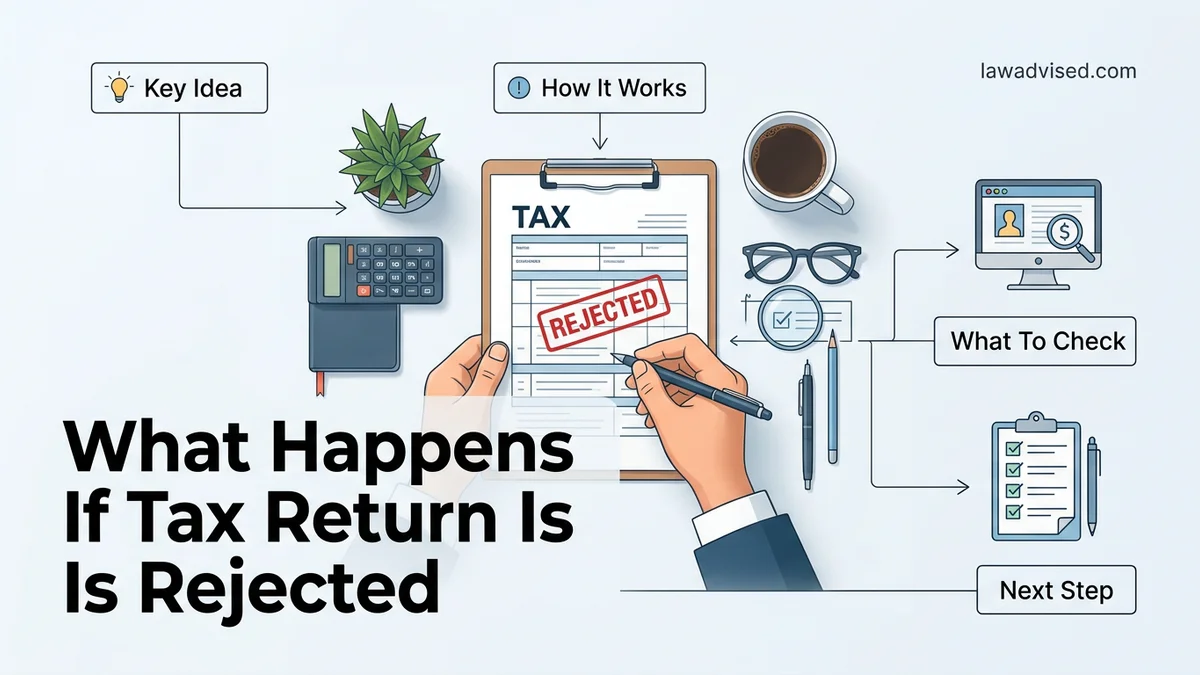
When the IRS rejects your e-filed return, they issue a specific error code and halt the processing cycle immediately. The primary consequence is that your tax return is legally considered unfiled until you correct the error and successfully transmit it back to the agency.
The Immediate Consequences of a Rejection
- Processing Delay: Your expected tax refund is paused until the corrected return clears the IRS electronic validation checks.
- Zero Penalty Risk (Initially): As long as you fix and resubmit a rejected return within the IRS grace period—typically 5 to 10 calendar days from the original rejection date—you will not face late-filing penalties.
- No Official Record: Because the system rejected the file, the IRS has no record of your income or deductions, leaving you unprotected if you claim a refund without a successful re-file.
How the IRS Communicates the Rejection
If you used commercial tax software like TurboTax or FreeTaxUSA for your 2026 filing, you will receive an email alert or a dashboard notification when you log in. If you filed via a professional CPA, they will receive a Reject Notification containing the specific Reject Code. This code acts as a roadmap telling you exactly what data point failed validation.
What Causes a Tax Return to Get Rejected
Electronic filing systems rely on exact data matches against government databases maintained by the Social Security Administration and the IRS. Even a single typo will trigger an automatic rejection before a human ever looks at your forms.
Identity and Personal Information Mismatches
- Social Security Number Errors: Typing a single digit wrong in your SSN, your spouse’s SSN, or a dependent’s SSN will cause an immediate rejection.
- Name Control Failures: The first four letters of your last name in your tax software must match the official records of the Social Security Administration exactly.
- Incorrect IP PIN: If you enrolled in the Identity Protection PIN program for 2026 and entered the wrong six-digit number, the system will block your return to prevent fraud.
Prior-Year Tax Data Discrepancies
Tax software requires verification data from your previous year’s return to authenticate your identity electronically.
- Adjusted Gross Income Mismatch: Entering the wrong AGI from your 2025 tax return will cause the IRS e-file servers to reject the transmission instantly.
- Self-Select PIN Errors: Using an incorrect five-digit PIN that you created yourself last year will trigger a validation failure. If you do not know your prior-year AGI, you must input zero or obtain your exact figures from your online IRS account.
Step-by-Step Guide to Fix and Resubmit a Rejected Tax Return
Fixing a rejected electronic tax return for the 2026 filing season requires careful attention to detail. Whether the rejection stemmed from an incorrect identity verification number or a mismatched dependent Social Security number, the IRS provides a clear electronic pathway to correct the error. Most popular commercial software solutions guide filers through these corrections automatically.
Core Steps to Amend and Transmit Your Return
- Access your tax software or IRS account: Log into the platform you used to prepare your taxes or check your IRS e-file status dashboard to view the specific rejection code and detailed explanation message.
- Locate the error in your document: Cross-reference the rejection reason code against your source documents, such as your W-2, 1099, or previous year tax records, to find the exact discrepancy.
- Update the incorrect field: Modify the specific line item, personal information entry, or electronic signature pin within your tax preparation software. Do not create an entirely new return from scratch.
- Save and re-validate your file: Run the software’s built-in error check to ensure no new formatting issues or missing data fields were accidentally introduced during the correction process.
- Resubmit electronically: Follow the software prompts to re-sign and securely transmit your updated tax return back to the IRS database at no additional charge.
According to compliance data from major tax software providers, over 90 percent of electronically corrected returns are successfully accepted within 24 to 48 hours of resubmission.
What If Your Resubmitted Tax Return Still Fails to Go Through?
Repeated rejections typically indicate a deeper data conflict within the IRS master database, such as a dependent already claimed on another return or an unresolvable Identity Protection PIN mismatch. When standard digital resubmission fails multiple times during the 2026 tax season, taxpayers must pivot to alternative filing strategies to avoid processing delays.
Advanced Troubleshooting and Fallback Options
- Switch to paper filing: If electronic rejections persist, print out your completed tax return, sign it manually, attach all required W-2 forms, and mail it to the appropriate IRS regional service center.
- Contact the IRS identity verification line: Call the specialized IRS identity theft and verification toll-free support line to clear any security flags placed on your Social Security number.
- Consult a licensed tax professional: Engage a Certified Public Accountant (CPA) or Enrolled Agent (EA) to diagnose persistent electronic filing blocks and communicate directly with IRS stakeholder liaison channels. Professional assistance for complex return rejections generally ranges from $150 to $450 depending on the complexity of the underlying issue.
Conclusion
Discovering that your tax return has been rejected can cause immediate anxiety, but it is fundamentally a routine electronic notification rather than a formal audit or penalty. Promptly identifying the specific error code and resubmitting through your tax software resolves the vast majority of issues quickly. According to verified research and expert financial sources from the IRS, taking immediate corrective action ensures your return enters the processing queue with minimal disruption to your expected refund timeline. Review your filing status today and execute the necessary digital corrections to keep your tax season on track.
❓ Frequently Asked Questions
What is the difference between a rejected tax return and an accepted one?
An accepted tax return has passed initial electronic validation checks and is being processed by the IRS. A rejected return failed those basic automated checks due to a data mismatch or formatting error and was never officially received.
What are the most frequent reasons tax returns get rejected?
The most common triggers include mismatched Social Security numbers, incorrect spelling of names, a missing or incorrect prior-year Adjusted Gross Income (AGI) or self-select PIN, and a dependent already claimed on another return.
What should I do if my tax software will not let me update the rejected return?
If your software locks you out or fails to clear the error, you may need to start a new return, bypass the e-file error by overriding fields, or print and mail your tax documents directly to the IRS.
How long do I have to fix a rejected tax return near the April deadline?
The IRS typically provides a 5-day grace period from the date of rejection to correct and successfully re-file your electronic return without incurring late-filing penalties.
How do I update my prior-year AGI if it caused the rejection?
You can find your prior-year AGI on last year’s filed tax return line 11 (Form 1040), or by pulling your IRS tax transcript online if you do not have a copy of last year’s paperwork.
Will a rejected tax return delay my expected tax refund?
Yes, because the IRS does not officially receive your return until the rejection is fixed and the return is successfully accepted, your overall refund timeline will be pushed back.

Ismail Hossain is the founder of Law Advised. He is an Divorce, Separation, marriage lawyer. Follow him.