Can Employees Pay Estimated Taxes in 2026? Expert Guide
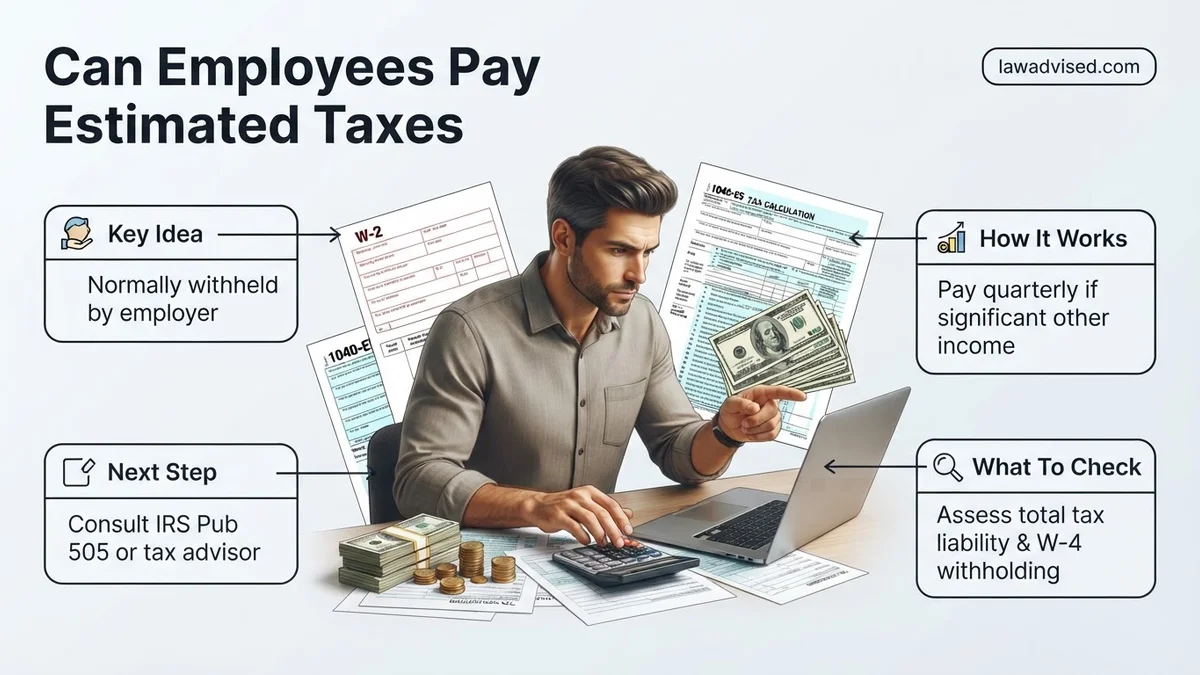
Yes, W-2 employees can pay estimated taxes if they have extra income from side hustles, investments, or capital gains that aren’t subject to employer withholding. However, a simpler option for most employees is to increase their workplace tax withholding using Form W-4.
Yes, W-2 employees can absolutely pay estimated quarterly taxes to the IRS. While estimated payments are typically associated with freelancers and business owners, millions of traditional employees use them to cover tax shortfalls.
Navigating taxes as an employee with side income in 2026 requires understanding how the IRS expects you to pay. If you earn money outside your primary job, your standard paycheck withholding often falls short, leading to surprise tax bills and potential underpayment penalties.
Key Takeaways
- W-2 employees can legally make quarterly estimated tax payments to the IRS using Form 1040-ES.
- Adjusting your Form W-4 with your employer is usually easier than calculating quarterly payments.
- Extra income from side hustles, dividends, or capital gains often triggers the need for extra tax payments.
- The IRS safe harbor rule helps you avoid underpayment penalties if you meet specific withholding thresholds.
- You can mix and match increased withholding and estimated payments to cover your total tax liability.
What Causes W-2 Employees to Owe Extra Taxes
Most employees assume their employer handles everything. However, your W-2 withholding only accounts for your primary salary. When you have outside income streams, the IRS still expects you to pay taxes on that money throughout the year, not just in April.
Common Sources of Non-Wage Income
Tax shortfalls usually happen when you generate income that lacks automatic payroll deductions. Paying attention to these streams helps you anticipate your total tax liability for 2026.
- Investment gains: Dividends, capital gains from selling stocks, or cryptocurrency profits.
- Side hustles: Freelance work, consulting gigs, or driving for rideshare apps on the side.
- Rental properties: Monthly rental income minus allowable operating expenses.
- Spousal income: If you file jointly and your spouse is self-employed or has a significant side gig.
The Underpayment Penalty Trap
The United States operates on a pay-as-you-go tax system. If you owe more than $1,000 when you file your 2026 tax return, the IRS may assess a penalty. To avoid this, you must generally pay at least 90% of your current year’s tax liability or 100% of your prior year’s tax liability through withholding or estimated payments.
How to Fix Tax Shortfalls Using Form W-4 or Estimated Payments
When you realize your day job is not withholding enough tax to cover your investments or side income, you have two primary methods to fix the gap. Both options satisfy IRS requirements, but they function very differently.
Option 1: Adjusting Your W-2 Withholding via Form W-4
For most W-2 employees, updating your Form W-4 is the easiest way to handle extra tax obligations. You do not need to calculate quarterly payments or worry about missing IRS deadlines.
- Automatic deductions: Your employer withholds an extra fixed dollar amount from every paycheck.
- Zero math required: Use the IRS Tax Withholding Estimator online to find the exact amount to add.
- Set and forget: Once submitted to HR, the process runs entirely in the background.
Option 2: Making Quarterly Estimated Payments via Form 1040-ES
If your side income fluctuates wildly or you prefer keeping your primary paycheck untouched, you can pay quarterly estimated taxes using IRS Form 1040-ES.
- Payment schedule: Deadlines fall four times a year in April, June, September, and January.
- Direct payments: You pay the IRS directly online using IRS Direct Pay or credit cards.
- Manual tracking: You must calculate your quarterly earnings and ensure you submit accurate amounts to avoid penalties.
Step-by-Step Guide to Calculating Quarterly Estimated Taxes
Calculating your quarterly payments requires accurate forecasting. If you are an employee supplementing your income with side work in 2026, precision prevents overpaying or facing surprise bills. According to IRS guidelines, you must base your calculations on your expected adjusted gross income, deductions, and credits for the year.
Step 1: Project Your Total 2026 Income
Combine your expected W-2 wages with all anticipated freelance, side hustle, or investment earnings. Review your pay stubs and previous tax returns to establish a reliable baseline. Financial analysts recommend updating these projections at the end of each calendar quarter to account for unexpected salary bumps or variable side income.
Step 2: Estimate Your Total Tax Liability
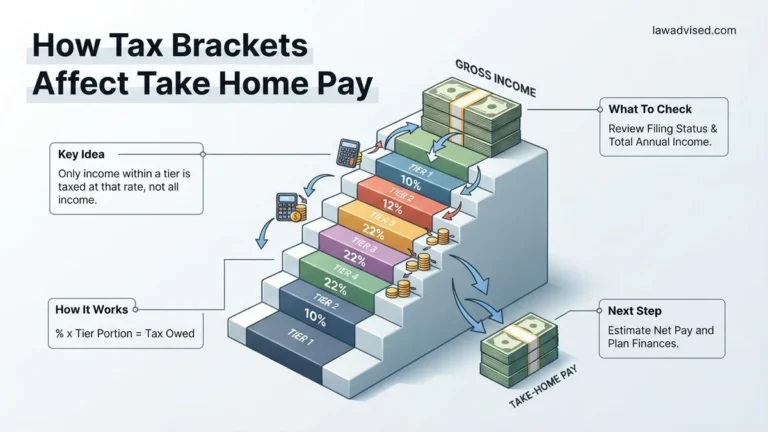
Subtract your standard or itemized deductions from your projected total income to determine your taxable income. Apply the 2026 federal income tax brackets and factor in self-employment tax if you have independent contractor earnings. The Social Security Administration sets the self-employment tax rate at 15.3% for the combined employer and employee shares on net earnings up to the wage base limit.
Step 3: Account for W-2 Withholding
Examine your regular paycheck to see how much federal income tax your employer already withholds annually. Subtract this withheld amount from your total estimated tax liability. The remaining figure is the exact amount you need to pay across your quarterly estimated installments using IRS Form 1040-ES.
What If It Still Doesn’t Work?
Even with careful planning, calculation errors or sudden income spikes can leave you vulnerable to underpayment penalties. If your estimated tax strategy falls short of IRS thresholds for 2026, specific corrective measures can help minimize financial fallout.
- Submit a revised Form W-4 immediately: Ask your employer to increase your regular paycheck withholding to cover any projected shortfall before the end of the tax year.
- Make a larger catch-up payment: Send an immediate quarterly payment via IRS Direct Pay to reduce the principal balance subject to late-payment interest.
- File for a penalty waiver: The IRS occasionally waives underpayment penalties for taxpayers who experienced casualty, disaster, or unusual circumstances such as a sudden disability.
- Consult a certified tax professional: Engage a CPA or Enrolled Agent to review your withholding strategy and draft Form 2210 to accurately calculate or request a waiver for any penalties. Professional tax advisory services typically range from $200 to $600 depending on complexity.
Conclusion
While traditional W-2 employees generally rely on automatic payroll deductions, supplementing income with freelance work or investments requires proactive tax planning. Adjusting your W-4 withholding remains the most seamless solution, but paying quarterly estimated taxes using IRS Form 1040-ES provides a reliable alternative for complex financial situations. According to verified research and tax expert sources, maintaining accurate income projections throughout the year is the single most effective way to avoid costly underpayment penalties. Take your next actionable step today by reviewing your latest pay stub and calculating your projected 2026 tax liability.
❓ Frequently Asked Questions
Can employees pay estimated taxes instead of adjusting their W-4?
Yes, W-2 employees are legally allowed to make quarterly estimated tax payments using Form 1040-ES. This is common for individuals who have fluctuating freelance income alongside a traditional salary.
Why would a regular employee owe taxes at the end of the year?
Employees often owe taxes if they have significant non-wage income, such as investment dividends, capital gains, rental property revenue, or a freelance side gig where no taxes are withheld.
How do I update my W-4 to avoid making quarterly payments?
You can submit a new Form W-4 to your employer’s payroll department. Step 4(a) allows you to report extra income, and Step 4(c) allows you to request an explicit dollar amount to be withheld from each paycheck.
What are the IRS safe harbor rules for avoiding penalties?
To avoid underpayment penalties, you generally must pay at least 90% of the tax shown on your current year’s return, or 100% of the tax shown on your prior year’s return (110% if your adjusted gross income exceeds $150,000).
Can I use both Form W-4 withholding and quarterly estimated payments?
Yes, you can combine both methods to ensure your total tax liability is fully covered by the end of the year, preventing surprise bills during tax season.
How do I make a quarterly estimated tax payment to the IRS?
You can make payments securely online using IRS Direct Pay, by mailing a physical check with Form 1040-ES voucher, or by paying with a credit or debit card through an approved payment processor.

Ismail Hossain is the founder of Law Advised. He is an Divorce, Separation, marriage lawyer. Follow him.