Maternity Laws in Arizona 2027 Real Guide to Rights & Leave
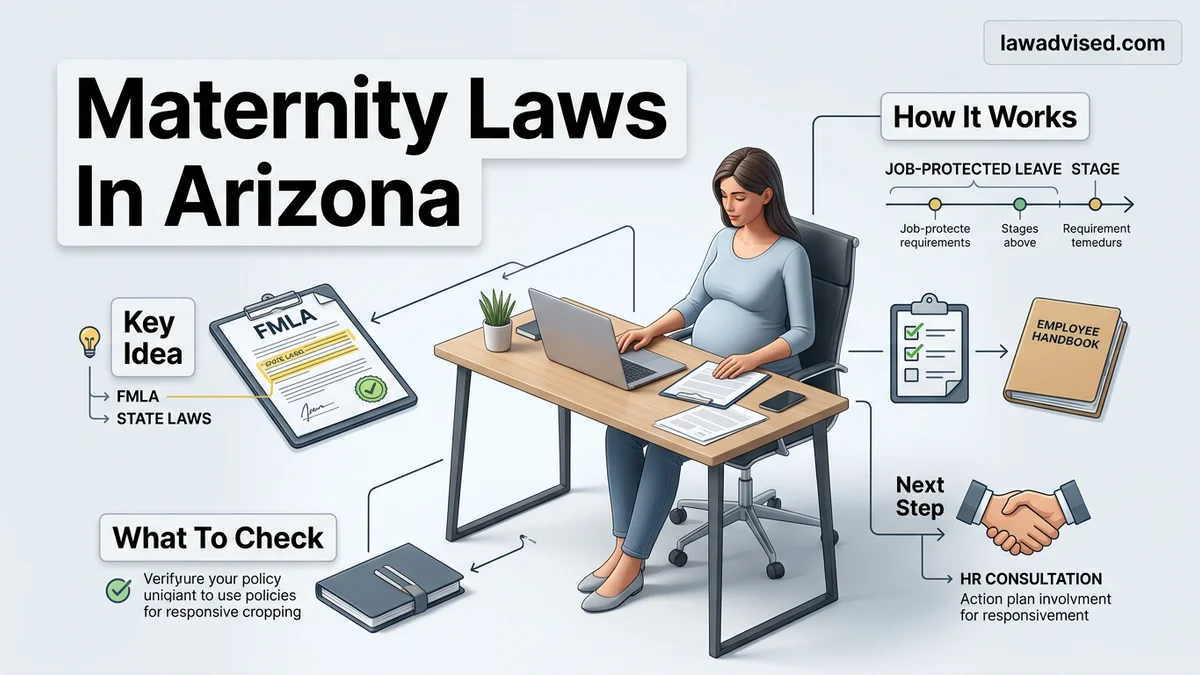
Navigating maternity laws in Arizona requires understanding both federal protections and state-specific workplace accommodations. Pregnant employees are entitled to reasonable accommodations and protection against discrimination, though paid family leave is not strictly mandated by state law.
Navigating maternity laws in Arizona requires understanding a mix of federal mandates and state-specific protections that safeguard your job, health, and financial security during pregnancy and postpartum. As of 2027, working mothers in Arizona benefit from strengthened federal rules like the Pregnant Workers Fairness Act, alongside state protections that prohibit workplace discrimination based on pregnancy, childbirth, or related medical conditions.
Knowing your exact rights prevents illegal employer pushback and ensures you receive the necessary medical leave and workplace adjustments. Whether you need daily accommodations or consecutive weeks off after delivery, understanding the legal framework keeps you in control of your career and health.
Key Takeaways
- Arizona employers must provide reasonable workplace accommodations for pregnancy.
- FMLA grants up to 12 weeks of unpaid, job-protected leave for eligible workers.
- State law prohibits discrimination based on pregnancy, childbirth, or related medical conditions.
- Expressing breast milk at work is protected under federal and state guidelines.
- Document all accommodation requests in writing to ensure legal protection.
What Causes Workplace Rights Violations Under Arizona Maternity Laws
Most maternity rights violations in Arizona happen because employers misunderstand or misapply the boundary between state and federal legislation. Human resources departments sometimes default to rigid company policies that ignore legal mandates for pregnant workers.
Common Misunderstandings About Pregnancy Leave
-
Assuming small businesses are exempt from all leave laws: While federal FMLA applies only to companies with 50 or more employees, Arizona’s Civil Rights Act covers employers with 15 or more workers, offering broader local protection against discrimination.
Denying light duty due to cost: Employers often claim providing a stool, water bottle, or modified lifting schedule creates an undue hardship, which rarely meets the strict legal threshold set by the courts.
Retaliation after disclosing a pregnancy: Shifting a pregnant employee to a lower-paying shift or cutting their hours immediately after a leave request violates state and federal whistleblower and anti-discrimination statutes.
Employer Non-Compliance Scenarios
In 2027, digital surveillance and automated scheduling tools sometimes flag pregnant workers for lower productivity when they take legally mandated restroom breaks or attend prenatal appointments. If your manager penalizes you for pregnancy-related needs while accommodating other temporary medical conditions, your employer is actively violating Arizona discrimination laws.
How to Request Pregnancy Accommodations and FMLA Leave Step by Step
Securing your maternity rights requires a paper trail and strict adherence to statutory timelines. Do not rely on verbal agreements with your supervisor when requesting accommodations or bonding time.
Step 1: Document Your Medical Needs Clearly
-
Obtain a signed note from your OB-GYN or treating healthcare provider that explicitly outlines your workplace restrictions.
Specify the exact accommodations you need, such as sitting for extended periods, avoiding heavy lifting over 15 pounds, or taking scheduled rest breaks.
Avoid sharing unnecessary medical history; stick strictly to what impacts your job duties.
Step 2: Submit Written Notice to Human Resources
-
Draft a formal written request citing the Pregnant Workers Fairness Act and Arizona Civil Rights Act.
Submit the request via email so you have an unalterable timestamp.
Keep a personal copy of all correspondence outside of your work-issued computer or inbox.
Step 3: File Your FMLA or State Leave Paperwork
If you qualify for the Family and Medical Leave Act, submit your certification forms at least 30 days before your anticipated due date when the need is foreseeable. If complications arise suddenly in 2027, submit your paperwork as soon as practicable. Your employer has five business days to provide a response detailing your rights and responsibilities.
What If Your Employer Denies Your Maternity Rights in Arizona
Navigating pregnancy and parental leave can become complicated if an employer pushes back or unlawfully denies your rights. Arizona workers are protected by both federal and state mandates, but violations still occur across various industries. Knowing how to formally address a denial ensures your career and family remain legally protected in 2027.
Recognizing Common Violations
Employers occasionally violate maternity laws by miscalculating FMLA eligibility, retaliating against workers for requesting leave, or refusing to provide reasonable workplace accommodations. Under the Arizona Healthy Working Families Act and federal standards, denying fundamental pregnancy accommodations or terminating an employee due to pregnancy-related absences is strictly prohibited. Documenting every communication in writing remains vital for building a strong administrative or legal case.
Steps to Take Following a Denial
- Review your company employee handbook and original leave request to ensure all procedural requirements were met on your end.
- Request a written explanation from your HR department detailing the specific legal or operational justification for the denial.
- Consult with an employment law attorney or contact the Arizona Civil Rights Division to discuss potential discrimination claims.
- File a formal charge of discrimination with the Equal Employment Opportunity Commission (EEOC) within the mandated 300-day window from the date of the violation.
What If It Still Doesn’t Work?
If informal resolutions and internal HR appeals fail to secure your rightful maternity leave or accommodations, escalation through formal legal and regulatory channels is required. Taking swift action prevents the expiration of critical filing deadlines and protects your professional standing.
- File a formal complaint with the U.S. Department of Labor’s Wage and Hour Division if your FMLA rights were violated.
- Retain a specialized employment lawyer in Arizona to issue a demand letter on your behalf. Initial consultations typically range from $150 to $350, while full representation arrangements vary.
- Submit a formal charge through the Arizona Civil Rights Division (ACRD) to investigate unlawful pregnancy discrimination or retaliation.
- Pursue civil litigation in state or federal court for damages, back pay, and mandatory reinstatement if settlement negotiations break down entirely.
Conclusion
Securing your maternity rights in Arizona requires a clear understanding of federal baselines, state-specific statutes, and proactive documentation. According to verified research and expert sources from employment legal analysts, early intervention and strict adherence to administrative deadlines dramatically improve the likelihood of a successful outcome. Your next actionable step is to review your employer’s leave policy today and consult with human resources or legal counsel well in advance of your due date to ensure complete compliance.
❓ Frequently Asked Questions
What specific protections do Arizona maternity laws offer pregnant employees?
Arizona laws protect workers from discrimination, harassment, and wrongful termination based on pregnancy. Employers are legally required to treat pregnant employees the same as other employees with temporary disabilities.
How does the Family and Medical Leave Act (FMLA) apply to new mothers in Arizona?
FMLA provides eligible employees with up to 12 weeks of unpaid, job-protected leave per year for the birth and care of a newborn child, maintaining health insurance benefits during the leave.
What should I do if my employer refuses to provide pregnancy accommodations?
First, submit your request in writing with a doctor’s note detailing the necessary accommodations. If denied, you can file a discrimination charge with the Arizona Civil Rights Division or the EEOC.
Can I use accrued paid sick time for maternity leave in Arizona?
Yes, under the Arizona Fair Wages and Healthy Families Act, eligible employees can use earned paid sick time for medical appointments and conditions related to pregnancy and childbirth.
Are small businesses in Arizona required to follow maternity leave laws?
Small businesses with fewer than 50 employees are exempt from FMLA, but they must still comply with Arizona state laws prohibiting pregnancy discrimination and requiring reasonable accommodations.
Does short-term disability insurance cover maternity leave in Arizona?
If your employer offers short-term disability insurance or you purchased an individual policy prior to pregnancy, it typically covers a portion of your wages during recovery from childbirth.

Ismail Hossain is the founder of Law Advised. He is an Divorce, Separation, marriage lawyer. Follow him.