Month to Month Lease Laws in Texas: Essential Rules You Must Know
Are you renting a place in Texas or thinking about becoming a landlord? Understanding month-to-month lease laws in Texas is crucial for protecting your rights and avoiding surprises.
Whether you’re a tenant wanting flexibility or a landlord needing clear rules, knowing how these leases work can save you time, money, and stress. You’ll discover what a month-to-month lease really means, your rights and responsibilities, how rent changes work, and what to do if you want to end the lease.
Keep reading to get the clear, straightforward answers you need to navigate Texas rental laws with confidence.
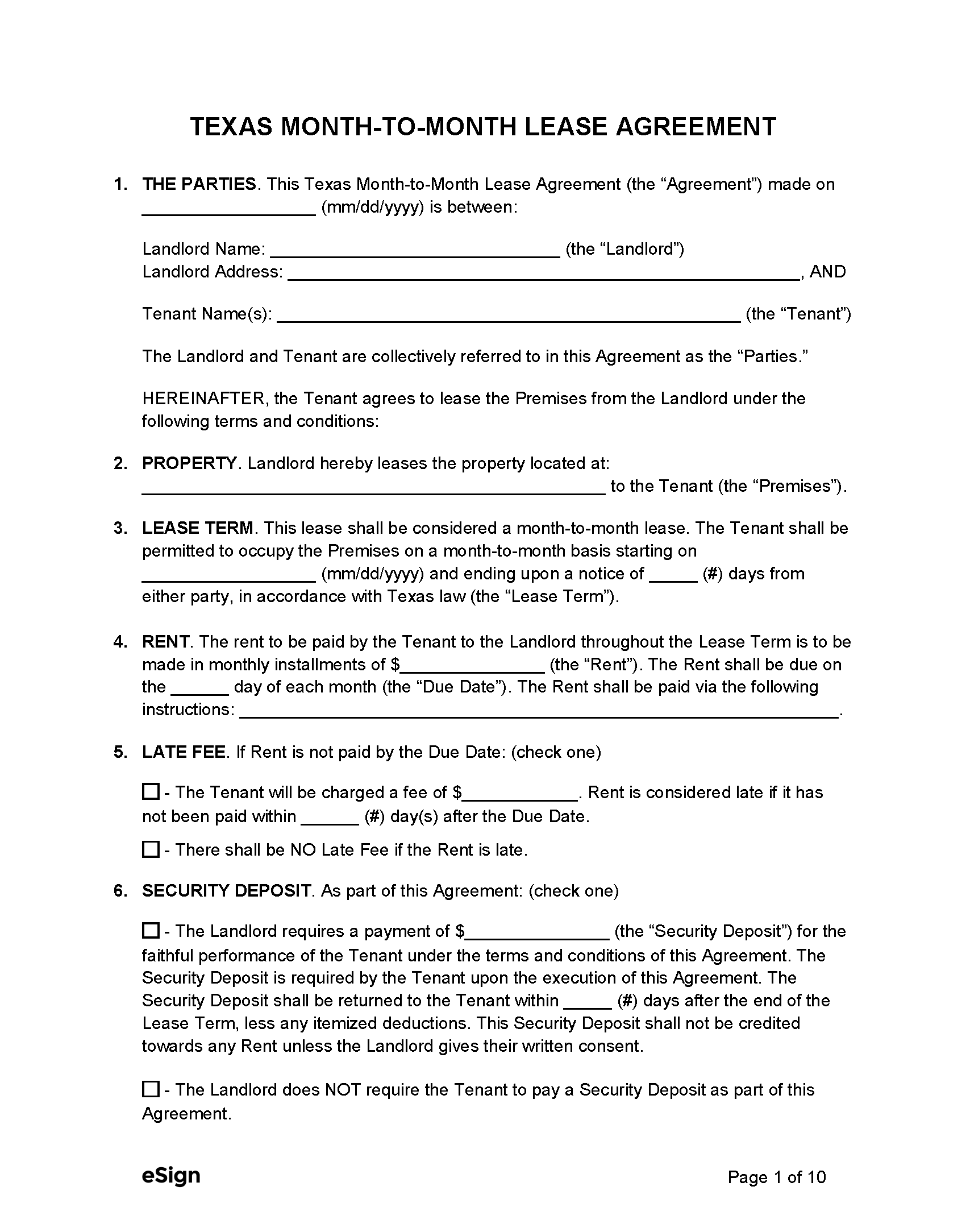
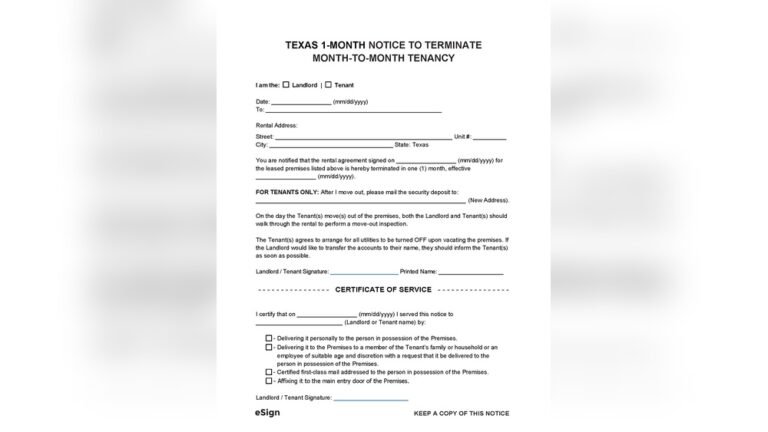
Credit: esign.com
Basics Of Month-to-month Leases
Month-to-month leases offer flexibility for both tenants and landlords in Texas. These agreements do not have a fixed end date and renew automatically each month. This setup suits people who want short-term housing or landlords who prefer adaptable rental terms.
Understanding the basics of month-to-month leases helps tenants and landlords know their rights and responsibilities. It also clarifies how these leases differ from fixed-term agreements.
Definition And How It Works
A month-to-month lease is a rental agreement that lasts for 30 days. After each month, the lease renews automatically unless either party gives notice to end it. Rent and other conditions usually stay the same during each month.
Tenants pay rent monthly and can move out with proper notice, typically 30 days. Landlords can also change terms or end the lease with a written notice.
Transition From Fixed-term To Month-to-month
When a fixed-term lease ends, the tenant may stay and continue paying rent. If the landlord accepts payment, the lease changes to a month-to-month agreement by default.
All original lease terms remain in effect unless changed by either party. This automatic change gives tenants more freedom while landlords keep legal protections.
Tenant And Landlord Rights
Tenant and landlord rights under Texas month-to-month leases create a flexible rental environment. Both parties have specific protections and obligations. Understanding these rights helps avoid disputes and ensures fair treatment.
Tenants can stay with short notice periods. Landlords can adjust terms but must follow the law. The balance aims to protect both sides in a changing rental market.
Rent Increases And Restrictions
Landlords may raise rent on a month-to-month lease. They must provide written notice at least 30 days before the increase. This rule gives tenants time to decide to stay or leave.
Rent increases cannot be used to punish tenants. The amount must be reasonable and follow any local rules. No surprise hikes allowed without proper notice.
Protection Against Retaliation
Texas law protects tenants from retaliation by landlords. A landlord cannot raise rent or end a lease because a tenant reports problems. This includes reporting unsafe conditions or code violations.
Tenants who exercise their rights are shielded from unfair treatment. Retaliation is illegal and tenants can seek legal help if it happens.
Lease Termination Rules
Understanding lease termination rules is important for tenants and landlords. These rules explain how to properly end a month-to-month lease in Texas. They protect both parties and ensure a smooth transition.
Texas law has clear guidelines on notice periods and special cases like military service or family violence. Following these rules helps avoid legal problems and fees.
Notice Period Requirements
Texas law requires tenants or landlords to give at least 30 days’ written notice before ending a month-to-month lease. This notice must be delivered before the rent period ends. For example, if rent is due on the first, notice must be given before the first of the month.
Either party can end the lease by providing this notice. Without it, the lease automatically continues under the same terms. The notice should clearly state the intent to terminate the lease to avoid confusion.
Ending Lease Early For Military Or Family Violence
Tenants in the military can end their lease early if they receive permanent change-of-station orders or deployment orders. They must provide written notice and a copy of military orders to the landlord.
Survivors of family violence also have the right to end their lease without penalty. They must give written notice and include documentation, like a protective order or police report. This law helps protect tenants in difficult situations.
Eviction Process For Month-to-month Tenants
The eviction process for month-to-month tenants in Texas follows specific legal rules. Landlords must follow these rules carefully to remove tenants lawfully. This process differs from evicting tenants with fixed-term leases.
Month-to-month leases give landlords flexibility but require proper notice to end the tenancy. Landlords cannot evict tenants without valid reasons and must follow the law. Understanding the eviction process helps both landlords and tenants avoid conflicts.
Legal Grounds For Eviction
Landlords can evict month-to-month tenants for several legal reasons. Non-payment of rent is the most common cause. Other grounds include violating lease terms or damaging the property.
Failure to follow property rules or creating disturbances can also justify eviction. Landlords cannot evict tenants without a lawful reason. Retaliation against tenants for exercising their rights is illegal under Texas law.
Steps Landlords Must Follow
Landlords must provide tenants with a written notice to end the lease. For month-to-month leases, a 30-day notice is required. This notice must clearly state the landlord’s intent to terminate the lease.
If the tenant does not leave after the notice period, the landlord must file an eviction lawsuit in court. The court will schedule a hearing where both parties can present their case. Only a judge can order an eviction.
After winning the case, the landlord can request a writ of possession. This document allows law enforcement to remove the tenant if they still refuse to leave. Landlords must never use self-help eviction methods like changing locks.
Special Considerations In Texas
Texas law has unique rules for month-to-month leases. These rules protect both landlords and tenants. Knowing these special considerations helps avoid confusion.
Tenants and landlords must follow Texas-specific guidelines. These include how leases end and what happens if tenants stay past their lease.
Holdover Tenants
If a tenant stays after their lease ends, Texas law calls them a holdover tenant. The landlord can accept rent and let the lease continue month-to-month. All original lease terms stay the same.
Landlords cannot demand a new lease just because the tenant holds over. They must give proper notice to change lease terms or end the agreement. This protects tenants from sudden changes or eviction.
Lease Renewal And Non-renewal Notices
Texas does not require landlords to give advance notice before ending a month-to-month lease. However, landlords must give at least 30 days’ written notice before raising rent or ending the lease.
Tenants should also give 30 days’ notice to end the lease. This notice must align with the rental period. Proper notice prevents legal problems and makes moving out smoother.
Both parties should keep written records of notices. This protects rights and clarifies lease status.
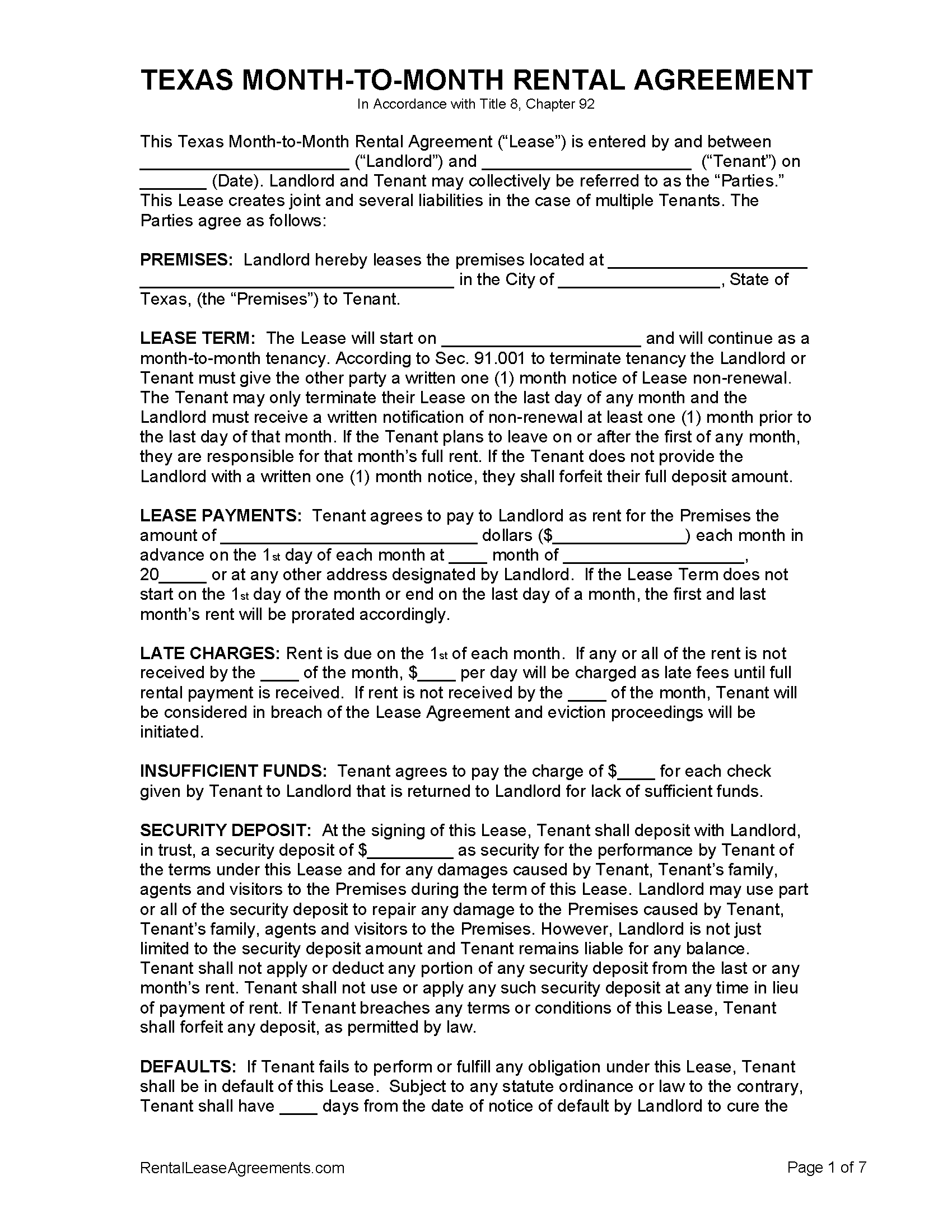
Credit: rentalleaseagreements.com
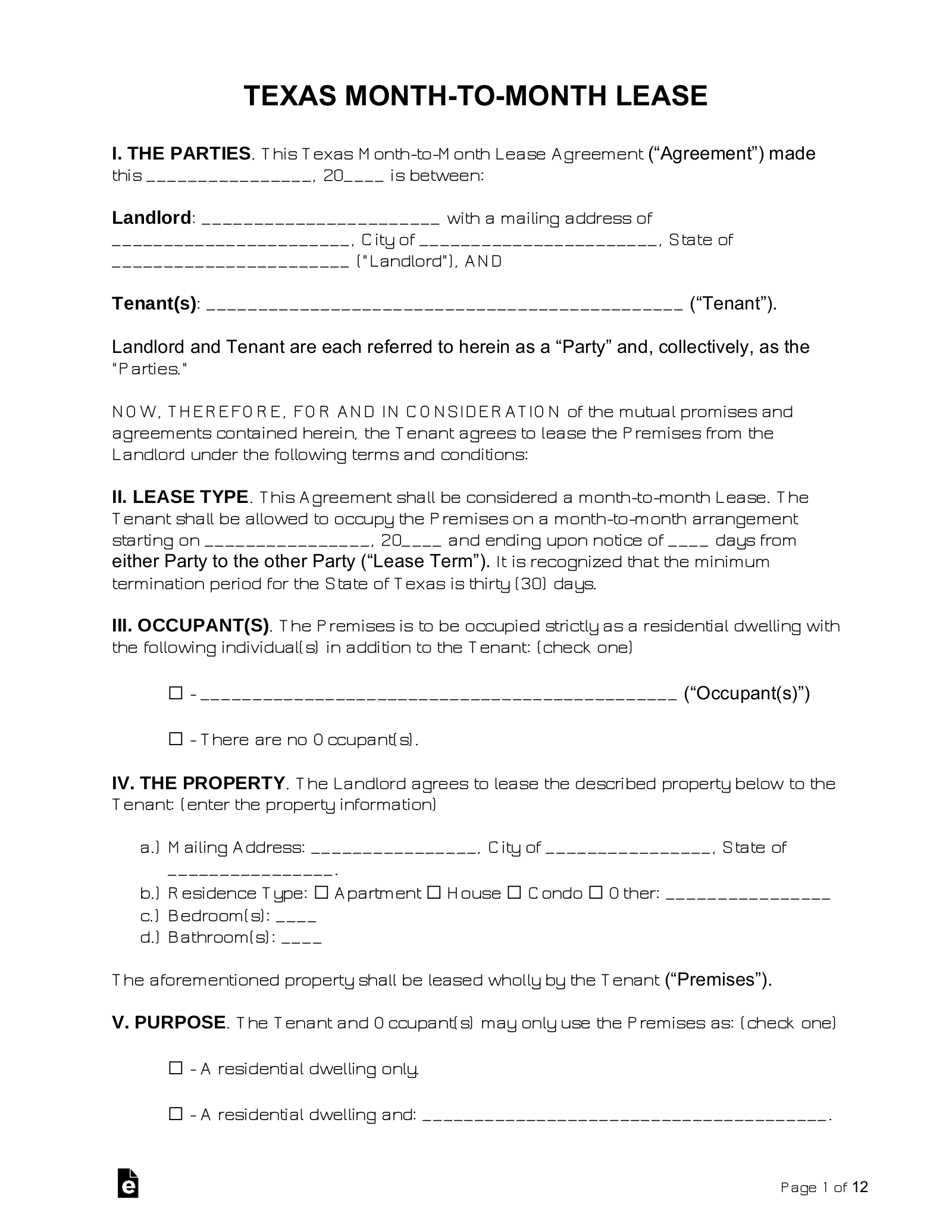
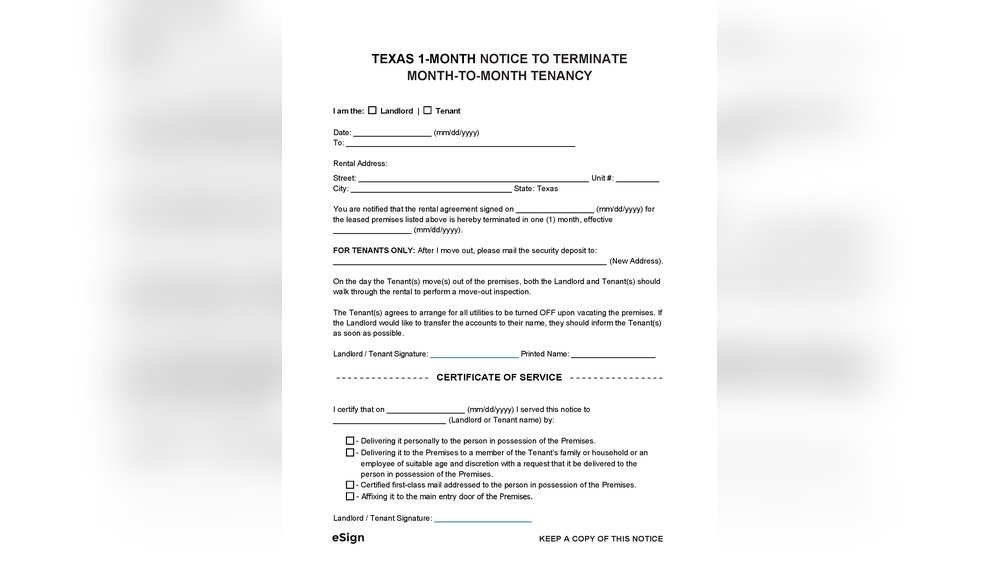
Credit: eforms.com
Frequently Asked Questions
What Are The Cons Of A Month-to-month Lease?
Month-to-month leases often have higher rent, less stability, and require frequent rent reviews. They offer less security for tenants and landlords.
What Is The 92.052 Law In Texas?
Texas Law 92. 052 requires landlords to provide tenants a written notice before increasing rent or changing lease terms in month-to-month agreements.
Can My Landlord Raise My Rent $300 Dollars In Texas?
In Texas, landlords can raise rent by $300 if the lease allows it or with proper notice for month-to-month agreements. No state rent control limits increases. Landlords must provide at least 30 days’ written notice before the increase takes effect.
How To Evict A Month-to-month Tenant In Texas?
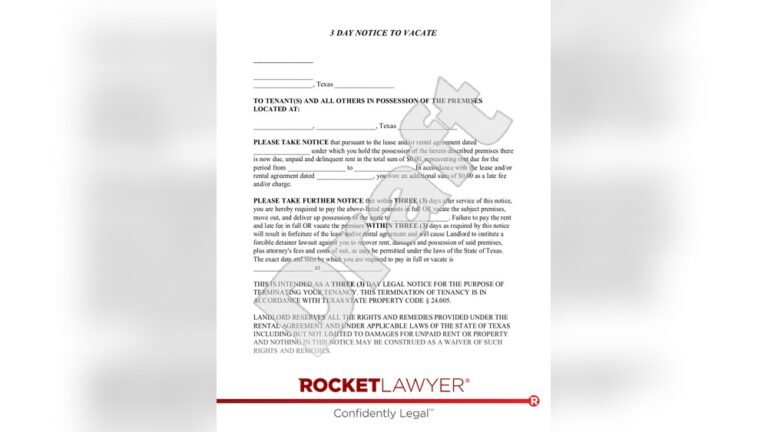
To evict a month-to-month tenant in Texas, provide a written 30-day notice to vacate. File an eviction lawsuit if they stay. Follow Texas eviction laws strictly.
Conclusion
Month-to-month leases in Texas offer flexibility for both landlords and tenants. Tenants can leave with proper notice, while landlords can adjust terms legally. Knowing your rights helps avoid conflicts and surprises. Always read your lease carefully and follow Texas laws.
For more details, check official resources or seek legal advice. Staying informed protects your interests and ensures a smooth rental experience.

Ismail Hossain is the founder of Law Advised. He is an Divorce, Separation, marriage lawyer. Follow him.