Estimated Taxes for Rental Income 2026 Step-by-Step Guide
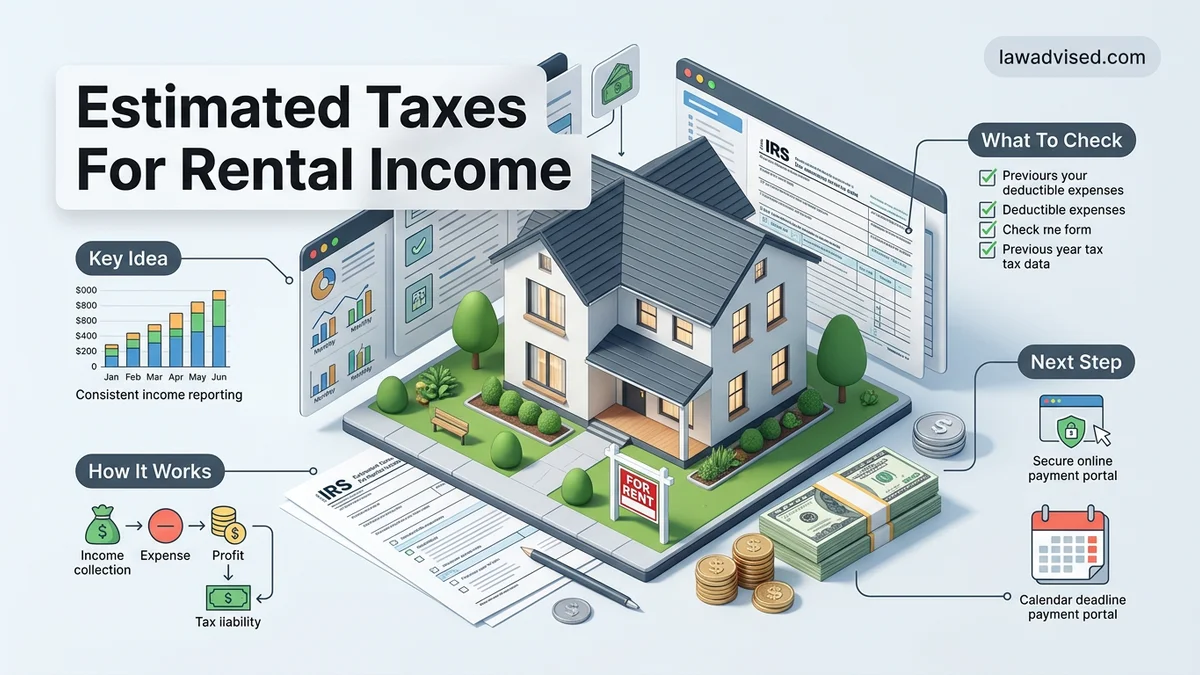
Landlords generally must pay quarterly estimated taxes on rental income if they expect to owe $1,000 or more in federal taxes when filing their return. Skipping these payments can result in costly IRS underpayment penalties even if you settle the balance annually. You can accurately determine your liability by subtracting deductible expenses like depreciation, repairs, and mortgage interest from your gross rental revenue.
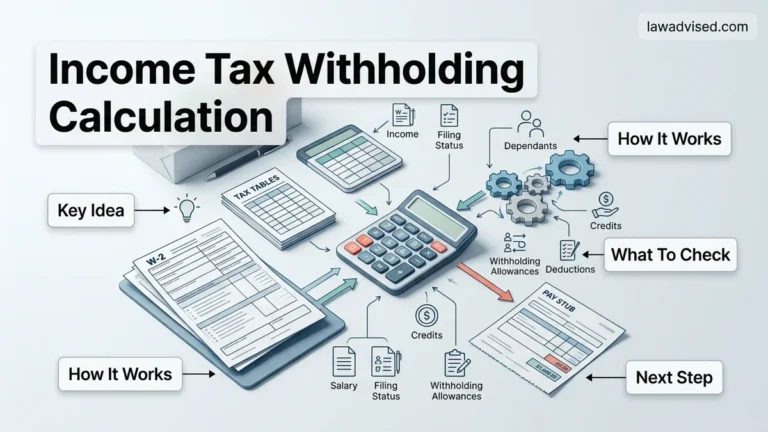
If you earn rental income, the IRS generally expects you to pay taxes on those profits throughout the year via quarterly estimated tax payments. Because rental income usually does not have taxes withheld automatically like a traditional W-2 paycheck, you are responsible for calculating and submitting these payments yourself using Form 1040-ES.
Failing to make these payments or underestimating your liability leads directly to IRS underpayment penalties and unexpected interest charges when you file your annual return in 2026. This guide breaks down the exact rules, thresholds, and calculations you need to stay compliant.
Key Takeaways
- Pay quarterly estimated taxes if you expect to owe $1,000 or more to the IRS.
- Calculate net rental income by subtracting mortgage interest, repairs, and depreciation from gross rent.
- Use IRS Form 1040-ES to calculate and mail or electronically submit your quarterly payments.
- Mark the exact IRS quarterly deadlines to avoid automatic underpayment penalties.
- Consider state-level estimated tax requirements alongside federal obligations.
Why Landlords Face Penalties for Unpaid Estimated Taxes
The United States tax system operates on a pay-as-you-earn model. The IRS expects you to pay taxes as you generate income throughout the tax year rather than waiting until the annual filing deadline in April.
The Pay-As-You-Earn Mandate
When you operate a rental property, your tenants pay you rent monthly, but the government does not automatically deduct income tax or self-employment tax from those checks. To bridge this gap, the IRS requires landlords to make quarterly estimated tax payments. If you rely solely on paying a lump sum when you file your annual tax return, the IRS treats your payments as chronically late, triggering a systemic penalty.
The $1,000 Threshold Rule
You generally must make estimated tax payments for 2026 if you expect to owe at least $1,000 in tax after subtracting your withholding and refundable credits. Specifically, the IRS requires your total withholding and timely estimated payments to cover at least:
- 90 percent of the tax shown on your 2026 tax return, or
- 100 percent of the tax shown on your 2025 tax return (this increases to 110 percent if your adjusted gross income exceeded $150,000).
What Causes IRS Underpayment Penalties on Rental Income
Even conscientious landlords can accidentally trigger IRS penalties if they miscalculate their net rental profits or misunderstand how quarterly thresholds work. Knowing the common pitfalls helps you protect your cash flow.
Fluctuating Rental Profits and Expenses
Rental income rarely stays identical month after month. An unexpected HVAC replacement, a vacant unit, or sudden property tax hikes will drastically alter your net rental income. If you base your quarterly estimated payments on a static monthly profit projection without adjusting for major capital expenses or seasonal repair costs, your end-of-year calculations will fall short of the IRS safe harbor rules.
Ignoring the Safe Harbor Rules
Many landlords guess their quarterly payments based on how much cash they have in the bank rather than mathematically matching IRS thresholds. If your rental portfolio expands in 2026, relying blindly on your 2025 tax liability might not cover your current 90 percent requirement. Always review your net income quarterly to ensure your payments align with actual year-to-date earnings to avoid sudden late-payment fees.
How to Fix Your Estimated Tax Liability Using Form 1040-ES
When your rental income requires quarterly payments, you must use IRS Form 1040-ES, Estimated Tax for Individuals, to calculate and remit what you owe. Getting this right prevents underpayment penalties for the 2026 tax year.
Step-by-Step Filing and Payment Procedure
- Review your 2026 net rental income: Subtract total deductible expenses, including mortgage interest, repairs, insurance, and the crucial 2026 depreciation allowances, from your gross rental receipts.
- Complete the 1040-ES worksheet: Input your expected adjusted gross income, taxable income, and projected credits on the worksheet found within the official IRS instruction booklet.
- Calculate your quarterly installment: Divide your total estimated tax liability by four, ensuring you meet the IRS safe harbor rule of paying at least 90 percent of your 2026 liability or 100 percent of your 2025 tax.
- Submit your payment: Send your payment by the required 2026 quarterly due dates using IRS Direct Pay, the EFTPS system, or by mailing a physical voucher with a check.
What If Your Rental Income Fluctuates and Calculations Fall Short?
Rental income is rarely uniform throughout the year. Unexpected tenant vacancies, major property repairs, or fluctuating utility costs can throw off your initial 2026 calculations, leading to potential underpayment penalties when you file your annual return.
Adjusting Mid-Year Projections
- Recalculate at the Q2 or Q3 mark: If your rental income spikes unexpectedly due to higher seasonal rates or long-term lease renewals, use the annualized income installment method to adjust your remaining quarterly vouchers upward.
- Utilize IRS Form 2210: If income fluctuated heavily during specific quarters, file Form 2210 with your annual return to potentially reduce or eliminate penalties by showing that income was earned unevenly throughout 2026.
- Make a catch-up payment immediately: Submit an additional voluntary payment via IRS Direct Pay before the next quarterly deadline to minimize accumulating interest and penalty charges.
What If It Still Doesn’t Work?
If automated calculations continue to yield conflicting results or your rental portfolio has grown too complex for standard worksheets, consider these troubleshooting steps:
- Re-audit your expense logs: Verify that all property management fees, local property taxes, and capital improvements are correctly categorized to lower your adjusted net income.
- Engage a Certified Public Accountant (CPA): Consult a licensed tax professional specializing in real estate taxation to review your 2026 estimated schedules. Professional consultations typically range from $300 to $600 for a comprehensive review.
- Utilize professional tax software: Upgrade to a business-tier software package designed to automatically recalculate quarterly estimates whenever rental income or expense entries are updated.
- Contact the IRS directly: Call the IRS dedicated helpline for individuals to clarify specific reporting ambiguities regarding passive activity loss limitations for the 2026 tax year.
Conclusion
Managing estimated taxes on rental income requires proactive monitoring, accurate expense tracking, and strict adherence to quarterly IRS deadlines to avoid costly penalties. According to verified research and expert financial sources, utilizing the safe harbor rule and updating projections mid-year ensures total compliance. Your immediate next step is to download the 2026 Form 1040-ES packet and recalculate your next quarterly installment based on your current year-to-date net rental earnings.
❓ Frequently Asked Questions
How do I calculate my net rental income for estimated tax purposes?
Subtract all allowable operating expenses—such as mortgage interest, property taxes, insurance, repairs, property management fees, and depreciation—from your total gross rental income. The resulting net figure is what you use to estimate your tax bracket liability.
What happens if I miss a quarterly estimated tax payment deadline?
Missing a deadline or underpaying your quarterly amount can trigger an IRS underpayment penalty. This penalty is calculated as interest on the underpaid amount for the number of days it remains unpaid.
Are short-term rental owners subject to the same estimated tax rules?
Yes, earnings from short-term rentals like Airbnb or VRBO are treated as rental or business income depending on the level of services provided, and they still require quarterly estimated tax payments if you meet the $1,000 threshold.
How can I avoid penalties if my rental income changes dramatically mid-year?
You can use the annualized income installment method on IRS Form 2210. This method allows you to calculate your estimated tax payments based on actual income earned during specific periods rather than an even split.
Do I also need to pay state estimated taxes on rental income?
Most states with a personal income tax also require quarterly estimated tax payments if you earn rental income within their borders. Always check state-specific tax agency websites for local thresholds and deadlines.
Can I use the safe harbor rule to avoid IRS penalties?
Yes, you can generally avoid underpayment penalties if your total payments equal at least 90% of the tax shown on your current year’s return or 100% of the tax shown on your prior year’s return (110% for higher-income earners).

Ismail Hossain is the founder of Law Advised. He is an Divorce, Separation, marriage lawyer. Follow him.