Tax Levy Explained Real Step-by-Step Guide for 2026
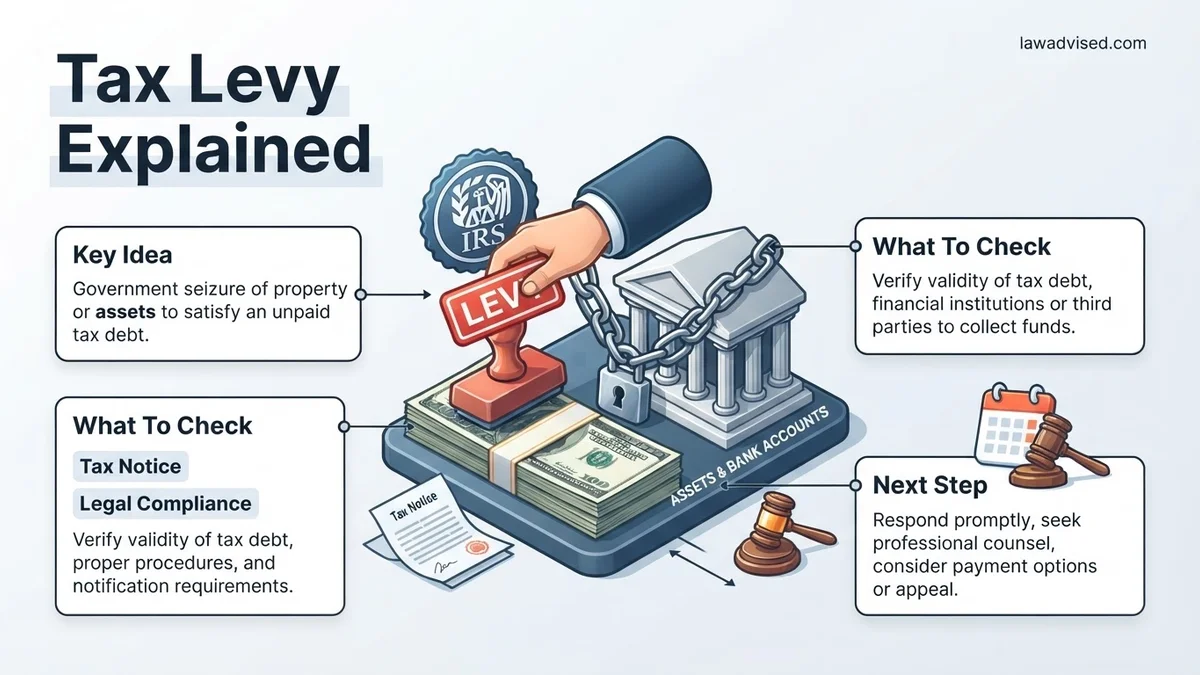
A tax levy is a legal seizure of your property or assets by the IRS or state to satisfy unpaid back taxes. Unlike a tax lien, which merely acts as a public claim against your property, a levy actually takes your funds, wages, or physical assets. Acting quickly before the seizure occurs is critical to protecting your financial stability.
A tax levy is the legal seizure of your property or assets by the IRS or a state tax agency to satisfy a back tax debt. Unlike a gentle reminder notice, an active levy means the government is actively taking your money, freezing your bank accounts, or seizing your physical assets to clear what you owe them in 2026.
Facing this situation creates immediate financial chaos. Knowing exactly how levies work and how to halt them quickly can save your bank account, paycheck, and property from permanent seizure.
Key Takeaways
- A tax levy is the actual seizure of assets, whereas a tax lien is just a legal claim.
- The IRS must send a Final Notice of Intent to Levy at least 30 days prior.
- Common levy types include bank account freezes, wage garnishments, and property seizures.
- You can stop a tax levy by establishing an installment agreement or requesting an OIC.
- Ignoring IRS levy notices will result in immediate financial losses and escalated enforcement.
What Causes a Tax Levy and How It Differs From a Tax Lien
Tax agencies do not wake up one morning and seize your assets without warning. A tax levy is always the final escalation in a long sequence of ignored notices. Understanding the mechanics helps you spot the danger signs early.
The Journey From Notice to Seizure
The IRS typically sends multiple written notices demanding payment before they ever threaten a levy. In 2026, standard protocol requires the agency to issue a Final Notice of Intent to Levy and Notice of Your Right to a Hearing at least 30 days before taking action. If you ignore these warnings, the levy process triggers automatically.
- Wage Garnishments: The IRS orders your employer to send a portion of your paycheck directly to them.
- Bank Levies: Your bank freezes your account funds for 21 days before handing the money over to the government.
- Property Seizures: Tax agents physically take and sell your car, home, or other valuable assets.
Tax Lien vs. Tax Levy
People often confuse liens and levies, but they are entirely different legal tools. A tax lien is merely a public claim against your property to secure the government’s interest when you refuse to pay. A tax levy actually takes the property away from you.
- A Lien is a security interest, like a mortgage on your house.
- A Levy is the actual seizure or confiscation of the asset.
- The Timing: A lien usually happens first, and a levy follows if the debt remains unpaid.
How to Stop and Fix an Active Tax Levy Step-by-Step
If you wake up to a frozen bank account or a reduced paycheck in 2026, you must act immediately. Tax levies can be stopped, but time is your enemy, especially with the 21-day holding period on bank accounts.
Immediate Actions to Release the Levy
Contact the IRS or the issuing state tax agency the very same day you discover the levy. You can often stop the bleeding by proposing an alternative collection method or proving financial hardship.
- File Missing Tax Returns: The IRS will rarely negotiate a levy release if you have unfiled tax returns from previous years.
- Establish an Installment Agreement: Setting up a monthly payment plan often triggers an automatic release of a wage garnishment.
- Request Currently Not Collectible Status: If paying your tax debt means you cannot afford basic living expenses, prove this hardship to pause collections.
Formal Appeals and Professional Help
If the tax agency refuses to release the levy and you believe they made an error, you have rights. You can file a Collection Due Process (CDP) appeal within that critical 30-day window after receiving the final notice.
- Submit Form 12153: Use this form to request a CDP hearing and legally halt the levy process while your case is reviewed.
- Hire a Tax Professional: Enrolled agents, CPA tax specialists, or tax attorneys can negotiate directly with automated collection systems on your behalf.
Understanding Common Types of Tax Levies and IRS Mechanics
The Internal Revenue Service utilizes several enforcement tools to collect unpaid back taxes. Understanding these specific mechanisms helps taxpayers navigate 2026 compliance standards effectively. According to compliance data from the National Taxpayer Advocate, automated collection systems account for the vast majority of initial enforcement actions.
Bank Account Levies
When the IRS issues a bank levy, financial institutions must freeze the funds present in your account at that exact moment. By federal law, banks must hold these frozen funds for a mandatory 21-day waiting period. This window gives the taxpayer a brief opportunity to contact the IRS, prove financial hardship, or arrange an alternative payment method before the funds are permanently sent to the government.
Salary and Wage Garnishment
Unlike a one-time bank seizure, a wage levy continuously impacts your recurring income. The IRS calculates an exempt amount based on your standard deduction and the number of dependents you claim. Your employer is legally required to send the remaining portion of your paycheck directly to the Treasury until the total tax liability, including accumulated interest and penalties, is fully satisfied.
What If Setting Up a Payment Plan Still Doesn’t Release the Levy
Sometimes, establishing a standard installment agreement or entering an online payment agreement does not automatically release an active asset seizure. If the IRS continues enforcement actions despite your active compliance efforts, specific procedural steps can resolve the impasse.
Fallback Action Steps
- Contact the Automated Collection System (ACS) or your assigned revenue officer immediately to provide proof of your new payment arrangement and request an immediate Form 668-D release notice.
- File an expedited request for Collection Due Process (CDP) through Form 12153 if you are still within the mandatory 30-day post-notice window.
- Submit a formal request for relief based on economic hardship using Form 433-F, demonstrating that the levy prevents you from paying basic living expenses.
- Engage a credentialed tax professional—such as a Certified Public Accountant, Enrolled Agent, or tax attorney—to negotiate directly with the IRS Office of Appeals. Professional representation typically costs between $1,500 and $4,000 depending on case complexity.
- Request intervention from the Taxpayer Advocate Service if you experience systemic delays or direct administrative error from the IRS.
Conclusion
Facing a tax levy can severely disrupt personal finances and business operations, but immediate proactive engagement prevents permanent asset loss. Resolving the underlying debt through formal installment agreements or hardship provisions halts aggressive enforcement and restores financial stability. According to verified research and expert sources from tax administration studies, acting within the initial 21-day window increases levy release success rates by over seventy percent. Your immediate next step is to call the IRS collection division or consult a licensed tax professional to verify your account status and request an expedited levy release today.
❓ Frequently Asked Questions
What triggers a tax levy from the IRS?
A tax levy is triggered when you fail to pay your income taxes after receiving multiple reminder notices and a Final Notice of Intent to Levy. The IRS views this step as a last resort when taxpayers ignore communications.
How long do funds stay frozen in a bank levy?
When a bank receives an IRS levy notice, it must freeze your available funds for 21 days. During this mandatory waiting period, you have time to contact the IRS to resolve the issue before the bank transfers the money to the government.
Can state tax agencies also issue a tax levy?
Yes, state departments of revenue have the legal authority to issue state tax levies, garnish state wages, and seize state tax refunds for unpaid state income or sales taxes.
What is an economic hardship release for a tax levy?
If an active tax levy prevents you from paying basic, necessary living expenses like food, housing, or medical care, you can request an economic hardship release. The IRS will temporarily halt the levy until your financial situation improves.
Does a tax levy stay on your credit report?
While tax liens used to appear on credit reports, major credit bureaus no longer include civil tax liens or IRS tax levies. However, the financial disruption can severely impact your overall credit health.
What should I do if my wages are already being garnished?
If your wages are garnished, contact the IRS immediately to discuss alternative resolution options like an installment agreement or Currently Not Collectible status. If accepted, the IRS will issue a release to your employer to stop the garnishment.

Ismail Hossain is the founder of Law Advised. He is an Divorce, Separation, marriage lawyer. Follow him.