IRS Collections Process Explained Step-by-Step Guide 2026
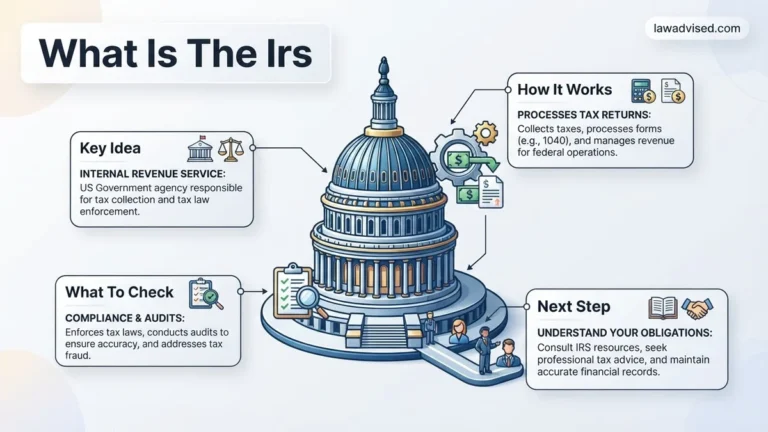
The IRS collections process moves through a predictable, chronological series of stages from initial notices to severe enforcement actions like liens and levies. Understanding this timeline allows you to intervene early, protect your assets, and secure a formal resolution with the IRS.
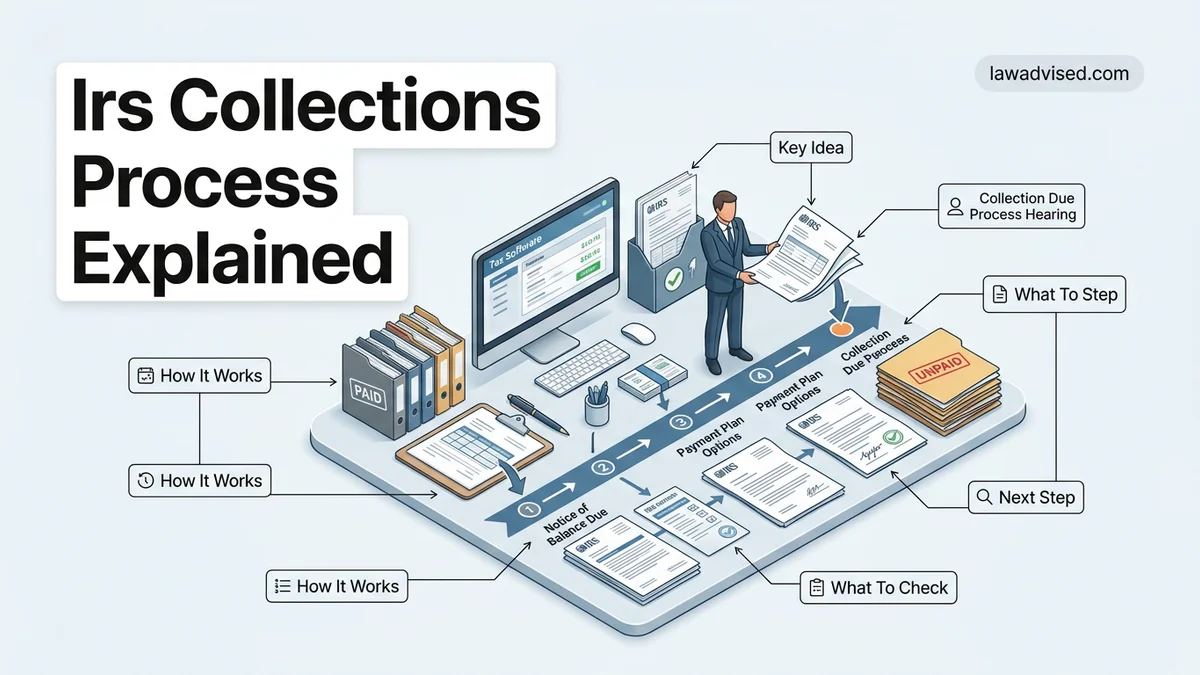
The IRS collections process moves through a strict chronological progression, beginning with an automated balance-due notice and escalating all the way to legal enforcement actions like levies and property seizures if you fail to respond. When you owe back taxes in 2026, the agency follows a standardized statutory path to collect the debt.
Understanding this exact timeline matters practically because it dictates your legal window to intervene. Knowing where you stand in the collection pipeline allows you to stop aggressive enforcement before the IRS seizes your bank accounts, wages, or physical assets.
Key Takeaways
- Ignore initial notices at your own peril; early response stops escalation.
- A Notice and Demand for Payment triggers the formal collection cycle.
- Federal tax liens attach to all your property automatically.
- Wage and bank levies can be prevented by establishing an installment plan.
- Collection Due Process hearings protect your right to appeal enforcement.
What Causes IRS Collection Actions and Notice Triggers
The Initial Notice and Demand for Payment
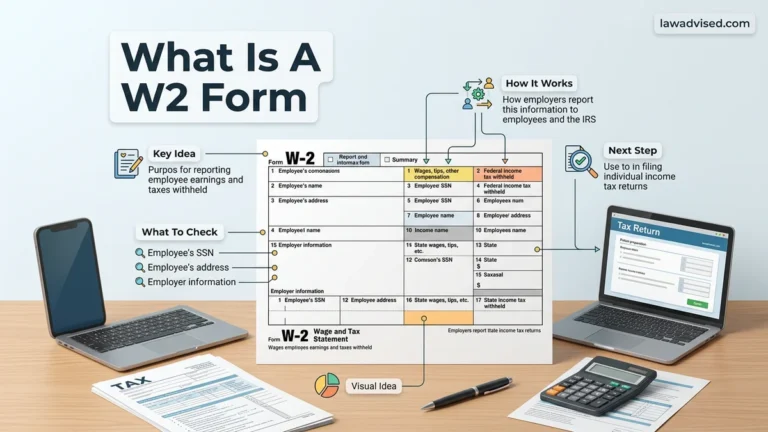
The collection process officially triggers the moment the IRS processes your tax return and discovers an unpaid balance, or when an audit results in an assessed tax deficiency. Once the tax is assessed, federal law requires the IRS to mail you a Notice and Demand for Payment. This initial communication typically arrives as a CP14 notice (or similar balance-due notice), giving you a brief window to pay the liability in full.
- The notice outlines the specific tax year, principal tax owed, accumulated penalties, and daily-compounding interest.
- Ignoring this initial notice leads directly to automated escalation within the IRS internal database, known as the Integrated Collection System (ICS).
- By 2026, automated processing speeds mean this initial phase transitions to severe notices much faster than in previous decades.
The Final Notice of Intent to Levy
If you fail to pay or establish a payment arrangement after the initial notice, the IRS issues a statutory acceleration warning. For most enforcement actions, this is known as the Final Notice of Intent to Levy and Notice of Your Right to a Hearing (often sent via Letter 1058 or LT11). This document is the legal key that unlocks the IRS’s power to seize your property.
- This notice triggers your statutory right to request a Collection Due Process (CDP) hearing within 30 days.
- It serves as the final warning before the IRS contacts your employer, bank, or state agencies to forcefully retrieve the funds.
- Without a timely response, the agency will legally initiate levies on your active income streams and financial accounts.
From Start to Finish: IRS Collections Process Explained
Navigating the labyrinth of Internal Revenue Service debt recovery can feel overwhelming, but understanding the progression helps you take control. This guide walks you through the exact lifecycle of tax debt, from the initial notification to potential resolution options, empowering you to protect your assets and communicate effectively with tax authorities.
Step 1: Receive the Initial Notice and Balance Determination
What you need: Your tax return copies, W-2s or 1099s, and the specific IRS notice received (such as CP14 or CP501).
Instructions: When you fail to pay taxes owed in full, the IRS officially begins the collection process by issuing a balance due notice. This document outlines the tax year, the base tax amount, accumulated penalties, and daily-compounding interest. Carefully review the calculation against your own financial records. If you agree with the assessment, note the payment deadline. If you disagree, immediately gather documentation proving the discrepancy and call the toll-free number listed on the notice to dispute the charges before collection escalates.
Pro Tip: Never ignore the first notice. Responding within 30 days prevents the automatic accumulation of harsher failure-to-pay penalties and additional interest charges.
Step 2: Review Notice of Intent to Levy and Right to a Hearing
What you need: Form 12153 (Request for a Collection Due Process or Equivalent Hearing) and certified mail tracking information.
Instructions: If the debt remains unpaid after multiple reminder notices, the IRS will issue a Letter 1058 or LT11, which serves as a Final Notice of Intent to Levy and Notice of Your Right to a Hearing. This is a critical legal threshold. It means the government intends to seize your property, bank accounts, or wages. You have exactly 30 days from the date of the notice to file Form 12153, requesting a Collection Due Process (CDP) hearing. Filing this pauses most enforcement actions and gives you a formal platform to negotiate alternative payment strategies with an independent settlement officer.
Pro Tip: Always mail your hearing request via certified mail with a return receipt requested to prove it was submitted within the strict 30-day window.
Step 3: Explore and Propose an Installment Agreement
What you need: Form 9465 (Installment Agreement Request), Form 433-F (Collection Information Statement), and your recent bank statements and household expense bills.
Instructions: If you cannot pay your tax liability in a lump sum, you can propose a monthly payment plan. For tax debts under $50,000, you can often set up a Streamlined Installment Agreement online without submitting detailed financial disclosures, allowing you up to 72 months to pay. For larger balances or non-streamlined setups, you must submit financial statements showing your monthly disposable income. The IRS will evaluate your ability to pay and establish a fixed monthly withdrawal date. Maintaining this agreement keeps enforced collection activities at bay.
Pro Tip: Set up automatic debit payments (Direct Debit Installment Agreement) to reduce user fees and lower the overall interest rate charged on your remaining balance.
Step 4: Negotiate an Offer in Compromise
What you need: Form 656, Form 433-A (OIC), application fee ($205), and initial payment or proposed periodic payment amounts.
Instructions: An Offer in Compromise (OIC) allows qualifying taxpayers to resolve their tax liability with the IRS for a lower amount than what they actually owe. This option is typically approved when there is doubt as to collectibility—meaning your assets and future income are less than the total tax debt. You must meticulously document your monthly income, living expenses, and asset equity. The IRS reviews your comprehensive financial profile to determine your “Reasonable Collection Potential” (RCP). If accepted, you pay the agreed-upon settlement either in a lump sum or via short-term periodic payments.
Pro Tip: Use the IRS online “OIC Pre-Qualifier” tool before paying fees to estimate your chances of acceptance based on your specific financial figures.
Step 5: Navigate Federal Tax Liens and Credit Impact
What you need: Form 12277 (Application for Withdrawal of Filed Form 668(Y)) if seeking lien removal after resolution.
Instructions: As collections progress, the IRS may file a Notice of Federal Tax Lien in public records. This legal document alerts public creditors that the government has a legal claim against all your current and future property, including real estate, vehicles, and accounts receivable. While a lien does not immediately seize your assets, it severely damages your credit score and hinders your ability to secure loans or sell property. Once the underlying tax debt is satisfied or converted into an approved payment arrangement, you can request a lien release or withdrawal to help restore your financial standing.
Pro Tip: Paying off your liability directly triggers a lien release within 30 days, but you must explicitly request a withdrawal to remove the public notice from your credit report entirely.
Step 6: Handle Active Levies and Wage Garnishment
What you need: Form 668-W (Notice of Levy on Wages, Salary, and Other Income), pay stubs, and financial hardship documentation.
Instructions: If you fail to respond to notices and do not establish a formal payment arrangement, the IRS will execute enforced collections through levies. A wage garnishment forces your employer to send a significant portion of your paycheck directly to the government, leaving you only a modest exempt amount. Bank levies freeze funds in your checking or savings accounts for 21 days before transferring them to the IRS. To stop an active levy, you must immediately contact the IRS, demonstrate financial hardship, or negotiate an emergency compliance agreement to release the seized assets.
Pro Tip: Act fast when a bank levy hits; you only have a strict 21-day window to prove economic hardship before the bank transfers your frozen funds permanently to the Treasury.
Step 7: Request Currently Not Collectible (CNC) Status
What you need: Form 433-F or Form 433-A, proof of basic living expenses, and income documentation.
Instructions: If paying your tax debt would prevent you from meeting basic, necessary living expenses—such as rent, utilities, food, and medicine—you can request that your account be placed in Currently Not Collectible (CNC) status. To qualify, you must submit detailed proof of your financial hardship. While CNC status does not erase your tax debt, it forces the IRS to temporarily halt all active collection activities, including wage garnishments and bank levies. Interest and penalties will continue to accrue, and the IRS will periodically review your financial situation to see if your ability to pay has improved.
Pro Tip: CNC is a temporary shield, not a permanent pardon; use this breathing room to stabilize your finances or prepare an Offer in Compromise.
✅ Final Checklist
- Verified the accuracy of the original tax assessment and calculated penalties
- Responded to all notices or filed for a Collection Due Process hearing within the 30-day deadline
- Selected and applied for the best resolution path (Installment Agreement, OIC, or CNC)
- Submitted complete and accurate financial disclosure forms without missing attachments
- Retained copies of all correspondence, certified mail receipts, and confirmation numbers
Important Notes:
- Never ignore IRS correspondence, as inaction guarantees aggressive enforcement actions like property seizures and wage garnishments.
- Seek professional help from a Certified Public Accountant (CPA), Enrolled Agent (EA), or tax attorney if facing complex corporate tax debts, unfiled returns spanning multiple years, or active levies exceeding $50,000.
- The IRS collections timeline varies wildly depending on the debt amount, but the entire process from initial notice to active levy typically spans 6 to 12 months. Professional representation fees for resolution range from $1,500 to $5,000+ depending on case complexity.
How to Fix IRS Tax Debt with Step-by-Step Resolution Options
Setting Up Installment Agreements and Payment Plans
The most common way to stop aggressive collection actions is by negotiating a formal payment plan with the IRS. If you cannot afford to pay your 2026 tax liability in a single lump sum, an Installment Agreement lets you spread your payments out over an extended period, up to 72 months in many cases.
- Streamlined Installment Agreements: Available to individuals who owe $50,000 or less in combined tax, penalties, and interest, requiring minimal financial disclosure.
- Regular Installment Agreements: Required for balances over $50,000, which necessitate a detailed breakdown of your monthly income and allowable living expenses via Form 433-F.
- Establishing an active payment plan legally halts active levies, protecting your bank accounts and wages from immediate seizure.
Exploring Offers in Compromise and Currently Not Collectible Status
If your financial hardship is severe enough that you genuinely cannot pay your full tax liability over the lifetime of the collection statute, alternative relief programs exist. An Offer in Compromise (OIC) allows qualifying taxpayers to resolve their total tax debt with the IRS for a fraction of what they actually owe.
- The IRS calculates your Reasonable Collection Potential (RCP), factoring in your monthly disposable income and realizable equity in assets.
- If you have no disposable income or assets, you can request Currently Not Collectible (CNC) status, which temporarily suspends all collection actions until your financial situation improves.
- Submitting these formal resolution packages freezes the aggressive escalation of the IRS collections machine while your application is under review.
How to Stop Levies, Liens, and Enforcement Actions
When the IRS issues a Notice of Intent to Levy or files a Notice of Federal Tax Lien, immediate defensive action is required to protect your assets and credit rating. According to enforcement guidelines, the agency generally must wait 30 days after issuing a final notice before seizing wages, bank accounts, or property. Utilizing this window effectively can halt enforcement entirely.
Filing a Collection Due Process (CDP) Hearing
Requesting a CDP hearing through Form 12153 within the statutory 30-day window legally halts all levy actions. Tax experts note that this hearing allows you to propose alternative collection methods or contest the liability. The Independent Office of Appeals handles these cases separately from collection agents, offering a neutral review of your financial situation.
Establishing Alternative Resolution Paths
- Submit a Collection Information Statement: Complete Form 433-A or 433-F to prove financial hardship, which forces a temporary suspension of active collection efforts.
- Request Currently Not Collectible (CNC) Status: If basic living expenses consume your entire income, the IRS can designate your account as CNC, pausing levies until your financial standing improves.
- Propose an Offer in Compromise (OIC): Submitting an OIC with the required application fee and initial payment temporarily stays certain collection activities while the IRS evaluates your settlement proposal for pennies on the dollar.
What If Your Payment Plan Still Doesn’t Work?
If an existing installment agreement or resolution path fails due to unexpected financial hardship or administrative rejection, strict secondary protocols must be followed to avoid immediate asset seizure. Verified tax resolution standards emphasize swift intervention when standard agreements collapse in 2026.
- Contact the IRS Immediately: Call the number on your default notice before the expiration date to request a restructuring of your payment terms rather than waiting for forced collection.
- Seek Licensed Professional Help: Engage a Certified Public Accountant (CPA), Enrolled Agent (EA), or tax attorney if the total liability exceeds $10,000 or involves complex asset structures. Professional representation fees typically range from $1,500 to $5,000 depending on case complexity.
- Involve the Taxpayer Advocate Service: File Form 911 to request assistance from the Taxpayer Advocate Service if IRS collection procedures are causing systemic economic hardship or administrative delays.
- Apply for Penalty Abatement: Request first-time penalty abatement or establish reasonable cause to reduce the total balance, making the remaining debt manageable under a revised payment structure.
Conclusion
Navigating the IRS collections process in 2026 requires proactive communication and strict adherence to strict statutory deadlines to prevent devastating bank levies and property liens. Ignoring collection notices only accelerates forced enforcement, whereas engaging early opens viable avenues like installment agreements and hardship statuses. According to verified research and expert sources, taking control of your tax liability immediately drastically reduces cumulative penalty fees and stops aggressive collection actions. Your next actionable step is to review your latest IRS notice and log into your online tax account to verify your exact balance and current compliance status today.
❓ Frequently Asked Questions
What triggers the start of the IRS collection process?
The collection process officially begins when you file a tax return showing a balance due, or when the IRS creates a substitute return for you and sends a Notice and Demand for Payment.
What is the difference between a tax lien and a tax levy?
A Federal Tax Lien is a legal claim against your property to secure the government’s interest, while a tax levy actually seizes your property, such as bank funds or wages, to satisfy the debt.
How do I request a Collection Due Process (CDP) hearing?
You can request a CDP hearing by filing Form 12153 within 30 days of receiving the Final Notice of Intent to Levy or Notice of Federal Tax Lien Filing.
What happens if I ignore IRS collection notices completely?
Ignoring notices leads to forced enforcement actions, including wage garnishments, bank account levies, property seizure, and potential passport revocation for seriously delinquent tax debt.
Can I set up a payment plan online to stop collections?
Yes, taxpayers owing less than $50,000 in combined tax, penalties, and interest can often set up a short-term payment plan or Installment Agreement directly through the IRS online portal.
Does the IRS have a time limit to collect back taxes?
Yes, the IRS generally has a 10-year Statute of Limitations from the date the tax was assessed to collect the debt, though certain actions can pause this clock.

Ismail Hossain is the founder of Law Advised. He is an Divorce, Separation, marriage lawyer. Follow him.